Dogs rarely use just one signal at a time. A sideways stance can look casual, awkward, polite, or even uncertain depending on what comes with it. One dog may turn its body a little to soften an approach, while another may do the same thing because it is watching closely and trying to stay ready for whatever happens next.
That is why this behavior is worth noticing. It is not a single message with one fixed meaning. It often sits somewhere between social communication, self-protection, and simple comfort. The details matter more than the pose itself.
Some dogs stand sideways during interaction because they are trying to reduce tension. Others do it when they are alert, unsure, or avoiding direct pressure. In everyday life, the posture can appear in greetings, near food, around strangers, during play, or when a dog wants to stay involved without fully committing to the moment.
What a sideways stance looks like in real life
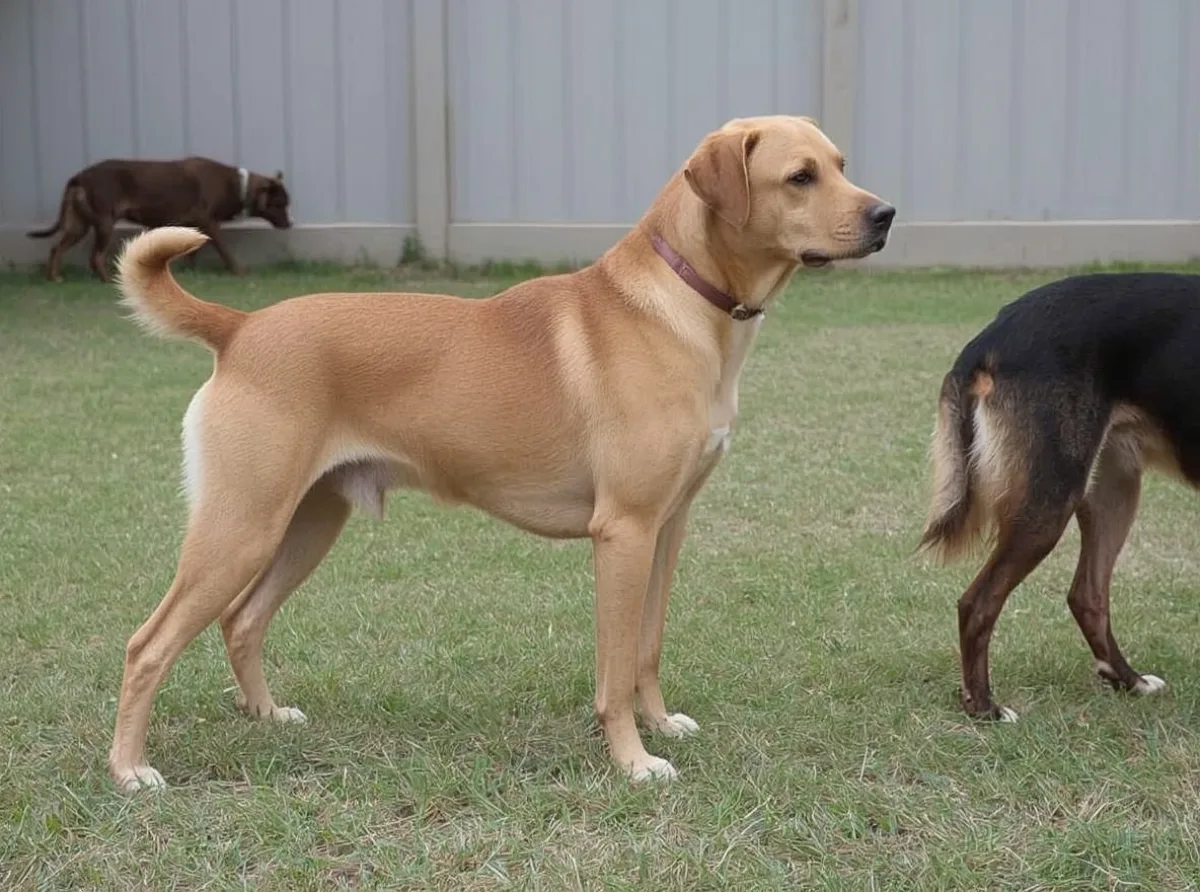
A dog standing sideways is usually not squarely facing the other dog, person, or object involved. The body may be slightly angled, with the head turned toward the target and the hips or shoulders offset. Sometimes the dog shifts weight from one side to the other. Sometimes it freezes in place with only the eyes moving.
In a friendly setting, this posture can look soft and loose. The tail may move gently. The mouth may stay relaxed. The dog may seem to be saying, “I’m here, but I’m not pushing anything.”
In a more uncertain setting, the same sideways position can look tighter. The legs may stiffen. The ears may tilt back or forward. The dog may hold its breath for a moment, then move away, circle, or step in closer only after a pause.
Body angle alone does not tell the full story. The rest of the dog’s posture, movement, and facial expression give the real meaning.
Why dogs commonly choose this posture
Dogs are social animals, but they are not always direct in how they approach one another. A sideways position can be a practical compromise. It allows the dog to stay connected while lowering the intensity of the interaction. That can matter a great deal when the other dog seems pushy, unfamiliar, excited, or simply too close.
This kind of posture is often linked to polite communication. Dogs use their bodies to keep interactions smooth, and turning slightly sideways can make the encounter feel less confrontational. It reduces the sense of head-on pressure, which many dogs prefer to avoid.
It can also be a sign of restraint. A dog may want to investigate but not rush. It may want attention but not physical contact. It may be curious and cautious at the same time. The sideways stance gives it room to manage both feelings without leaving the situation.
Common reasons behind the behavior
- Softening an approach to another dog or person
- Watching closely while staying ready to move
- Showing uncertainty without full retreat
- Maintaining space during greeting or play
- Decreasing social pressure in a close interaction
Emotional reasons dogs may stand sideways
Emotion is often at the center of this posture. A dog that feels calm may stand sideways because it is comfortable and relaxed. A dog that feels unsure may do the same because the angle helps it avoid direct conflict. The trick is learning which emotional direction the posture is pointing toward.
Relaxed sideways standing usually comes with easy movement. The dog may glance around, shift its feet, sniff the ground, or walk forward and back without tension. There is no hard stare, no stiffness, and no obvious pressure to the moment.
More guarded sideways standing tends to look different. The dog may hold still longer than usual. The head may stay turned, but the shoulders and hips may look braced. The dog may be politely close, but not truly settled. That can happen when it is deciding whether the interaction feels safe enough to continue.
When a dog stands sideways, it may be balancing curiosity with caution. The posture often reflects a middle ground rather than a single strong emotion.
Signs that often appear with a relaxed sideways stance
- Loose tail movement
- Soft eyes
- Open mouth or relaxed lips
- Easy breathing
- Flowing movement instead of freezing
Signs that often appear with a tense sideways stance
- Stiff legs or shoulders
- Closed mouth and tight lips
- Reduced blinking or fixed stare
- Tail held very still or low
- Slow, cautious movement or sudden stillness
How this behavior shows up during greetings
Greeting behavior is one of the most common places to see a sideways stance. Dogs meeting each other head-on can feel more intense than many people realize. A slight turn of the body can make the greeting less direct and more socially acceptable.
Some dogs approach, then angle their bodies before getting close enough to sniff. Others move in a curve rather than a straight line. That curve often ends in a sideways position, especially if the dog wants to gather information first. It can be a way of asking for a gentler exchange.
People sometimes misread this as indifference. In reality, it may be a very thoughtful social move. The dog is not refusing contact. It is managing the pressure of it.
When two dogs interact well, one may present a side profile as a quiet invitation. The other may mirror that angle. The exchange can look almost choreographed, but it is really just two animals trying to keep the interaction comfortable.
What it can mean during play
Play adds another layer. A sideways stance during play often appears right before a chase, a bounce, or a quick retreat. It can also show up when one dog wants to keep the game moving without becoming too intense. The posture gives the dog flexibility.
Some dogs use a side-on position as part of a play bow sequence. They may dip the front end, turn the body, and then spring away. The sideways angle can help signal that the movement is playful, not threatening. It tells the other dog, “I’m still with you.”
But not every sideways posture in play is carefree. If the dog is continually sidestepping, avoiding close contact, or turning away from rough behavior, the body may be asking for more space. Play should still look balanced. When one dog keeps using a sideways position to escape pressure, the behavior may be a quiet boundary rather than an invitation.
How environment and routine influence the posture
A dog’s surroundings can change how often this behavior appears. In a busy home with constant movement, a dog may stand sideways more often because it is tracking activity from multiple directions. In a quiet home, the same posture may show up less, except during moments of novelty or surprise.
Routine matters too. Dogs that know what to expect often move with more ease. A familiar visitor, a predictable leash walk, or a regular playmate may not trigger much sideways standing. Unpredictable situations are different. A new dog in the yard, a loud appliance, or a crowded park can make the behavior much more visible.
Stimulation also plays a role. A dog that is under-stimulated may be more sensitive to every small change. A dog that is over-stimulated may angle its body in a way that helps it cope with too much happening at once. The same stance can appear in both cases, but for different reasons.
Environmental factors that can increase the behavior
- Frequent visitors or unfamiliar dogs
- Busy walk routes with many distractions
- Competition for toys, food, or space
- Unexpected noise or movement
- High-energy households with little downtime
How owners often misread it
One common mistake is assuming that a sideways stance always means friendliness. Another is assuming it always means fear. Both readings are too simple. Dogs use body language in shades, not labels.
People may also miss the importance of context. A dog standing sideways near a food bowl is not sending the same message as a dog standing sideways while greeting a trusted friend. The setting changes the meaning. The same is true for the speed of movement, the distance involved, and the dog’s history with that situation.
Owners sometimes think the dog is being stubborn or “dramatic” when it is actually trying to manage space. A sideways body can be a way of staying engaged without escalating pressure. That is often a sign of emotional intelligence, not defiance.
If the posture appears suddenly or becomes more common, the best question is not “What is the dog doing?” but “What changed around the dog?”
What the behavior may signal about emotional state
A sideways stance often sits in the overlap between confidence and caution. A fully confident dog usually moves with more directness. A deeply worried dog may avoid contact altogether. The sideways position often belongs to the middle zone, where the dog is checking things out while still keeping options open.
That middle zone can include curiosity. A dog may not be nervous so much as careful. It may be interested in the other dog, the person, or the object, but not ready to give full attention or full trust yet. The angled body lets it gather information with less commitment.
It can also reflect self-control. Some dogs are excited but know the interaction should stay calm. Turning sideways can help reduce intensity. In that case, the behavior is part social skill and part emotional regulation.
How to tell curiosity from discomfort
| Behavior | More likely curiosity | More likely discomfort |
|---|---|---|
| Movement | Loose, shifting, approaching and retreating | Stiff, hesitant, or frozen |
| Face | Soft eyes, relaxed mouth | Tight mouth, tense stare |
| Body | Flexible posture, easy weight shifts | Braced shoulders, rigid legs |
| Follow-up behavior | Sniffing, circling, continued engagement | Backing away, avoidance, or shutdown |
How age and experience affect the behavior
Young dogs often stand sideways while they are still learning how to manage social space. Puppies can be playful, wobbly, and socially awkward all at once. They may turn their bodies as they test responses from other dogs or people.
As dogs mature, the posture may become more purposeful. An adult dog that stands sideways often has a clearer reason for doing it. It may know the difference between a safe interaction and an overwhelming one. It may use body angle as a deliberate way to stay polite.
Older dogs may do it for comfort as much as communication. Aging can bring changes in mobility, hearing, vision, or tolerance for fast social pressure. A sideways stance may help an older dog control the pace of interaction and avoid being crowded.
Different settings where it appears often
The behavior does not belong to only one type of moment. It can show up in many everyday situations, each with a slightly different meaning. Watching the context helps separate ordinary social balance from concern.
- At the door: A dog may angle its body while greeting guests so the approach feels less direct.
- On leash: Sideways standing can appear when a dog is trying to see something while staying near its handler.
- Near another dog: It may be a polite way to reduce pressure and invite sniffing or parallel movement.
- During feeding: The stance may reflect caution, protectiveness, or a wish for space.
- In a crowded park: The dog may be managing too much activity at once.
When the posture becomes more noticeable
Some dogs stand sideways only now and then. Others do it so often that it becomes part of their normal social style. A regular pattern may suggest that the dog prefers indirect interaction, particularly in environments that feel crowded or unpredictable.
Notice whether the behavior increases during certain times of day or around specific triggers. A dog may be more sideways in the evening when tired, after a long walk when overexcited, or around one particular dog that tends to invade space. Repetition tells a story.
Consistency matters more than one isolated event. A single sideways stance is usually not a concern on its own. A frequent sideways stance paired with other signs of stress, however, deserves closer attention because it may reveal a lasting discomfort with the way interactions are unfolding.
Patterns matter more than moments. A repeated body language habit often reflects the dog’s preferred way of handling social pressure.
How to read the whole picture without overthinking it
The best reading of sideways standing comes from combining several details at once. Body angle, facial tension, movement speed, tail position, and the surrounding situation all matter. A dog is rarely saying one simple thing with one posture.
It helps to compare the behavior with the dog’s usual style. Some dogs are naturally cautious and side-step often. Others are direct and only turn sideways when something feels off. The same position can mean different things depending on the dog’s baseline personality.
A calm dog may stand sideways and then continue sniffing, walking, or greeting with ease. A tense dog may hold the angle but avoid moving forward. That difference is subtle, but it is usually there.
What this behavior says about dog social life
Sideways standing is part of how dogs negotiate space. It can lower pressure, keep the peace, and allow a dog to stay engaged without forcing a direct challenge. In that sense, it is a useful social tool. It gives dogs room to be cautious without being fully closed off.
It also shows that dogs often communicate in layered ways. A posture that looks simple from a distance may contain curiosity, caution, and politeness at the same time. That complexity is normal. Dogs do not have to choose only one feeling before interacting.
For many dogs, the sideways stance is just one of several ways to say, “Let’s take this at a comfortable pace.” The meaning shifts with the moment, and that shifting is exactly what makes the behavior worth noticing in the first place.
A close look at subtle differences
Two dogs can look similar from across a room and be communicating very different things. One may stand sideways because it is relaxed and waiting for the next cue. Another may do it because it is uncomfortable but trying not to make a bigger issue out of the interaction. That is why the quiet details deserve attention.
A dog that keeps one ear relaxed, shifts weight easily, and resumes normal movement probably feels fine. A dog that braces, licks its lips repeatedly, or avoids a direct path may be saying the interaction is too much. The body often starts speaking before the situation becomes obvious to people.
Even the speed of the turn matters. A smooth, loose turn usually looks very different from a sudden sidestep. One is often part of fluid social behavior. The other may be an attempt to create distance or escape pressure.
How this behavior changes in different relationships
The sideways stance can look one way with a familiar dog and another way with a stranger. Dogs that trust each other may angle their bodies in a relaxed, almost casual manner. Dogs that do not know each other well may do the same thing, but with more tension and caution.
With people, the pattern can be equally different. A dog may stand sideways beside a trusted owner because it is comfortable and settled. Near a visitor, the same angle may mean uncertainty, watchfulness, or a desire to keep some space while still staying in the room.
That difference is one reason this behavior should never be interpreted alone. Relationships shape body language. So do past experiences. A dog that has learned people are unpredictable may be more likely to use sideways postures around new arrivals than a dog with an easy history of social contact.
When the posture is simply part of the dog’s style
Not every sideways stance carries extra meaning. Some dogs are naturally a little off-center in how they stand, especially when they are curious or relaxed. Their body language may be broad, shifting, and asymmetrical without showing stress. That can be part of their normal expression.
In those dogs, sideways positioning is more of a habit than a signal. It may happen while sniffing, watching, waiting, or listening. If the dog remains loose and responsive, there may be no concern at all. The posture is simply one of its preferred ways to exist in the moment.
Still, even a habitual posture can become meaningful if it appears in new situations or alongside new tension. A dog’s normal style can change when the environment changes. That is why long-term observation is useful. The body may be familiar, but the context is always changing.
Why the behavior matters in everyday life
For many dogs, standing sideways is a small adjustment that keeps interactions manageable. It can prevent overexcitement, reduce social pressure, and allow a dog to stay involved without feeling trapped. That is a practical skill in a world full of doors, leashes, visitors, and other dogs with different social styles.
Recognizing the posture helps people respond more accurately. Sometimes the dog needs room. Sometimes it needs a slower introduction. Sometimes it is simply comfortable and using body angle as part of normal communication. The answer is in the combination of signals, not in the angle by itself.
When the sideways stance is read with care, it becomes easier to see how dogs manage their own comfort while staying connected to the world around them. The message is often quiet, but it is rarely random.