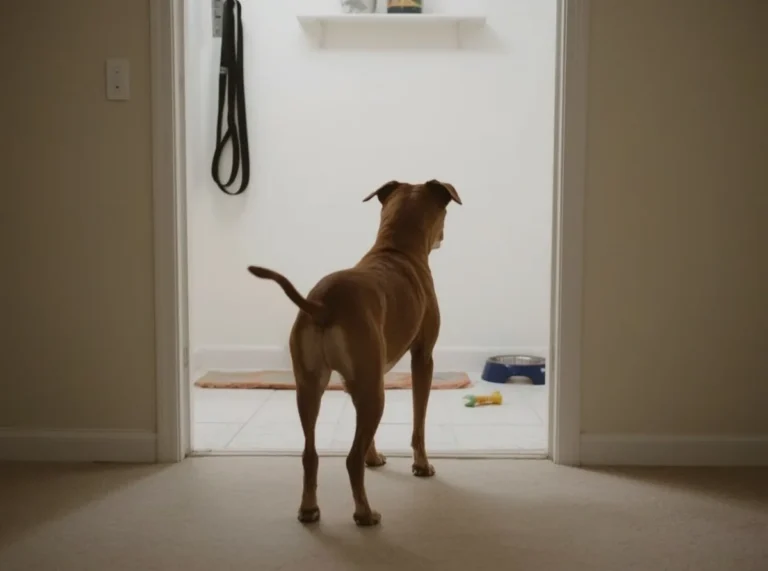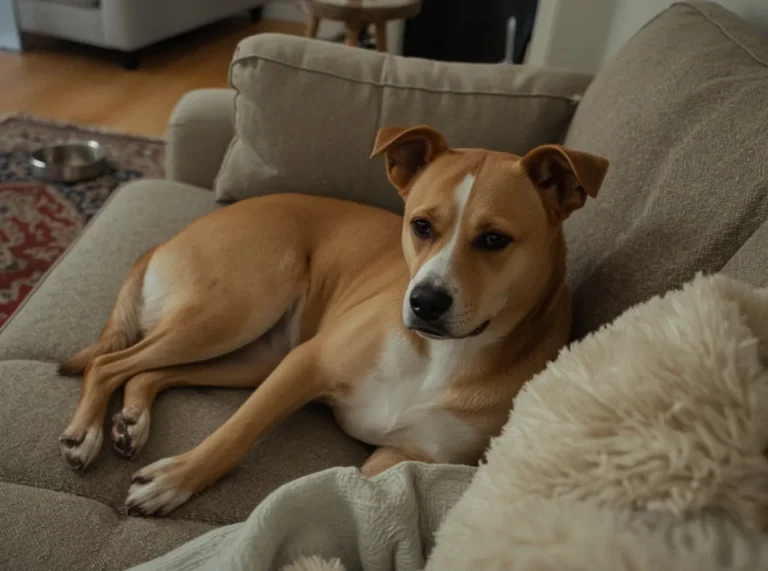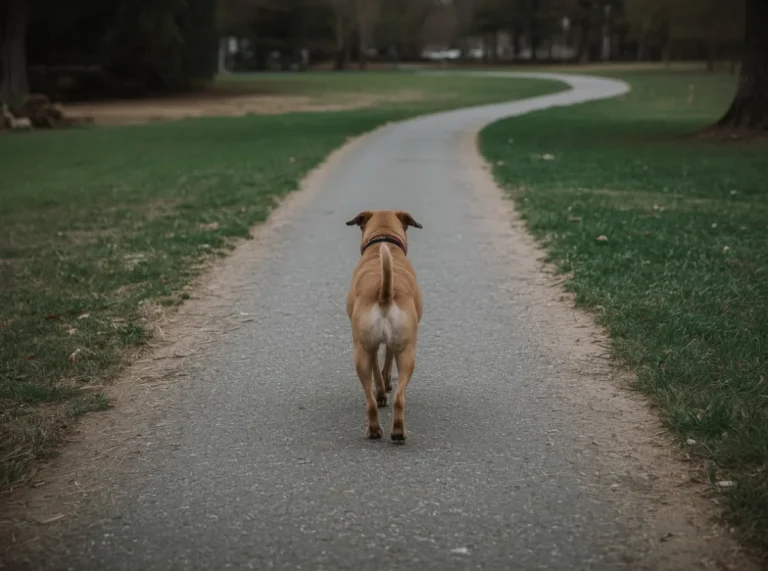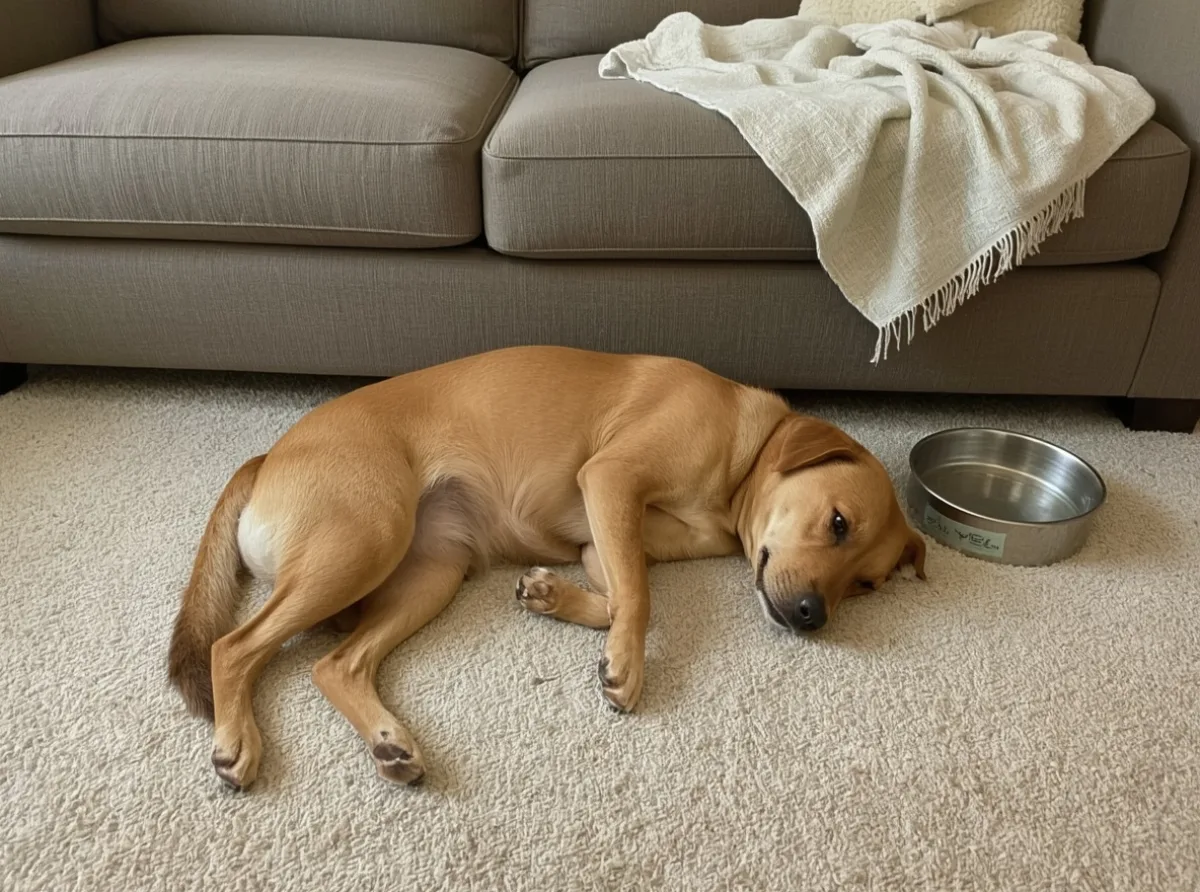
A dog that suddenly drops onto its side near a person can look relaxed, silly, or completely confusing. One moment the dog is walking normally, and the next it is leaning, flopping, or settling with one side of the body pressed to the floor close to a familiar human.
That movement often gets noticed because it happens in such a specific way. The dog is not just lying down anywhere. It is choosing a spot near someone, and that choice usually says something about comfort, trust, curiosity, or a need for closeness.
In everyday life, this behavior can show up on the couch, beside a chair, next to the bed, or right at someone’s feet. Sometimes it looks peaceful. Sometimes it seems like an invitation. Other times it appears after excitement, uncertainty, or a long day of activity.
What the Side-Rolling Behavior Looks Like in Daily Life
Dogs do not all roll onto their side for the same reason, and they do not do it in the same way. Some dogs lower themselves slowly and settle with loose muscles, while others flop down quickly as if they have decided to stop moving right there. The body language around the movement matters just as much as the movement itself.
A relaxed dog may approach a person, turn in a small circle, and then let one side of the body fall to the ground. The legs may stretch out. The tail may rest loosely. Breathing stays even. In that version, the dog often seems comfortable and unguarded.
Another dog may roll partly onto a side while still watching the room. The head stays up. The eyes track movement. The body is close to the person, but the posture is less soft. That can suggest curiosity, hesitation, or a mix of comfort and alertness.
Some dogs do it after petting, during quiet downtime, or when someone sits down nearby. Others do it at the door, during greetings, or when the household gets busy. The same motion can appear in very different emotional settings, which is why the full picture matters.
Why Dogs Often Choose to Lie on Their Side Near People
One common reason is simple comfort. A dog that feels safe around a person may use that person’s presence as a cue to relax fully. Turning onto a side exposes part of the body, so the choice is often linked to a sense of security rather than random movement.
Another reason is closeness. Many dogs like to stay physically near their favorite people, even if they do not want active attention. Rolling onto a side can be a quiet form of companionship. The dog is nearby, settled, and content without needing to do much else.
It can also be a way of asking for contact. Some dogs roll to the side when they hope for belly rubs, chest scratches, or a hand resting on them. They may glance upward, wiggle slightly, or stay in place after the person reaches down. That does not always mean they want the same type of touch every time, but it often reflects interest in interaction.
In some cases, side-rolling is linked to submission or deference. A dog may show a softer, lower posture around someone it trusts, especially if it wants to avoid conflict or is unsure what will happen next. This does not always mean fear. It can be a polite, socially aware posture that says, “I am not challenging you.”
A dog lying on its side near a person is often communicating one of three things: comfort, social connection, or a desire to reduce tension in the moment.
Emotional Reasons That Can Be Behind the Behavior
Dogs use body position to manage how they feel. Side-lying can help a dog settle when excitement is fading, when the environment finally quiets down, or when the dog wants to stay close without being active. It is a resting position, but it can also be a social signal.
Trust plays a large role. A dog that has learned that a person is predictable and safe may allow its body to soften more completely in that person’s presence. The side is one of the less protected parts of the body, so choosing to expose it often means the dog is not worried about immediate danger.
Some dogs roll onto their side because they are overwhelmed and trying to downshift. This may happen after visitors arrive, after play gets too intense, or after a noisy episode. The side position can create a pause in the dog’s emotional state. It slows the interaction and gives the dog a way to settle.
Other dogs do it because they are feeling affectionate in their own way. Not every dog wants to jump, lick, or lean hard against a person. Some simply prefer to be close enough to share space while keeping their own stillness. That quiet proximity can be a genuine sign of attachment.
Subtle Body Signals That Help Explain the Meaning
The same side-lying position can mean very different things depending on the rest of the body. A loose mouth, soft eyes, relaxed ears, and steady breathing usually point toward calmness. The dog may shift only slightly when touched and remain in place without tension.
If the muscles are tight, the eyes are wide, or the head stays angled toward a doorway or sound, the dog may not be fully relaxed. In that case, the side position might be more about caution than comfort. The dog may be resting, but it is still monitoring the room.
Tail position is also useful. A neutral or soft wag can suggest ease. A tucked tail or a tail held very still can suggest uneasiness. The rest of the body should be read alongside the tail, not instead of it.
Look at how the dog responds when a person moves closer. A comfortable dog will often remain soft, stretch more, or even inch closer. A stressed dog might freeze, lip lick, turn the head away, or get up quickly. Those reactions often reveal more than the side-lying itself.
Helpful clues to notice
- Loose, even breathing
- Soft eyes or slow blinking
- Muscles that look relaxed rather than braced
- Tail resting naturally
- Willingness to stay in place when someone approaches
How People Often Misread the Behavior
Many owners assume that a dog lying on its side near them is always asking for belly rubs. Sometimes that is true, but not always. A dog may simply want proximity, not direct touching. Another dog may want touch but only in a specific spot or for a short time.
Some people also mistake side-lying for complete submission. That can happen, but not every low posture means the dog is nervous or yielding. Many confident dogs lie on their side because they are fully relaxed and see no reason to stay upright. The difference comes from the surrounding signals.
It is also easy to assume that the dog is tired and nothing more. Fatigue can be part of it, especially after exercise, but dogs often choose where to rest based on social comfort. If the dog follows a person from room to room and then rolls onto its side nearby, the social piece is probably important.
Another common misunderstanding is that the dog is inviting constant handling. A dog may enjoy being near someone while still wanting control over touch. If the dog shifts away, tenses, or gets up after a few seconds of contact, the message is worth respecting.
When the Behavior Appears Most Often
Side-rolling near people tends to show up during predictable moments in the day. One common time is after activity. A dog may play, walk, or explore, then come back and collapse onto a side near a trusted person as if the body is finally ready to shut down.
It also appears during quiet household routines. Dogs often watch people while they cook, read, work, or watch television. When the environment calms, the dog may choose that moment to settle nearby. The human presence becomes part of the rest routine.
Greeting periods can bring out the behavior too. Some dogs run up, circle once, and then roll partly onto the side near the person they are excited to see. That can happen when the dog is happy but not sure how to manage all that energy.
In some households, the behavior becomes more noticeable at bedtime or early morning. The dog may be seeking warmth, reassurance, or a familiar place near the person. The position is often less about dramatic communication and more about the dog’s preference for shared space.
How Environment and Routine Influence the Pattern
A dog living in a calm home may side-roll more often because there is more opportunity to relax. A predictable routine can make the body feel safer, and safety makes soft postures easier. Dogs do not need perfect stillness, but they do tend to rest more openly when the day feels manageable.
Busy households can create a different pattern. Some dogs roll onto their side only after the noise drops, as if they have been waiting for the right moment to decompress. In those homes, the behavior may be a release of tension rather than a sign of immediate drowsiness.
Stimulation matters as well. A dog that does not get enough mental or physical activity may show restless behavior first, then suddenly flop down beside a person once the environment gives it something steady to focus on. The person becomes a safe anchor after too much internal or external activity.
Temperature, furniture, and floor type can matter too. A dog may choose a cool floor near a person on a warm day or a soft rug beside the sofa in the evening. The side position is not only emotional; it is practical. Dogs are constantly balancing comfort, temperature, and social distance.
When Side-Rolling May Be Playful, and When It May Be Defensive
Playful side-rolling tends to look loose and easy. The dog may bounce, roll, and then look back expectantly. The face is open. The movement is quick but not stiff. In that state, the dog may be inviting more interaction or trying to keep the play going in a low-key way.
Defensive side-rolling is different. The dog may expose part of the body while keeping the head turned away or the shoulders tight. There may be a pause before the movement, or the dog may stay frozen once on its side. That kind of posture can happen when the dog wants space but is not ready to move away.
There are also mixed signals. A dog can approach a person, lie on its side, and still seem uncertain. It may lean in and pull back at the same time. That combination often shows a dog trying to stay connected while keeping emotional control.
Mixed body language is common. A dog can be near a person, relaxed in one part of the body, and cautious in another.
Side-rolling can mean different things depending on the whole picture
| Body language | Possible meaning |
|---|---|
| Loose muscles, soft eyes, relaxed breathing | Comfort, trust, calm closeness |
| Side-lying with watching or scanning | Relaxed but still alert |
| Tension, freezing, or avoidance after rolling | Unease, caution, or stress |
| Wiggly movement, expectant look, repeated return | Playful invitation or affection |
What It May Say About the Dog’s Relationship With a Person
Dogs often reserve their softest body language for people they know well. Rolling onto the side near someone can reflect a relationship that feels stable and familiar. The dog may not be asking for anything dramatic. It may simply be saying that the person’s presence is part of what makes rest possible.
Some dogs develop this habit with one family member more than others. That does not automatically mean they love one person and ignore the rest. It can mean that one person’s routine, tone, or movement style is easier for the dog to settle around.
Dogs are highly sensitive to human pacing. A person who moves calmly, speaks softly, and respects space often makes it easier for a dog to melt into a side-lying position nearby. The dog may learn over time that this person is a good place to rest and watch the world from a safe angle.
In homes where a dog has learned that closeness leads to pressure, the behavior may look different. The dog may lie near a person but keep one side slightly tense or get up quickly if touched too much. That is still communication. It just carries more caution.
When the Behavior Becomes More Noticeable Over Time
Some dogs do this more often as they age. As they slow down physically, they may choose side-lying more because it is easier on the body. Older dogs may also become more selective about where they rest and whom they rest near.
Younger dogs may show the behavior in short bursts. They roll, settle, and move again. Puppies often test different positions and may use side-lying as a brief pause between bursts of energy. Their version of the behavior can look clumsy, playful, or rapidly changing.
If the side-rolling becomes new or more frequent, the context matters. A dog that suddenly wants to lie down on one side near people more often may simply be seeking comfort, but it can also reflect fatigue, soreness, or a change in routine. Patterns are more informative than one-off moments.
Long-term consistency can tell a useful story. If the dog has always done this after dinner, after walks, or during evening quiet, the behavior is likely part of the dog’s normal rhythm. If it appears only in stressful weeks or after disruptions in the home, the environment may be driving it.
When to Pay Closer Attention
Side-rolling near people is usually harmless and normal, especially when the dog looks loose and content. Still, there are times when the behavior deserves more attention. If the dog seems stiff, avoids being touched, or rolls onto the side only after startling events, the posture may be tied to discomfort.
Repeated rolling accompanied by panting, whining, trembling, or sudden withdrawal can point to stress rather than rest. A dog that cannot seem to settle may be trying to manage something uncomfortable in the environment or in the body.
Physical discomfort can also change posture. If the dog seems reluctant to lie on one side, shifts often, or rises with stiffness, it is worth noting the pattern. Dogs do not always show pain in obvious ways, and a side-lying preference can change when the body feels off.
Changes in behavior near people can also reflect emotional shifts. A dog that once flopped down easily but now stays more guarded may be responding to noise, household tension, schedule changes, or reduced confidence. Small posture changes sometimes reveal the earliest signs that a dog’s comfort level has changed.
What the Behavior Usually Means in Everyday Terms
Most of the time, a dog rolling onto its side near a person is not trying to be mysterious. It is making a practical choice based on comfort, social connection, and the feeling of safety in the moment. The person’s presence may simply make it easier for the dog to rest, watch, or decompress.
The best clue is rarely the side-lying itself. It is the combination of body softness, facial expression, movement, and timing. A dog that chooses to lie close, stays loose, and settles deeper is usually showing trust. A dog that lies close but remains guarded is saying something more complicated.
That small shift from standing to side-lying can reveal a lot about how a dog experiences the people around it. Sometimes it is an invitation. Sometimes it is a nap in progress. Sometimes it is a quiet request for space with company. The position is simple, but the message behind it can vary in ways that are easy to miss unless the whole body is read together.