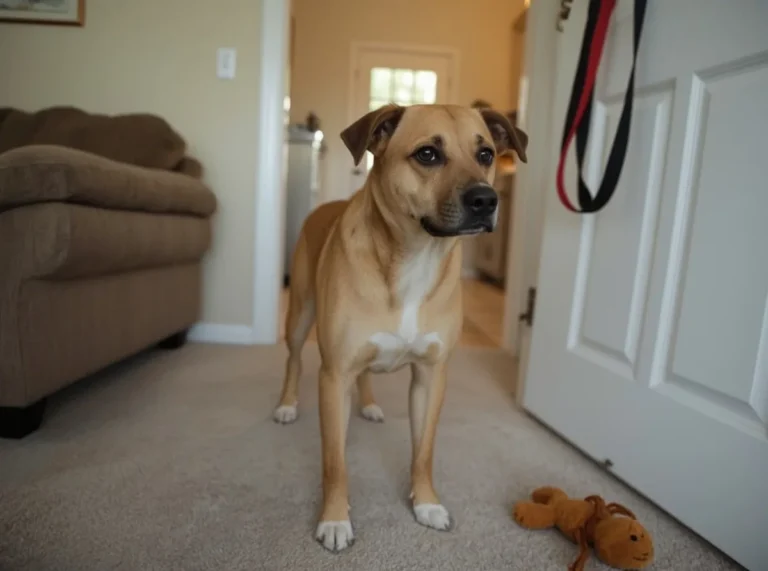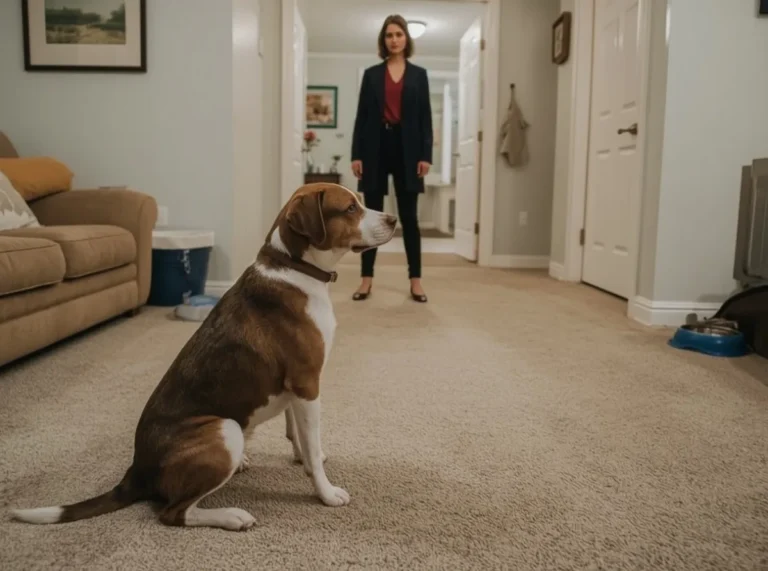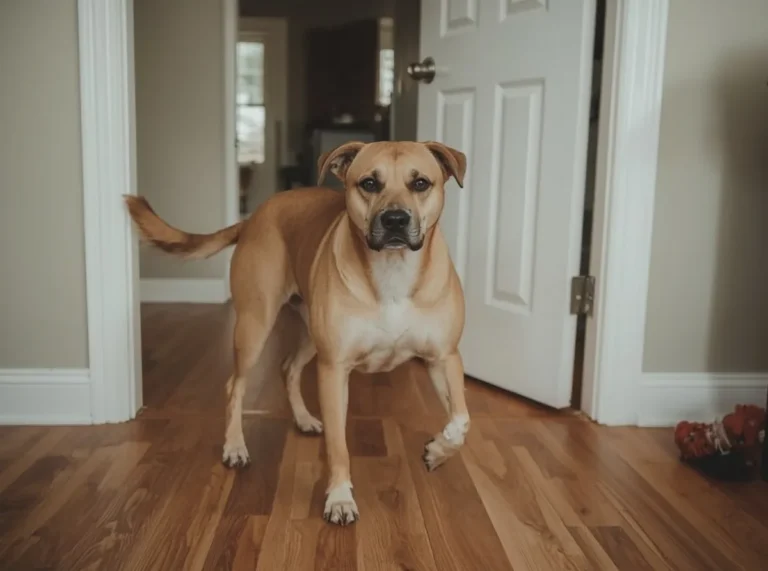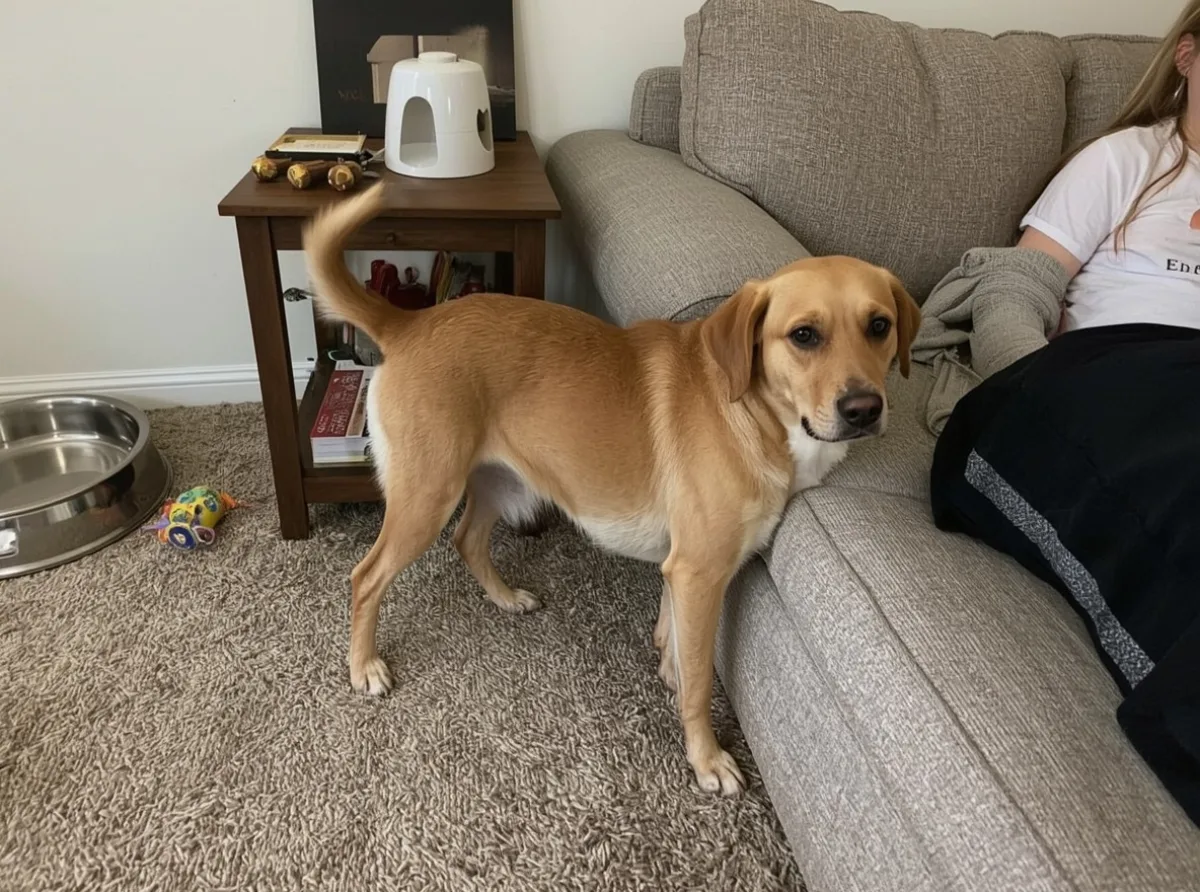
A dog that presses a shoulder into your leg, settles against your side, or leans hard into your hand is often saying more than “pet me.” The behavior can be gentle, insistent, affectionate, or even a little awkward if the dog is large and unexpectedly heavy. It shows up in quiet living rooms, on crowded sidewalks, at the vet’s office, and anywhere a dog feels the need to connect or steady itself.
Some dogs lean for comfort. Others lean because they want attention. A few lean when they are unsure, excited, tired, or trying to make sense of a situation that feels too intense. The same body movement can mean different things depending on the moment, the dog’s personality, and what else the body is doing at the same time.
That is why this behavior is worth looking at closely. It is rarely random. Dogs use contact to communicate, and leaning is one of the clearest ways they do it in everyday life.
What leaning into physical contact looks like in daily life
Leaning is not always dramatic. Sometimes it is just a small shift of weight toward a person, another dog, or even a piece of furniture. Other times it is a full-body press, with the dog putting most of its weight into the contact and staying there for a few seconds or longer.
In a home setting, a dog may lean into a person while being petted, while standing beside the couch, or while waiting near the kitchen. On walks, the same dog may angle its body against a leg when passing a busy intersection or a barking neighbor’s yard. Some dogs do it at greeting time, especially if they are excited but want closeness more than movement.
The key detail is that leaning usually involves a deliberate choice to reduce distance. The dog is not just brushing by. It is seeking a point of contact and often lingering there. That choice can mean comfort, curiosity, confidence, or uncertainty, depending on the rest of the picture.
Common situations where leaning appears
- When a dog wants affection and is inviting more touch
- During a stressful or unfamiliar event, such as loud noises or visitors
- When a dog feels excited and wants to stay physically close
- While resting beside a trusted person or animal
- In moments of uncertainty, especially in new places
Why dogs commonly lean into contact
One of the most common reasons is simple social comfort. Dogs are highly attuned to contact, and many of them find physical closeness reassuring. A lean can function like a quiet request for connection, especially when the dog has learned that being near a person usually leads to calm attention, petting, or safety.
Some dogs lean because they are physically seeking pressure. That pressure can feel grounding. It may help them settle their body, especially if they are overstimulated or unsure how to respond to a moment. A dog that leans into a trusted person may be using that person as an emotional anchor.
In other cases, leaning is a learned behavior that has been reinforced over time. If every lean gets a reassuring touch, a kind word, or a scratch behind the ears, the dog may repeat it because it works. That does not make the behavior manipulative in a human sense. It simply means the dog has found a useful social strategy.
Leaning often reflects a dog’s need for closeness, reassurance, or interaction, but the meaning changes with context. A relaxed lean and a tense lean are not the same behavior.
Emotional and internal reasons behind the behavior
Dogs do not lean for only one emotional reason. The same motion can come from attachment, uncertainty, excitement, or fatigue. To understand it well, it helps to look at the dog’s overall state rather than the lean alone.
Attachment and trust
Many dogs lean into the people they trust most. This is often seen during quiet moments at home, after a greeting, or when the dog chooses to rest nearby. The lean may be soft, slow, and matched by relaxed muscles. Ears may rest in a neutral position, the mouth may be loose, and the dog may remain still for a while.
In this case, the leaning is part of social bonding. The dog is saying, in its own language, that contact with this person feels good. It does not always ask for more. Sometimes the physical closeness itself is enough.
Reassurance and uncertainty
Other leans look different. A dog may press into a leg during a thunderstorm, near a strange dog, or when people are moving unpredictably around it. The body may be slightly tense, and the dog may keep glancing around. The lean in this situation is not only about affection. It is a way to stabilize.
Some dogs seek contact when they are unsure what will happen next. They may not be frightened enough to flee, but they do not feel fully settled either. Leaning gives them a fixed point in a changing moment.
Excitement and social enthusiasm
Leaning can also appear when a dog is happy, energized, or eager to participate. A greeting at the door, a leash being clipped on, or a familiar routine about to start can all trigger contact-seeking behavior. In these moments, the dog may lean while wagging, shifting its feet, or looking up expectantly.
This kind of leaning often feels lighter and quicker than stress-related leaning. The dog may come in, make contact, then move away and return again. It is part of an excited social loop.
Fatigue and a desire to settle
Tired dogs sometimes lean because they are done processing the world. After play, exercise, travel, or a long day of noise and movement, leaning into a person or object can be a way to rest without fully disengaging. The dog is still choosing closeness, but the tone is calmer and slower.
Many owners notice this in the evening. The dog comes over, rests half its body against a couch, a person’s leg, or another calm dog, then drifts off. That kind of leaning often follows a day with plenty of stimulation.
What the body language around the lean can tell you
Looking at the lean alone can lead to the wrong idea. The rest of the body usually gives the better clue. A relaxed dog and a worried dog can both lean, but they do not carry themselves the same way.
| Signal | More likely meaning |
|---|---|
| Loose muscles, soft eyes, slow breathing | Comfort, trust, calm affection |
| Tense neck, fixed gaze, scanning surroundings | Uncertainty, caution, need for reassurance |
| Wiggly body, quick movement, playful face | Excitement, greeting, social enthusiasm |
| Heavy pressure, stillness, seeking repeated contact | Self-soothing, support, grounding |
Tail movement is useful, but it should not be read in isolation. A wagging tail can show pleasure, arousal, or tension depending on speed, height, and the dog’s posture. A lean with a high, stiff tail looks very different from a lean with a loose, low tail.
Eye contact matters too. A soft gaze often suggests comfort. A hard stare, on the other hand, may signal alertness or discomfort. When the dog leans in but keeps checking the environment, it may be looking for reassurance rather than simply enjoying closeness.
Body language works as a group. Leaning, ear position, tail carriage, breathing, and movement all help show whether a dog is relaxed, excited, or uneasy.
How environment and routine influence leaning
A dog’s surroundings can change how often it leans and how strongly it does so. Quiet homes, predictable routines, and familiar people usually encourage calm leaning. Busy households, constant visitors, unpredictable schedules, and noisy streets can make the behavior more frequent or more intense.
Dogs that live with a lot of background activity may use leaning as a way to steady themselves. If the room is full of movement, voices, or sudden sounds, contact with a trusted person can feel like the most stable thing nearby. The more overwhelming the environment, the more valuable that steady point may become.
Routine also matters. Dogs often lean more at predictable transition times, such as before meals, before walks, after a car ride, or when a family member returns home. These are moments when the dog expects something to happen. Leaning can be part of that anticipation.
Situations that can increase leaning
- Loud events, storms, fireworks, or construction noise
- New people, new animals, or unfamiliar spaces
- Changes in the daily routine
- Long periods of boredom or under-stimulation
- Very exciting moments, such as visitors arriving or leashes appearing
Some dogs lean more when they have not had enough physical or mental activity. That does not mean they are always seeking exercise. Sometimes they are seeking a sense of engagement. A dog with extra energy or limited stimulation may use contact to direct attention toward itself.
On the other hand, an over-tired or over-stimulated dog may lean because it needs help settling down. The behavior can look similar from the outside, but the internal reason is different. One dog wants more connection because it is under-engaged. Another wants a way to come down from too much input.
Different forms of leaning and what they may signal
Not all leaning is the same. The direction, pressure, timing, and frequency can change the meaning. A side lean during petting is not identical to a forward press during a stressful encounter.
Calm, affectionate leaning
This is the version most people picture first. The dog approaches, rests against a leg or arm, and remains loose. It may sigh, close its eyes halfway, or settle into the contact without further demands. The energy is quiet and steady.
In many households, this kind of leaning shows up during evenings, after walks, or while family members are sitting still. The dog wants proximity, not necessarily action.
Attention-seeking leaning
Some dogs learn that leaning gets a response. They may nudge with their shoulder, press harder when ignored, or keep returning to the same person until petting starts. This is especially common in dogs that are social, confident, and aware of how humans react.
The behavior is not necessarily a problem. It becomes more relevant when it starts interrupting normal routines or when the dog cannot settle without constant contact. In those cases, the lean may be part affection and part habit.
Stress-related leaning
A dog under stress may lean with more force and less softness. The body can feel stiff, the movements can be slower, and the dog may remain glued to one spot. In some situations, the dog seems to be using contact as protection from the environment.
This is especially noticeable when the lean appears suddenly in a place that usually does not require it. A dog that normally walks independently but suddenly presses into a person during a thunderstorm or vet visit is likely looking for support, not simply a petting session.
Defensive or conflicted leaning
Sometimes a dog wants closeness and space at the same time. It may lean in, then pull away, then lean again. This can happen around strangers, other dogs, or unfamiliar settings. The dog is not fully comfortable, but it is not ready to retreat either.
These mixed signals often show up in dogs that are sensitive or easily overwhelmed. The contact is helpful, but the situation still feels complicated. The lean becomes part of a wider attempt to cope.
How owners often interpret the behavior versus what it may actually mean
It is easy to read leaning as pure affection, and often it is. But dogs do not only lean when they are feeling loving. They may lean when they need reassurance, when they are unsure, or when they have learned that leaning produces a useful response from people.
A dog leaning during a petting session may be saying “please keep going,” but a dog leaning during a storm may be saying “I need something steady.” Both are real, but they are not identical. The human response can be similar, yet the underlying need is different.
Owners sometimes assume a lean means confidence. That is not always true. Some of the most contact-seeking dogs are also the ones that need the most support in certain settings. A dog can be socially bold and emotionally sensitive at the same time.
Others assume leaning is clinginess or bad manners. In reality, many dogs are simply using the tools available to them. Physical contact is one of the clearest tools dogs have. They use it to communicate with other dogs, with people, and with the environment around them.
When a dog leans, the question is not just “Does it want contact?” It is also “What kind of contact, and why now?”
How dog-to-human interaction shapes the habit
Dogs quickly learn which people welcome contact and which ones respond less often. A dog that leans into a person who pets it calmly and speaks softly may repeat the behavior with that person more than with others. Over time, this becomes part of the relationship.
In some homes, leaning is encouraged simply because people enjoy it. In others, the behavior develops because the dog has found contact to be a reliable way to ask for comfort. Both paths can lead to the same physical pattern, but the emotional context matters.
Some dogs prefer leaning against a person’s side, while others choose a knee, a foot, or even the back of a leg. These choices may reflect trust, habit, or the dog’s own size and balance. Bigger dogs often lean more obviously because their weight makes the contact impossible to miss. Smaller dogs can lean just as deliberately, but in a subtler way.
Dogs also lean against other dogs. In multi-dog homes, this may be a sign of social comfort, play invitation, or shared resting behavior. If the interaction is relaxed and reciprocal, the lean often becomes part of a peaceful coexistence. If the receiving dog stiffens or walks away, the meaning changes quickly.
When leaning becomes more noticeable over time
Many dogs lean more as they mature and develop stronger attachment patterns. Puppies may tumble into contact in a clumsy, playful way, while adult dogs often make the choice more deliberately. Mature dogs tend to know which people or settings help them feel settled.
Some dogs become more contact-seeking as they age. Slower movement, reduced confidence, changes in hearing or vision, and general sensitivity can make a familiar body nearby feel especially important. That does not always mean anxiety. Sometimes it reflects the comfort of routine and the value of proximity.
At the same time, a sudden change in leaning can matter. A dog that starts leaning more than usual may be reacting to a change in the household, a new stressor, discomfort, or a shift in how it feels physically. A dog that leans much less than usual may also be telling a story. The absence of a familiar behavior can be meaningful too.
Patterns worth noticing over time
- Does the dog lean more in one room than another?
- Does the behavior increase around certain people?
- Does it appear during noise, visitors, or routine changes?
- Does the lean look relaxed or tense?
- Has the behavior changed suddenly, or only gradually?
Consistency matters because it helps separate a habit from a response. A dog that leans every evening before settling down may simply enjoy closeness. A dog that only leans during storms, car rides, or veterinary visits may be showing a much more situational need.
What leaning can reveal about the dog’s broader temperament
Leaning often fits into a larger pattern of how a dog handles the world. Dogs that are socially oriented may seek contact easily. Sensitive dogs may use leaning to regulate themselves. Independent dogs may lean only when they feel especially safe or especially unsure.
The behavior can also reflect a dog’s confidence in the relationship with its person. A dog that leans into touch without hesitation usually sees that person as dependable. That does not require a dramatic emotional bond. It often looks very ordinary: a dog walks over, pauses, and rests its body in place.
Still, the most useful reading is the simplest one. Leaning is contact with intention. The intention can be comfort, connection, pressure, or protection. Once the surrounding context is noticed, the behavior becomes easier to understand.
In everyday life, dogs lean because bodies matter to them. Contact is part of how they cope, communicate, and stay close to the things that feel important. A lean can be soft and affectionate, practical and grounding, or a little uncertain. The dog’s posture, the timing, and the setting usually tell the rest of the story.
When the lean appears in familiar moments, it often blends into the rhythm of a household. A dog rests against a leg while a meal is being prepared. Another settles beside a chair after a walk. Another presses closer when the world gets loud. Each one is choosing contact for a reason that makes sense in that moment.
The more carefully the surrounding details are noticed, the less mysterious the behavior becomes. Leaning is not just a cute habit. It is a small, practical form of communication that dogs use often, and usually with good reason.