A dog that keeps watching the same person is often doing more than just looking around the room. The behavior can be quiet and steady, almost easy to miss at first, yet it usually has a reason behind it. Sometimes that reason is simple affection. Other times it reflects curiosity, habit, unease, or a strong sense of attention toward one individual.
People often notice this at home, during visits, on walks, or in a busy household where one person seems to hold the dog’s focus more than anyone else. The stare may be soft and relaxed. It may also feel intense, especially if the dog follows every movement with its eyes and keeps returning to that same person again and again.
Dogs do not watch in the same way people do. Their gaze can be social, practical, or emotional. A dog may be checking for cues, waiting for a routine event, or reading a person’s mood and body language. The behavior matters most when you look at the whole picture instead of the stare by itself.
What the behavior can look like in everyday life
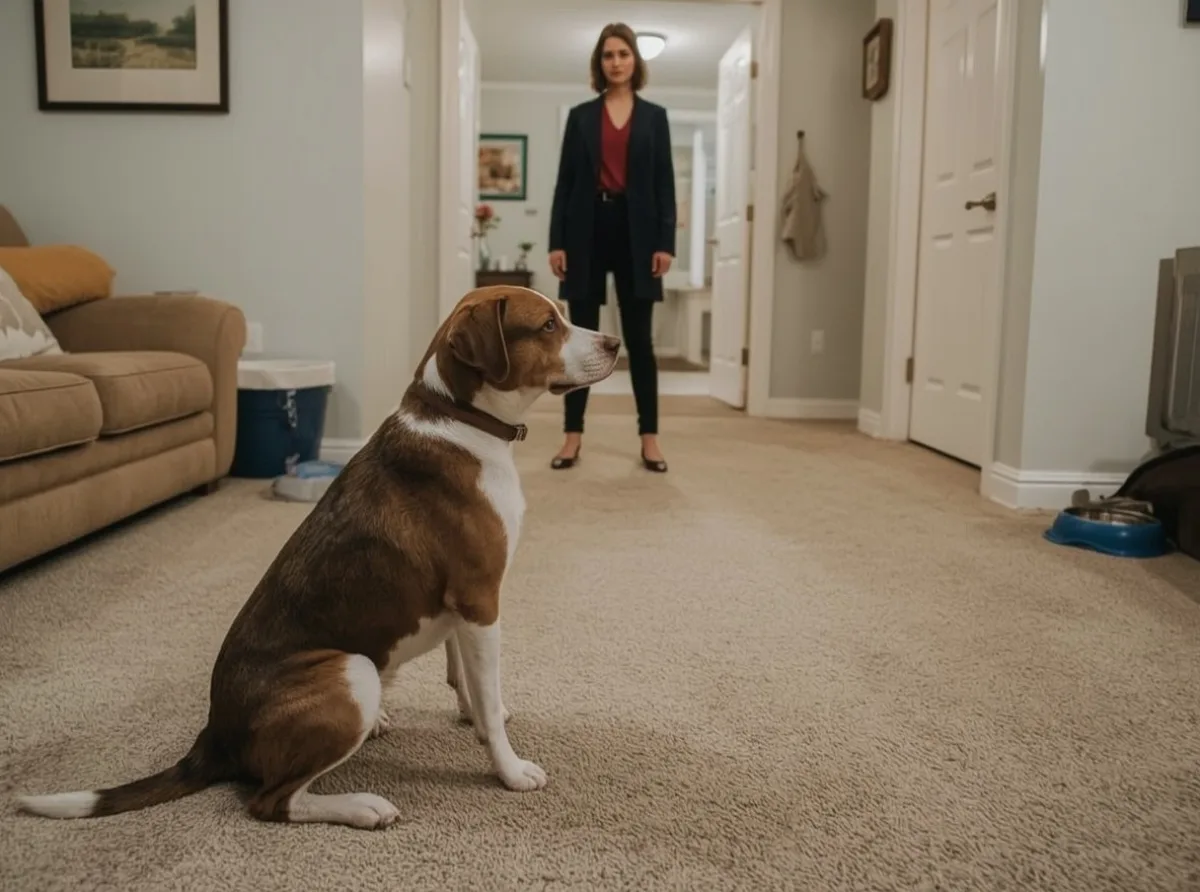
Watching the same person does not always mean the dog is staring without blinking from across the room. It can show up in smaller, ordinary ways. The dog may keep turning its head toward one person during dinner, resting nearby with one eye open, or tracking that person every time they move from the kitchen to the hallway.
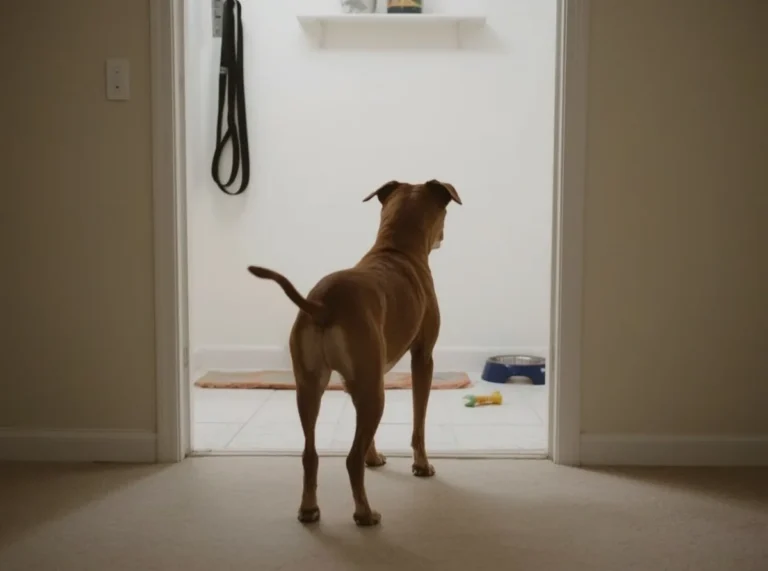
Some dogs watch a particular person because that person is the source of food, play, walks, or comfort. Others do it even when nothing obvious is happening. They may settle near the person’s chair, sit in a doorway to keep them in sight, or quietly reposition themselves whenever that person leaves the room.
The behavior can be constant or intermittent. A dog may look only once in a while, then return to watching after a noise, a movement, or a pause in activity. In a calm home, the pattern may seem subtle. In a busy one, it can stand out because the dog keeps choosing the same person again and again out of everyone present.
Why a dog may focus on one person so strongly
One of the most common reasons is attachment. Dogs often build stronger bonds with one person in the household, especially the one who handles feeding, walking, or daily routines. That person becomes important in the dog’s mind, and watching them can feel natural and reassuring.
Another reason is anticipation. Dogs are excellent at learning patterns, and they notice who opens the door, who picks up the leash, who reaches for treats, and who usually sits down to relax at the same time each evening. A dog may not be “obsessed” so much as highly tuned in to the person who seems to make things happen.
Some dogs are simply more socially observant than others. They track facial expressions, posture, and movement with remarkable care. If a dog watches one person more than the rest of the household, it may reflect a preference for that person’s rhythm, tone, or general way of moving through the day.
The same stare can mean very different things depending on the dog’s body language, the room, and what usually happens before and after the behavior.
Common emotional reasons behind the watching
- Attachment and comfort
- Expectation of food, play, or a walk
- Curiosity about a person’s movements
- Uncertainty in a new or changing situation
- Protective or vigilant behavior
- A need for reassurance in a noisy or active home
A dog may also watch one person closely because that person feels different from the others. Dogs notice tone of voice, energy level, posture, and even subtle routines that humans barely think about. If one person tends to move unpredictably, speak loudly, or carry unusual items, the dog may keep checking them for updates.
In some cases, the behavior is tied to the dog’s history. A rescue dog may focus on the one person who seems calm and predictable. A puppy may lock onto the person who has been the most consistent during the early weeks. An older dog may watch the person whose habits fit best with the dog’s own pace and comfort level.
How body language changes the meaning
A dog’s stare by itself does not tell the full story. Relaxed eyes, loose muscles, and a soft mouth often point to calm interest. The dog may simply be attentive, waiting, or feeling socially connected. That kind of watching is usually quiet and unforced.
When the body becomes tense, the meaning shifts. A stiff posture, closed mouth, still tail, raised hackles, or fixed unblinking eye contact can suggest stress, alertness, or guard-like behavior. The dog may not be comfortable, even if it looks calm from a distance.
Movement matters too. A dog that watches one person while easily shifting position, blinking, and responding to other sounds is different from a dog that freezes and stays locked in on one target. The second version deserves more attention because it can signal discomfort or strong arousal rather than simple interest.
Signals that often accompany a relaxed watch
- Loose, balanced posture
- Soft eyes with normal blinking
- Tail at a natural height
- Quiet breathing
- Easy ability to look away
Signals that may suggest tension
- Rigid body
- Fixed stare without blinking
- Tail held very still or very high
- Whale eye or visible eye whites
- Growling, lip tightening, or freezing
These signs do not automatically mean danger, but they do mean the dog’s attention is tied to a stronger internal state. Context becomes essential. A dog watching the person holding a bowl is not the same as a dog watching one person with a stiff body and no sign of relaxation.
How routine and environment shape the habit
Dogs thrive on patterns. A predictable home can make the behavior more obvious because the dog learns exactly who does what. If one person feeds the dog every morning and another person always takes the evening walk, the dog may split its attention based on who controls the next important event.
In a quiet home, the watching may look stronger because there are fewer distractions. The dog has time to settle its gaze and keep it there. In a busy household, the same behavior may happen in fragments, with the dog checking in repeatedly whenever that one person enters the room or changes position.
Noise and activity can also play a role. A dog that feels overwhelmed may watch one steady, familiar person as an anchor. That person might represent predictability in a household full of movement. The stare can function like a check-in: “Are things still okay?”
On the other hand, a highly understimulated dog may watch one person because there is little else to do. If the dog does not get enough physical exercise, mental activity, or social variety, attention can become overly narrow. The person becomes the most interesting thing in the room simply because the rest of the environment feels flat.
When the behavior appears more often in certain rooms, times of day, or household routines, the setting is part of the message.
What the dog may be communicating
Sometimes the dog is asking for something direct. It may want food, access to the yard, attention, a leash, or permission to join the person in another part of the house. Dogs are skilled at linking a person to an outcome, so the stare can become a kind of silent request.
Other times the dog is checking for emotional cues. Dogs pay attention to tension in a household, changes in tone, and unusual behavior. If one person is upset, recovering from illness, working irregular hours, or behaving differently than usual, the dog may watch them more closely. That focus can come from concern, uncertainty, or a desire to understand what is happening.
Some dogs simply like to be near the person who feels most familiar. The gaze is then part of a broader pattern of proximity. The dog follows that person from room to room, rests at their feet, and remains alert to any change in their movements. It is less a single behavior than a style of attachment.
Possible reasons the dog keeps returning to one person
- That person is tied to the dog’s daily routine
- The dog feels safest around that person
- The person’s movements predict important events
- The dog is looking for reassurance
- The dog is responding to a change in the person’s behavior
How people often misread the behavior
It is easy to assume the dog is being clingy, suspicious, or unusually intense. Those labels may miss the real reason. A dog may watch one person because that person is simply the most meaningful part of the dog’s day. Another dog may do the same thing because it is confused by changes at home and wants to stay oriented.
People sometimes interpret the stare as dominance, but that idea often oversimplifies what is happening. Most of the time, the behavior has more to do with social attention, routine, or emotional dependence than any power struggle. Dogs are more practical than theatrical. They watch what matters to them.
At the same time, it should not be dismissed when it feels unusually fixed or tense. The difference between normal interest and a concern-worthy pattern is usually found in the rest of the dog’s behavior. A dog that watches, relaxes, and moves on is different from a dog that cannot settle, paces, or remains locked on one person even after the situation changes.
Situations where the behavior becomes more noticeable
The same person may become the focus during mealtimes, before walks, when guests arrive, or when the family routine changes. Dogs notice transitions. They pay close attention to the person who usually handles the next step.
It is also common after a household shift. A new schedule, a move, a new baby, a loss in the family, or even a small change in work hours can make the behavior stand out more. The dog may watch the same person because that person still feels stable while other parts of the environment have changed.
In multi-person homes, the behavior may become especially clear when one person is quieter, calmer, or more responsive to the dog’s cues. Dogs often choose the person whose signals are easiest to read. That choice can look mysterious from the outside, but to the dog it may simply feel efficient and safe.
When the watching reflects emotional strain
Not every fixed gaze is harmless curiosity. A dog that watches one person with a tense body, reduced blinking, and little ability to disengage may be showing anxiety or overstimulation. This can happen when the dog is worried about where that person is going, what they are doing, or whether something important is about to change.
Some dogs become overly focused on one individual when they are distressed by being left alone, when household dynamics feel unstable, or when they depend heavily on one person for reassurance. In those situations, the watching may be paired with following, whining, pacing, guarding the doorway, or difficulty settling down.
Stress-related attention is often repetitive. The dog keeps checking the person, loses interest in other activities, and seems unable to fully relax. That pattern is different from affectionate interest or a routine-driven watch, where the dog can easily shift focus once the expected event has passed.
A steady gaze can be affectionate, practical, or stressed. The dog’s posture and ability to disengage usually reveal which one it is.
How age and experience affect the pattern
Puppies often watch one person because they are still learning the world and looking for guidance. Their attention can move quickly from one human to another, but one person may become a favorite anchor during uncertain moments. That is common and often changes as the puppy grows more confident and more familiar with the household.
Adult dogs may show the behavior more clearly because their routines are established. They know who feeds them, who opens the door, and who tends to interact in a predictable way. The watching can become almost automatic, especially in homes where the same person has always handled the dog’s main needs.
Older dogs may focus on one person because that person is easier for them to read. Senior dogs often become more selective with attention. They may prefer the calmest person in the house, or the one whose movements match their slower pace and changing comfort levels.
What long-term consistency can tell you
If the dog has watched the same person for months or years, the habit likely reflects a stable relationship. That does not automatically mean the dog is needy or anxious. It may simply mean this person is central to the dog’s daily life in a way that feels dependable and familiar.
If the behavior started suddenly, the reason may be different. A new routine, a change in the person’s health, an altered work schedule, a recent household event, or even a shift in the dog’s own wellbeing can all change how attention is expressed. Sudden intensity is worth noticing because it often reflects a new pattern rather than an old habit.
Long-term watching that stays relaxed and easy is usually part of the dog’s social style. Long-term watching that becomes more fixed, more tense, or harder to interrupt deserves a closer look at the environment and the dog’s overall comfort.
Practical things to notice before drawing conclusions
It helps to watch the pattern instead of only the stare. Ask a few simple questions. Does the dog watch this person at certain times only? Does the behavior happen when the person is about to feed, leave, or change rooms? Does the dog relax once the expected event happens?
Also notice what else the dog does. A dog that watches and then settles nearby is sending a different message from a dog that watches, paces, licks its lips, or cannot seem to stop following. Small details matter because they reveal whether the behavior is peaceful, goal-driven, or uneasy.
If the dog is otherwise happy, eating normally, sleeping well, and interacting comfortably with the household, the watching may just be part of its personality. If the behavior comes with fear, tension, or an inability to relax, the attention is telling a more complicated story.
Questions that help make sense of the behavior
- Does the dog look relaxed or stiff?
- Does the behavior happen at predictable times?
- Is one person linked to food, play, or walks?
- Can the dog easily look away?
- Has anything changed in the home recently?
Looking closely at these details often turns a confusing habit into something much easier to understand. The same person may simply be the dog’s favorite source of comfort, the clearest signal of what happens next, or the one individual whose presence helps the dog feel organized in a busy world.
When a dog keeps watching the same person, the behavior is usually telling a story about relationship, routine, and emotional response. Sometimes it is warm and familiar. Sometimes it is alert and watchful. Sometimes it reflects uncertainty that only shows up in a quiet, repeated stare. The answer is rarely in the gaze alone. It is in the dog’s whole way of being around that person, day after day.