A dog that suddenly freezes and watches you is doing something many owners notice before they fully understand it. The body goes still. The eyes lock in. Sometimes the tail stops moving too. It can happen in the middle of play, while you are walking across the room, or when you reach for a leash, a bowl, or the front door.
That stillness is not one single message. In one moment it may reflect curiosity. In another, it may be a sign of caution, anticipation, or uncertainty. Dogs rarely freeze for no reason. They are often collecting information, trying to predict what comes next, or deciding whether the situation feels safe.
What makes this behavior confusing is that it can look almost identical across very different emotions. A dog may freeze because it expects something good, because it feels pressured, or because it is unsure how to respond. Paying attention to the full picture matters more than the freeze itself.
What a sudden freeze usually looks like in everyday life
In a household setting, a freeze can happen in small, ordinary moments. Your dog may stop mid-step and stare when you open a cabinet. It may go still when you stand up from the couch. Some dogs freeze when they hear a sound outside the door, while others do it the instant they notice a toy, treat, or leash in your hand.
The posture often changes in subtle ways. The head may lower slightly or point forward. The ears may lift or rotate toward you. The mouth may close. The muscles around the shoulders and legs can look tight, even if the rest of the dog seems quiet.
Not every frozen moment means concern. Some dogs pause to focus before moving again. They may be listening closely or deciding how to respond. But if the stillness comes with tension, hard staring, or reluctance to move, the meaning shifts.
Common signs that appear with the freeze
- Fixed eye contact without blinking much
- Body weight shifted forward or backward
- Tail held still, high, low, or tucked
- Closed mouth and tense face
- Ears pointed toward the source of interest
- Slow breathing or brief breath holding
These details help explain whether the dog is curious, cautious, or uncomfortable. One frozen moment is less important than the pattern around it.
A freeze is often a pause for information. The dog is reading the room before choosing the next move.
Why a dog may suddenly freeze and watch you
Dogs watch people closely because humans are central to their daily life. We bring food, walks, routines, and unpredictable changes. A dog may freeze simply because it notices a cue that matters. Your hand reaches for the harness. Your voice changes. You stand near the kitchen at an unusual hour. The dog pauses to interpret the signal.
Expectation is one common reason. Many dogs learn that certain actions lead to rewards. If you grab the treat bag or pick up the car keys, your dog may go still because it is focused on what happens next. That kind of freeze is usually relaxed, alert, and paired with interest rather than tension.
Uncertainty is another possibility. A dog may freeze when something feels unfamiliar, awkward, or difficult to read. If your movement is sudden, your expression is different, or the environment has changed, the dog may stop and watch to gather more clues. This is especially common in dogs that are cautious by nature.
Sometimes the freeze is linked to self-control. A dog that is excited may hold still for a second because it has learned that calm behavior makes good things happen. This can look very intense, but the emotion underneath is different from fear. The body may be taut, yet the dog remains engaged and ready for action.
There is also a defensive version of freezing. In that case, the dog may be trying not to escalate a situation. Instead of moving forward or backing away, it becomes still. This can appear when a dog feels cornered, startled, or unsure whether it should defend space, food, or a resting place.
How to tell curiosity from concern
The difference between a relaxed freeze and a stressed freeze often shows up in the details. A curious dog may still wag lightly, shift weight, or soften its face after a second or two. The stare is focused, but not rigid. The body is ready to move, not locked in place.
A concerned dog tends to look harder and tighter. The eyes may seem rounder or more fixed. The ears may pin back or become sharply forward in a way that feels stiff. The body may lean away slightly, even if the dog does not step back right away.
Relaxed versus tense freezing
| More relaxed | More tense |
|---|---|
| Soft eyes | Hard stare |
| Loose mouth | Closed, tight mouth |
| Easy breathing | Breath held or shallow |
| Body soft but attentive | Body stiff or rigid |
| May move quickly after the pause | May hesitate to move or react suddenly |
Some dogs show mixed signals. They may freeze with a wagging tail, or stare while also leaning away. That combination can mean the dog is conflicted. It wants to engage, but it is not fully comfortable yet.
Mixed body language often matters more than the stare itself. A dog can look calm at the face and still feel tense through the rest of the body.
Emotional reasons behind the behavior
Many dogs are emotionally sensitive to changes in tone, movement, and routine. A sudden freeze can be tied to how the dog feels about you in that moment. If your dog watches you closely when you speak in a firm voice, it may be responding to tone before meaning. Dogs are very good at noticing small shifts in human energy and posture.
Attachment can also play a role. Dogs that are closely bonded to their people often track them constantly. If you move from room to room, pause at the counter, or head toward the door, the dog may freeze to avoid missing a cue. This is not always anxiety. Sometimes it is simply intense focus on the person it depends on most.
In other cases, the dog may be unsure about the relationship in that moment. If something has happened that made the dog uneasy, it may freeze and study your face for clues. A change in routine, a loud correction, or an unfamiliar visitor can make a normally social dog more watchful.
Dogs that are naturally shy or cautious tend to freeze more often than bold dogs. They may prefer to assess first and act second. That pause can be a useful coping strategy, especially in busy homes where sound, motion, and people change quickly.
How environment and routine influence freezing
The same dog may freeze frequently in one setting and rarely in another. A quiet home with predictable routines usually creates fewer intense pauses. A busy household, by contrast, can make a dog more alert because it has to track more movement and more changes throughout the day.
Routine matters a great deal. Dogs quickly learn the meaning of repeated events. If the same action always leads to food, a walk, or visitors, the dog may freeze in anticipation as soon as the pattern starts. The behavior may become strongest at the times of day when the dog expects something important.
Stimulation also changes how often the freeze appears. A dog that has not had enough enrichment may become hyperaware of every sound and motion. Another dog that is overstimulated may become still because it is mentally overloaded. In both cases, the freeze reflects how the dog is processing the environment.
Situations where freezing becomes more noticeable
- Before meals or treats
- When the leash, collar, or harness appears
- At the sound of the doorbell or car in the driveway
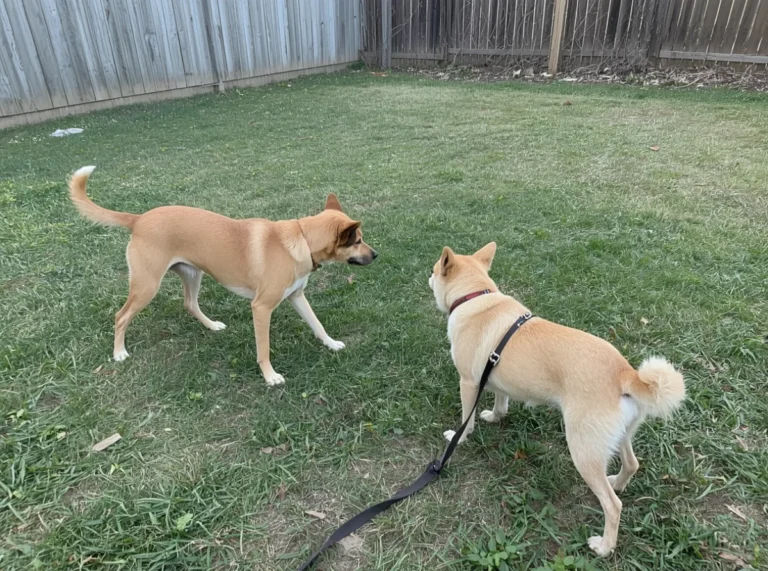
- During play that becomes too intense
- When someone approaches a resting spot or food bowl
- In unfamiliar places with new smells and sounds
Patterns like these are important. A dog that freezes in the same situations again and again is showing you what those moments mean to it.
When the freeze may signal stress or discomfort
Some freezes are brief and harmless. Others deserve attention because they happen when the dog feels pressured. A dog that suddenly stops moving while being hugged, moved, brushed, or approached too quickly may be saying that the situation is too much. The stillness can come before growling, snapping, or trying to leave.
Food-related freezing is another area to watch closely. If a dog goes still over a chew, toy, or bowl and watches you carefully, it may be worried about losing access to something valuable. That does not automatically mean aggression. It may simply mean the dog feels protective and needs more space.
Freezing can also show up in dogs that are overwhelmed by noise or activity. A dog in a loud home may stop and stare as a way of processing too much at once. In these moments, the stillness is often a sign that the dog needs relief rather than more interaction.
If a freeze appears around touch, food, rest, or movement toward the dog, treat it as a message to slow down and give space.
How owners often misread the behavior
Many people assume a dog that freezes and stares is being stubborn or trying to dominate. That interpretation misses how often the behavior is rooted in emotion or information gathering. A dog is not usually trying to win a silent contest. It is trying to understand what is happening and what response will keep things predictable.
Another common mistake is to assume every freeze is a sign of fear. Fear is one possible cause, but not the only one. Some dogs freeze because they are thrilled and highly focused. Others do it because they are polite and waiting for a cue. The same posture can belong to very different inner states.
It is also easy to overlook duration. A quick pause is normal in many dogs. A long, stiff stare with little movement deserves more attention. The length of the freeze, along with what comes before and after it, tells the real story.
How the behavior connects to dog communication
Dogs use stillness as part of their communication system. In the canine world, moving too quickly can be risky. A pause helps a dog avoid conflict, track intentions, and adjust its own behavior. When your dog freezes and watches you, it may be doing something similar in a human setting.
This is especially noticeable in dogs that are social and observant. They learn your habits. They know the sound of your shoes, the shape of your morning routine, and the difference between relaxed attention and serious attention. A frozen stare may be the dog’s way of saying, “I notice this change, and I am waiting for the next part.”
Because dogs live so closely with people, their communication often blends instinct with learned experience. A dog that freezes at the sight of a leash may not only be anticipating a walk. It may also be reading your body language from years of repetition. The behavior can become deeply tied to household rhythm.
What repeated freezing can tell you over time
When freezing is occasional, it may just reflect normal alertness. When it happens often in similar situations, it starts to reveal the dog’s preferences and sensitivities. A dog that freezes every time you reach near its sleeping area may want more space. A dog that freezes only when you pick up the ball may be bracing for play or excitement. A dog that freezes whenever a stranger enters may be more cautious in social settings.
Long-term patterns matter more than isolated moments. Some dogs always pause before eating. Others freeze briefly when they hear specific sounds. Some begin to freeze more as they age, especially if their hearing, vision, or confidence changes. The behavior itself may stay the same, but the reasons behind it can shift.
Consistency is useful here. If the dog’s freeze has a familiar pattern, context can usually explain it. If it starts suddenly and appears in new situations, that change is worth noticing. Dogs often show discomfort through repetition before they show it in more obvious ways.
Questions that help interpret the pattern
- Does the freeze happen in one specific place or many?
- Does it come before something exciting, uncertain, or unwanted?
- Is the body soft, tense, or somewhere in between?
- Does the dog recover quickly or stay stiff for a while?
- Has the routine or environment changed recently?
These observations give the behavior context without forcing it into one simple label.
What to notice in the moment
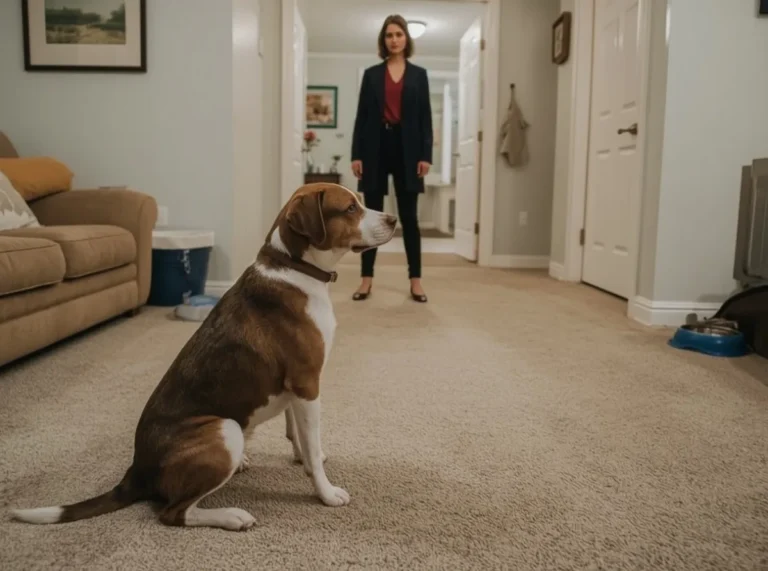
When a dog suddenly freezes and watches you, it helps to look at the whole scene. Where is the dog standing? What just happened? What were you doing right before the pause? The answer is often in the sequence, not the stare alone.
Watch for body tension, direction of movement, and what the dog does next. If it relaxes, blinks, and moves forward naturally, the freeze was likely brief focus. If it stays rigid, avoids eye contact after a moment, or seems reluctant to approach, the dog may be uncomfortable. If it surges forward with excitement, the stillness may have been part of arousal and anticipation.
A dog’s freeze is rarely random. It is usually part of a bigger conversation built from routine, emotion, and experience. The more familiar you become with your dog’s usual patterns, the easier it is to tell when the pause is ordinary and when it is a signal worth respecting.
In everyday life, that stillness can mean many things at once: curiosity, expectation, caution, attachment, or stress. The difference is in the details around it, and those details are often visible long before anything else changes.