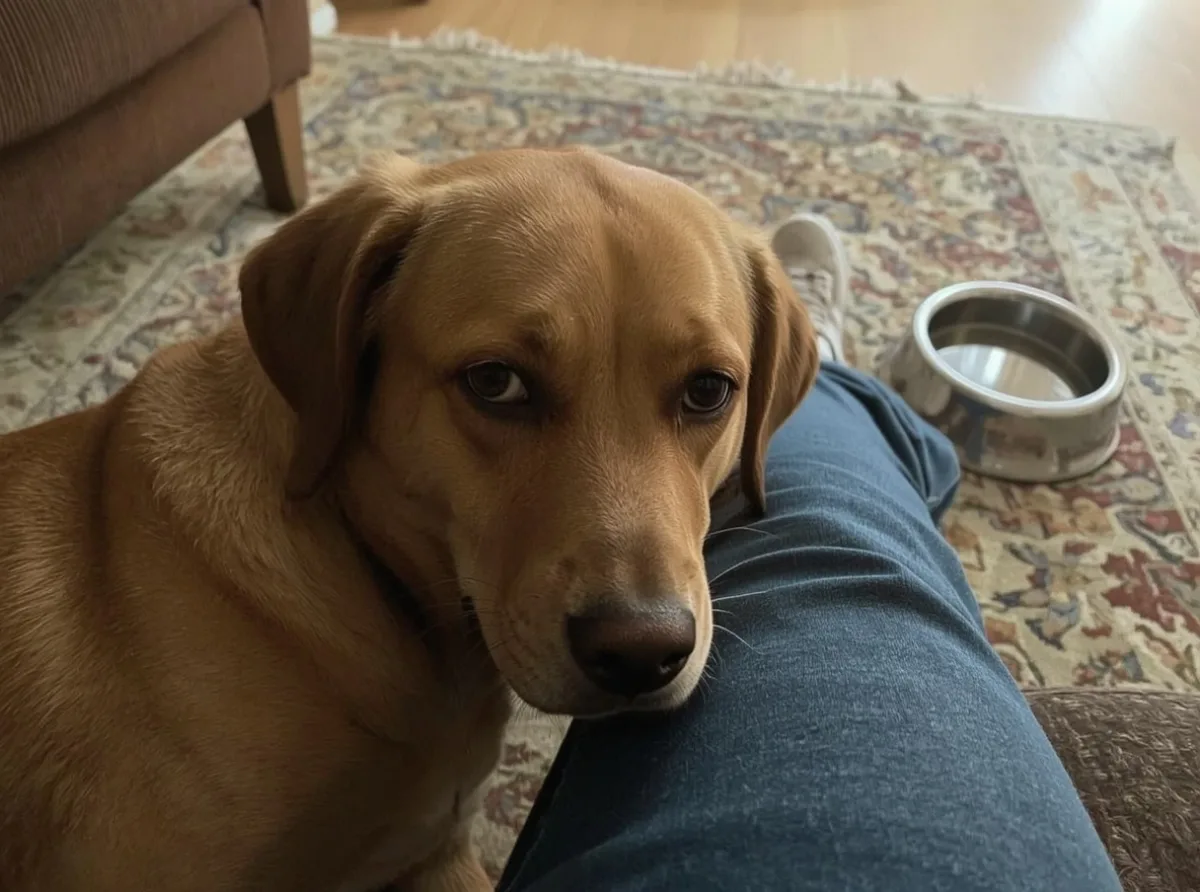
A dog that leans against you is doing more than taking a casual stance. The contact can feel comforting, affectionate, or a little insistent, depending on the moment and the dog. Sometimes it happens when you are standing in the kitchen, sometimes while you are sitting on the couch, and sometimes when you are trying to walk through a doorway with a cup of coffee in your hand.
That simple pressure from a dog’s body can mean a few different things. It may be a sign of trust. It may be a request for attention. It may also be a way for a dog to feel steadier in a busy or unfamiliar situation. The behavior is common, but the meaning changes with context, body language, and the dog’s usual habits.
In many homes, leaning becomes part of the dog’s everyday language. Some dogs do it lightly and often, almost like checking in. Others lean with purpose, pressing more firmly when they want reassurance or when something in the environment feels uncertain. The key is not just the leaning itself, but the rest of the picture around it.
Why Dogs Lean Against People
Leaning is a social behavior, and it often develops because dogs learn that people provide safety, warmth, and attention. A dog may lean because physical contact helps it feel connected. For some dogs, the sensation is soothing in the same way a child might reach for a familiar hand.
It can also be a practical form of communication. Dogs do not always come up, sit, and ask politely in a neat human way. Instead, they use their bodies. A lean may say, “I want to be close,” “Please notice me,” or “I’m not sure about this situation.”
Not every lean has the same emotional root. A confident dog may lean simply because it likes contact. A nervous dog may lean because it is seeking grounding. A highly social dog may lean because it has learned that body contact reliably brings interaction.
Leaning is best understood as context-based communication. The same gesture can mean affection, reassurance-seeking, attention, or uncertainty depending on what the dog is doing and how the rest of the body looks.
What Leaning Looks Like in Daily Life
In everyday life, dog leaning shows up in predictable places. Many dogs lean while their owner is standing still, especially in the kitchen, near the front door, or beside a table. Some dogs press their shoulder, hip, or full side against a leg as if anchoring themselves there.
Other dogs lean while being petted. They may shift weight into the hand, move closer after a few strokes, or stand beside a person and rest there without asking for anything more. This often happens when the dog feels relaxed and wants the contact to continue.
There are also dogs that lean during moments of activity. A dog may press into a person during thunderstorms, fireworks, visitors at the door, or a busy walk through a loud environment. In these situations, the behavior can reflect uncertainty rather than simple affection.
Common Everyday Situations
- Standing beside you in the kitchen while you cook
- Leaning against your legs during a walk or on a crowded sidewalk
- Pressing into your side while sitting on the couch
- Leaning after a startling noise or sudden movement
- Resting on you when tired, especially in the evening
These moments can look similar, yet they do not always carry the same message. A relaxed evening lean and a tense lean after a loud truck passes are not identical. Watching the whole scene matters more than focusing on the body contact alone.
Emotional Reasons Behind the Behavior
One of the most common reasons dogs lean is affection. Dogs are social animals, and physical closeness is part of how they bond with people they trust. A calm lean can be a simple expression of comfort and connection.
Another common reason is reassurance-seeking. Dogs often rely on routines and familiar cues, and when those cues are missing or disrupted, they may look for a stable point of contact. Leaning against a person can help a dog settle itself when the environment feels too active or unpredictable.
Some dogs lean because they are highly sensitive to their surroundings. These dogs notice small changes quickly: footsteps in the hallway, a different visitor, a shift in tone of voice, a new sound outside. Contact can help them regulate during those moments. The lean may be brief, but its purpose is clear to the dog.
There is also a learned side to this behavior. If a dog has leaned in the past and received petting, soothing words, or extra attention, it may repeat the behavior because it has become rewarding. That does not make the behavior manipulative. It simply means the dog has learned what works in its daily life.
Signs the Lean Is Emotional Rather Than Casual
- The dog follows the lean with a soft gaze and relaxed mouth
- Its weight shifts fully into your leg or side
- The dog settles once contact is made
- There is no urgency in the movement
- The body looks loose rather than stiff
A lean like this usually feels easy and unforced. The dog is not crowding the space with tension. It is sharing it.
How Body Language Changes the Meaning
The lean itself only tells part of the story. A dog can lean with a loose body, a wagging tail, and calm breathing. That kind of leaning often points to comfort or affection. Another dog can lean with a stiff spine, narrow eyes, and a tight mouth, which may suggest unease or caution.
Tail movement is not enough on its own, either. A wagging tail can appear in happy, uncertain, or overstimulated states. If the dog is leaning and also scanning the room, licking its lips, or staying ready to move away, the behavior deserves a different interpretation than a soft, sleepy lean against the couch.
Eye contact matters too. A dog that leans gently while looking relaxed or blinking slowly is often in a calm state. A dog that leans while staring intently at the door or at a stranger may be trying to stay close while also staying alert.
To read a lean correctly, look for the full body picture: posture, face, tail, breathing, and whether the dog seems loose or braced.
Relaxed Leaning vs. Tense Leaning
| Type of lean | Common signs | Possible meaning |
|---|---|---|
| Relaxed | Loose muscles, soft eyes, easy breathing | Affection, comfort, social closeness |
| Seeking support | Closer contact after noise or change, may stay near owner | Reassurance, uncertainty, self-soothing |
| Tense | Stiff body, alert ears, watchful posture | Unease, vigilance, discomfort |
Most dogs show a mix of these states at different times. A dog that usually leans for affection may still lean defensively during a storm. The habit stays the same, but the reason shifts.
How Routine and Environment Shape Leaning
Daily life influences this behavior more than many owners realize. A quiet, predictable home may encourage soft, relaxed leaning because the dog has little reason to stay on guard. In a busier house, leaning may appear more often as the dog looks for a stable point in the middle of movement and noise.
Dogs that receive regular exercise, mental stimulation, and rest often show more balanced behavior overall. They still lean, but the lean may be more affectionate than restless. By contrast, a dog that is under-stimulated may use leaning as part of a larger pattern of following, nudging, and staying close because it has little else to do.
Changes in routine can make the behavior more noticeable. A move to a new home, a shift in work schedule, new guests, or a change in family rhythm can all lead to more contact-seeking. Some dogs lean more after a long day of activity. Others lean more when they have not had enough interaction and want to stay connected.
Environmental Triggers That Often Increase Leaning
- Loud weather, such as thunder or heavy wind
- Visitors, especially unfamiliar ones
- Busy household movement and noise
- New places or travel
- Long stretches without interaction
These triggers do not always create the same response. One dog may tuck itself beside a person and lean quietly. Another may press hard and refuse to move. The difference usually reflects personality, past experience, and current stress level.
What Owners Often Misread
People often assume a leaning dog is always being affectionate. Sometimes that is true. Sometimes it is only partly true. A dog may love the person and still be leaning because it feels uncertain or overaroused. The behavior can hold more than one meaning at once.
Another common misunderstanding is assuming the dog is being stubborn or pushy. In many cases, the dog is simply using the most effective way it knows to stay connected. A lean that happens repeatedly at the same time of day may be tied to routine, not dominance or willfulness.
Owners also sometimes overlook the difference between voluntary contact and contact that seems forced. A dog that chooses to stand near a person and rest there is different from a dog that corners itself against a leg and seems unable to relax anywhere else. The first is usually social. The second may signal discomfort or dependence on proximity for security.
When the lean is paired with clingy behavior, pacing, whining, or following from room to room, it may be part of a broader pattern. That pattern can reflect insecurity, boredom, or a strong attachment style that has become hard for the dog to manage alone.
How Different Dogs Use the Same Behavior
Breed, age, temperament, and life history all influence how leaning appears. A large, sturdy dog may lean heavily because its body is physically capable of applying more pressure, but the emotional reason might be gentle and simple. A smaller dog may lean lightly but do it far more often.
Puppies often lean in clumsy, frequent ways because they are still learning how to move around people. For them, leaning may be part balance, part curiosity, and part social seeking. Adult dogs tend to lean with more intent. By then, the behavior usually has a clearer emotional purpose.
Older dogs may lean differently again. Some lean for warmth and support as their bodies change. Others become more contact-seeking as their hearing or vision declines and familiar touch feels more reassuring. Age can make the behavior more noticeable without changing its basic social meaning.
Dogs with a shy or sensitive temperament may lean to manage uncertainty. More outgoing dogs may lean because they enjoy physical closeness and want to stay involved in whatever is happening. Both patterns are normal, but they tell different stories.
When Leaning Becomes More Noticeable
Some dogs lean most in the evenings, when the household slows down and they can finally settle. Others do it when their owner is standing still, because stillness invites contact. A dog may also lean more after exercise, when it is tired and seeking rest, or after a long separation, when reconnection matters more.
The behavior often becomes more frequent during life changes. A new baby, a home renovation, a new pet, or a change in the work schedule can all alter the dog’s sense of security. In those periods, leaning may increase because the dog is trying to keep close to its familiar person.
It can also appear more often if the dog has learned that leaning brings a reward. If the dog leans and receives soothing touch every time, the behavior may become a regular part of its daily routine. That is not necessarily a problem. It just means the dog has built a habit around connection.
Repeated leaning is not automatically a problem behavior. What matters is whether the dog seems calm, tense, dependent, or distressed when it does it.
Reading the Behavior Without Overthinking It
A dog leaning against you is usually not trying to send a dramatic or mysterious message. In most homes, it is a practical, social gesture that fits into ordinary life. The behavior becomes clearer when it is viewed alongside the dog’s posture, surroundings, and recent experiences.
A soft lean during quiet time is easy to understand. A firm lean during a noisy event may be the dog’s way of asking for support. A constant lean throughout the day may suggest the dog has become very attached to physical closeness or is unsure how to relax independently. None of these possibilities needs a complicated explanation, but each one benefits from attention.
What matters most is the pattern over time. A dog that leans only at bedtime is telling a different story from a dog that leans every time the door opens. A dog that leans and then settles is different from a dog that leans and stays alert, tense, or restless. Looking at the rhythm of the behavior often reveals more than the lean itself.
Leaning is one of those quiet behaviors that can mean several things without becoming confusing. The body contact is real, and so is the context around it. Once both are considered together, the message usually becomes easy to read: the dog wants closeness, support, or a little more certainty in that moment.