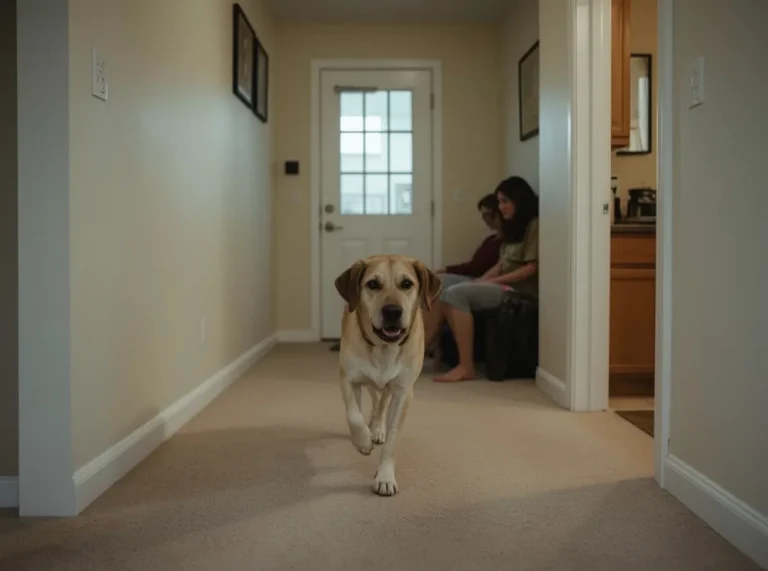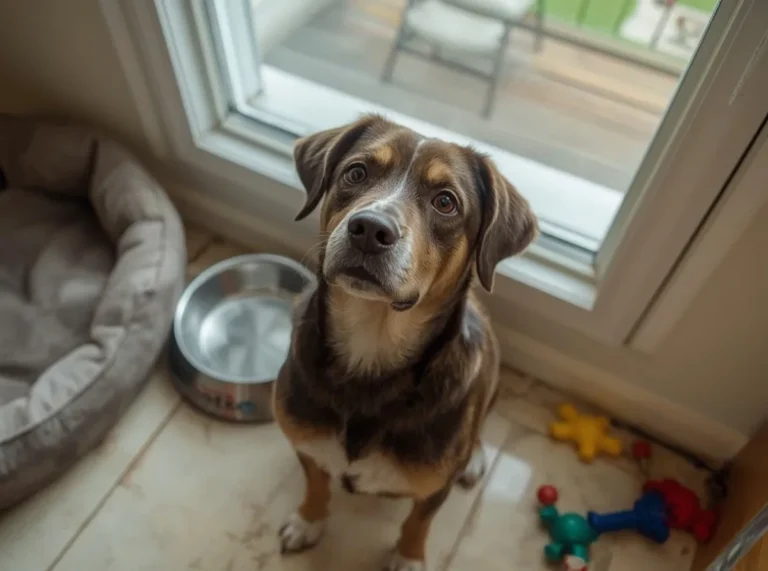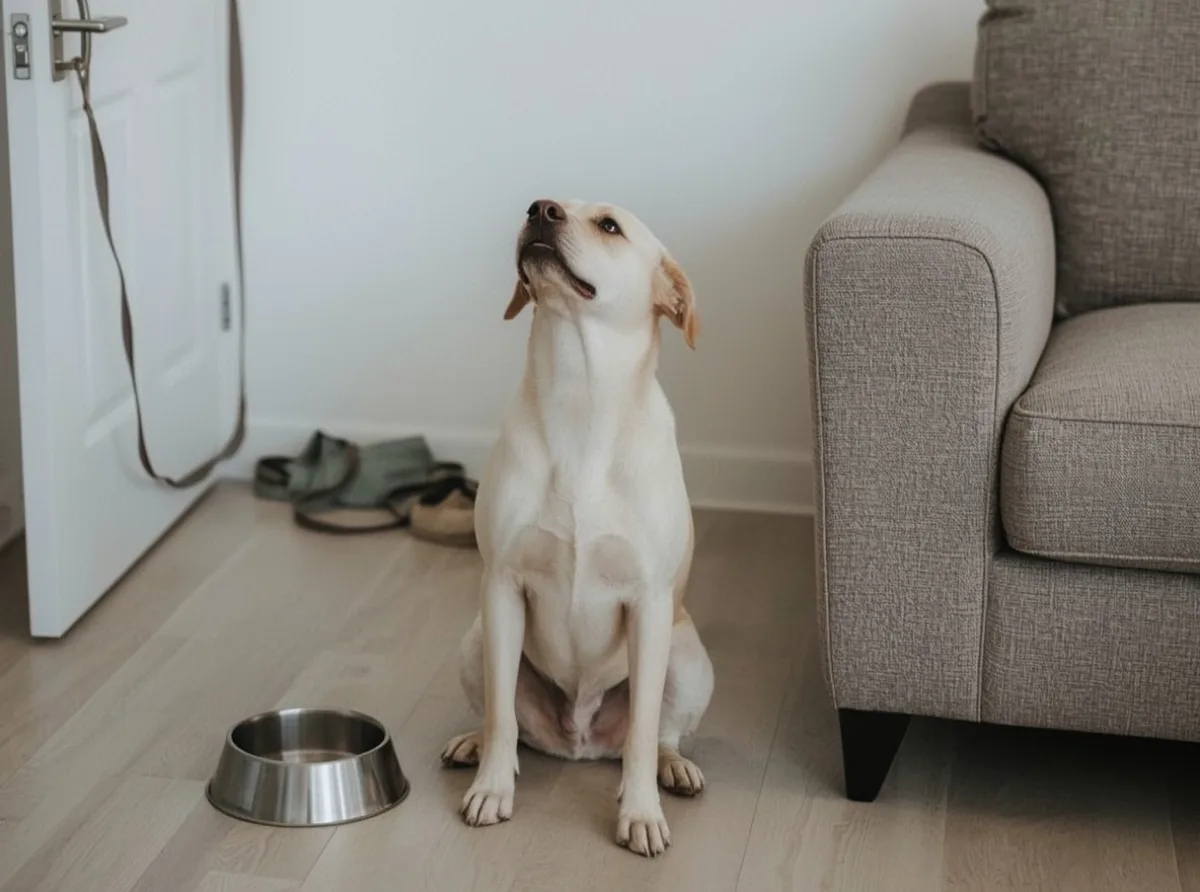
A dog that keeps checking your face is often doing more than “just looking.” The habit can be quiet and subtle, but it usually carries information. A dog may be reading your mood, waiting for a cue, or trying to understand what happens next.
Sometimes the behavior feels sweet and steady. Other times it can seem intense, almost like your dog is trying to figure you out. The meaning depends on the rest of the body, the setting, and what has been happening before the glance.
Face-checking is one of those everyday dog behaviors that can be easy to miss at first. Then you notice it in the kitchen, on the couch, while you are getting ready to leave, or when you are speaking to someone else. It often becomes part of the background of life with a dog, but it can say a lot about the dog’s emotional state and social habits.
What Face-Checking Looks Like in Daily Life
Face-checking is not one single gesture. It can be a quick look up, repeated eye contact, a soft stare, or a pattern of glancing between your eyes and mouth. Some dogs do it from a close distance. Others watch from across the room and seem to “pop in” with their gaze every few seconds.
In everyday life, it often appears during small routines. A dog may look at your face when you pick up keys, open the refrigerator, sit down at dinner, or pause in the middle of a walk. Some dogs do it when nothing obvious is happening at all, which can make the behavior seem more mysterious than it really is.
The same dog may check your face in several different ways depending on the moment. A loose, relaxed dog may glance up and then settle back down. A worried dog may stare harder, blink less, or stay frozen for a beat. A playful dog may look up, wait, and then bounce into the next thing.
Common ways it shows up
- Looking directly at your eyes or mouth while you speak
- Glancing up after hearing a sound or movement
- Watching your face during meals, walks, or transitions
- Checking your expression when the household mood changes
- Looking back and forth between your face and another object, person, or doorway
A dog’s face-checking often reflects social attention first, and emotion second. The look itself matters less than the whole picture around it.
Why Dogs Keep Looking at Human Faces
Dogs are unusually skilled at reading human communication. Over time, many dogs learn that faces carry useful information. Your eyes, mouth, and eyebrows may tell them whether you are relaxed, annoyed, moving, feeding, leaving, or about to change the plan.
Some dogs are naturally more face-focused than others. Breed tendencies, early social experiences, and the dog’s individual temperament all play a role. A highly social dog may check your face often because human attention matters a great deal to them. Another dog may do it because your face is the clearest signal in a confusing environment.
There is also a practical side to it. Humans are unpredictable compared with dogs. We talk, turn, reach, sit, stand, smile, frown, and shift our attention without much warning. Many dogs learn to watch the face because it is one of the fastest ways to know what is coming next.
Possible internal reasons behind the behavior
- Seeking information about your mood or intention
- Waiting for permission, direction, or routine events
- Looking for reassurance in uncertain moments
- Tracking food, movement, or attention
- Trying to stay connected during social interaction
In many cases, face-checking is simply part of a dog’s social intelligence. Dogs do not need to understand every human word to follow a conversation. They often watch expressions and posture because those signals are more reliable than the sound of a sentence alone.
When Face-Checking Is About Connection
For some dogs, checking your face is a form of closeness. They are not necessarily asking for anything specific. They are keeping a social link open. That can happen in calm, content dogs that enjoy being near their person without needing constant physical contact.
This often shows up in the small quiet moments of the day. A dog lying near your feet may look up at your face, then rest again. Another may watch you from across the room and give a soft glance every so often, as if staying aware of your presence is part of feeling settled.
Dogs that are bonded to one person can be especially face-oriented. They may track micro-changes in expression and body movement with surprising speed. This does not automatically mean clinginess. In many dogs, it is just a normal way of staying socially tuned in.
Soft, brief eye contact paired with relaxed muscles often points to connection rather than tension.
When It May Signal Uncertainty or Stress
Not every face-check is relaxed. Some dogs look at your face because they are unsure what will happen next. In those cases, the behavior can look more careful, more frequent, or more intense. The dog may be seeking clues about whether to wait, move, approach, or back away.
This is more common in unfamiliar settings, during changes in routine, or when the dog senses tension in the home. If your voice sounds sharper than usual, if strangers are present, or if the dog is near something confusing, face-checking may increase. The dog is trying to solve the situation by reading you.
Stress-related face-checking often comes with other body signals. The ears may sit back. The tail may stay low or still. The mouth may close tightly. Some dogs blink less and become very still, which can make the stare feel more intense than affectionate.
Signals that can come with anxiety
- Stiff posture
- Frequent lip licking or yawning
- Frozen movement before or after the glance
- Raised hackles or a tucked tail
- Scanning between your face and the environment
When the rest of the body looks tense, face-checking is less likely to mean simple affection. It may mean the dog is waiting for guidance or trying to keep control of an uncertain moment.
How Routine Shapes the Behavior
Dogs pay close attention to patterns. If your face usually predicts food, walks, play, or departure, your dog will learn to check it often. The behavior can become more obvious around the times of day when your routine is strongest.
Morning routines are common. So are mealtimes, walk preparation, and the period right before someone leaves the house. In households with very consistent habits, a dog may begin watching faces as soon as the first familiar step happens. That might be the sound of shoes, the click of a leash, or the way you stand up from a chair.
In quieter homes, face-checking may stand out because there is less background noise. In busy homes, dogs may check faces more often because they need to track multiple people and shifting activity. Either way, the behavior becomes easier to notice when the dog has learned that human faces are useful landmarks in the day.
Environmental factors that can increase face-checking
- Predictable meal and walk schedules
- Frequent changes in activity
- Busy households with multiple people moving around
- New visitors or unfamiliar settings
- Long periods of low stimulation
A dog that seems to watch your face more during certain times of day may simply be anticipating the next event. The pattern is often tied to routine rather than emotion alone.
How Attention, Food, and Training History Affect It
Dogs learn through consequences, even when nobody is formally training them. If looking at your face has often led to treats, petting, praise, or a walk, the behavior can become stronger. The dog may not be “begging” in a simple sense. It may be checking whether the usual reward is available.
This is especially common in dogs that have learned to read subtle household patterns. A glance at your face might be followed by a treat, a hand reaching down, or a change in your movement. After enough repetitions, the dog does not need a big cue. The face itself becomes the cue.
Food can intensify the habit, but it is not the only influence. Attention matters too. Even negative attention can reinforce face-checking if the dog has learned that staring at you creates a response. That response may be spoken words, movement, or eye contact back.
If your dog checks your face and then quickly looks toward the treat cabinet, the leash, or the door, the behavior is probably tied to expectation and learned routine.
Subtle Differences Between Relaxed and Reacting Dogs
Because the same behavior can mean different things, it helps to look closely at the quality of the glance. A relaxed dog usually looks soft around the eyes. The body remains loose. Breathing stays normal. The dog may look up and then move on without urgency.
A dog in a more reactive state often looks different. The stare can become fixed. The body may lean forward or lock in place. Small changes in your face may seem to matter a lot. The dog may also become more alert to every sound in the room.
There is also a middle ground. Some dogs are neither calm nor distressed. They are simply highly focused. They may monitor your face with steady interest because that is their habit, and because you are the center of their social world.
Helpful comparison
| Body language | What face-checking may mean |
|---|---|
| Loose body, soft eyes, normal breathing | Connection, curiosity, comfort |
| Still body, closed mouth, repeated glances | Uncertainty, waiting for cues |
| Fixed stare, tension, scanning surroundings | Stress, caution, possible reactivity |
What Puppies Often Do
Puppies are especially likely to check human faces because they are gathering information all the time. They have limited experience, so they lean heavily on people to interpret the world. A puppy that looks at your face during new experiences is often asking, in dog language, whether things are safe or what happens next.
Young dogs also use face-checking to learn household rhythms. They watch when you pick up the puppy’s bowl, when play starts and ends, and when your tone changes. This is part of normal learning, not a sign that something is wrong.
As puppies mature, the behavior may become more refined. Some dogs glance less often once they feel secure. Others continue the habit because it becomes part of how they communicate. The pattern may get quieter, but it does not necessarily disappear.
How Adult Dogs May Differ
Adult dogs often show more stable versions of the same behavior. A mature dog may already know your daily patterns and therefore check your face at predictable moments. In many homes, the dog becomes excellent at reading the “prelude” to events: a shower, a phone call, the sound of a bag zipper, or the pause before a walk.
Age can also change why the dog checks your face. An older dog may rely more on your expressions if hearing or vision declines. A middle-aged dog may do it out of habit and connection. A highly sensitive adult dog may keep watching your face because it helps manage uncertainty.
What matters most is consistency. If the behavior is long-standing and appears in many calm situations, it is often just part of the dog’s social style. If it suddenly becomes much more intense, that shift deserves attention because it may reflect a change in comfort, routine, or health.
When the Behavior Becomes More Noticeable
Face-checking tends to stand out when life becomes less predictable. A move, a new family member, visitors, schedule changes, or even a noisy week can make a dog look to your face more often. The dog is trying to rebuild a sense of order.
It may also become more obvious when the dog is understimulated. Bored dogs often look to people for guidance simply because there is not much else to do. In those moments, face-checking may be a way of asking for engagement, movement, or a change in the environment.
Dogs may also show the behavior more after a period of excitement. Once the burst of activity fades, the dog looks back at you to understand whether the event is over or if something else is coming.
Moments when owners often notice it most
- Before meals or walks
- When the house gets quiet after noise or activity
- During conversations between people
- When the dog is unsure about a visitor or object
- After a change in schedule or household routine
How to Read the Whole Picture
The face alone does not give the full answer. A dog can look at your face for affection, instruction, curiosity, worry, or anticipation. The surrounding details are what separate one meaning from another.
Look at posture first. Then notice the eyes, mouth, tail, and movement. A dog leaning in with a loose body is very different from a dog holding still and watching every shift in your expression. The environment matters too. A face-check during a calm evening is not the same as a face-check during a stressful household moment.
It can help to think in patterns instead of isolated moments. Does your dog check your face mostly before meals? Mostly when you are tense? Mostly when you sit quietly? Those patterns reveal much more than a single glance ever could.
Meaning comes from repetition plus context. One look is a moment. A pattern is information.
When the Habit Is Simple Social Awareness
Many dogs check their person’s face because that is how they stay in tune with the household. It is a practical social skill. It helps them decide when to wait, when to follow, and when to relax. In these cases, the behavior is neither a problem nor a demand. It is part of how the dog navigates daily life.
You may notice this most during ordinary pauses. The dog looks at you while you are working at the table, cooking, or sitting on the couch. There is no obvious request. The dog just seems to be keeping contact. That often means the relationship itself is the point.
Some dogs are simply more observant than others. They notice tiny changes in your face the way another dog might notice a change in smell or sound. That sensitivity can be useful, especially in calm homes where the dog has learned that people are steady and readable.
When to Pay Closer Attention
A sudden change in face-checking deserves a closer look. If a dog that rarely watched your face suddenly becomes very focused, or if a typically relaxed dog starts staring with tension, something in the environment or in the dog’s body may have changed.
Look for other signs at the same time. Appetite, sleep, movement, response to touch, and overall energy can all matter. A behavior that looks emotional may also be influenced by discomfort, sensory changes, or a shift in daily stability.
That does not mean every intense look is a warning. Some dogs are simply going through a temporary phase of heightened attention. But when the change is clear and sustained, it is worth noticing the pattern rather than the moment.
Face-checking is one of the clearest ways dogs use their eyes to stay connected with people. It can be affectionate, practical, cautious, or learned through routine. The meaning depends on the body around it, the rhythm of the day, and the dog’s usual way of moving through the home.
In a quiet moment, the glance may simply mean comfort. In a stressful one, it may mean the dog is searching for direction. The face is part of the conversation, but never the entire conversation. The rest is written in posture, timing, and the small habits that repeat day after day.