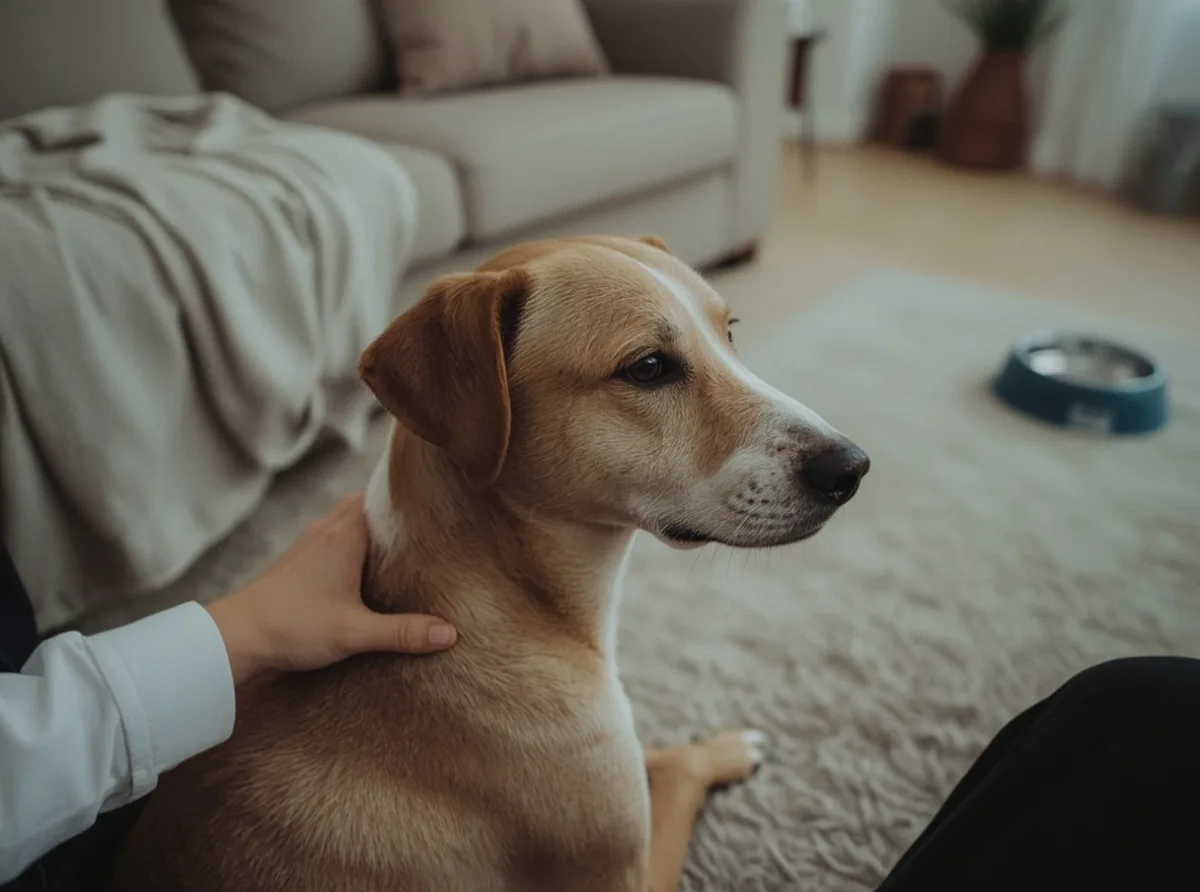
Many dogs enjoy being petted, but not every dog holds still and stares back with pure delight. Sometimes a dog turns its head away, looks at the floor, glances to the side, or avoids direct eye contact while you are touching them. That small movement can be easy to miss, yet it often tells you something important about how the dog is feeling in that moment.
Looking away is not always a sign that a dog dislikes affection. In many cases, it is a normal part of how dogs communicate calmness, politeness, uncertainty, or a desire for a little more space. The meaning depends on the rest of the body, the setting, and how the petting is happening. A relaxed dog who leans in and softly turns away is saying something very different from a dog who stiffens and looks aside while tensing up.
Understanding that difference makes everyday interactions easier. It helps you notice when petting is welcome, when it is simply tolerated, and when your dog may need a break. Small signals matter because dogs usually speak with posture, face, and movement long before they ever move away completely.
What Looking Away Can Mean in Everyday Moments
Dog owners often notice this behavior during ordinary routines. A dog may be lying on the couch and receive a few strokes on the head, then turn its face toward the room. Another dog may enjoy chest rubs but look away when a hand reaches over the top of the head. A third dog might be friendly with guests but glance away each time someone bends down and pets too quickly.
The reaction can seem confusing because the dog may not move off the spot. That does not automatically mean the dog is comfortable. Dogs often stay in place because they are polite, curious, sleepy, or unsure how to end the interaction. Looking away can be a subtle way of saying, “I’m not quite sure what I think about this,” or “This is okay, but please keep it gentle.”
Avoid assuming that stillness means consent. A dog may remain under your hand because it is patient, not because it is thrilled.
Sometimes looking away is part of a relaxed state. Dogs do not always maintain direct eye contact the way people do. In fact, steady eye contact can feel intense or unnecessary to many dogs. A side glance or an averted face can fit a calm social interaction, especially when the petting is slow and the dog’s body stays loose.
Other times, the same movement appears when a dog feels overhandled. This is where context becomes essential. One dog may look away because it is settling into a nap, while another may look away because the petting is too close, too fast, or happening in a place it does not enjoy being touched. The behavior alone is not enough; the rest of the body usually fills in the story.
Emotional Reasons Behind the Behavior
Calmness and soft social signals
Dogs are social animals, but they do not use human-style eye contact in the same way we do. Looking away can be a calm social signal. It may show that the dog is not trying to challenge anyone and is comfortable enough to relax its gaze. In some cases, the dog is essentially choosing a low-pressure way to interact.
This is especially common during slow, familiar petting between a dog and a trusted person. If the dog’s body is loose, breathing is easy, and the tail stays in a natural position, the averted gaze may simply reflect contentment. Some dogs close their eyes, turn their muzzle slightly, or shift their head just enough to enjoy the sensation without staring back.
Uncertainty or mild discomfort
A dog may also look away because it is unsure about the contact. Maybe the petting started too abruptly. Maybe the dog likes being touched in one place but not another. Maybe it is comfortable with one person but less comfortable with a stranger. Averted eyes can be one of the first signs that a dog is not fully settled.
That uncertainty is often subtle. The dog may keep standing or sitting still, but the body becomes a little tighter. The ears may move back or flatten slightly. The mouth may close if it had been open, and the dog may stop leaning in. These are small changes, but they matter more than the head turn itself.
Stress, overload, or a wish for distance
Sometimes looking away is part of a bigger pattern of stress. If the dog turns its head away repeatedly, licks its lips, yawns, shifts weight, or tries to move off, the petting may be more than the dog wants at that moment. This does not always mean the dog is frightened. It may simply be overstimulated, tired, or not in the mood for touch.
Dogs can become overloaded during busy visits, family gatherings, or long periods of handling. A dog that was happy to greet people earlier in the day may look away after several rounds of attention. The behavior can change quickly when the environment becomes noisy or unpredictable.
When a dog looks away and also stiffens, freezes, or avoids being touched again, the message is usually clearer: the interaction should slow down or stop.
The Role of Touch Location and Petting Style
Not all petting feels the same to a dog. Many dogs prefer touch on the chest, shoulders, or side of the body over a hand reaching over the head. A dog may love being scratched behind the ears yet look away when someone pats the top of the head. That difference is easy to overlook because people often pet in ways that seem friendly to humans but feel invasive to dogs.
Petting style also matters. Light, rhythmic strokes can feel soothing, while fast rubbing or repeated pats may feel stimulating or even irritating. A dog may look away because the contact is too intense, too uncertain, or happening in a spot that feels vulnerable. Some dogs do better when the petting starts and ends predictably, rather than with sudden changes in pressure.
New people often trigger this behavior more than familiar ones. A dog may willingly accept touch from a family member but turn away from a guest who leans in too close. The issue may not be the person’s intent. It may be the speed, the angle, the smell, the voice, or the fact that the dog has not yet learned whether that hand is safe.
Common body areas and typical reactions
| Petting area | Possible dog response | What looking away may suggest |
|---|---|---|
| Top of head | Some dogs accept it, others tense | Uncertainty, politeness, or mild discomfort |
| Chest | Often well tolerated | Relaxation if the body stays loose |
| Back and shoulders | Usually easy for many dogs | Looking away may simply reflect calmness |
| Face or muzzle | More sensitive for many dogs | A clearer sign the dog wants less pressure |
| Hips or legs | Varies by dog and touch history | Could indicate sensitivity or preference differences |
How Environment Changes the Meaning
A dog’s surroundings can make the same gesture mean something different. In a quiet living room, a dog looking away while being petted may be resting or simply enjoying a peaceful moment. In a crowded home with visitors, kids, noise, and movement, the same behavior may show that the dog is processing too much at once.
Routine also matters. Dogs tend to respond differently when they know what comes next. A dog who gets gentle evening cuddles after dinner may look away in a relaxed way because the sequence is familiar. But if the same dog is interrupted from sleep, dragged into the middle of a chaotic room, or touched repeatedly while trying to settle, the averted gaze may reflect irritation or uncertainty.
Stimulation level changes things too. After a long walk, play session, or busy day, a dog may be too mentally full for prolonged attention. Looking away can be a mild self-protective move, a way to lower the intensity of the interaction without escalating. That is especially common in dogs that are sensitive, young, elderly, or simply tired.
Signs the environment is influencing the behavior
- The dog looks away more often during noisy or crowded moments.
- The dog is easier to pet in one room than another.
- The behavior appears after exercise, visitors, or excitement.
- The dog relaxes when the petting becomes slower and quieter.
- The dog avoids eye contact when several people try to interact at once.
What the Rest of the Body Usually Tells You
Eye movement alone rarely gives the whole picture. A dog can look away in a healthy, relaxed way or in a tense, avoidant way. The difference usually shows up in posture, muscle tone, and movement. That is why reading the whole dog matters more than focusing on one signal.
A relaxed dog often has a soft face, loose shoulders, and a body that may lean into the hand or stay comfortably settled. The dog might look away while keeping the rest of the body open and easy. Some dogs even close their eyes briefly or sigh when being pet in a spot they love.
A stressed or unsure dog usually gives a more complicated picture. The body may freeze, the tail may become still, the ears may shift back, or the dog may avoid turning fully toward the person. The dog might accept a few strokes and then move away as soon as the pressure continues. That pattern is often more important than the head turn itself.
If the dog looks away and also seems tense, quiet, or reluctant to reengage, the safest reading is that the dog wants the interaction reduced.
Helpful signals to notice together
- Loose body versus stiff body
- Soft blinking versus fixed stare
- Lean-in versus leaning away
- Open mouth and easy breathing versus closed mouth and tension
- Tail at rest versus tail held rigidly still
- Voluntary return for more touch versus moving off after a few seconds
Why Some Dogs Do It More Than Others
Individual temperament plays a big role. Some dogs are naturally more expressive and easily aroused by touch. Others are quieter and prefer brief, predictable affection. Breed tendencies can influence this too, but personality and experience usually matter more than breed labels. A dog that was gently handled from a young age may be more comfortable with being touched, while another dog may need more time to trust physical contact.
Past experiences also leave a mark. Dogs that have been roughly handled, startled during petting, or touched in uncomfortable ways may look away as a way of managing uncertainty. This does not mean they cannot learn to enjoy affection. It just means they may need slower, more respectful interactions before they feel secure.
Age can also change the way dogs respond. Puppies may look away because they are still figuring out what contact means and how to manage excitement. Adult dogs often show more consistent preferences. Older dogs may look away because they are more sensitive, more easily tired, or simply less interested in prolonged handling.
How Owners Often Misread the Signal
One common mistake is assuming a dog that does not pull away must be enjoying every second. Dogs are often patient. Some will accept touch because they trust the person, not because they want endless petting. Looking away can be a polite form of communication that gets missed when the hand keeps moving.
Another misunderstanding is treating the behavior as rudeness or rejection. In reality, many dogs are not trying to “ignore” anyone. They are managing their own comfort. Averted eyes can be a way to reduce social pressure, especially if the dog feels watched or cornered.
People also sometimes mistake appeasement for pleasure. A dog may look away, lick its lips, and stay very still. That can look calm from a distance, but calmness is not the same as enjoyment. The dog may be enduring the petting rather than asking for it. The distinction matters because the dog’s comfort should guide what happens next.
Signs owners often miss
- Turning the face away but keeping the body rigid
- Looking away right after a hand reaches in
- Soft freezing instead of leaning closer
- Brief lip licking during petting
- Sudden interest in the room as a way to create space
What the Behavior May Be Saying in Different Situations
When the dog is curled next to you on the couch, looking away may mean, “I’m comfortable, just not interested in staring.” When a stranger reaches over the dog’s head, the same movement may mean, “Please give me a little more room.” When petting happens after a walk or during a family gathering, it may mean, “There is already enough going on.”
This is why the moment matters. A single behavior rarely has one fixed meaning across all settings. The dog’s posture, the pace of petting, the time of day, and the dog’s history with that person all shape the response. A dog that looks away while relaxed and leaning into the touch is communicating something very different from a dog that looks away while holding its breath and waiting for the hand to stop.
Some dogs also look away as part of a natural social rhythm. They may accept a few seconds of affection, glance off to one side, then return to sniff or settle. That back-and-forth can be normal, especially in dogs that enjoy connection but prefer to regulate the amount themselves. The behavior becomes more meaningful when it repeats at the same moment every time petting starts or continues.
When the Behavior Becomes a Pattern
Repeated looking away in the same situations can reveal a clear preference. A dog that consistently turns its face from head pats may be saying that head contact is not enjoyable. A dog that only looks away when touched by children may need more space, gentler handling, or closer supervision. A dog that looks away during petting after a long day but not after a short calm morning may simply be more sensitive when tired.
Patterns are often more useful than isolated moments. One glance away is easy to misread. A repeated pattern across days, people, and settings is more informative. It helps you see whether the dog is generally relaxed, selectively comfortable, or frequently overwhelmed.
That pattern can also shift over time. Dogs change with age, environment, and routine. A newly adopted dog may avoid eye contact during petting for weeks, then soften as trust grows. An older dog that once welcomed long petting sessions may begin turning away sooner because touch now feels less enjoyable or more tiring.
Practical Ways to Respond in the Moment
When a dog looks away, the simplest response is to pause and notice what else is happening. If the body seems loose and the dog stays nearby, the petting may be fine in small amounts. If the body seems tense or the dog stops leaning in, it is usually wise to lighten the touch or stop altogether.
Giving the dog a chance to choose is often helpful. Some dogs will circle back for more contact if they want it. Others will remain nearby but enjoy the quiet without being touched. That difference is important because closeness and petting are not always the same thing. A dog may want company without physical pressure.
It can also help to change the type of touch. Slow strokes on the chest or shoulder may be easier to accept than direct head pats. Petting for a shorter time and then stopping before the dog has to signal discomfort can build trust. Over time, the dog learns that the human notices small cues and respects them.
Let the dog’s response shape the interaction. If the dog looks away and seems to settle, keep it gentle. If the dog looks away and seems to withdraw, give space.
Closing Thoughts on the Signal
A dog looking away while being petted is not a random habit. It is part of a conversation, and the meaning depends on the conversation around it. Sometimes it reflects calm contentment. Sometimes it reflects uncertainty, politeness, fatigue, or a request for less intensity. The body around the eyes usually tells the fuller story.
Once you start noticing the difference between soft, relaxed averted gaze and stiff, avoidant body language, the behavior becomes easier to read. That makes everyday affection smoother. It also makes the dog feel more understood, which is often what turns ordinary petting into a comfortable habit rather than an awkward guess.