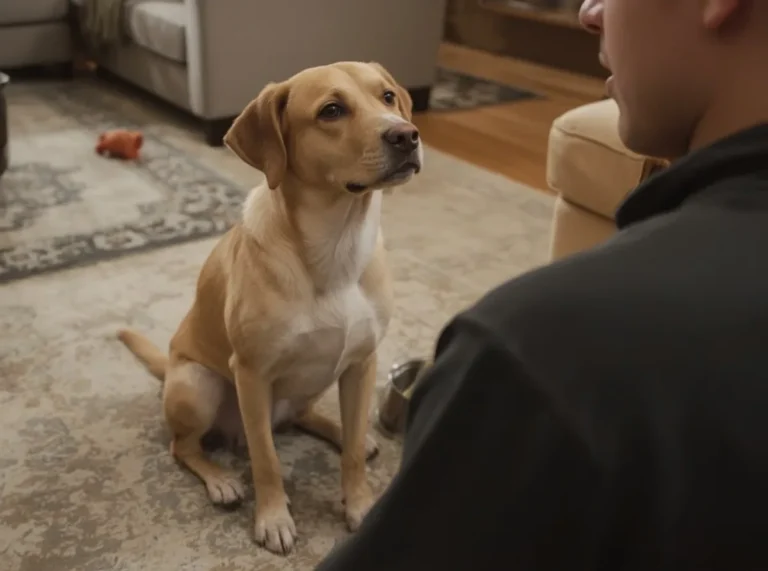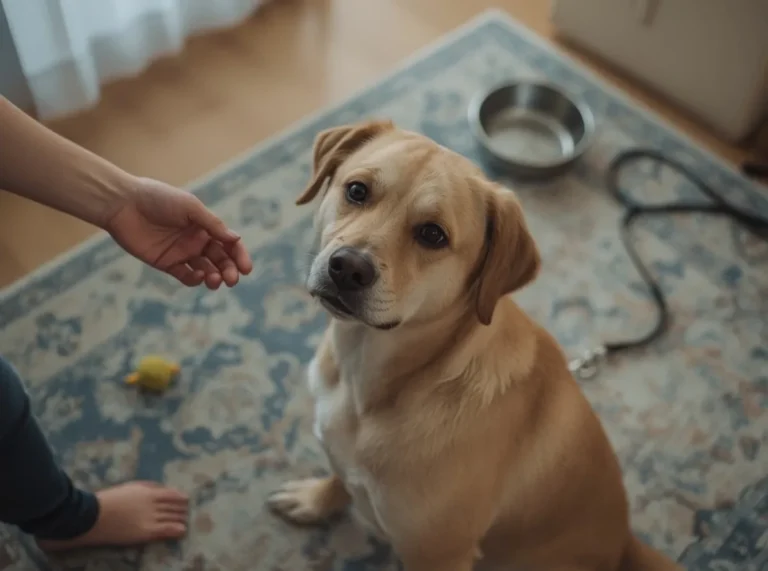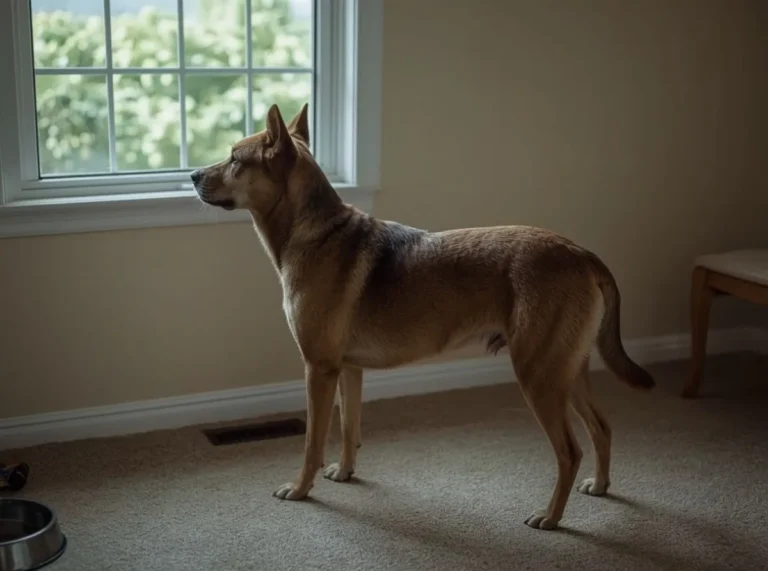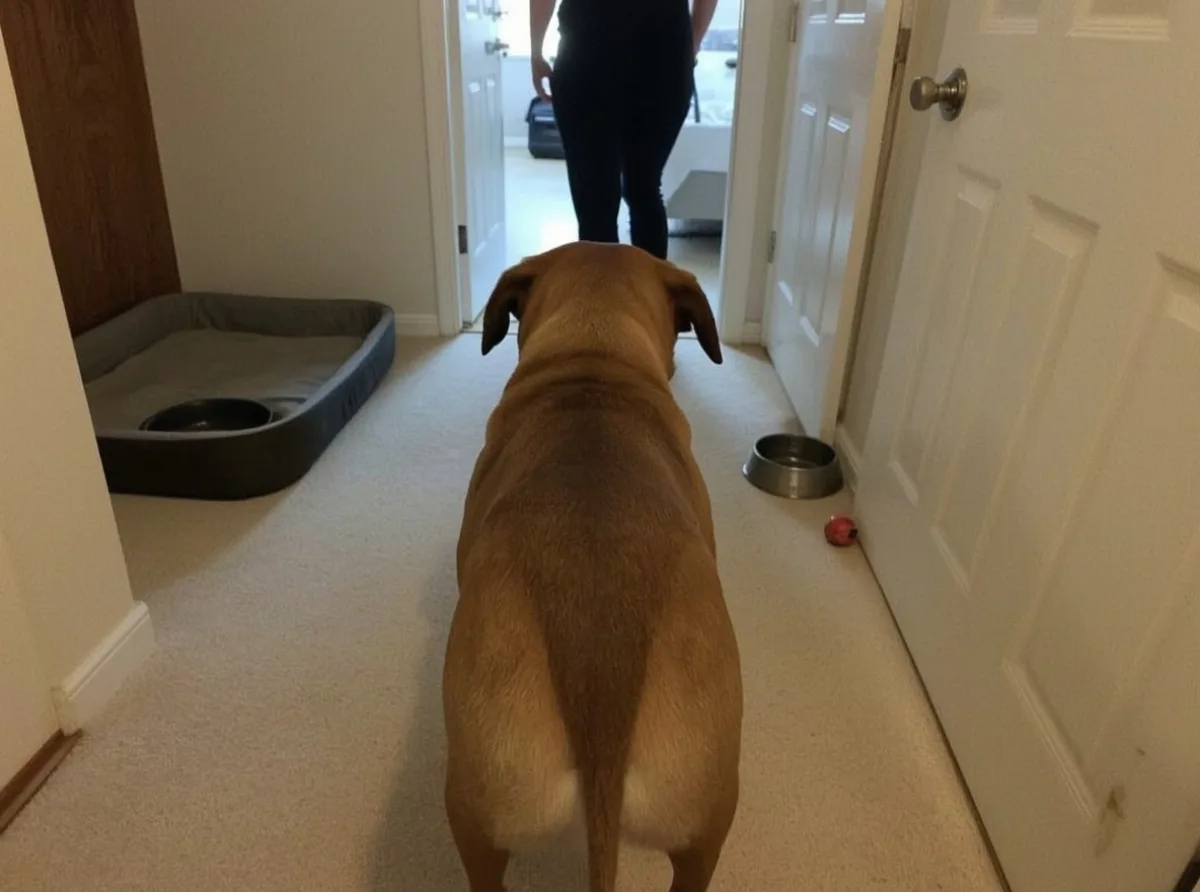
A dog that turns its head away, blinks slowly, or refuses direct eye contact during stress is not being rude. In many cases, the dog is trying to soften the moment. Eye contact can feel intense in dog communication, especially when a dog already feels unsure, crowded, or overstimulated.
In a calm setting, many dogs glance at their people freely. But when pressure rises, that same dog may look away, show the whites of the eyes, or keep the head slightly lowered. These small changes matter. They often reveal that the dog is trying to manage discomfort before it grows into something bigger.
This behavior can show up at home, on a walk, at the vet, during grooming, or in the middle of a noisy household. It may last only a second or continue for as long as the stressful situation remains. Either way, it usually says something about the dog’s internal state, not about disobedience or stubbornness.
Understanding why dogs avoid physical eye contact during stress helps owners read the moment more accurately. The dog may need space, reassurance, predictability, or time to settle. Sometimes the answer is simple: the dog feels watched and wants the interaction to slow down.
What Avoided Eye Contact Looks Like in Everyday Life
Physical eye contact is more than just looking at someone. For dogs, it can include a direct stare, a face-to-face posture, or being physically close while locked into a tense interaction. When stress enters the picture, many dogs change that pattern fast.
A dog might turn its head sideways when a person reaches toward its collar. Another dog may avert its gaze while someone leans over it. Some dogs avoid looking at other dogs in a tense room, then glance back briefly before looking away again. The behavior often appears subtle, which is why it can be easy to miss.
Common signs that appear alongside eye avoidance include:
- Turning the head away
- Soft blinking or rapid blinking
- Yawning when not tired
- Freezing for a moment
- Lowered ears or a lowered head
- Shifting weight backward
- Looking toward an exit or another part of the room
- Trying to move behind furniture or behind a person
These signals do not always mean the same thing in every dog. A dog may look away because it is uncertain, overwhelmed, guarding its personal space, or trying to avoid conflict. The context around the behavior matters as much as the behavior itself.
When a stressed dog avoids eye contact, it is often trying to reduce pressure, not reject the person or situation.
Why Eye Contact Feels Harder During Stress
Dogs use body language to negotiate space, comfort, and social intent. Direct eye contact can be interpreted as a challenge, especially if the rest of the body looks tense. When a dog already feels stressed, holding that gaze may make the situation feel even more intense.
Stress changes the way a dog processes the environment. Sounds seem louder. Movements feel sharper. Small gestures can become hard to tolerate. In that state, a dog may prefer to look away rather than keep focusing on the source of pressure.
Some dogs have a naturally sensitive temperament. They notice details quickly and can become overwhelmed by busy scenes, unfamiliar handling, or fast approaches. Those dogs may break eye contact early, before more obvious stress behaviors appear. Others hold eye contact until they are already near their limit, then suddenly avert their gaze or retreat.
There is also a social reason behind the behavior. In dog communication, avoidance can help prevent conflict. Looking away can signal, “I’m not a threat,” or “I don’t want trouble.” That is one reason the behavior is so common when a dog feels trapped or uncertain.
Common Situations Where It Shows Up
This pattern can appear in many ordinary situations. Some are predictable. Others catch people off guard because the dog seemed fine only a moment earlier.
1. During Vet Visits
Vet clinics are full of unfamiliar smells, handling, and waiting. A dog may avoid eye contact when a stranger touches sensitive areas, takes a temperature, or restrains the body for an exam. The dog is often trying to stay still and limit attention, not being defiant.
2. During Grooming
Nail trims, brushing, ear cleaning, and bathing can all create discomfort. A dog may avert its gaze when the grooming tool appears or when the handler moves too close to the face. The avoidance can come before more obvious resistance, such as pulling away or tensing the body.
3. In Busy Households
Noise, constant movement, children running, people arriving and leaving, and unpredictable handling can create steady stress. In these homes, eye contact avoidance may become more frequent because the dog never fully settles. The dog may keep glancing away while scanning for the next disturbance.
4. Around Other Dogs
Direct staring between dogs can feel threatening. A dog that avoids eye contact during social pressure may be trying to keep interactions peaceful. This is especially common when another dog is intense, pushy, or standing too close.
5. During Training or Correction
If a dog feels confused or pressured, it may look away instead of looking at the person. That can happen when the expectations are unclear, the correction is too abrupt, or the dog is already tired. The avoided gaze is often a sign that the dog is unsure what to do next.
What the Behavior May Signal Emotionally
Not every dog avoids eye contact for the same internal reason. Some are anxious. Some are conflicted. Some are simply trying to avoid escalation. The emotional layer can vary a lot.
A frightened dog may avoid eye contact because the situation feels too intense to engage with directly. A conflicted dog may want to approach but also wants distance. A dog that feels trapped may look away as a way to reduce pressure and buy time. In each case, the body is often saying, “I need this to slow down.”
Subtle tension in the rest of the body helps clarify the emotional picture. A loose, comfortable dog may glance away and then relax again. A stressed dog usually shows other signs at the same time, such as stiffness, panting, lip licking, pinned ears, or a tucked tail. The combination matters more than any single gesture.
Avoided eye contact is often one piece of a larger message: the dog is uncomfortable enough to change how it communicates.
How Dogs Use Eye Avoidance to Regulate Distance
Eye avoidance can be a self-protective tool. It helps the dog lower the social intensity of an interaction without needing to escape immediately. In dog language, that can be a very practical move.
For example, a dog lying near the couch may look away when a child reaches too quickly. The dog may stay in place, but the gaze changes because the dog wants less pressure. Another dog may sit near the front door, look away from a visitor, and lick its lips. That sequence can mean the dog is managing caution while deciding whether to stay or leave.
This is why physical eye contact should never be treated as the only proof of confidence. Many calm dogs avoid long eye contact simply because it is not how they communicate. Others avoid it only when something starts to feel wrong. The pattern around the behavior tells the real story.
What Owners Often Misread
People often assume eye avoidance means the dog is guilty, being stubborn, or ignoring them. In reality, stress is a more common explanation. A dog can be trying very hard to keep things peaceful while looking away.
Another common mistake is assuming the dog wants more direct reassurance. Sometimes that helps, but not always. If a dog is overwhelmed, repeated leaning in, talking closely, or staring can increase discomfort. The dog may need less pressure, not more attention.
Owners also sometimes miss the early signs because the dog is still quiet. There is no barking, growling, or obvious pulling away yet. But the eyes have already changed, and the body may be subtly tightening. By the time the dog turns the head fully away, the stress has usually been building for a little while.
It helps to compare the behavior with the dog’s normal baseline. A dog that usually makes easy eye contact but suddenly avoids it in a specific setting is communicating something important. A dog that rarely holds eye contact may simply have a softer communication style and needs context to interpret the signal.
How Environment and Routine Shape the Behavior
The setting around a dog can make eye avoidance more frequent or more pronounced. Dogs that live with routine often have an easier time staying emotionally steady. When the day is predictable, the dog knows what comes next and does not need to stay on alert as much.
In contrast, dogs living with irregular schedules, chaotic noise, or too much stimulation may avoid eye contact more often because their stress level stays elevated. Even small things matter. A dog that is always startled awake, always crowded during mealtime, or constantly interrupted may become less willing to hold gaze during stressful moments.
Environmental changes can also create temporary shifts. Moving to a new home, introducing another pet, adjusting to a new baby, or remodeling a room can all make a dog more cautious. During those periods, eye avoidance may increase because the dog is trying to make sense of a world that feels less predictable.
Sometimes the behavior improves once the dog has more control over space. A quiet corner, a stable routine, and calmer handling can reduce the need for avoidance. The dog does not have to be “trained out” of stress as much as it needs fewer reasons to feel cornered.
Subtle Differences Between Calm Avoidance and Stress Avoidance
Not all eye avoidance means the same thing. A calm dog may look away gently, then re-engage with a relaxed body and normal movement. A stressed dog usually looks away with a tighter posture and more caution in the rest of the body.
These differences can be easier to see when placed side by side:
| Calm eye avoidance | Stress-related eye avoidance |
|---|---|
| Brief glance away | Repeated or prolonged gaze breaking |
| Loose body and easy breathing | Stiff body, tight mouth, or shallow breathing |
| Normal movement resumes quickly | Freezing, retreating, or scanning for escape |
| Appears in relaxed social moments | Appears during handling, conflict, or pressure |
Dogs can also mix signals. A dog might approach a person with wagging tail movement but keep the head turned away. That can mean the dog is interested yet uncertain. Another dog may look briefly at a trigger, then look away and lick its lips. The behavior is often a balancing act between curiosity and self-protection.
How Sensitivity, Attachment, and Alertness Interact
Dogs are social animals, but they do not all handle social pressure in the same way. Some are highly attached to people and become more watchful when the environment changes. Others are naturally cautious and prefer to monitor situations from the edge. Both patterns can lead to reduced eye contact during stress.
A highly alert dog may scan the room and avoid direct gaze when something feels off. A deeply bonded dog may seek its person but still look away when the interaction becomes too intense. The relationship does not disappear just because the dog avoids eye contact. In many cases, the bond is still there, but the dog is managing its own threshold.
Sensitivity also plays a major role. Dogs that react strongly to sound, touch, or sudden movement may turn away sooner than more easygoing dogs. They are not less social. They are simply more likely to protect themselves from overload by reducing face-to-face intensity.
When the Behavior Becomes More Noticeable Over Time
Some dogs show this behavior only in specific situations. Others become more consistent over time, especially if stressors keep repeating. A dog that is often corrected, often surprised, or often crowded may learn that looking away is safer than holding eye contact.
Age can matter too. Puppies may avoid eye contact because they are unsure, under-socialized, or still learning how to read the world. Adult dogs may do it when they feel pressured or need space. Older dogs may become more sensitive to handling, noise, or fatigue, which can make eye avoidance more noticeable in daily life.
Long-term patterns deserve attention. If a dog begins avoiding eye contact more often than before, it may be reacting to pain, chronic stress, a change in routine, or a new environmental trigger. The shift may be gradual, which is why owners sometimes notice the behavior only after it has become routine.
A change in eye contact behavior can be a useful clue that something in the dog’s daily life no longer feels manageable.
Practical Ways to Read the Moment
Looking at the whole body helps more than focusing on the eyes alone. The same dog may communicate very differently depending on posture, breathing, and movement. A full-body read can prevent confusion and help people respond more appropriately.
- Check whether the dog can move away freely
- Notice whether the body is loose or stiff
- Watch for lip licking, yawning, or freezing
- Compare the dog’s current behavior to its usual baseline
- Look for patterns: does eye avoidance happen in the same situations?
If the dog is avoiding eye contact in a stressful moment, reducing pressure usually helps more than pushing for engagement. Giving the dog space, speaking calmly, and making the environment less intense can lower the need for defensive communication. Small adjustments often matter more than dramatic ones.
Why the Behavior Matters in Daily Life
Dogs do not explain discomfort with words. They use posture, gaze, and movement instead. Eye avoidance is one of the clearest quiet signals they have. It often appears before more obvious stress behaviors, which makes it useful for understanding what the dog can tolerate and what it cannot.
A dog that avoids physical eye contact during stress is usually trying to keep things from escalating. That can happen in a clinic, at home, on leash, or in social interactions with other dogs. The meaning is shaped by context, but the core idea is often the same: the dog wants less pressure.
When owners notice the pattern early, they can respond in a way that respects the dog’s comfort. That may mean stepping back, slowing down, changing the environment, or giving the dog a moment to settle before asking for anything more.
Over time, the behavior becomes easier to understand when viewed as part of the dog’s broader communication style. Some dogs are naturally more direct. Others are more subtle. Eye avoidance during stress is one of the subtle ones, and it deserves the same attention as louder signals.