A dog that avoids looking directly at people is not always being rude, distant, or difficult. In many cases, the behavior is quiet communication. A dog may glance away during a greeting, turn its head when spoken to, or keep its eyes on the floor while standing close to a person. That can happen for many reasons, and the meaning depends on the dog, the setting, and what else the body is doing.
Direct eye contact carries weight in the dog world. Between dogs, a hard stare can feel intense or even threatening. With people, many dogs learn over time that looking away can help keep things calm. Some are showing respect, some are uncertain, and some simply feel more comfortable that way. What looks like avoidance to us may be a normal, thoughtful response from the dog.
The first step is noticing the whole picture. Eye contact alone rarely tells the full story. Ears, mouth, posture, tail movement, and how quickly the dog chooses to look away all add context. A relaxed dog who briefly turns his eyes aside is very different from a stiff dog who cannot settle, even for a second.
Why dogs may avoid direct eye contact
Dogs do not use eye contact in the same way people do. Many humans see steady eye contact as honesty, attention, or confidence. Dogs often read it differently. For them, prolonged staring can feel intense, and in some situations it may be a challenge rather than a friendly gesture.
That difference explains why some dogs avoid looking directly at people even when they are comfortable. They may be trying to stay polite in their own language. A dog that lowers its gaze while approaching a new visitor may be saying, in effect, “I am not a threat.”
Other dogs avoid eye contact because they are unsure. New environments, unfamiliar voices, or unpredictable body language can make direct looking feel too exposing. Looking away gives the dog a little breathing room. It can reduce pressure without requiring the dog to flee.
Avoiding eye contact is often less about disinterest and more about managing social pressure.
There are also dogs that have learned through experience that eye contact leads to something they do not want. If a dog has been corrected harshly, stared at during conflict, or repeatedly overwhelmed during handling, it may become careful about looking at people. The behavior can be learned, not just instinctive.
What this behavior looks like in everyday life
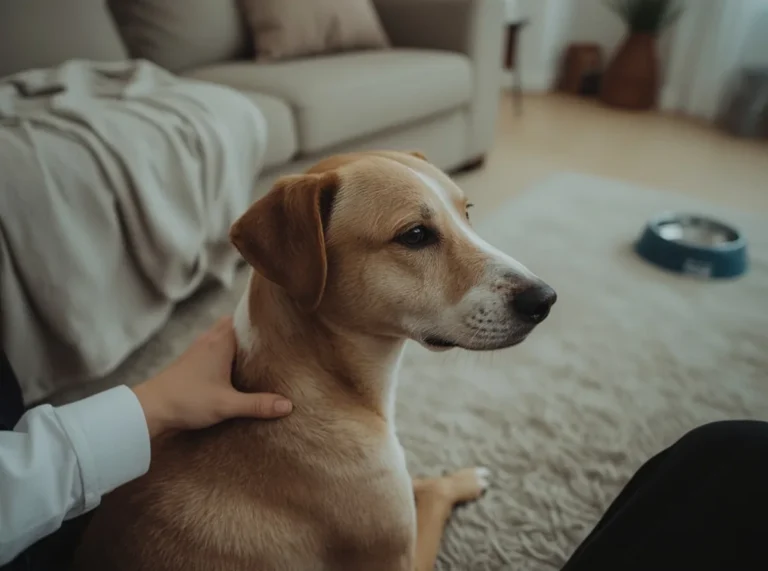
In daily life, avoiding eye contact can appear in many subtle ways. A dog may turn its head when you bend down to pet it. It may look to the side during a greeting at the front door. Some dogs look at a person only briefly, then shift their gaze away and soften their face. Others look at the ground while standing close, especially if they are uncertain about what will happen next.
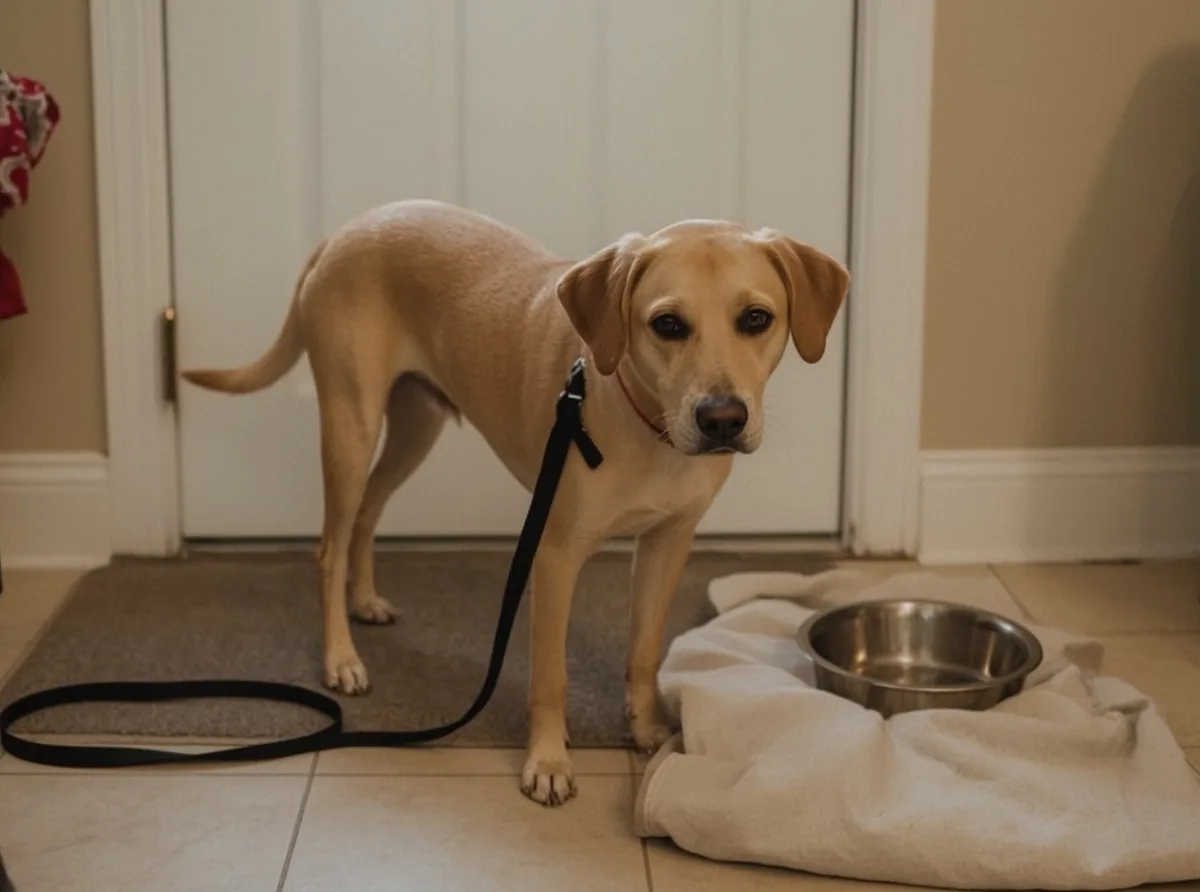
Sometimes the behavior shows up in moments that seem ordinary to people but feel loaded to the dog. A dog being fitted with a harness may avoid eye contact because it anticipates a walk, a vet visit, or a routine it does not enjoy. Another dog may do the same thing when guests arrive, when a child leans in too fast, or when a person speaks in a loud excited voice.
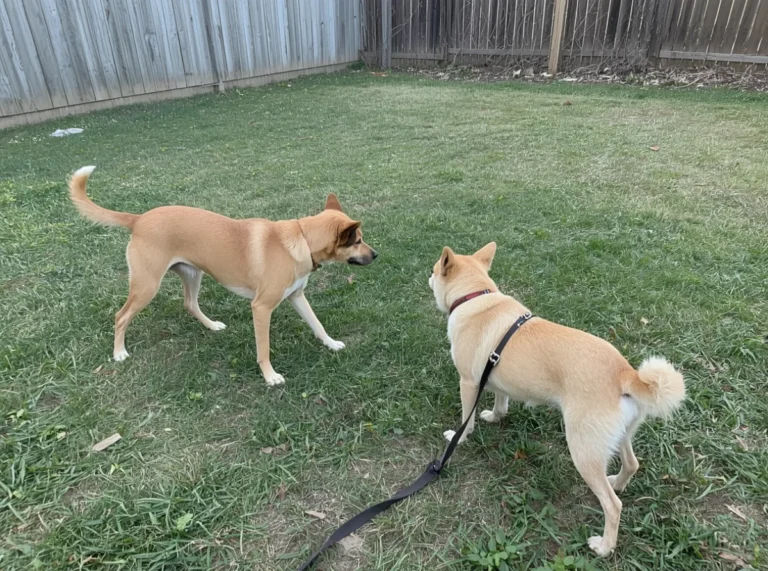
The same dog may look directly at one person but not another. That difference matters. Dogs often respond to posture, tone, speed, scent, and prior experiences. A dog that avoids eye contact with strangers but not with family members is not behaving inconsistently; it is making distinctions based on comfort and trust.
Common everyday patterns
- Turning the head away during petting
- Looking sideways during greetings
- Glancing up briefly, then looking down again
- Avoiding eye contact when being scolded or corrected
- Watching a person from the corner of the eye instead of directly
These patterns can be mild and harmless, or they can point to discomfort. The difference usually comes from the rest of the body. A loose jaw, relaxed tail, and easy breathing suggest a calmer state. A tight mouth, frozen posture, tucked tail, or rapid licking may signal stress.
Possible emotional reasons behind the behavior
One of the most common reasons dogs avoid eye contact is simple caution. Many dogs are naturally careful in social situations. They may not want to appear pushy or confrontational, especially around people who move quickly or reach toward their face. Looking away can help them keep interactions predictable.
Shyness can also play a role. A shy dog may want connection but feel overwhelmed by the intensity of direct attention. The dog may approach on its own terms, then look away once it is close. This does not always mean the dog dislikes people. It may mean the dog needs more time to feel settled.
Anxiety changes the picture further. A nervous dog may find eye contact difficult because it increases arousal. Some dogs become more alert when someone stares at them, and that alertness can be uncomfortable. Avoidance becomes a way to reduce the pressure.
Fear-based behavior can look similar but usually comes with stronger signals. A fearful dog may avoid eye contact while also backing away, freezing, crouching, or showing the whites of the eyes. In those moments, the gaze avoidance is part of a broader attempt to feel safe.
If a dog avoids looking at people and also seems tense, withdrawn, or hard to settle, the behavior deserves closer attention.
Confidence can shape the behavior too. Surprisingly, some secure dogs avoid direct eye contact because they know they do not need to prove anything. They are not worried, but they are also not seeking constant engagement. They may glance at a person, assess the situation, and then return to what they were doing.
How environment and routine influence eye contact
Where the dog lives and how the day unfolds can have a strong effect on this behavior. A quiet home may help a sensitive dog feel comfortable enough to look at people more often. A busy household with frequent movement, noise, and interruptions can push a dog toward avoidance simply because direct attention becomes tiring.
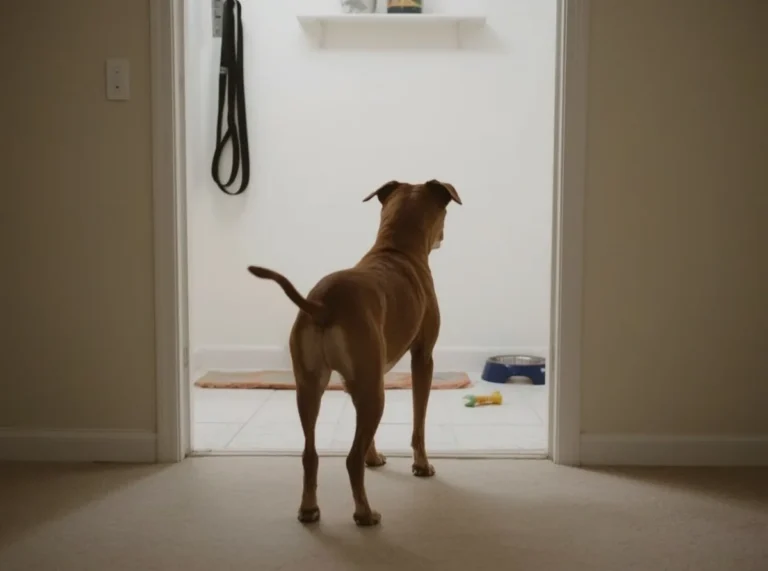
Routine matters as well. Dogs often become more open when their daily life feels predictable. If meals, walks, rest, and play happen at regular times, the dog may have less reason to stay guarded. On the other hand, when the schedule changes constantly, some dogs become more watchful and less willing to make direct eye contact.
Overstimulation can make the behavior more obvious. A dog who has had too many visitors, too much noise, or too much handling may start avoiding faces and eyes as a way to protect its space. This is especially true for dogs that are naturally sensitive or easily aroused. They are not rejecting people across the board. They may simply be asking for less pressure.
Even the physical environment matters. Tight spaces, blocking doorways, leaning over a dog, or standing too close can make eye contact feel more intense. Many dogs are more willing to look at people when there is room to move and no one is crowding them.
Situations that often bring it out
- First meetings with unfamiliar people
- Busy homes with constant activity
- Training sessions that feel too fast or repetitive
- Vet clinics, grooming tables, or other high-pressure places
- Moments after punishment, sudden noise, or conflict
What the behavior may signal about the dog’s state of mind
Avoiding direct eye contact can mean many things, so the full emotional picture matters. When the dog is relaxed, the behavior often looks soft and fluid. The dog may blink slowly, shift weight comfortably, and choose to look away without seeming trapped. In that case, the body language suggests calm social distance rather than distress.
When the dog is unsure, the eye movement may become more frequent and fragmented. The dog might look briefly at the person, then away, then back again. This can happen when the dog is trying to read the situation. It is taking in information while also trying not to invite too much pressure.
When the dog is defensive or very uncomfortable, eye avoidance may appear alongside stillness or tension. The dog may hold its body rigid, keep its mouth shut tightly, or show a hard set to the face. In those moments, the absence of eye contact is not the main issue; it is part of a broader warning system.
| Behavior pattern | Possible meaning | What else to notice |
|---|---|---|
| Soft head turn away | Polite, calm avoidance | Loose body, easy breathing, relaxed tail |
| Brief glances, then looking away | Uncertainty or caution | Hesitation, lip licking, weight shifting |
| Freezing and avoiding eye contact | Strong discomfort | Stiff posture, tucked tail, lowered head |
| Avoidance only with strangers | Selective discomfort | Comfort with familiar people, tension with new ones |
It helps to think of the behavior as information rather than a verdict. The dog is not simply being “good” or “bad.” It is communicating a level of ease, caution, or stress that may shift from one moment to the next.
How owners often misread it
One common mistake is assuming that a dog who avoids eye contact is guilty, stubborn, or unfriendly. Dogs do not experience guilt in the human sense, and avoidance during correction is often a stress response. The dog may be trying to reduce conflict, not confess to anything.
Another misunderstanding is reading every averted gaze as fear. Some dogs are deeply comfortable with people and still do not prefer prolonged eye contact. They may love affection, enjoy family life, and simply not use direct staring as part of their social style.
People also sometimes push for eye contact because they think it builds respect. In some dogs, repeated insistence can have the opposite effect. If a dog already finds direct eye contact intense, asking for more of it can make interactions feel harder, not better.
That does not mean eye contact should be avoided forever. It means the purpose matters. A calm dog may learn that brief, gentle eye contact is part of relaxed communication. But forcing it, especially in tense situations, can create pressure. The dog may then avoid looking even more.
What matters most is not whether the dog looks directly at you, but whether the dog seems comfortable in your presence.
Deeper context of dog-human interaction
Dogs living with people are constantly reading human behavior, often more carefully than people realize. They notice how fast someone moves, whether a hand comes from above, and whether a face is leaning in. For a dog, direct eye contact is only one part of a much larger social exchange.
Some dogs learn to use the side glance as a safer alternative. They can monitor a person without feeling pinned down. This is especially common in dogs that are gentle, observant, or highly responsive to mood. They may be interested in what people are doing, just not eager for intense face-to-face contact.
Bonded dogs often show this behavior in a balanced way. They may avoid direct staring but still follow their owner from room to room, rest nearby, or respond quickly to familiar cues. In that case, the relationship is intact. The dog simply communicates affection and trust through body position, closeness, and attention rather than sustained eye contact.
In multi-dog homes, this behavior can also reflect social manners learned from other dogs. A dog that grew up around calm adults may be especially respectful about gaze. It may transfer that same style to people, keeping interactions soft and non-confrontational.
When the behavior becomes more noticeable
Some dogs avoid eye contact only in certain phases of life or under certain pressures. Puppies may look away easily because they are still learning how to read people. Young dogs can be curious but easily overstimulated. Adult dogs often become clearer in their preferences, showing more direct eye contact when they feel secure and less when they do not.
As dogs age, they may change again. Senior dogs may avoid eye contact more often if they are less comfortable, less energetic, or less interested in social intensity. Vision changes, confusion, and pain can also affect how and when they look at people. A dog that once made steady eye contact may begin turning away more often if something in its physical comfort has shifted.
Life changes can make the behavior stand out, too. A move to a new home, a new baby, visitors staying over, or a change in routine can make even a social dog pull back a little. The gaze change may be temporary, but it still reflects how the dog is coping in the moment.
Long-term patterns worth noticing
- Does the dog avoid eye contact only with certain people?
- Has the behavior increased during stress or after life changes?
- Does the dog look away but stay relaxed, or look away and stiffen?
- Has the dog always behaved this way, or is it new?
- Does the avoidance happen in one setting but not another?
Patterns tell more than single moments. A dog that has always used gentle gaze avoidance may simply have a quiet social style. A dog that suddenly stops meeting your eyes and also stops eating, playing, or moving normally may be telling you something else entirely.
A calm way to read the behavior
Dogs avoid looking directly at people for many reasons: politeness, caution, uncertainty, learned experience, sensitivity, or simple preference. The behavior is not unusual, and it is not automatically a problem. What matters is the context around it.
A dog that looks away but keeps a loose body, easy breathing, and a soft face is likely comfortable enough to stay engaged in its own way. A dog that avoids eye contact while also showing tension, freezing, or retreating may need more space and a slower pace. The same action can mean different things depending on the moment.
In everyday life, the clearest answer usually comes from watching the dog over time. Repeated patterns reveal comfort zones, stress points, and social habits. Direct eye contact is only one part of that picture, and for many dogs, it is not the part that matters most.