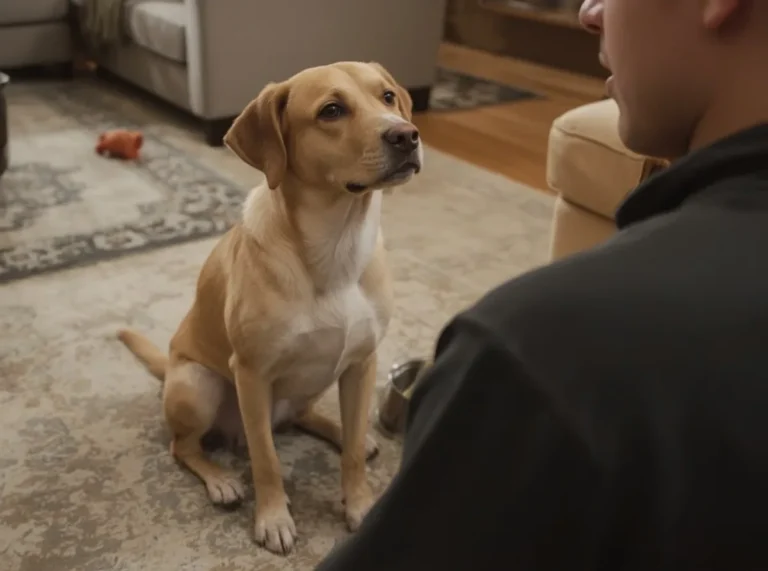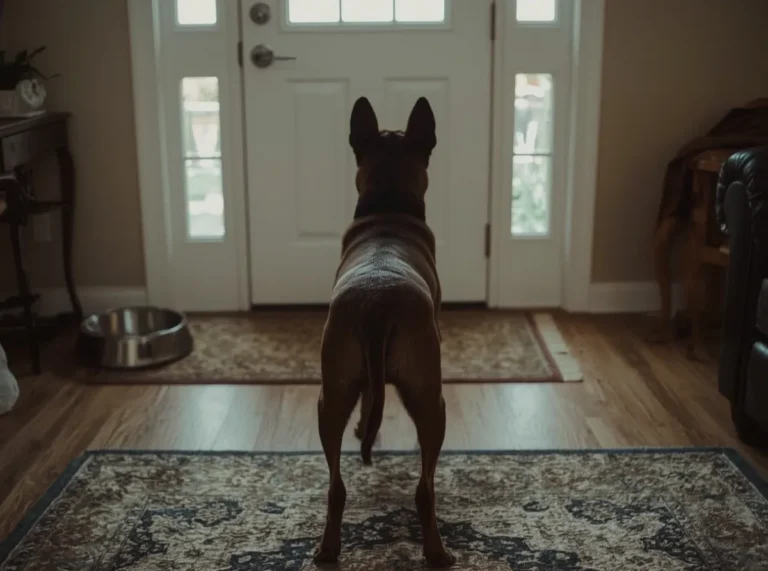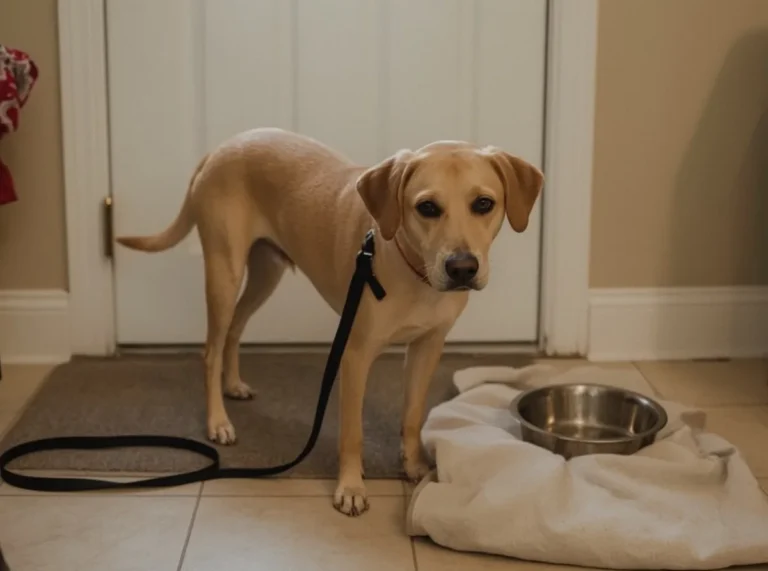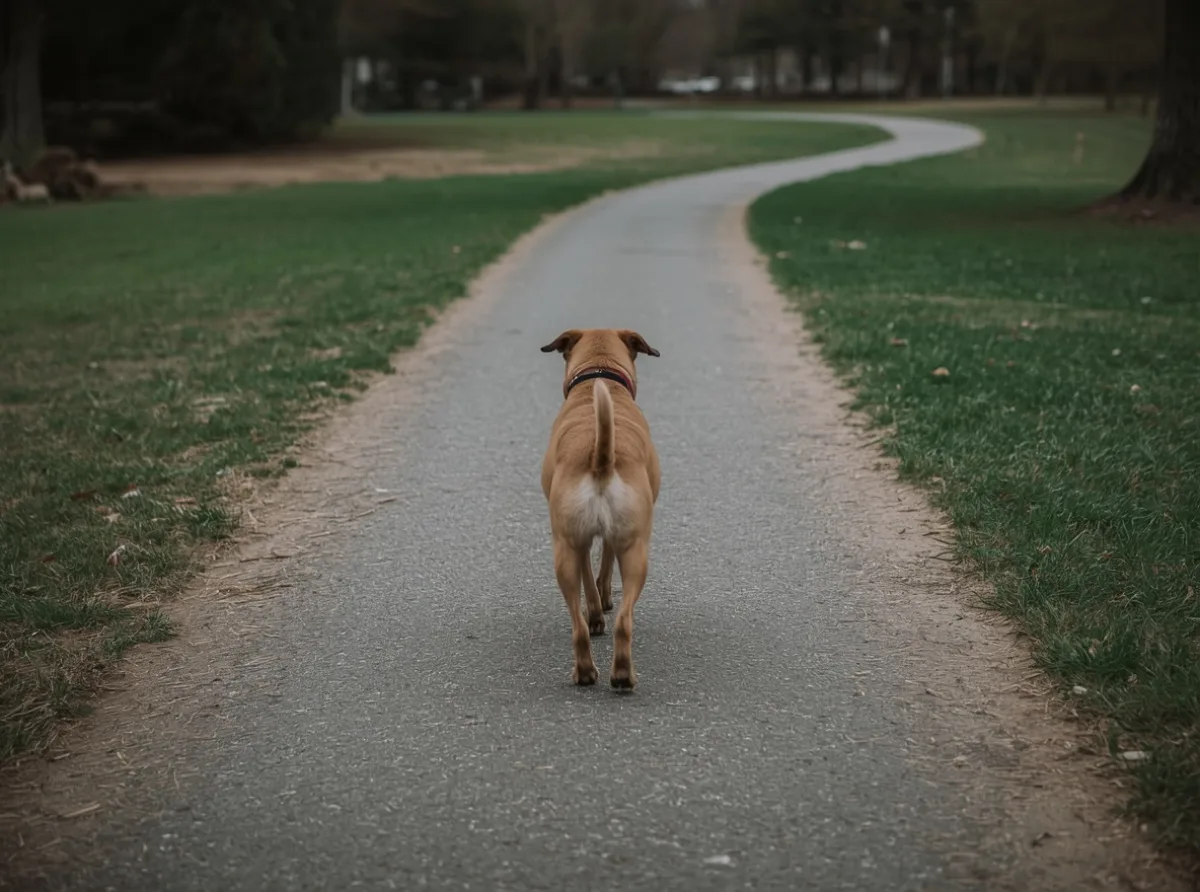
A dog that keeps glancing back at its owner is doing more than making casual eye contact. That backward look can happen on a walk, in the yard, at home, or in the middle of an ordinary routine. Sometimes it lasts only a second. Other times the dog seems to check in again and again, almost as if it is quietly asking for a response.
That behavior can feel easy to read when the dog is relaxed and near its person, but it becomes more interesting when it shows up in different settings. A dog may look back while leading the way down a path, pause and look over its shoulder in the kitchen, or keep turning its head toward an owner during a new experience. The reason is not always the same. In many cases, the backward glance is a small social habit with several possible meanings layered together.
Dogs are extremely tuned in to people. They notice movement, tone, timing, and distance. Looking back can be a way to stay connected, gather information, check safety, or confirm what happens next. It can also appear when a dog feels unsure, excited, curious, or simply attached to the person nearby. The context matters more than the glance itself.
What It Looks Like in Everyday Life
In daily life, this behavior often appears as brief check-ins. A dog walks a little ahead, then turns its head back toward the owner before continuing. Another dog may stop at the top of the stairs, look over, and wait. Some dogs do it repeatedly during walks, especially when the leash is loose and the dog feels free enough to move ahead but still wants contact.
The body language around the glance gives helpful clues. A soft face, loose tail, relaxed mouth, and easy movement usually point to comfort. A stiff body, raised ears, frozen posture, or quick repeated looks may suggest uncertainty. The same motion can mean very different things depending on the rest of the dog’s signal.
One backward glance is not a full message. The whole picture matters: body tension, pace, tail position, ears, and what is happening around the dog.
Common moments when dogs look back
- During walks, especially when the dog is slightly ahead
- When entering a new place or approaching something unfamiliar
- While waiting for a cue, treat, or permission
- When the owner changes direction or stops moving
- In busy environments with sounds, people, or other dogs
- At home when the dog wants attention or reassurance
Some dogs make this behavior part of their normal rhythm. They move forward, look back, then move again. It can feel almost like a conversation without words. The owner becomes a reference point, and the dog keeps checking where that point is and whether it is still there.
Why Dogs Commonly Do This
Looking back is often tied to attachment. Dogs are social animals, and many of them like to confirm the location of the person they trust most. That trust does not always show as constant closeness. Sometimes it shows as monitoring. The dog moves independently, but only as far as it feels comfortable before checking in again.
Another common reason is learning. Dogs quickly notice that people control access to many things: walks begin and end, doors open, treats appear, and routines change based on human action. A dog may look back because it is waiting for the next signal. In that sense, the glance is practical. It helps the dog keep pace with the social rules of the household.
Curiosity also plays a role. Some dogs simply want to know what the owner is doing. If the owner lingers behind, stops suddenly, or makes noise, the dog may turn to inspect the change. That look can seem emotional, but it may just be a quick information check.
Emotional reasons behind the backward look
- Seeking reassurance from a familiar person
- Maintaining social connection during movement
- Checking for direction or permission
- Responding to mild uncertainty in a new setting
- Monitoring the owner because the dog values proximity
- Looking for cues that something interesting is about to happen
In some dogs, the behavior reflects a naturally careful temperament. These dogs tend to stay aware of their surroundings and the position of their person. The backward glance is part social habit and part self-protection. They are not necessarily anxious. They may simply prefer to keep the situation organized.
When the Behavior Shows Up Most Often
Walks are one of the most common settings. A dog that has been ahead of its owner for a few steps may look back to confirm pace, direction, or distance. This often happens at intersections, trail forks, or moments when the owner slows down. The dog may be trying to avoid getting too far away from its person while still exploring.
It also appears in unfamiliar environments. A new park, a busy sidewalk, a friend’s house, or a veterinary lobby can make a dog more watchful. Looking back gives the dog a familiar anchor when the world around it feels unpredictable. The owner becomes a steady point in a changing scene.
At home, the same behavior may happen in smaller ways. A dog walking into another room may turn and look back before continuing. A dog carrying a toy may glance over as if checking whether the game is still active. A dog that is not fully relaxed may do this more often when household routines change, such as when visitors arrive or mealtimes shift.
| Situation | Likely meaning |
|---|---|
| Loose-leash walk | Checking in, staying connected, waiting for direction |
| New environment | Seeking reassurance or monitoring safety |
| At home during routine changes | Looking for cues and stability |
| Near exciting stimuli | Sharing attention between the owner and the trigger |
| During training | Anticipating feedback or the next instruction |
What It May Signal About the Dog’s Emotional State
A calm backward glance often means the dog is socially engaged and comfortable enough to keep moving. The dog does not feel the need to fully detach from the owner. Instead, it is checking the relationship as it goes. That can be a sign of trust, not concern.
But the same action can also appear when a dog feels unsure. In that case, the look may be longer, more frequent, or paired with hesitation. The dog might slow down, stop, or lean back toward the owner. The head turn becomes a request for guidance rather than a casual check-in.
A dog that looks back while staying loose and curious is different from a dog that looks back while hesitating or tensing. One is socially connected. The other may be asking for help or clarity.
Signs the dog is relaxed
- Loose, easy movement
- Soft eyes and face
- Tail carried naturally
- Brief glance, then continued walking
- Curious posture rather than frozen posture
Signs the dog may be uneasy
- Repeated or prolonged staring back
- Slow movement or reluctance to proceed
- Tight body, raised shoulders, or stiff legs
- Tail held low or tucked
- Whining, lip licking, or panting without heat
Not every dog shows tension the same way. Some become very still. Others keep moving but do so with a careful, guarded quality. A dog can be conflicted and still look back politely, which is why the surrounding details matter so much.
How Routine and Environment Influence It
Dogs live by patterns. When the routine is stable, many dogs seem more confident and less likely to check back constantly. When the environment changes often, the backward glance may become more frequent. This does not automatically mean a problem exists. It can simply mean the dog is paying attention because the world is less predictable.
A quiet home can produce one kind of behavior, while a busy household creates another. In a calm space, a dog may look back mostly out of affection or habit. In a loud home with children, guests, or sudden movement, the same dog may look back to track the action around it. Noise, clutter, and too much activity can make some dogs more watchful.
Daily stimulation matters too. Dogs that get enough exercise, enrichment, and mental engagement often settle into a more even rhythm. Dogs that are under-stimulated may appear restless and keep checking back because they have little else to focus on. On the other hand, a dog that is overstimulated may look back more often because it is trying to manage a lot at once.
Environmental factors that can increase the behavior
- Unpredictable daily schedules
- New people or frequent visitors
- Busy sidewalks, parks, or indoor spaces
- Limited exercise or mental engagement
- Recent changes in household routine
- Long periods of confinement followed by excitement
Some dogs are more sensitive by nature. They notice changes quickly and prefer to stay close enough to track what matters. In those dogs, the backward look is part of a broader habit of staying informed. It is not dramatic. It is practical.
What Owners Often Assume vs What It May Mean
Many owners assume the dog is being clingy, needy, or stubborn. Sometimes that is not far from the truth, but often the reason is simpler and more functional. The dog may be checking pace, looking for direction, or staying socially synced with the owner. Dogs do not usually look back for one single reason every time.
Another common assumption is that the dog is nervous whenever it looks back. That is not always correct. Plenty of confident dogs do this because they like to know where their person is. They may be independent in some settings and still maintain frequent check-ins. Confidence and connection can exist at the same time.
It is also easy to overread the behavior as a command request. A dog may indeed want something, but the glance alone does not tell the full story. The dog could want reassurance, direction, or simple social contact. If the pattern happens after the owner pauses, changes pace, or speaks, the dog may have learned to expect something specific in that moment.
Looking back is often a small social habit, not a single emotional label. It can mean “Where are you?” “What next?” “Are we okay?” or simply “I see you.”
How It Connects to Common Dog Traits
Attachment is one of the clearest connections. Many dogs form strong bonds with their people and like to keep that bond visually active. They do not always stay glued to the owner’s side, but they often keep the owner in view. The backward glance is one way to maintain that connection without stopping everything else.
Alertness is another trait at play. Dogs notice motion and changes in the environment very quickly. A sudden pause, a shift in walking direction, or a new sound behind them can trigger a glance back. That check helps them update their mental map of the situation.
Sensitivity matters as well. Some dogs are highly responsive to tone and body language. If they sense hesitation, excitement, or uncertainty in the owner, they may turn back more often. The dog is not just seeing the owner. It is reading the moment.
Traits that often shape this habit
- Strong social attachment
- High environmental awareness
- Learning through routine and repetition
- Moderate or high sensitivity to change
- Desire to stay coordinated with the owner
That mix of traits explains why the behavior can be seen in many types of dogs. A confident Labrador, a cautious shepherd mix, and a small companion dog may all look back, but each may do it for slightly different reasons. The behavior itself is common. The motivation underneath it is more individual.
When the Backward Look Becomes More Frequent
Sometimes the behavior becomes noticeable during transitions. Dogs often look back more when moving from one place to another, when leaving a familiar area, or when the owner is acting differently than usual. If a dog keeps turning its head to check on the owner, it may be trying to keep the situation organized in its mind.
It can also become more frequent after a change in the dog’s life. A new home, a new schedule, a new dog in the household, or a recent absence by the owner can all affect how often the dog checks in visually. In these periods, the dog may rely more heavily on the owner’s presence as a source of stability.
Some dogs grow out of the habit as they become more familiar with their environment. Others keep it as a stable part of their personality. There is no single pattern that applies to every dog. What matters is whether the behavior fits the context and remains part of a generally relaxed, functional routine.
How the Behavior Changes Across Different Dogs
Young dogs often look back in a more obvious way because they are still learning the rules. They may glance over frequently to check whether the owner is keeping up, whether something is allowed, or whether a new environment is safe. Their backward looks may be quick, animated, and repeated often.
Adult dogs may do it more selectively. Once they know the routine, they often reduce unnecessary checks. A mature dog that still looks back may be showing a long-standing habit of staying connected or may simply be working from a personality that values awareness and contact.
Older dogs can develop new patterns as their comfort, vision, hearing, or confidence changes. A senior dog may look back more often if movement feels less certain or if sensory changes make the environment harder to track. In that case, the glance can be a practical way to stay oriented.
Age-related patterns
- Puppies: frequent checking, quick learning, high curiosity
- Adults: more targeted looking, often tied to routine or context
- Senior dogs: may rely more on the owner for orientation and reassurance
Across all ages, the clearest clue is consistency. A dog that looks back in a relaxed, familiar way is usually communicating something simple and ordinary. A dog that suddenly increases the behavior, especially with tension or hesitation, may be responding to a change worth noticing.
What the Habit Can Tell You in the Long Run
Over time, this behavior often becomes part of the relationship pattern between dog and owner. Some dogs naturally check in frequently because they like working as a pair. Others are more independent and only glance back when the situation changes. Neither version is better. They are just different ways of staying socially organized.
The most useful observation is not how often the dog looks back on one particular day. It is whether the behavior fits the dog’s normal style. A steady, relaxed habit usually says the dog feels connected and aware. A sudden shift in frequency, especially if it comes with body tension or avoidance, can point to stress, confusion, or a change in the environment.
That is why the same glance can feel meaningful in one setting and ordinary in another. A dog may look back because the walk is going well, because the surroundings are unfamiliar, or because the owner has become the dog’s main point of reference. The backward look is often small, but it carries a lot of social information when seen in context.
In everyday life, this behavior often reflects a mix of attachment, attention, and simple communication. The dog is keeping the relationship active while moving through the world.
When a dog keeps looking back, it is usually not sending one dramatic message. It is monitoring, syncing, checking, and staying engaged. The meaning shifts with the moment. Calm dogs do it. Careful dogs do it. Confident dogs do it too. The difference lies in how they do it and what else the body is saying at the same time.