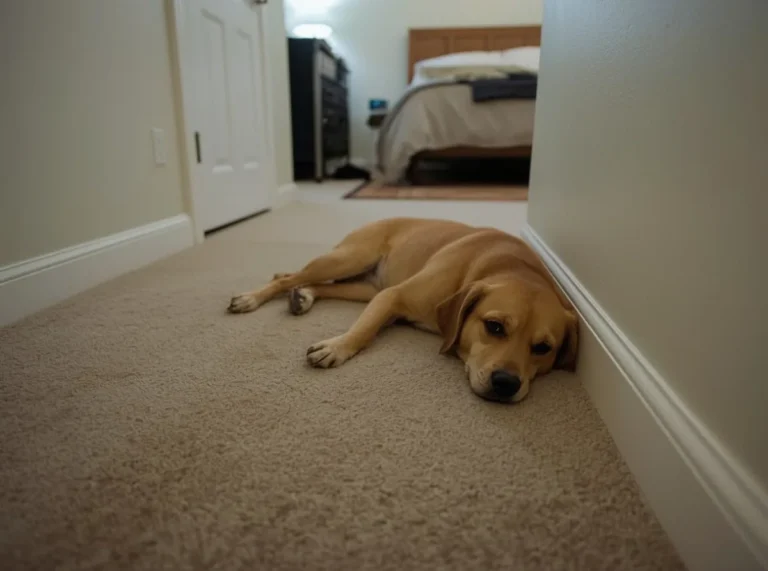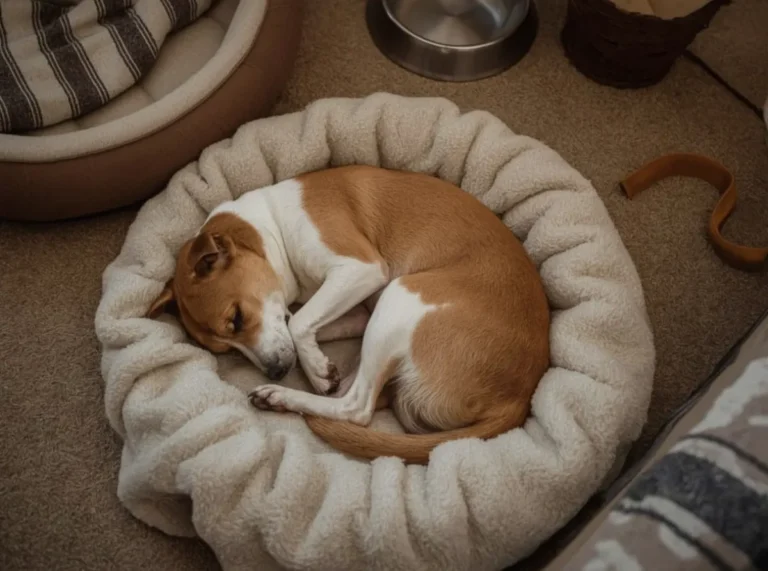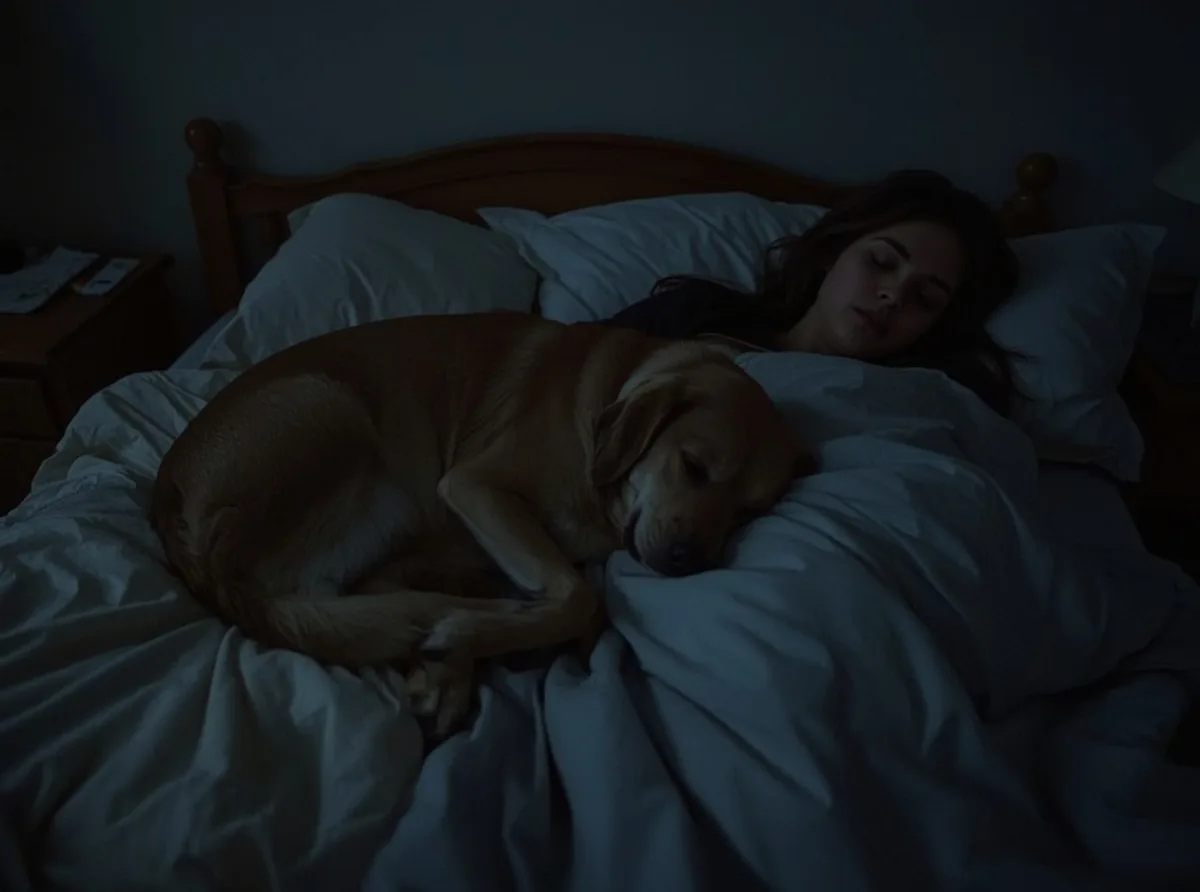
Some dogs do not just want to be in the same room at night. They want a specific place close to a person, often pressed against legs, tucked near the hips, or curled up just outside an arm’s reach. The choice can look simple from the outside, but it often comes from a mix of comfort, habit, social attachment, and how the dog reads the household after dark.
Night changes the way dogs experience a home. Noise drops, movement slows, and the familiar daytime routine disappears. In that quieter setting, a dog may gravitate toward the person who feels most steady and predictable. For many dogs, sleeping close is not only about warmth or a soft spot. It is also about staying near what feels safe.
Some dogs choose closeness every night, while others drift back and forth depending on the mood of the household, the season, or their own energy level. A dog that follows a person from room to room in the evening may settle even closer once lights go out. Another dog may seem independent all day and still quietly move beside the bed when the house becomes still. The pattern often says more than the single moment does.
What Sleeping Close Usually Looks Like in Daily Life
Many owners notice a clear pattern. The dog waits near the bedroom door, circles once or twice, then picks a place as close as possible without fully getting in the way. Some dogs sleep with their back against a person’s legs. Others lean against a calf, press into a side, or rest just below the bed where they can still sense the human nearby.
Not every close-sleeping dog behaves the same way. A calm dog may settle quickly and stay there all night. A more alert dog might reposition several times, check the room, then return to the same person. Some dogs prefer direct contact, while others want a nearby presence without being touched. Both versions can mean the same basic thing: the dog values proximity.
The behavior also changes with context. A dog may sleep farther away after a long walk and a full evening of activity, but move closer on quiet nights. During storms, after visitors leave, or when the household schedule changes, the need to be near a person often becomes more obvious. The dog is responding to the whole environment, not just the bed itself.
Closeness at night is often less about “clinginess” and more about where the dog feels most settled, secure, and aware of the home.
Comfort Is One of the Strongest Reasons
Dogs are social animals, and closeness often feels physically good to them. A familiar body next to them can be soothing. The rhythm of breathing, the rise and fall of a mattress, and the presence of a known scent can all help a dog relax after the stimulation of the day.
Comfort can also be practical. Some dogs seek warmth, especially in cooler rooms or during colder months. Others prefer a softer surface close to a person because it offers a mix of comfort and security. Even if the dog has a perfectly good bed nearby, the human side may still be the better option in the dog’s mind.
There is also a learned comfort involved. If a dog has spent many nights near people and nothing bad happened, that pattern becomes familiar. Familiar feels easier. Dogs tend to repeat what has worked before, especially when it helps them fall asleep faster and stay settled longer.
Attachment and Social Bonding Matter
Sleeping near a person can reflect a strong social bond. Many dogs naturally prefer staying close to the individuals they trust most. That trust often shows up at night because the dog is not busy with outdoor smells, play, or household movement. When those distractions fade, attachment becomes easier to see.
Some dogs are especially tuned in to one person. They may choose that person’s side of the bed, that person’s chair in the evening, or that person’s path through the house. This does not always mean the dog is anxious. Sometimes it simply means the relationship feels especially important to the dog’s sense of routine and belonging.
Breeds and individual personalities play a role, but they do not explain everything. Even within the same breed, one dog may be happy sleeping across the room while another insists on staying within touching distance. Early experiences, daily habits, and temperament often shape the pattern more than any single label can.
Common signs that closeness is part of the bond
- The dog follows a person into the bedroom before settling.
- The dog relaxes quickly when the person lies down.
- The dog prefers a body contact position over a separate bed.
- The dog seeks the same person consistently, not just any available spot.
Safety and Alertness Can Influence the Choice
At night, many dogs become more watchful. A home that feels ordinary in daylight can seem different in darkness. Sounds carry farther, shadows move strangely, and the usual flow of activity stops. A dog may move closer to a person because that person is part of the dog’s internal map of safety and alertness.
This is especially common in dogs that are naturally sensitive to noise or movement. They may position themselves near a sleeping person because that location feels like the best place to monitor the room without having to stay on full alert. In a way, the dog can rest while still keeping one part of the mind on the environment.
Some dogs also settle closer when they want reassurance that the house is quiet and stable. The person’s sleeping presence can act like a steady signal that nothing unusual is happening. That is one reason a dog may choose a closer spot during thunderstorms, fireworks, or nights with unusual household sounds.
A dog that sleeps close may be seeking both comfort and a sense of watchful security, especially in a quiet or unfamiliar nighttime setting.
Habit and Routine Often Shape the Pattern
Dogs are very good at noticing routines. If a dog has been allowed on the bed, near the bed, or in a bedroom for months, that pattern often becomes part of the evening ritual. Once a routine feels established, the dog may continue choosing closeness simply because it has become the expected way to end the day.
The routine does not need to be intentional to take hold. A puppy that curled up beside someone during recovery, a rescue dog that found comfort after arriving in a new home, or an older dog that gradually got used to a bedroom arrangement can all develop a strong habit of sleeping near people. Repetition matters.
When the routine changes, the behavior may change too. A dog who used to sleep close may drift farther away if the room gets too warm, if a new pet joins the home, or if the person’s sleep schedule shifts. Likewise, a dog that usually stays at the foot of the bed may come closer after a stressful day, simply because the usual pattern no longer feels enough.
Emotional State Can Be Part of the Picture
Closeness at night can reflect emotional needs, but those needs are not always dramatic. Sometimes the dog is just mildly uneasy after a busy day. Sometimes the dog is tired and looking for the easiest place to fully relax. Other times the behavior suggests a deeper need for reassurance.
A dog that has trouble settling when alone may move closer because proximity helps reduce uncertainty. That can happen with newly adopted dogs, young dogs still learning the household, or dogs that have experienced big changes in routine. The nighttime setting removes many distractions, so feelings that were easy to miss during the day may show up more clearly.
It helps to look at the whole picture. A dog that sleeps close, eats normally, plays well, and relaxes during the day is probably showing a preference rather than distress. A dog that seems restless, follows constantly, startles easily, or struggles to settle may be leaning on proximity for emotional support. The behavior itself does not tell the full story, but the surrounding patterns often do.
When closeness may point to stress rather than preference
- The dog paces before settling and seems unable to relax.
- The dog startles quickly at small noises.
- The dog stays pressed to a person all night and resists moving away even briefly.
- The dog shows other signs of worry during the day, such as shadowing, restlessness, or loss of interest in normal activities.
Age Can Change How Close a Dog Sleeps
Puppies often sleep near people because they are new, unsure, and still learning the house. They rely heavily on contact and scent for reassurance. In those early weeks, closeness is part comfort, part survival instinct, and part habit-building. A puppy that sleeps near people is practicing how to feel safe in a home it does not yet fully understand.
Adult dogs may be more selective. Some become more independent once they know the house well. Others deepen their attachment over time and continue to prefer close contact at night. There is no single timeline. A dog that once slept across the room may decide years later that a person’s feet are the best spot in the house.
Older dogs can also seek closeness for different reasons. Vision changes, hearing loss, joint stiffness, or general aging may make a familiar person feel like the most stable point in the room. A senior dog may sleep closer because moving around the house at night feels less appealing than settling near the human who is already there.
The Home Environment Makes a Big Difference
The same dog may sleep closer in one home and farther away in another. Room temperature, bed size, household noise, other pets, and sleeping habits all shape the choice. A small apartment with predictable routines can encourage closeness simply because the dog is already sharing a compact space with people. A larger home may allow more independence, but that does not necessarily reduce the desire for contact at night.
Other animals can change the picture too. If another dog takes over the preferred soft bed, a dog may choose the human instead. If the household is active and full of movement, the dog may wait until everything is quiet before moving in close. And if the bedroom is the calmest room in the house, the dog may naturally link that space with the best chance for rest.
Even simple comfort details matter. A drafty room can make a dog move closer. A memory foam mattress can feel easier on older joints. A raised bed or crate placed near the person may offer the best mix of structure and connection. Dogs often make practical choices that line up neatly with their emotional ones.
| Possible factor | How it may affect closeness |
|---|---|
| Cold room | Dog moves nearer for warmth |
| Noise outside | Dog seeks reassurance beside a person |
| New pet in home | Dog may switch to a different sleeping spot |
| Busy daytime schedule | Dog may want more contact at night |
What Owners Often Misread
It is easy to assume a dog sleeping close means the dog is needy, spoiled, or unable to be alone. Sometimes that is not the case at all. Many dogs simply prefer physical nearness the way some people prefer a certain pillow or blanket. The behavior may be about comfort, not dependency.
Another common mistake is assuming the dog is trying to protect the person. Protection can be part of the picture in some dogs, but it is not the only explanation. A dog may stay close because the person is the center of the dog’s world at night, because the room feels calmer there, or because that spot has always worked well.
It is also easy to overread the behavior when it changes. A dog that sleeps a little farther away for a few nights is not necessarily pulling back emotionally. The dog may simply be too warm, more tired than usual, or less interested in direct contact at the moment. Dogs often adjust in small ways that reflect ordinary changes in the home.
Distance or closeness at night is best understood as a pattern, not a single decision made once and for all.
Subtle Signals That Often Travel With the Behavior
The way a dog sleeps close can reveal a lot. A loose body, soft face, and slow breathing usually point to comfort. A dog that curls gently into the space beside a person is likely choosing rest and familiarity. These dogs often shift once, sigh, and stay there.
Other body language can suggest mixed feelings. A dog that stays close but keeps lifting the head, flinching at sounds, or repositioning frequently may not be fully settled. That does not always mean something is wrong, but it can mean the dog is still managing the environment while trying to rest.
Some dogs show a very practical kind of closeness. They choose the nearest warm spot and settle without fuss. Others are more deliberate, walking around the bed several times before making contact. The slower approach can signal uncertainty, habit, or a strong preference for finding the exact right position before sleep.
How to Read the Pattern Over Time
The most useful clues usually come from repetition. Does the dog sleep close every night, only after stressful days, or mainly when the room is quiet? Does the behavior change with weather, guests, schedule shifts, or the presence of other pets? Those details help explain whether closeness is a steady preference or a response to something specific.
It also helps to compare nighttime behavior with daytime behavior. A dog that is confident, playful, and relaxed during the day but wants to sleep near a person at night is often showing a normal attachment pattern. A dog that seems tense, hyperaware, or unable to relax in most settings may be asking for more support than simple habit can explain.
Owners often notice that the dog’s preferred distance is surprisingly consistent. Some dogs always want body contact. Some want to lie on the floor beside the bed. Some need only the doorway. That preferred distance can tell you a lot about how the dog balances connection and independence.
Why the Behavior Feels Stronger in Some Homes
In a calm home, a dog may sleep close because there is little reason not to. The room is predictable, the person is nearby, and the surroundings are easy to settle into. In a busier home, closeness can become even more appealing because it gives the dog a stable anchor amid more movement and sound.
Some households unintentionally encourage the behavior by making the bedroom the quietest and most consistent room in the house. If the dog spends most evenings there, the space itself becomes associated with rest and connection. That association can be powerful. Over time, the dog may begin to head there automatically when nighttime starts.
Even changes that seem small to people can influence the choice. A new fan, a different blanket, a guest staying over, or a rearranged sleeping setup may make the dog shift positions. The behavior is flexible enough to reflect those changes, but stable enough to return to familiar closeness once the home feels normal again.
What the Behavior Usually Comes Down To
Dogs sleep closer to people at night for a mix of reasons, and those reasons are often practical as much as emotional. Comfort, warmth, habit, social attachment, alertness, and the structure of the home all shape the choice. The same dog may lean on one reason more than another depending on the night.
That is why the behavior can look simple while still carrying a lot of information. A dog tucked against a person’s side may be enjoying physical comfort. A dog resting near the bed after a noisy day may be seeking reassurance. A dog that has done this for years may just know that this is the easiest place to relax.
What matters most is the pattern around the behavior. The way the dog moves in, settles, and responds to the night often says more than the position itself. Close sleeping is rarely random. It is usually a small, steady choice shaped by the relationship between the dog, the person, and the space they share after dark.