A sleeping dog that suddenly twitches, kicks a paw, or lets out a soft whimper can catch any owner off guard. It often looks strange for a moment, especially when the movement is quick or repeated. Most of the time, though, twitching during sleep is a normal part of how dogs rest.
Dogs do not sleep in one flat, unchanging state. Their bodies move through different sleep stages, and some of those stages are active. A leg may jerk, whiskers may flutter, or the tail may give a tiny flick. These brief movements usually happen when the brain is processing dreams or shifting between deeper and lighter sleep.
That said, not every twitch means the same thing. Some movements are harmless and common, while others may be worth watching more closely. The difference often comes down to how the dog looks overall, how often it happens, and whether anything unusual appears with it.
What Twitching During Sleep Usually Looks Like
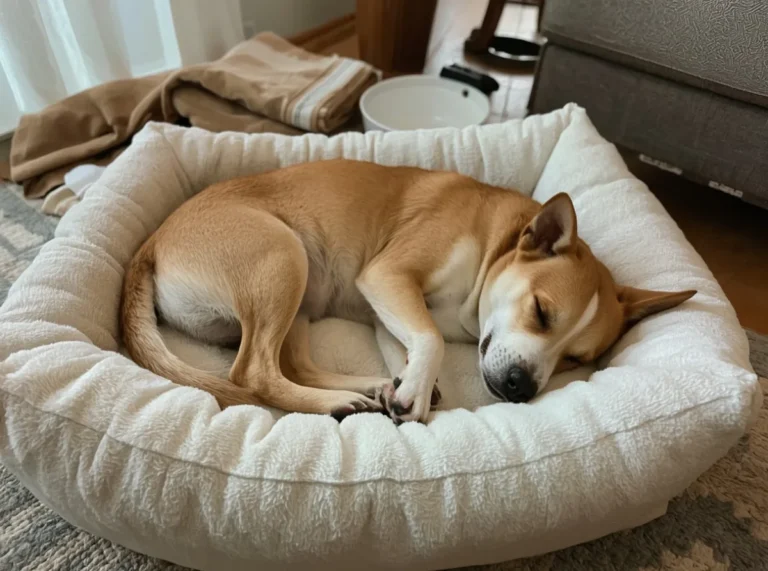
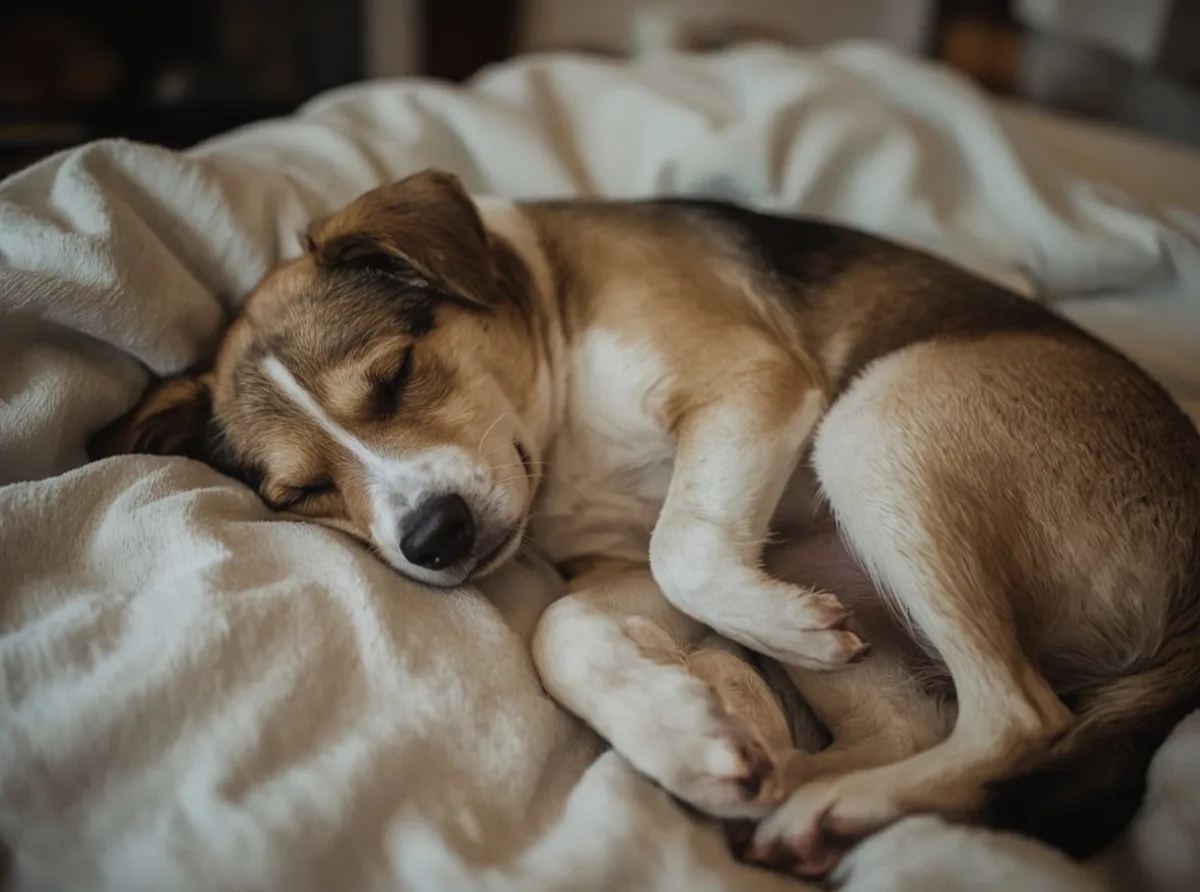
In everyday life, sleep twitching is often subtle. A dog may be lying on its side with loose muscles, and then a paw starts paddling for a few seconds. Sometimes the mouth moves as if the dog is chewing, or the eyelids flick rapidly under closed lids. The body stays relaxed even while small parts move on their own.
Some dogs twitch only occasionally. Others do it more often, especially in deeper sleep. Puppies tend to show it more visibly because their sleep cycles are active and their developing nervous systems are still maturing. Older dogs can twitch too, although the pattern may change with age.
It helps to notice whether the twitching is brief and smooth or sharp and repeated. A few little kicks during a nap usually mean something very different from stiff, forceful movements. The overall body posture matters just as much as the motion itself.
Common signs that the twitching is normal
- The dog is asleep and breathing evenly
- Muscles stay loose, not rigid
- The twitching lasts only a few seconds at a time
- The dog settles easily afterward
- There are no signs of distress when awake
Brief movements during sleep are often linked to normal dream activity, especially when the dog otherwise looks calm and comfortable.
Dreaming and Sleep Cycles in Dogs
Dogs, like people, experience different stages of sleep. During lighter sleep, the body tends to stay more still. During deeper stages, especially REM sleep, the brain becomes more active and the body may show small movements. This is the stage most commonly associated with dreaming.
Owners often notice twitching, whimpering, paw movement, or a quick tail wag during these moments. It may look as if the dog is running in a dream, chasing something, or reacting to a memory. Nobody can know the exact content of a dog’s dream, but the pattern fits the way canine sleep works.
Not every twitch happens in the same stage. Some dogs move a little as they drift in and out of sleep, especially if they are dreaming lightly. Others become very still for a while and then show a burst of movement. Both patterns can be normal.
Why puppies twitch so much
Puppies often twitch more than adult dogs because they spend a lot of time sleeping and their sleep is rich in active brain development. Their bodies are also still learning coordination. That can make sleep movements more noticeable and more frequent.
A young puppy may paddle all four legs, make tiny barking sounds, or shiver briefly while sleeping. In most cases, this is simply part of normal growth. As puppies mature, the movements usually become less dramatic, though they do not disappear completely.
When Twitching Is Just a Body Response
Sometimes what looks like a dream reaction is even simpler: the body is just adjusting itself. A dog may twitch in response to a muscle release, a shift in sleep position, or a brief nerve response. These little movements are common and do not always mean the dog is emotionally active in that moment.
It is easy to read too much into sleep behavior because dogs look expressive even when they are unconscious. A paw kick does not always mean excitement. A nose wiggle does not always mean stress. Often, the movement is part of normal nervous system activity with no deeper concern attached.
Still, context matters. If a sleeping dog is resting in a comfortable place, breathing normally, and otherwise peaceful, twitching is usually routine. If the body looks tense or the movements become hard to interrupt, the picture changes.
Normal sleep twitching tends to be brief, irregular, and accompanied by a relaxed body. That combination is reassuring.
Environmental Factors That Make Twitching More Noticeable
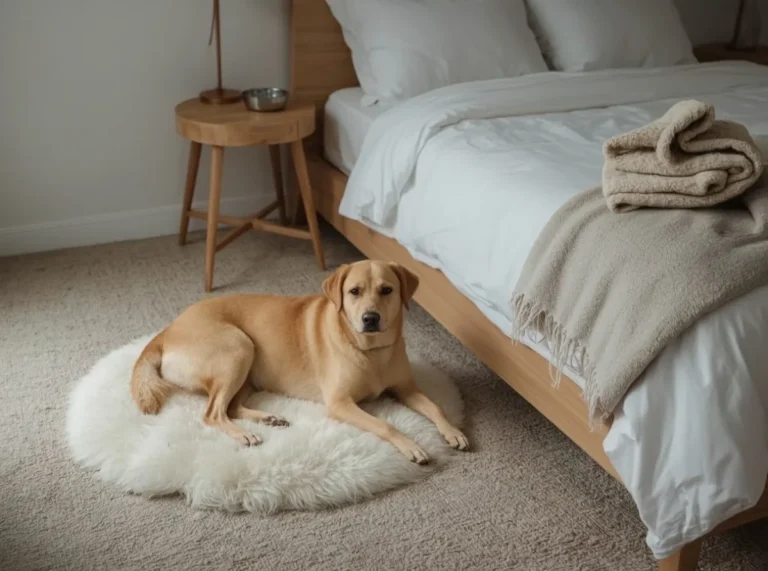
Where and how a dog sleeps can affect how obvious twitching appears. A dog that naps in a quiet room with deep, uninterrupted rest may cycle into dream sleep more easily, so movements may stand out. After a busy day, exercise, or strong stimulation, dogs may also sleep more deeply and show more active sleep behavior.
Household rhythm matters too. In a calm home, owners may notice every little movement because the surroundings are still. In a noisy or active home, twitching can happen just as often, but it may be harder to spot. The behavior does not necessarily change as much as the visibility of it does.
Temperature, bedding, and general comfort can also play a role. A dog that is physically relaxed and settled in its favorite spot may enter deeper sleep faster. A tired or overstimulated dog might twitch more during those deep sleep phases simply because it has more sleep pressure to work through.
Situations where twitching often becomes more common
- After a long walk or play session
- During naps in a quiet, familiar place
- When the dog is especially tired
- In puppies and young dogs
- During longer sleep periods at night
What Twitching May Suggest About Emotional State
Sleep twitching by itself usually does not point to a specific emotional problem. Still, a dog’s broader behavior can give useful clues. A dog that seems secure, rested, and predictable in daily life often twitches for ordinary sleep reasons. A dog that is constantly tense when awake may have more restless sleep overall, though the twitching itself is still not a diagnosis.
Some owners wonder whether twitching means the dog is having a bad dream. That is possible, but it is hard to know. Dogs may also twitch while dreaming about routine experiences like running, playing, sniffing, or interacting with familiar places and people. The movement is not automatically a sign of fear.
What matters more is the pattern across the whole day. A dog that startles easily, has trouble settling, or seems unable to relax may also sleep more lightly in general. In those cases, the sleep twitching is only one piece of a larger picture.
If a dog twitches during sleep but otherwise rests well, eats normally, and behaves like itself when awake, the movement is usually part of normal sleep activity.
How Owners Often Misread Sleep Movements
Sleep twitching can look dramatic for a second, so it is easy to misinterpret. A quick leg kick may seem like a seizure to someone who has never seen it before. A soft whine may sound worrying. But ordinary sleep movements usually stop on their own and leave the dog fully normal once awake.
Another common misunderstanding is to assume that every movement means discomfort. In reality, a dog can be deeply relaxed and still show active sleep signs. The body is not always still when the mind is resting. That is true for many healthy dogs.
Owners may also assume the dog wants to be woken up. Usually, that is not necessary. If the twitching is mild and brief, letting the dog sleep is often the best choice. Waking a dog unnecessarily can interrupt rest and cause confusion.
Signs that need closer attention
- Repeated, intense jerking that does not look like brief dream movement
- Stiffness rather than loose twitching
- Loss of awareness when awake after the episode
- Unusual drooling, collapse, or trouble standing
- Episodes that happen often and seem to worsen
When Twitching May Be Less Normal
Most sleep twitching is harmless, but not every movement should be ignored. If the twitching is strong, prolonged, or paired with unusual signs, it may deserve a veterinary conversation. The key difference is usually in the overall picture, not just the movement itself.
For example, a dog that jerks in sleep and then wakes up normally is different from a dog that has repeated episodes with stiff limbs, confusion, or unusual vocalization. A dog that seems unsteady, disoriented, or not fully responsive afterward is showing something beyond ordinary dreaming.
Frequent twitching that suddenly becomes much more intense than usual can also be worth noting. A change in pattern is often more important than the existence of twitching itself. Dogs have always twitched in sleep; the question is whether that pattern is staying consistent.
| What you see | More likely meaning |
|---|---|
| Brief paw kick, relaxed body, normal breathing | Typical dream-related movement |
| Soft whimper or mouth twitch during sleep | Common active sleep behavior |
| Rigid shaking, repeated episodes, confusion on waking | Needs closer attention |
| Sudden change from usual sleep pattern | Worth monitoring |
How Routine and Daily Life Shape Sleep Behavior
Dogs are creatures of habit, and sleep can reflect that. A dog with a steady routine often settles into deeper, more predictable rest. That may make normal twitching easier to notice, but it also often supports better overall sleep quality.
In a household with changing schedules, late-night activity, or inconsistent quiet time, a dog may not rest as smoothly. Some dogs compensate by sleeping more heavily when they finally get the chance. Others show lighter, broken-up sleep with smaller movements. The environment shapes the rhythm, even when it does not create a problem on its own.
Daily stimulation also matters. Dogs that get enough exercise, sniffing time, play, and mental engagement may rest more fully. That does not mean they will twitch less. It simply means their sleep patterns may be more settled. A dog that is under-stimulated can be restless in more obvious ways, both awake and asleep.
Observing Patterns Over Time
One twitch during one nap rarely tells much. Patterns over time tell more. If a dog has twitched lightly in sleep for years and acts completely normal otherwise, there is usually little reason for concern. If the behavior is new, stronger, or happening alongside other changes, the context becomes more important.
It can help to notice when the twitching happens most. Is it during long night sleep or short afternoon naps? Does it appear after active days? Is it more visible in puppies than as the dog gets older? These details can clarify whether the behavior fits normal sleep or something worth discussing with a vet.
Long-term consistency matters because dogs often have their own sleep style. Some dream visibly. Some barely move at all. Some shift between both. What matters is whether the pattern stays familiar and whether the dog seems healthy in every other respect.
Sleep twitching is usually meaningful only when it changes in intensity, frequency, or appearance alongside other behavior changes.
A Calm Way to Think About It
In most homes, a twitching dog is simply a sleeping dog doing what sleeping dogs do. The body moves a little, the brain stays active, and the rest of the dog remains tucked into rest. That small pattern is usually part of normal life with a healthy dog.
What helps most is paying attention without overreacting. A relaxed body, regular breathing, and quick return to sleep are reassuring signs. A major shift in movement, awareness, or recovery is the part that deserves a closer look. That distinction keeps the meaning of the behavior clear without turning every paw kick into a worry.
For many dogs, sleep twitching is just another familiar part of the day. It appears, fades, and comes back again with no problem at all. When the rest of the dog’s behavior is steady, the twitching usually fits that same rhythm.