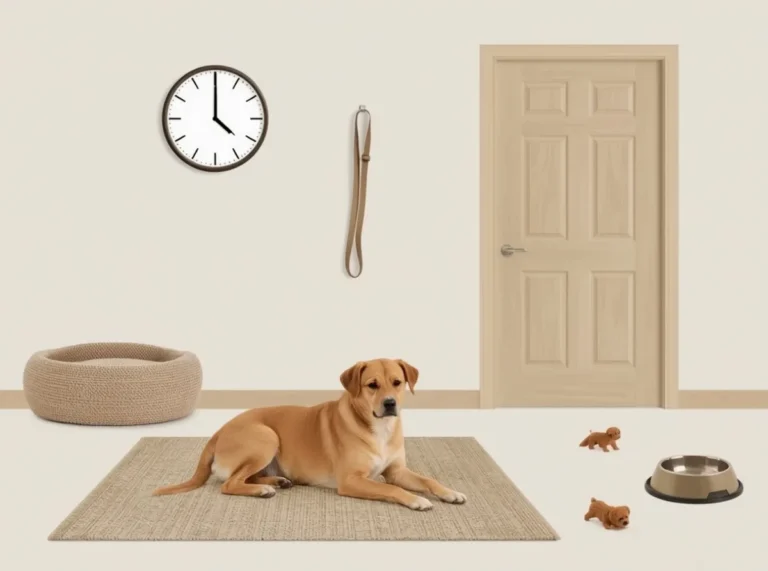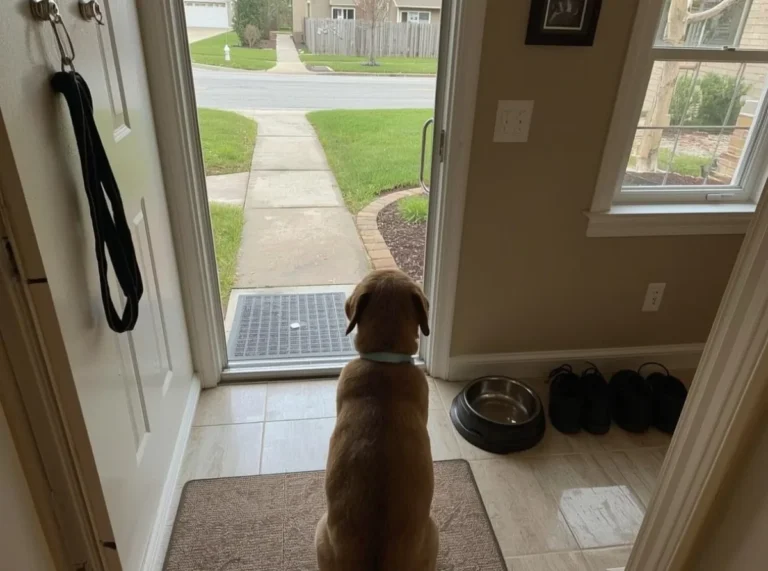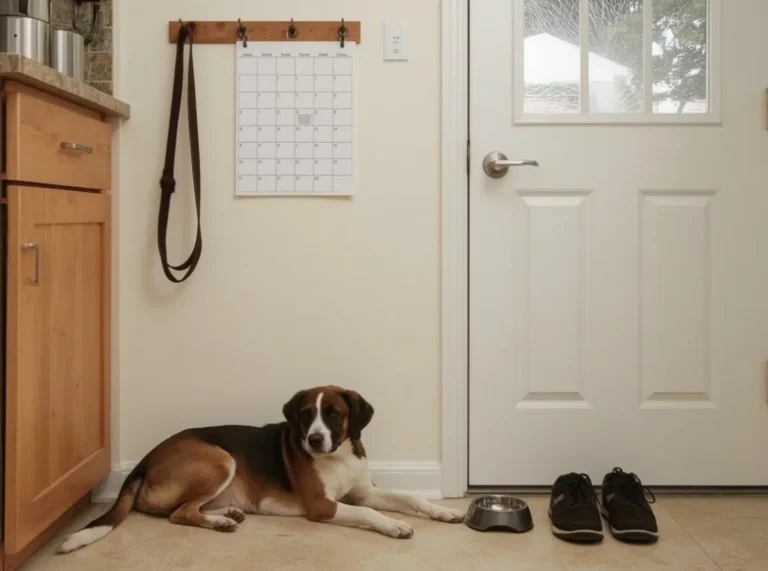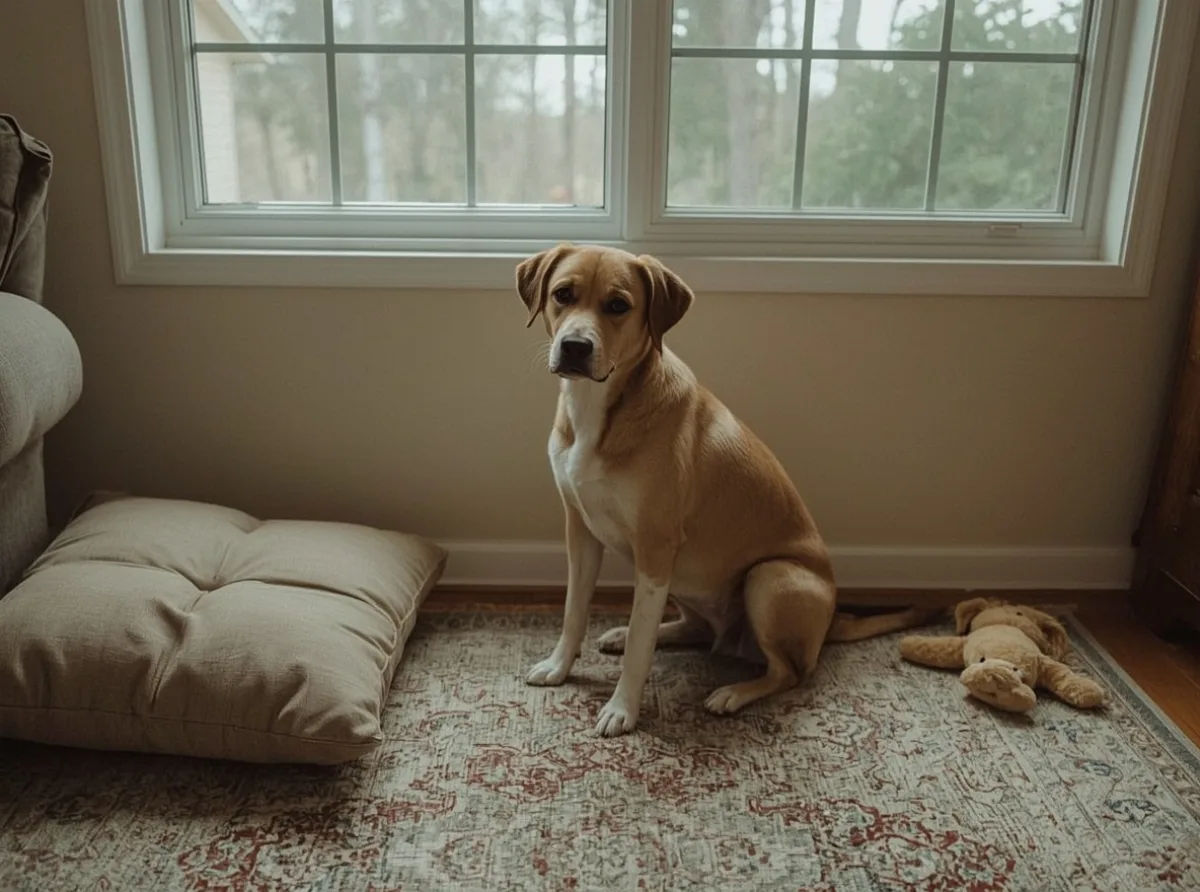
Some dogs develop a favorite place and return to it again and again. It may be the same corner of the sofa, a patch of carpet near the kitchen, the landing by the stairs, or a spot beside the back door. At first, it can seem random. Then it becomes a pattern.
Repeatedly sitting in one place is often tied to comfort, habit, observation, or a dog’s relationship with the home. In many cases, it is harmless. In others, it can reflect stress, anticipation, or a simple preference for what that spot offers. The reason is usually clearer once you look at the dog’s body language, daily routine, and surroundings.
A dog does not choose a place by accident for long. Heat, scent, visibility, safety, soft texture, and even memory can all shape where a dog wants to sit. When the same spot keeps drawing them back, there is usually something meaningful in it for the dog.
What Repeated Sitting Usually Looks Like
The behavior can be very obvious or fairly subtle. Some dogs plant themselves in one place every morning and stay there until the household activity changes. Others circle back to the same location throughout the day, sitting for a minute, getting up, and returning later. The pattern may happen in silence, or it may be paired with watching a doorway, waiting near a person, or settling in after a burst of energy.
In everyday life, it often looks like this:
- The dog sits in the same hallway corner whenever the family is moving around.
- The dog returns to the same chair or cushion after meals.
- The dog chooses the same spot near the window and stays there for long periods.
- The dog sits in the same place whenever a certain person is home.
- The dog keeps going back to a location that seems to “belong” to them.
Some dogs are not trying to do anything in particular. They simply prefer that spot. Still, a preference can reveal a lot. A place that feels secure, cool, warm, quiet, or socially important often becomes a repeat destination.
Comfort and Familiarity Are Common Reasons
Many dogs sit in the same place because it feels good. Familiarity matters to dogs more than people often realize. A spot that has the dog’s scent, a familiar view, and a predictable feel under the body can become a kind of anchor in the house.
Dogs are creatures of habit. If a dog once sat somewhere during a calm moment, then repeated that experience enough times, the spot can become associated with rest. Over time, that association grows stronger. The dog may return without any obvious external trigger because the place itself now signals ease.
Comfort can come from small details:
- softness of the surface
- proximity to a warm appliance or sunny window
- distance from noise or foot traffic
- easy view of the room
- the smell of a favorite person or item
Sometimes the spot is not even especially comfortable to a human. What matters is that it feels right to the dog. A slightly tucked-away location might feel safer than a wider open area. A hard floor patch might feel cooler and therefore more appealing on warm days.
When a dog keeps returning to one spot and looks relaxed there, the behavior often points to preference, not a problem.
Routine Can Turn a Spot Into a Habit
Dogs notice patterns quickly. If the same thing happens in the same place each day, the location becomes part of the routine. A dog may sit there because breakfast is served nearby, because someone usually passes by that area, or because the dog expects attention there. Even small repetitions can shape behavior.
For example, a dog may sit beside the kitchen while the family cooks because crumbs sometimes fall there. Another may return to the foot of a favorite chair because that is where the owner often reads or rests. In the dog’s mind, the place becomes connected to predictable events.
This is one reason the behavior can look stubborn. The dog is not necessarily refusing to move. The dog is following a learned pattern. Once the pattern is established, it may continue long after the original trigger has faded.
Routine-related signs often include:
- the dog sits there at the same times each day
- the behavior is stronger during meals, arrivals, or quiet evening hours
- the dog seems calm and settled rather than tense
- the spot is linked to a clear household event
Some Dogs Sit There to Watch and Stay Aware
Not every repeated sitting spot is about rest. Some dogs choose places that give them a good view of the household or a doorway. They may want to keep track of where people are, when someone comes in, or what is happening outside. This is common in dogs that are naturally observant or bonded closely to one part of the home.
A spot near a window, hallway, or entryway may help a dog feel in control of the environment. The dog can monitor movement without being in the middle of it. That can be especially appealing in busy homes, homes with visitors, or homes where activity changes throughout the day.
In some dogs, this has an alert but relaxed quality. In others, it can look more vigilant. The difference is in the body language. A loose posture, soft eyes, and easy breathing point to casual watching. A stiff body, fixed stare, or inability to settle elsewhere suggests the dog may be on guard rather than simply interested.
Emotional Reasons Behind the Behavior
Dogs also use location to manage emotion. A repeated sitting spot can become a place for self-soothing. When the environment feels too active, too loud, or too unpredictable, a dog may return to one area that has become emotionally safe. The place does not fix the underlying feeling, but it can help the dog regulate it.
Attachment plays a role too. A dog may sit in the same spot because it places them close to a person they trust, while still allowing some independence. Many dogs like to be near their people without being underfoot. Sitting in the same location day after day can be a balanced way to stay connected.
Sometimes the emotional pattern is more specific. A dog may choose a spot where a favorite person usually sits, or where the last comforting interaction occurred. Dogs remember associations strongly. If a particular location has repeatedly matched calm contact, the dog may seek it out whenever it wants reassurance.
A repeated sitting spot can be a sign of emotional balance, but it can also be a dog’s way of managing unease.
Emotional clues to watch for:
- soft or tense facial expression
- tail position and movement
- whether the dog settles easily or stays rigid
- ear posture and ability to respond to sounds
- how quickly the dog leaves when something changes
How the Environment Shapes the Choice
The same dog may choose a different spot in winter than in summer, or in a quiet apartment versus a noisy house. Environment matters because it changes what the location offers. A sunbeam can make one patch of floor irresistible. A cool tile area can become the preferred place after exercise. A quiet doorway can seem safer during construction noise or family gatherings.
Some homes unintentionally reinforce a certain sitting spot. If the dog is frequently petted there, spoken to there, or given attention there, the area becomes important. The dog learns that the place matters. Even negative attention can strengthen the pattern if it consistently happens in the same spot.
Furniture layout also plays a role. A dog may choose a place that allows easy escape routes, avoids foot traffic, or gives a better angle to watch the room. In multi-dog homes, the repeated spot may even reflect social positioning. One dog may claim the best viewpoint while another chooses a lower-traffic zone.
Environmental factors that can make one spot especially appealing:
- sunlight or warmth
- cooler flooring
- quiet acoustics
- limited foot traffic
- good view of doors, windows, or family members
- proximity to food, water, or resting areas
When It Is Simply a Preference
Some dogs sit in the same spot because they have decided it is theirs. That is not always symbolic. It can be as straightforward as liking the surface, the angle of the room, or the way the spot fits their body. Dogs are practical in this way. They repeat what works.
This type of preference usually looks easy and unforced. The dog moves there without hesitation, relaxes there quickly, and leaves without stress when something else draws their attention. The behavior stays consistent, but it is not rigid. The dog may have a favorite place without becoming distressed if it is unavailable.
Preference tends to be stable when the dog’s overall mood is stable. A dog that is eating well, sleeping well, interacting normally, and moving comfortably is often just expressing a personal habit. In that case, the repeated sitting is part of the dog’s daily rhythm, not a sign that anything is wrong.
When the Behavior May Signal Stress
Repeatedly sitting in one spot can also appear when a dog is uneasy. The key difference is often in how the dog behaves before, during, and after settling there. A stressed dog may return to the same place compulsively, as if pulled to it. The body may look tight. The dog may be slow to relax or may stay hyperaware of every sound.
This can happen during changes at home, after a move, when a new pet arrives, or when a household has become louder or less predictable. A dog may choose one area and keep going back because the place feels like the only manageable option.
Other signs often appear alongside the behavior:
- panting without heat or exercise
- watching the room constantly
- startling easily
- difficulty lying down fully
- stiff movement when getting up or turning
- reluctance to use other areas of the house
Stress-related repetition can also look like a dog guarding a location. The dog may sit there and become upset if others approach. In that case, the spot is not just comfortable. It has become important enough to defend.
Physical Discomfort Can Be Part of the Picture
Sometimes a dog sits in the same spot because it feels physically easier there. A cool floor may soothe a dog with body heat or soreness. A soft cushion may support aching joints. A low-traffic corner may reduce the effort of getting up and moving around. What looks like a strange habit may be a response to discomfort.
This possibility matters more when the dog is older, recovering from activity, or changing how it moves. A dog may repeatedly sit in one spot because it minimizes pain, provides stability, or lets the dog rest without being disturbed. The behavior may look the same as a normal preference, but the rest of the body often tells a different story.
Look for signs such as slower rising, stiffness after resting, hesitating before jumping, or avoiding stairs and furniture. If the dog’s chosen spot seems to be the only place where settling happens easily, that detail deserves attention.
| Behavior pattern | Possible meaning |
|---|---|
| Loose body, calm eyes, normal movement | Preference, habit, or comfort |
| Alert posture, frequent scanning | Watchfulness or environmental tension |
| Rigid body, restlessness, repeated return | Stress or uncertainty |
| Slow movement, stiffness, hesitation | Possible discomfort or pain |
How Owners Often Read It vs. What It May Mean
People sometimes assume a dog is being dramatic, spoiled, territorial, or unusually attached to a piece of furniture. Those ideas can miss the simpler truth. Dogs usually repeat a spot because it has a job in their daily life. It might help them feel safe, cool, close, or in control.
At the same time, it is easy to overlook the emotional side. A dog that sits in one place whenever the house gets busy may be signaling that the environment feels overwhelming. A dog that sits by the door every evening may be waiting for a routine event that matters deeply. The meaning depends on context, not just location.
Reading the behavior well means asking a few practical questions:
- Does the dog look relaxed or tense there?
- Does the spot have a clear function?
- Is the behavior tied to time of day or household activity?
- Has the pattern changed recently?
- Does the dog still choose other spots too?
Those details usually reveal more than the repeated sitting itself.
Long-Term Patterns Matter
A dog that has favored the same spot for years is often just a creature of strong habit. But if the behavior appears suddenly, becomes more intense, or is paired with changes in mood or movement, the pattern can mean something different. A new obsession with one spot is more worth noticing than a lifelong preference that has always looked calm.
Long-term consistency is useful information. A stable pattern with no other changes often points to ordinary routine. A shifting pattern, especially one that narrows the dog’s comfort zone, can point to a need for closer observation. Dogs rarely invent dramatic changes in behavior for no reason. Their habits usually respond to something in their daily world.
What matters most is not just where the dog sits, but how that choice fits the rest of the dog’s behavior.
What Makes the Spot Feel Important
Dogs do not think about space the same way people do. A room is not just a room. It is a map of scents, sounds, movement, and expectations. One spot may carry the smell of meals, another the scent of the front door, another the warmth of afternoon sun. When a dog chooses one location repeatedly, it may be because that location offers a combination of things that nowhere else does.
That combination can be emotional, practical, or both. The dog may enjoy the view and feel safer because of it. The dog may like the cool floor and also know that this is where the family tends to gather. The appeal is often layered. That is why the spot keeps winning out over others.
In homes with predictable routines, the pattern can become especially strong. The dog learns where things happen, where people pause, and where it is easiest to settle. Once the habit forms, the choice may look almost automatic. But underneath that automatic behavior is a set of very real preferences.
Calm, Watchful, or Concerned: The Difference Is in the Details
Two dogs can sit in the same spot for the same amount of time and mean very different things. One may be resting in total comfort. The other may be waiting, scanning, or trying to manage an uneasy feeling. The outward behavior is similar. The internal state is not.
That is why context matters so much. A calm dog usually has a loose body, soft muscles, and easy transitions into and out of the spot. A watchful dog may keep the head up, ears active, and eyes tracking movement. A concerned dog may return to the same spot repeatedly but seem unable to fully settle, as if the location is the best available option rather than a truly restful one.
Over time, the repeated spot becomes a kind of clue. It reflects what the dog values most at that moment in life: comfort, visibility, proximity, or relief. When owners notice the pattern with a little patience, the dog’s preference usually makes sense.
The same patch of floor, chair, or hallway can mean rest on one day and reassurance on another. That flexibility is part of what makes the behavior so interesting. The spot stays the same. The reason may not.