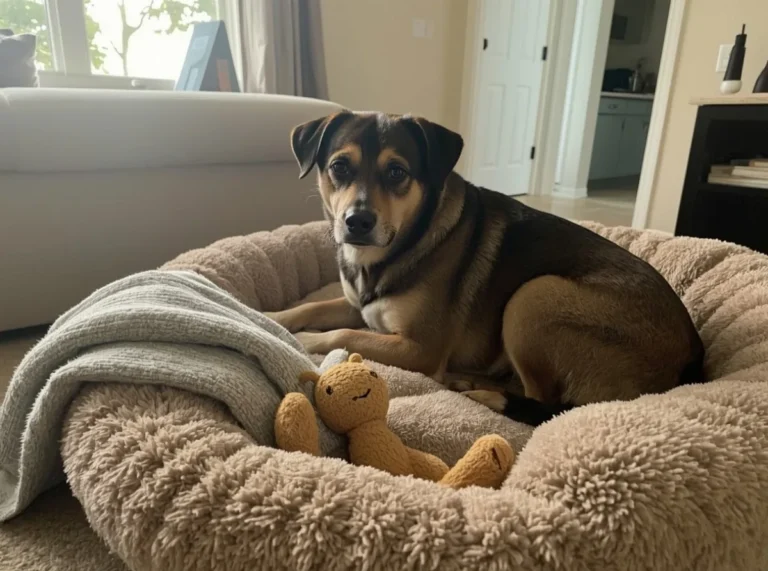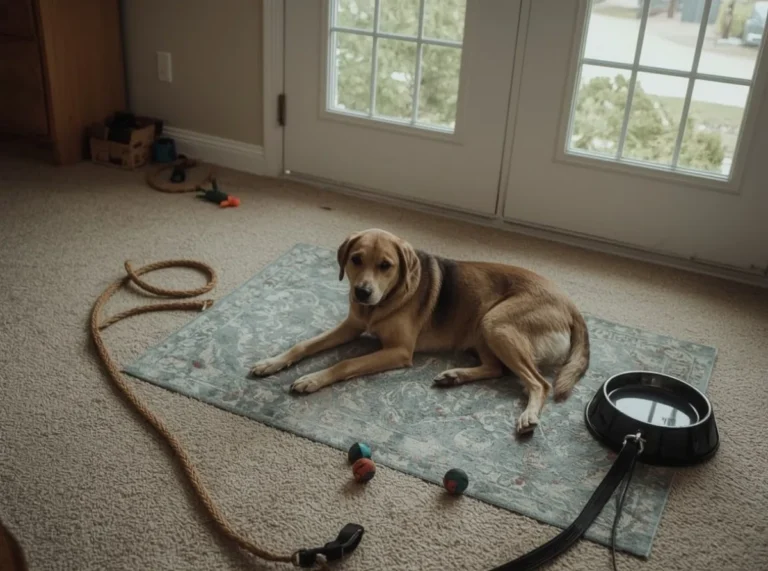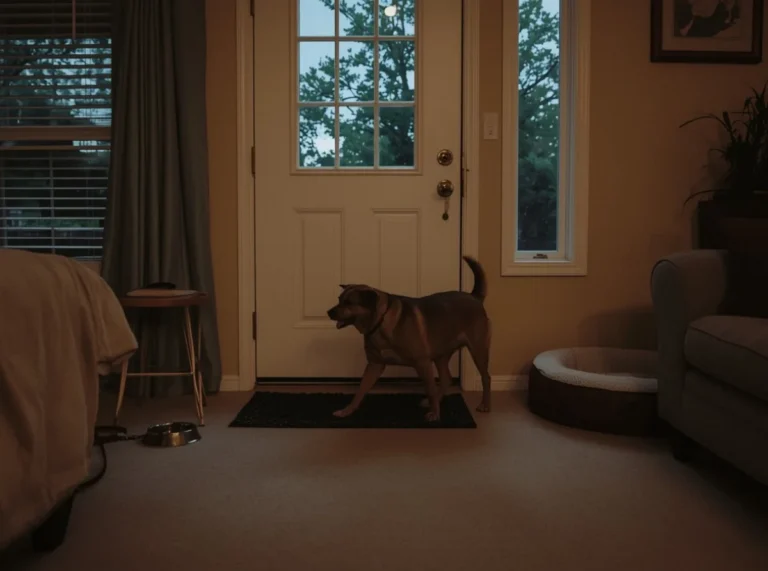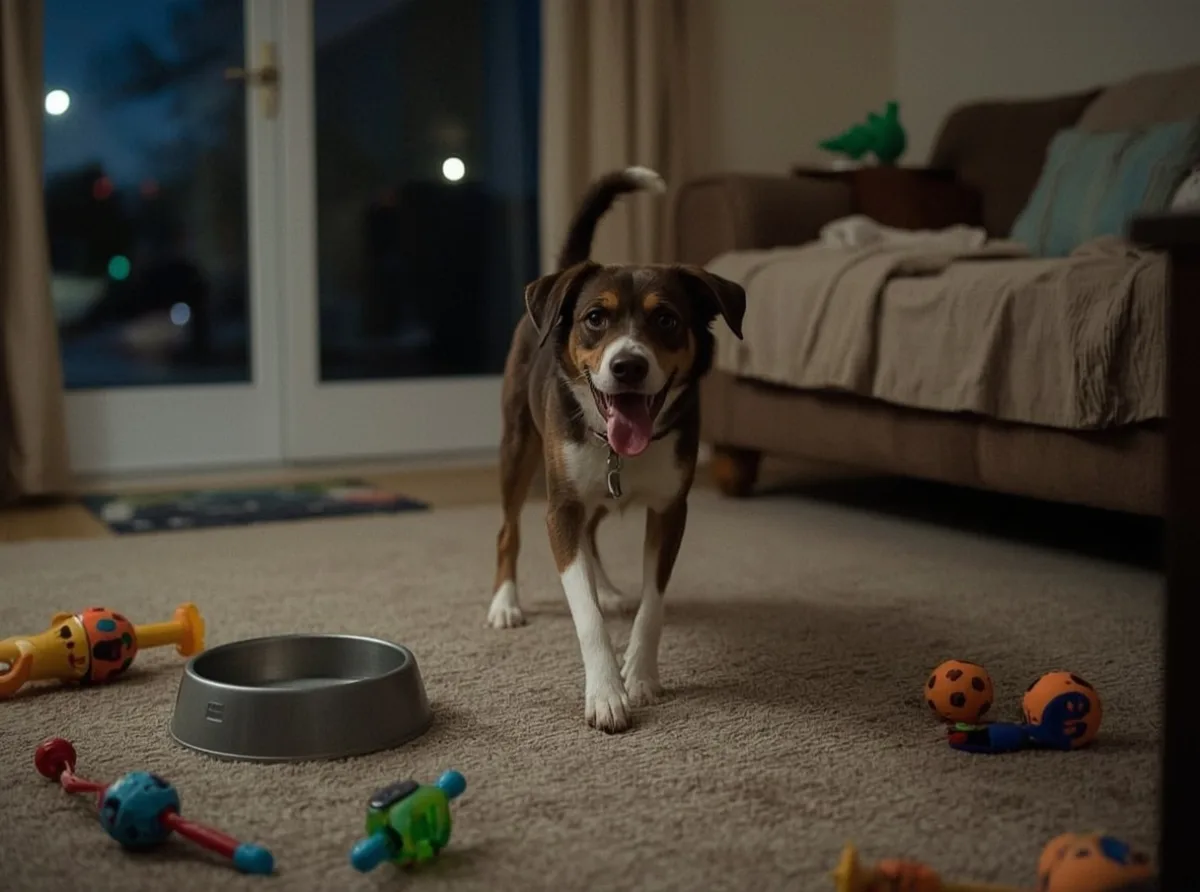
Many dog owners notice the same pattern: the house gets quieter, dinner is over, and their dog suddenly seems to wake up. A dog that spent much of the afternoon napping may start pacing, bringing toys, nudging for attention, or zooming from room to room. It can feel almost as if the day begins all over again once the sun goes down.
This evening burst of energy is often normal, but it is not random. Dogs respond to rhythm, routine, household activity, and the amount of stimulation they have had during the day. Evening is a time when several forces can line up at once, making dogs feel more alert, more social, or more ready to move.
Sometimes the behavior is simple excitement. Other times it reflects boredom, unmet needs, or a dog’s habit of syncing with the family’s own schedule. Understanding the pattern makes it easier to tell the difference between a healthy evening reset and restlessness that needs attention.
Why Evening Often Brings a Change in Energy
Dogs do not usually move through the day in the same way people do. Many settle into long stretches of rest during quiet hours, then become more active when the household changes pace. Evening tends to be one of those transition points. People come home, meals happen, lights change, and the environment becomes more engaging.
For a dog, these signals can mean that something interesting is about to happen. A leash might appear. A walk might start. A family member may finally sit down and become available for interaction. Even if nothing specific is scheduled, the shift in human behavior alone can be enough to wake a dog up.
Dogs also rely heavily on routine. If a dog has learned that evening usually includes play, feeding, outdoor time, or family attention, the body begins to anticipate it. That anticipation can show up as increased movement, barking, toy carrying, or persistent following around the house.
Evening activity is often less about “extra energy” and more about expectation. Dogs notice patterns quickly, and they often become active when their environment suggests that something is about to happen.
What Evening Activity Looks Like in Everyday Life
Not all active evening behavior looks the same. Some dogs become playful and bouncy, while others act restless, watchful, or demanding. The body language can shift depending on temperament, age, and what the dog experienced earlier in the day.
Common evening behaviors owners notice
- Bringing toys repeatedly and dropping them near people
- Pacing from room to room
- Doing short bursts of running or spinning
- Nudging hands, legs, or furniture for attention
- Following family members closely
- Vocalizing more than usual
- Standing near doors, leashes, or feeding areas
- Acting alert when the household becomes quieter
In some homes, this activity is cheerful and easy to read. The dog has a loose body, a wagging tail, and an obvious invitation to play. In other cases, the same evening movement may look more tense. The dog may be restless without settling, sniffing the house repeatedly, or seeming unable to choose an activity and stick with it.
That difference matters. A dog who is active because the evening feels exciting is in a very different state from a dog who is active because something feels unsettled or under-stimulated.
Routine and Anticipation Shape the Pattern
One of the biggest reasons dogs become more active in the evening is that the evening is predictable. Dogs learn patterns faster than many people realize. If the same sequence happens every day, the dog begins to build a mental map of the schedule.
For example, a dog may notice that around 6 p.m. the kitchen gets busier, food appears, the family gathers, and attention becomes available. Even if the dog is not hungry, the routine itself becomes stimulating. The dog may start hovering near the kitchen, checking faces, or becoming more animated long before any actual event begins.
In multi-person households, the pattern can be even stronger. When everyone returns home at different times, the dog may spend much of the day waiting for the household to “turn on.” By evening, the accumulated energy of the day can finally be expressed.
Dogs often become more active in the evening because they have learned that evening is when life in the home becomes more interesting.
Routine factors that commonly increase evening activity
- Feeding at the same time every night
- Walks that usually happen after work or dinner
- Children returning from school and becoming available to play
- Household noise rising and falling in a familiar pattern
- Owners sitting down after being busy, which invites attention
When a dog’s day is structured this way, evening energy is not unusual. It is part of a conditioned response. The dog is not guessing; it is reading the schedule.
Daily Stimulation Levels Matter
Another major factor is what happened earlier in the day. A dog that has slept most of the afternoon, with little engagement, may simply have more pent-up energy by evening. This is especially common in indoor dogs that spend long hours waiting for their people to return.
Physical exercise plays a role, but mental activity matters too. A walk around the block may not be enough for a dog that also needs sniffing, problem-solving, social contact, or a chance to use natural instincts. When the day is too quiet, the evening often becomes the time when the dog tries to make up for it.
That does not always mean the dog needs intense exercise. Sometimes the problem is not excess energy but unfinished stimulation. A dog can be tired in body and still eager for interaction, novelty, or mental engagement.
Signs the dog may be under-stimulated
- Seeking attention even after basic needs are met
- Repeating the same restless loops through the house
- Chewing or mouthing objects more often at night
- Difficulty settling once the household gets quiet
- Showing more interest in movement than in resting
Dogs that spend the day in a predictable, low-interaction environment often save their liveliness for the hours when people are finally available. Evening becomes the only time when something changes, so energy naturally concentrates there.
Emotional Reasons Behind the Evening Shift
Evening activity is not always about exercise needs. Emotional arousal can play a big role. Some dogs become more active because they are happy that the family is together again. Others become more alert because the shift from daytime to nighttime changes how secure or engaged they feel.
Dogs are social animals, and many are most attentive when their people are home and settled. The evening can bring closeness, attention, and predictable contact. A dog that has been quiet all day may suddenly become more interested in interaction once the social environment feels complete.
On the other hand, some dogs are sensitive to change. The transition from daytime bustle to evening calm can create a mild sense of uncertainty. The dog may respond by moving around more, checking windows and doors, or staying close to its people. What looks like “energy” may partly be the dog’s way of staying connected and informed.
Emotional activation in the evening can show up as playfulness, but it can also show up as vigilance. Both are forms of increased engagement with the environment.
Emotional states that can feed evening activity
- Excitement when the family becomes available
- Anticipation of a walk, meal, or outing
- Relief after a long quiet period
- Attachment-driven following and attention seeking
- Low-level uncertainty during household transitions
Because the same behavior can come from different emotions, it helps to look at the whole picture. A loose, bouncy dog is communicating something different from a dog that cannot seem to settle, even if both are moving around more than usual.
Age Can Affect How Strong the Pattern Is
Puppies often have a very obvious evening energy surge. They sleep hard, then wake up with a burst of curiosity and movement. Their daily rhythm is still developing, and they are learning how to regulate excitement. Evening can be one of the times when their energy rises sharply, especially if they have not had enough structured play or rest earlier in the day.
Young dogs may also become more active because they are still exploring boundaries. The day may have been filled with brief naps and small interactions, but evening offers the chance to test the environment again. Furniture, people, shadows, sounds, and toys all become interesting.
Adult dogs can show the same pattern, but often in a more settled way. Their evening activity may be tied more closely to habit and environment than to pure puppy energy. Mature dogs may pace, follow, or ask for play because they know what the evening usually brings.
Senior dogs are different again. Some older dogs remain active in the evening because that is when they feel most alert, especially if daytime naps are long. Others seem restless because physical discomfort makes it harder to settle. When a senior dog becomes more active at night, it is worth paying attention to whether the movement looks playful, habitual, or uncomfortable.
Playful Evening Energy vs Restless Evening Energy
Not every active evening dog is feeling the same thing. A dog can be lively in a healthy, balanced way, or it can be active because it cannot quite settle. The visible behavior may overlap, but the underlying experience is not the same.
| Type of behavior | What it often looks like | What it may mean |
|---|---|---|
| Playful | Loose body, toy offering, bouncy movements | Social excitement, readiness to engage |
| Restless | Pacing, repeated position changes, inability to relax | Unspent energy, boredom, or tension |
| Alert | Stiff pauses, window watching, quick reactions | Heightened awareness of sounds or changes |
| Attention-seeking | Nudging, following, pawing, vocalizing | Desire for interaction or routine confirmation |
These categories are not rigid. A single dog may move between them in the same evening. For example, a dog may start with playful excitement, then shift into pacing if no one engages, and later settle once a walk or chew toy meets the need.
That is why context matters so much. Evening activity is not just about the motion itself. It is about how the motion looks, when it happens, and what happened before it started.
The Household Environment Can Amplify the Behavior
Modern homes can make evening activity more noticeable. During the day, many dogs live in environments that are fairly quiet, especially if their owners are away at work. When people return home, the house changes quickly. Sounds increase. Movement increases. Food, conversation, and footsteps all become part of the dog’s world again.
For some dogs, that change is stimulating enough to trigger a burst of activity. The dog may not be reacting to one specific event. Instead, it is responding to the overall increase in energy in the home.
Even small details matter. Pulling out pans in the kitchen, putting on shoes, opening cabinets, folding laundry, or turning on a TV can all become cues. Dogs are excellent observers of movement. In the evening, when the day’s patterns shift, those cues feel especially meaningful.
Environmental triggers that often matter in the evening
- More people moving around the house
- New sounds from appliances, dishes, or doors
- Changes in light and outdoor activity
- Leashes, coats, and shoes appearing near the exit
- Children’s schedules and household transitions
Sometimes a dog becomes active simply because the day has finally become interesting enough to notice. That can be normal. But if the activity seems intense every night, the environment may be encouraging a pattern that never really gets resolved.
How Owners Often Misread the Behavior
It is easy to assume that an eveningly active dog just has “too much energy.” That can be true, but it is not the only explanation. Some dogs are not overloaded with physical energy; they are under-informed, under-stimulated, or strongly routine-driven. Others are seeking connection more than motion.
A dog that brings a toy every night may not be asking for a marathon of exercise. It may simply be saying that this is the time the family usually responds. A dog that paces near the door may not need a bigger yard. It may need a more predictable transition, more daytime enrichment, or a clearer signal that the evening walk is done and rest is next.
When a dog becomes more active in the evening, the real question is not only “How do I wear this dog out?” It is also “What has the dog learned to expect at this time of day?”
That shift in perspective helps owners make better choices. It moves the focus away from guessing and toward reading the pattern. Dogs are remarkably consistent once their routine is understood.
What the Behavior May Be Telling You
Evening activity can carry a few different messages at once. A dog may be telling you it wants attention, that it has had a quiet day, that it anticipates a familiar routine, or that it has not fully unwound from earlier stimulation. The message is often plain once the timing is examined closely.
Look at the details around the behavior. Did it start right after dinner? Does it happen after everyone sits on the couch? Does it appear only on days with shorter walks or more alone time? Does it disappear after a brief play session, a sniff walk, or a chew in a quiet room?
Those clues often reveal whether the dog is seeking interaction, releasing leftover energy, or reacting to the rhythm of the household.
Questions that help identify the pattern
- Has the dog been resting most of the day?
- Does evening activity happen at the same time?
- Does it increase when the home gets quieter?
- Is the dog loose and playful, or tense and unsettled?
- Does a short walk or mental task help the dog relax?
Patterns like these often speak louder than the behavior itself. A single energetic evening means little on its own. Repetition across days is what turns it into a meaningful habit.
When Evening Activity Becomes Especially Noticeable
Some dogs are naturally more active in the evening than others, but the pattern often becomes stronger in certain situations. Dogs in apartments may notice the same indoor routine every night and become keyed in to it. Dogs in quiet homes may wait all day for their people to return and then become especially animated once the house fills up. Dogs with inconsistent schedules may become even more alert because they cannot predict what comes next.
Travel, visitors, time changes, and seasonal shifts can also affect the pattern. Darker evenings may change the atmosphere in the home. Less outdoor time during cold weather can leave dogs with fewer outlets during the day. A dog that is usually calm may start becoming more active if the normal routine has been interrupted.
It is not unusual for evening activity to increase during periods of change. Dogs notice when a schedule is no longer reliable, and many respond by checking, pacing, or seeking more contact.
Long-Term Patterns Matter More Than One Busy Night
A single energetic evening is not usually a concern. Dogs have good days and busy days just like people do. What matters more is whether the pattern is stable, escalating, or paired with other changes such as difficulty settling, unusual vocalizing, clinginess, or signs of discomfort.
If the behavior stays consistent over time, it usually reflects a learned rhythm in the dog’s life. That rhythm may be based on anticipation, social need, boredom, or a combination of all three. Because dogs are creatures of habit, the evening pattern can become deeply embedded if it is repeated every day.
That is why consistent observation is useful. Not every dog needs the same response, and not every active evening should be treated as a problem. Some dogs are simply most alive when the household comes together. Others are trying to tell you that the day has not quite met their needs.
The difference becomes clearer when the behavior is viewed in context: the dog’s age, the home’s routine, the amount of daytime stimulation, and the emotional tone of the evening itself.
Evening activity often makes the most sense when it is read as part of a daily pattern, not as a stand-alone burst of energy.
Closing Perspective on the Evening Surge
Dogs often become more active in the evening because evening changes the entire feel of the day. The home becomes busier or quieter, routines become more visible, and the dog’s expectations come to the surface. For many dogs, that is the moment when stored energy, social interest, and anticipation all come together.
Some dogs express that shift through play. Others show it through pacing, following, or alertness. The behavior may look similar from one dog to the next, but the reasons behind it are shaped by daily life, household rhythm, and the dog’s own temperament. Once those pieces are clear, the evening surge becomes much easier to understand in ordinary, practical terms.