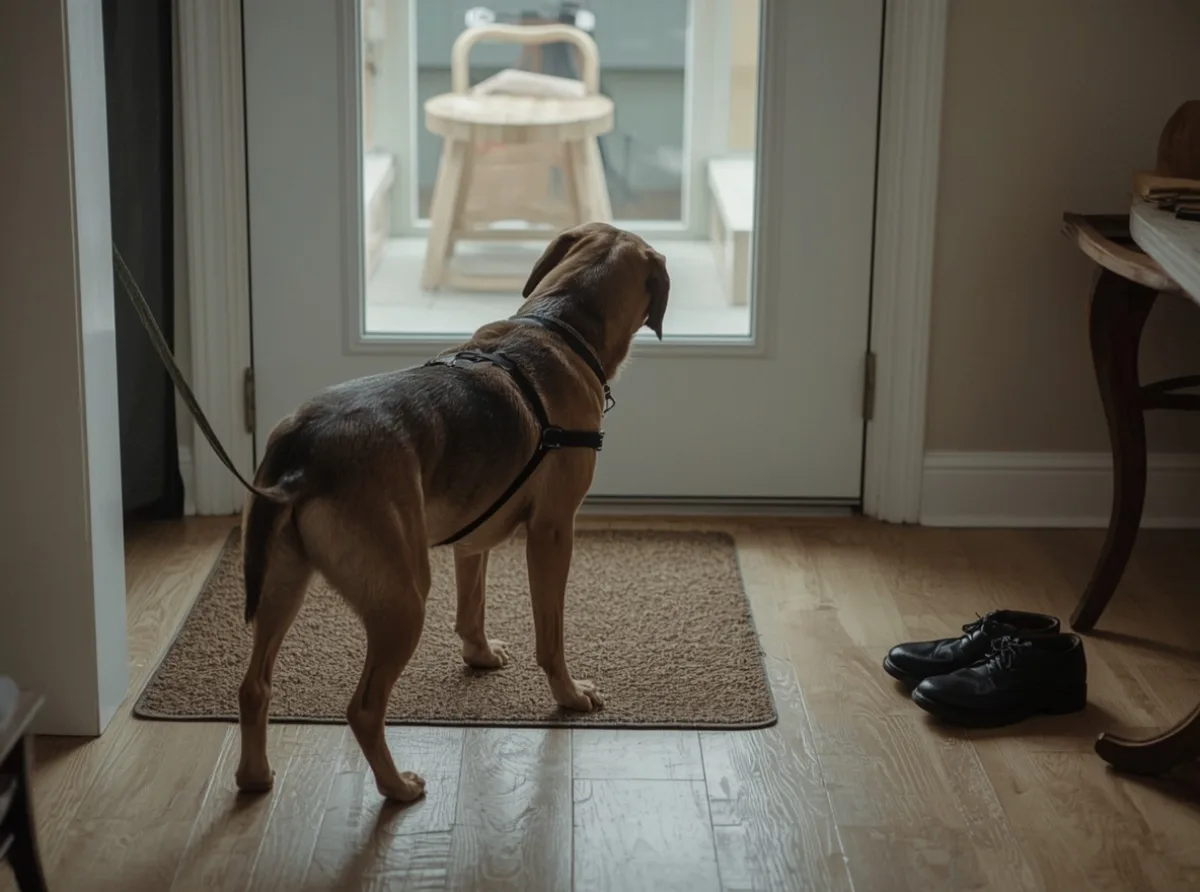
A dog waiting near the door can mean many different things, and the same posture does not always have the same cause. One dog stands there because it has learned that the door leads to a walk. Another waits because it hears footsteps outside. A third may simply feel more comfortable near the place where people come and go.
That small spot by the door often becomes a place of habit, expectation, and emotional response. Some dogs settle there quietly. Others pace, stare, whine, or spring up every time they hear movement in the hallway. The behavior can look simple on the surface, but it usually comes from a mix of learning, routine, and mood.
Understanding what makes a dog wait near the door starts with paying attention to context. Time of day matters. So does what happened right before the dog took that spot. A dog waiting near the door after you pick up a leash is saying something different from a dog waiting there all afternoon with no obvious trigger.
Why the Door Becomes Such a Strong Location
Doors are transition points. For dogs, that makes them powerful places. A door often means a walk, a car ride, visitors, a return home, a potty break, or access to the yard. Over time, dogs connect the spot with events that matter to them.
In many homes, the door is also where people appear and disappear. That pattern can be especially important for social dogs that pay close attention to movement and routines. If the family leaves through the front door at the same time each morning and returns the same way each evening, the dog may begin to treat the doorway like a waiting area.
When a dog repeatedly waits near the door, the location itself may have become part of the routine, not just a reaction to one event.
Sometimes the door is interesting even when nothing specific is happening. Sounds from outside, smells drifting under the gap, and changes in household activity all gather there. A dog may prefer that area because it provides information.
What the Behavior Can Look Like in Everyday Life
Waiting near the door does not always look the same. Some dogs lie down with their nose pointed toward the entrance. Others sit upright and watch silently. A few circle, scratch lightly, or switch between the door and the nearest person in the room.
In a relaxed version of the behavior, the dog may simply rest there and leave when called. The body is loose. Breathing stays normal. The tail may be still or gently moving, and the dog may appear curious rather than tense.
In a more active version, the dog may stand up every time a sound passes outside. It may listen hard, whine softly, or shift weight from one paw to another. That can mean anticipation, but it can also mean uncertainty or arousal.
At times, the dog is waiting for a very specific event. You may see this right before walks, meal times, or the arrival of a particular family member. In those moments, the behavior is often a clear learned pattern rather than a sign of distress.
Common Reasons Dogs Wait Near the Door
1. Anticipation of something familiar
Many dogs are good at reading schedules. If a walk usually happens after breakfast, the dog may wait by the door at that time every day. If you usually come home through that entryway, the dog may start checking the spot long before your arrival.
This type of waiting is usually linked to expectation. The dog has learned that the door predicts something it wants. The behavior becomes stronger when the result is reliable.
2. Interest in movement and sounds outside
Dogs hear more than people do, and many are quick to notice footsteps, car doors, voices, or delivery activity. A dog may wait near the door because something outside has captured its attention.
This is common in homes with frequent neighborhood traffic or shared hallways. Even small sounds can pull a dog toward the entrance. The dog may not be anxious at all. It may simply be curious.
3. Attachment to people
Some dogs choose the door because it is associated with the person they care about most. If a family member leaves, the dog may stay there longer than expected. The same can happen when a favorite person is due back soon.
This does not automatically mean separation problems. Many dogs are just socially attentive. They remember who left, where they left from, and when they usually come back.
4. Desire for outdoor access
For dogs that love the yard, the door is the gateway to stimulation. They may wait there because they want to sniff, explore, relieve themselves, or simply get out of the house.
This is especially common in active dogs, young dogs, and dogs that do not get enough outside time during the day. If the waiting becomes frequent and intense, the dog may be telling you that it needs more movement or a clearer schedule.
5. Uncertainty or concern
Some dogs wait near the door because they are unsure what is happening. Loud sounds outside, a change in routine, guests arriving, or activity in the hallway can make a dog feel watchful.
In these cases, the dog may not be eager to go out. It may be monitoring the entrance. The posture can look calm while still carrying tension underneath.
Emotional Reasons Behind the Behavior
Waiting near the door can reflect emotion just as much as routine. Dogs often express feelings through position, movement, and attention rather than through obvious signs. A dog that lingers by the door may be excited, hopeful, worried, bored, or simply focused.
Excitement is usually easy to spot. The dog may perk up as soon as keys jingle or shoes appear. Hopefulness often looks quieter, with a steady stare and patient stillness. Worry tends to add subtle tension, such as a stiff body, ears held tightly, or restless shifting.
Some dogs wait because they feel safer near an exit. That may sound unusual, but many dogs prefer areas where they can track movement and respond quickly to change. The door can offer a sense of control, especially in busy homes.
A dog’s waiting spot can reveal emotional state, but body language matters more than the location alone.
If the dog always waits near the door after you leave, it may be showing social attachment. If it waits there even when nobody is coming or going, the behavior may be driven by habit, outside stimulation, or a need for activity.
How Environment Shapes the Habit
The home environment influences this behavior more than many people realize. A quiet house with few daily changes often creates a different pattern from a busy household with constant comings and goings. Some dogs become door-focused because the doorway is the most interesting part of the home.
In a small apartment, the front door may carry almost all the outside activity the dog can experience from indoors. Every sound from the hallway becomes meaningful. In a house with a yard access door, the dog may wait there because it has learned that this is the place where the next outing begins.
Routine also matters. Dogs thrive on predictable sequences. If the same door opens before walks, mealtimes, or returns, the dog begins to track those patterns closely. The waiting behavior can become stronger when the pattern is repeated day after day.
Stimulation plays a role as well. A dog with enough exercise, sniffing, and social contact may wait at the door less intensely. A dog with a long, underfilled day may spend more time there simply because nothing else is happening.
Different Body Language, Different Meanings
Two dogs can stand near the same door and mean very different things. The details matter.
Relaxed waiting
- Body is loose
- Breathing is even
- Dog can settle or move away easily
- Ears and tail look neutral
This usually points to calm expectation. The dog may be waiting for a walk, a person, or the next routine event.
Alert waiting
- Head lifts at every sound
- Eyes stay fixed on the door
- Weight shifts forward
- Dog responds quickly to noises
This often reflects attention and anticipation. The dog is engaged with what might happen next.
Tense waiting
- Body looks stiff
- Tail may hold high or low and still
- Whining, panting, or pacing may appear
- Dog struggles to settle elsewhere
This can suggest stress, frustration, or emotional overload. The dog may want to go out, may be reacting to sounds, or may be struggling with an expected separation.
Restless waiting
- Dog gets up and down repeatedly
- Moves between the door and people
- Scratches, paces, or circles
- Has trouble relaxing for long
Restlessness often means the behavior is not just a quiet habit. Something is keeping the dog activated, and it may be worth looking at what happens right before the waiting starts.
How Owners Often Misread the Behavior
It is easy to assume a dog waiting at the door is always asking to go out. Sometimes that is true. But dogs use the door for more than one reason, and not every wait means the same thing.
A dog that sits near the door after a family member leaves may not be desperate to follow. It may simply be tracking the person’s absence. Another dog might wait near the door because it knows the next walk comes after a certain sound or movement in the house.
People also sometimes read door waiting as stubbornness. In reality, the dog may be responding to a pattern that feels important and predictable. The behavior is often practical from the dog’s point of view. The door is where things begin.
If a dog waits near the door and also shows stress signals, the behavior is less about patience and more about emotional activation.
That difference matters. Quiet expectation does not need the same response as persistent pacing or distress. Watching the rest of the dog’s body tells the fuller story.
When the Behavior Is Most Noticeable
Dogs tend to wait near the door at specific times. Mornings are common, especially if the first walk or potty break happens then. Evenings are another frequent moment, since people often come home, relax, and move around the entryway.
The behavior can also appear before predictable events. You may notice it before a sitter arrives, before the leash comes out, or before the family prepares to leave. Some dogs begin waiting long before the actual trigger because they have learned the sequence of household cues.
Door waiting may increase during periods of change. A shifted work schedule, colder weather, fewer walks, or a new household routine can all make the dog more focused on the entrance. The door starts to represent access, timing, and certainty in a changing day.
It can also become more obvious after a long day indoors. A dog that has had limited movement or mental engagement often notices the doorway more intensely than a dog that has already been active and satisfied.
What This Behavior May Reveal About the Dog
At its simplest, waiting near the door shows that the dog is tracking something important. That something may be social contact, outdoor access, a learned routine, or outside activity. The behavior points to attention.
It can also reveal sensitivity. Dogs that notice small environmental changes often pay close attention to thresholds and entrances. The door gives them information, and they keep returning to it because it matters.
In some dogs, the behavior reflects strong social attachment. They want to stay close to the part of the home where people leave and return. In others, it reflects anticipation of play or movement. The same posture can be rooted in very different needs.
When the waiting is frequent and calm, it may simply be part of the dog’s daily rhythm. When it becomes intense, clingy, or repetitive, it may signal that the dog is relying too heavily on that doorway for stimulation or reassurance.
Looking at the Whole Pattern
One moment near the door rarely tells the full story. What matters is the pattern over time. Does the dog wait only before walks, or does it sit there for hours? Does it relax if nothing happens, or does it keep checking and pacing? Does the behavior increase when the home is busy, quiet, or unpredictable?
Answering those questions makes the behavior easier to interpret. A dog that waits after hearing the car in the driveway is responding to a real cue. A dog that waits whenever the household schedule changes is likely reacting to uncertainty. A dog that takes a nap by the door every afternoon may just prefer that place because it keeps the dog close to the action.
Many dogs build small habits around the door because it is one of the most meaningful places in the home. It links them to movement, people, outdoor access, and timing. That is why the behavior can seem so ordinary and yet still carry a lot of information.
When a dog keeps choosing the door, it is usually not random. The entrance has become part of the dog’s way of understanding the day.