A dog that seems to know the exact minute breakfast is served, the usual walk happens, or the family starts winding down in the evening is not just being dramatic. Many dogs build strong expectations around repeated daily events. They notice patterns in household movement, sounds, light changes, and the small habits people repeat without thinking.
That is why a dog may start waiting by the pantry at 7 a.m., becoming restless near the door at 5 p.m., or hovering near the sofa when bedtime approaches. These behaviors are often rooted in routine, but they can also reflect excitement, anticipation, sensitivity to cues, or a need for more structure in the day. What looks like a simple clockwatching habit is usually a mix of memory, association, and emotional learning.
Dogs do not read digital clocks, yet many behave as if they do. They remember what happened before, notice what usually comes next, and adjust their behavior around that pattern. In a home where everyday life is fairly consistent, those expectations can become very strong.
How Dogs Learn the Timing of Daily Activities
Dogs are excellent pattern learners. They may not understand time in a human sense, but they quickly connect repeated events with the cues that come before them. A clink of a leash, a person putting on shoes, the smell of food, or even a regular shift in household activity can tell a dog what is about to happen.
Over time, the brain links those cues together. If dinner has arrived after the same sequence for weeks, the dog begins to expect it when the sequence starts again. The expectation becomes so solid that the dog may begin showing signs of anticipation before the actual event is near. This is not stubbornness. It is learned association reinforced every day.
Dogs often respond less to the clock itself and more to the clues that predict what the clock usually brings.
Some homes create stronger timing habits than others. A very regular routine, the same wake-up time, and repeated meal schedules can make a dog especially certain about daily events. Even small details matter. If a family member always comes home at the same hour, the dog may start waiting near the window well before that time.
What Expectation Looks Like in Everyday Life
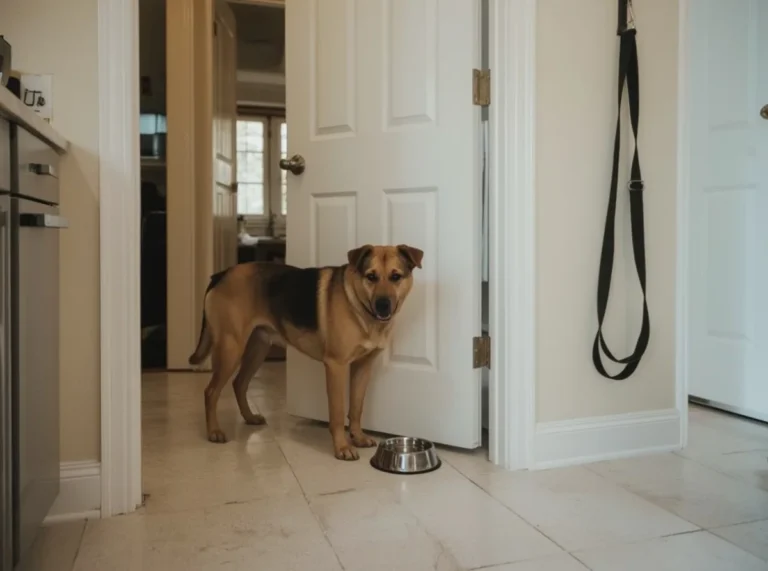
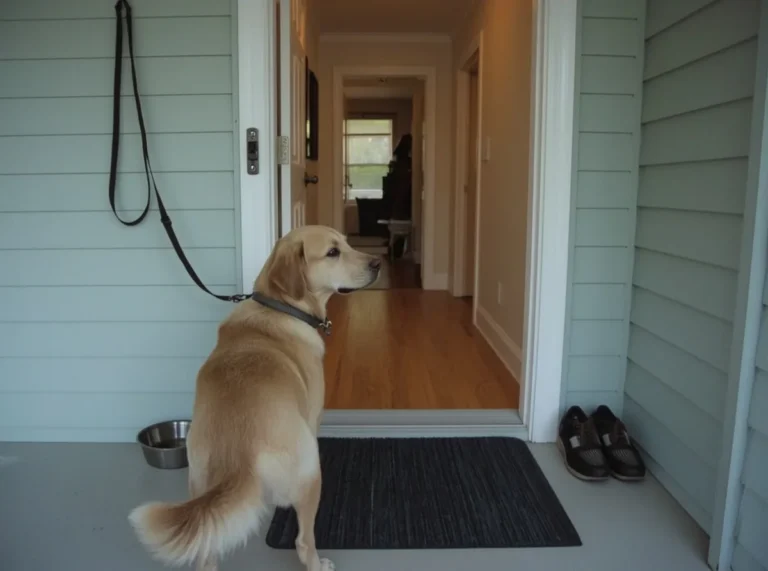
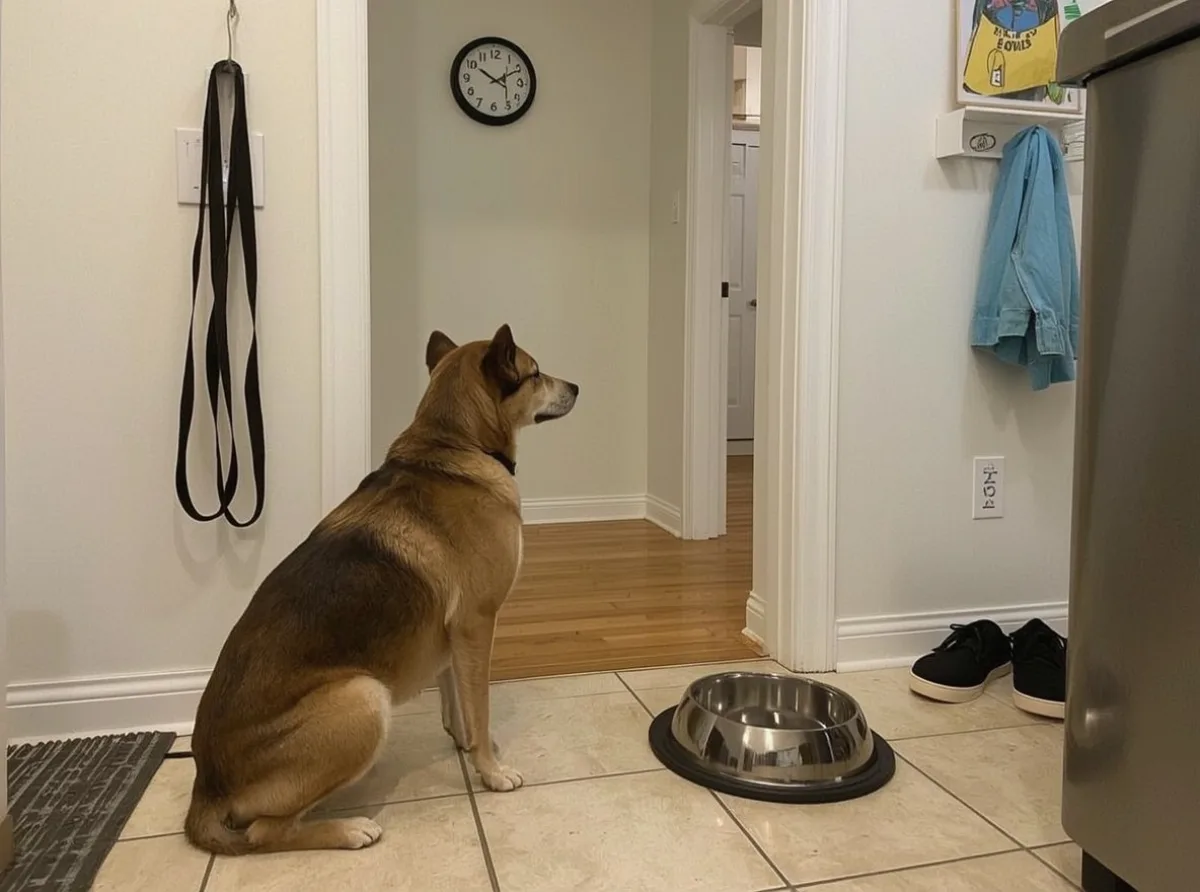
When a dog expects an activity at a specific time, the behavior is usually easy to spot. The dog may become alert, pace, stare toward the usual location, follow a person from room to room, or sit near the door before the walk. Some dogs quietly position themselves in the right place and wait. Others become more energetic and vocal as the predicted time approaches.
These behaviors often appear in ordinary moments. A dog might rise from a nap around the time the family usually gets home. Another may head to the kitchen before breakfast is served. Some dogs go to the leash hook or the treat cabinet on their own because they have learned the pattern so well that the environment itself seems to signal the event.
Common signs of time-based expectation
- Waiting in a familiar spot before meals or walks
- Following a person who is part of the routine
- Pacing, whining, or soft barking near the expected time
- Watching the door, kitchen, or bedroom closely
- Checking in repeatedly with eye contact or nudging
- Becoming more active when a known cue appears
Not every dog shows excitement in an obvious way. Some are subtle. A dog may simply stand near the hallway ten minutes earlier than usual, or start looking toward the kitchen when the household begins to shift gears. Those small changes still reflect expectation.
Why Routine Becomes So Important
Routine gives dogs a way to predict the day. Predictability can feel reassuring. When the same things happen in a familiar order, the dog does not need to guess as much. That can reduce uncertainty and help the dog move through the day with confidence.
A predictable home environment also teaches dogs where to focus. If meals, walks, play, and rest happen around the same times, the dog becomes tuned in to the rhythm of the house. This can be especially noticeable in dogs that are naturally observant or closely attached to their people.
Expectation becomes stronger when the same activity happens at the same time, in the same place, with the same lead-up signals.
At the same time, routine is not only about comfort. It can also be a source of mental stimulation. Dogs enjoy having a pattern they can understand. Knowing what usually comes next helps them organize their day, and that can make daily life feel easier for them.
Emotional Reasons Behind the Behavior
Timing-related expectation is not only about habit. It often has an emotional side. Many dogs look forward to certain activities because those moments are rewarding. Food, attention, outdoor time, and social interaction all carry meaning. A dog that expects a walk at 6 p.m. may be thinking less about time and more about the pleasure and connection tied to that moment.
Attachment also plays a role. Dogs are social animals, and they tend to notice when human activity predicts something important. If a person’s schedule often precedes something enjoyable, the dog may become emotionally invested in that pattern. The dog is not only waiting for the event itself, but also for the interaction that usually comes with it.
Some dogs show expectation because they feel secure. They have learned that life usually follows a clear structure, and that structure is reassuring. Others show stronger anticipation because the event is highly valued. A dog that is especially food-motivated may become very focused around mealtimes, while a highly social dog may watch for family members returning home.
Emotional states that can shape the behavior
- Excitement about a rewarding activity
- Comfort in familiar daily patterns
- Attachment to a particular person or event
- Anticipation of attention, food, or movement outside the home
- Frustration when the expected routine changes
How Environment Strengthens the Pattern
The home environment can make these expectations stronger or softer. A quiet house with a fixed schedule often creates very clear timing habits. A busy household can do the same if the same sequence repeats every day. Either way, consistency is the key factor.
Dogs pay attention to many details people overlook. The sound of a cabinet opening, the sight of a jacket being picked up, the lights being turned on, or the family settling into evening routines all become part of the daily map. Once those clues are linked to a regular event, the dog starts responding before the main activity even begins.
Changes in stimulation matter too. A dog that spends the morning napping, the afternoon alone, and the evening waiting for the same outing may become especially sensitive to that outing’s timing. When the day lacks variety, the repeated event stands out more. The anticipation can feel intense simply because the dog has been waiting for the same highlight all day.
| Household pattern | Typical effect on expectation |
|---|---|
| Same meal times every day | Stronger anticipation around feeding times |
| Regular walk schedule | Earlier waiting and increased alertness before walks |
| Predictable family arrivals | Watching doors or windows at the usual hour |
| Frequent routine changes | Less precise timing, more uncertainty |
| Limited daily stimulation | Greater focus on the next expected event |
When Expectation Becomes More Noticeable
Dogs often show stronger time-based expectation during activities that matter most to them. Meal times are common examples because food is highly reinforcing. Walks can create another strong pattern, especially if they always happen after certain human routines like finishing work or clearing the table.
Holiday schedules, weekends, and seasonal changes can also make the behavior stand out. A dog may continue expecting the usual event even when the day is different, which can reveal how deeply the routine has been learned. Some dogs become more insistent after a missed activity, especially if the event usually happens at the same hour every day.
Age can influence how clearly the behavior appears. Mature dogs often settle into routine very strongly because they have experienced repeated schedules for a long time. Puppies may show the beginnings of the pattern more quickly than owners expect, especially when the same steps lead to the same reward. Older dogs can also become more fixed in their habits, partly because predictable routines feel easier to navigate.
What the Behavior May Signal About the Dog’s Emotional State
A dog expecting daily activities at specific times is usually showing healthy anticipation. In many cases, it means the dog is engaged with the household rhythm and understands what happens next. The behavior can be calm, excited, or somewhere in between. The important clue is whether the dog seems settled while waiting or increasingly tense and unable to relax.
Calm expectation often looks organized. The dog may go to a familiar spot, watch quietly, and remain relatively relaxed until the activity begins. More reactive expectation can include vocalizing, pacing, pawing, or difficulty settling. That version may still be rooted in routine, but the emotional intensity is higher.
Sometimes the same behavior carries mixed meaning. A dog that waits at the door before a walk may be showing excitement, but a dog that does the same while panting, trembling, or refusing to rest may be communicating stress or frustration. The timing alone does not tell the full story. Body language gives it context.
The same daily expectation can reflect comfort, eagerness, or tension depending on posture, movement, and how easily the dog can settle afterward.
Subtle Signals Owners Often Miss
Not all time-based expectation looks obvious. Some dogs are very quiet about it. They may simply shift locations a little earlier each day, keep one ear turned toward the kitchen, or lie down near the hallway before the usual event. These changes can be easy to miss unless someone watches the pattern over several days.
Small changes in body language matter. A dog that becomes more upright, fixes its gaze on a doorway, or begins checking in with a person more frequently is often moving from general awareness into specific expectation. Even a slight change in breathing or posture can show that the dog has started preparing for the expected activity.
Owners sometimes interpret this as impatience, when it is often more precise than that. The dog is not necessarily demanding something. It may simply be reading the day correctly based on previous experience.
Subtle timing cues dogs may show
- Changing resting spots before the usual event
- Looking toward the same area repeatedly
- Standing up a few minutes early
- Becoming more attentive to household sounds
- Focusing on one person linked to the routine
How Owners Commonly Read It Versus What It May Mean
People often see a dog’s time-based behavior and assume it is either spoiled excitement or a sign of being demanding. Sometimes that is partly true, but the more useful view is to ask what the dog has learned. Repeated daily experiences shape expectation quickly, and dogs are very good at noticing reliable patterns.
A dog waiting by the pantry is not only asking for food. It may be acting on memory, environmental cues, and an understanding of how the household works. A dog that watches the door at the same time every evening may be responding to the sound of traffic slowing outside, the end of family activity, or the usual sequence that ends in someone arriving home. The behavior can look simple from the outside while actually reflecting a layered learning process.
This matters because it changes how the behavior is interpreted. Instead of seeing the dog as difficult, it is more accurate to see the dog as highly tuned in to repetition. That distinction helps explain why some dogs seem to “know” the schedule so well.
When Expectation Becomes a Pattern Worth Noticing
There is a difference between a dog that confidently waits for a predictable event and a dog that seems unable to relax without it. A dog with a solid routine may show brief anticipation and then settle once the activity happens. That is common and usually uncomplicated.
But if the dog begins appearing anxious long before the event, becomes restless for long periods, or struggles to calm down after the routine changes, the expectation may be carrying more emotional weight. In those cases, the behavior is no longer just about time. It may be tied to sensitivity, boredom, under-stimulation, or a strong dependence on one repeated event.
Patterns matter here. A single excited morning is not much to worry about. A dog that behaves this way every day, in the same intense way, is communicating something consistent about how it experiences the household rhythm.
The Deeper Dog-Human Connection Behind the Habit
Time-based expectation is one of the clearest examples of how closely dogs read human life. They adapt to the household schedule because they live inside it. They watch, listen, remember, and respond. Over time, they become part of the rhythm they did not create.
That connection shows up in the smallest moments. The dog is already waiting when the leash comes out. The dog rises when dinner is being prepared. The dog goes to the usual window when the family’s return time approaches. These are not random behaviors. They are built from repeated interactions between the dog and the people around it.
In many homes, this expectation becomes a quiet kind of cooperation. The dog learns the pattern, the family follows the routine, and daily life moves with a familiar rhythm. When that rhythm stays steady, the dog often seems to settle into it with surprising precision.
Dogs thrive on repeated sequences because repetition turns ordinary household events into reliable signals.
Calm Closing Thought
A dog that expects daily activities at specific times is showing more than a sense of schedule. It is showing how carefully it observes the home, how quickly it learns patterns, and how much value it places on the moments that repeat. The behavior can be quiet or enthusiastic, simple or layered, but it almost always comes from the same place: a dog making sense of life through routine.
When that expectation appears consistently, it is usually the result of many small cues working together. The dog has learned when things happen, what they usually lead to, and how to prepare for them. That steady awareness becomes part of daily life, right alongside the sounds, habits, and movements that make up the household rhythm.