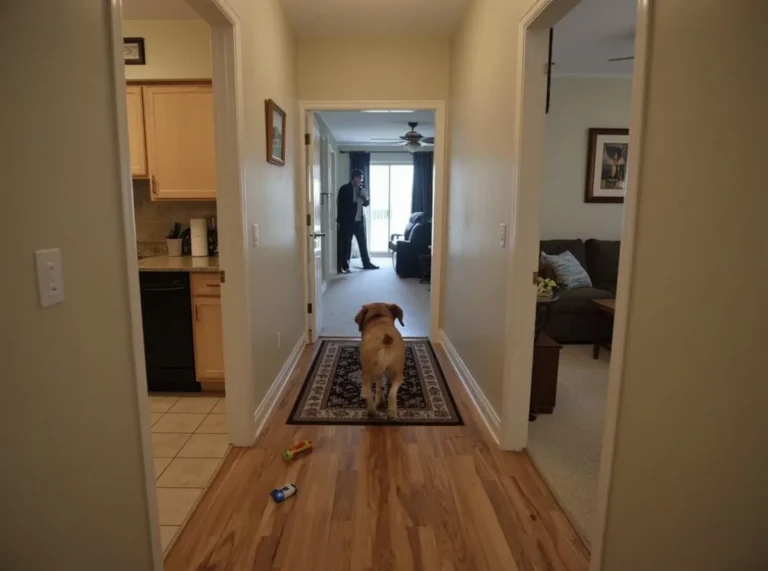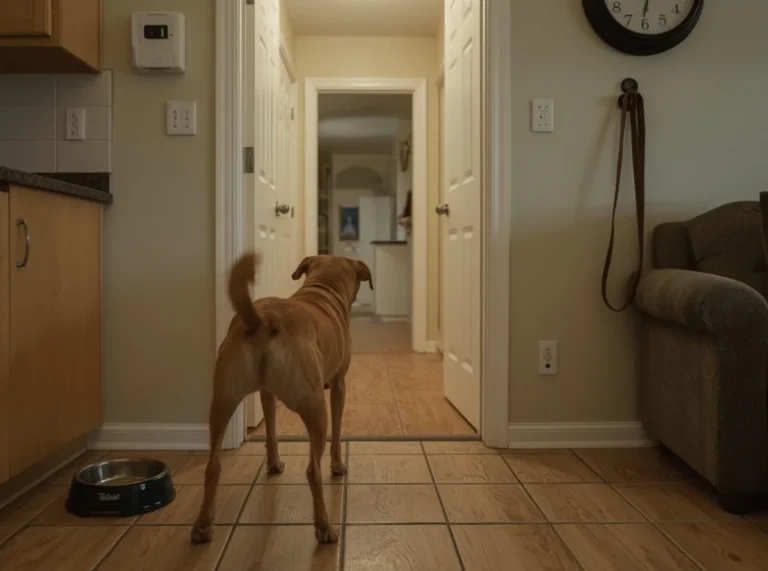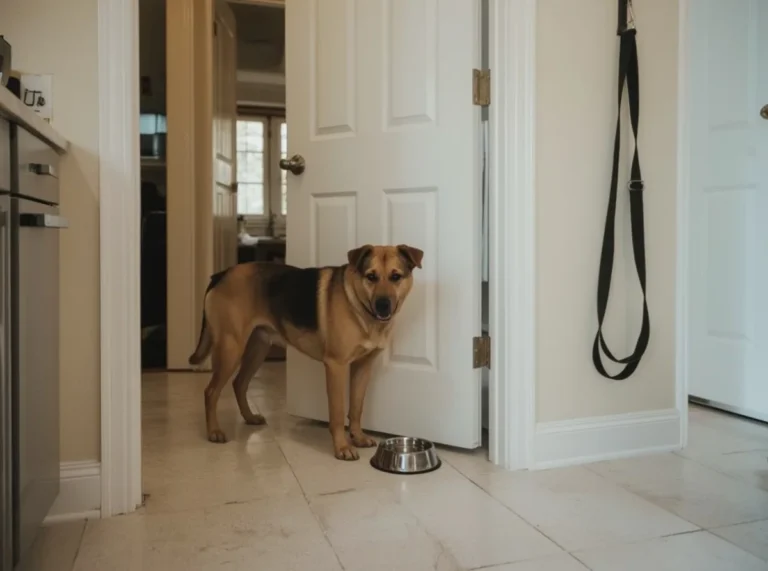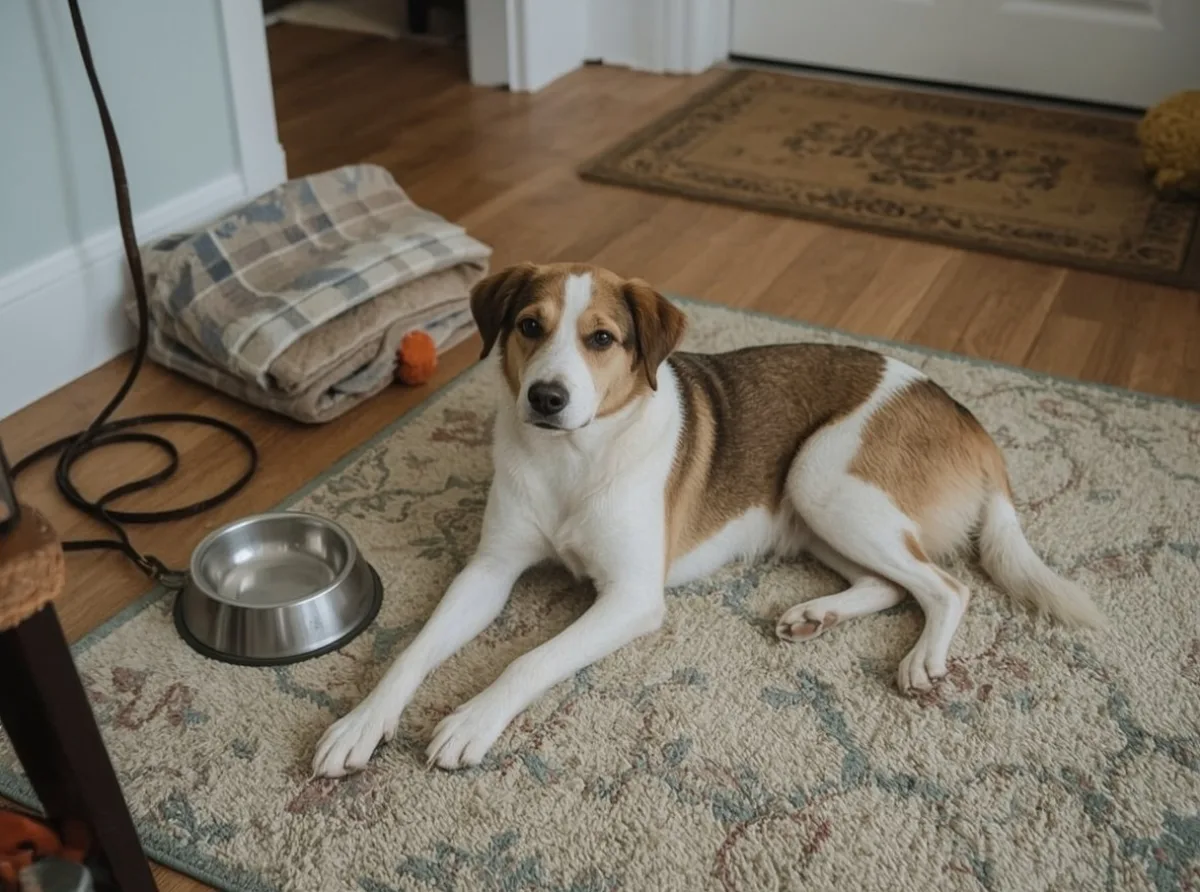
A dog that starts out alert, bouncy, or even a little tense and then becomes calm after a repeated sequence is not doing something mysterious. In many cases, the dog is learning what comes next. Once a pattern feels familiar, the nervous system can stop preparing for the unknown and settle into a more relaxed state.
This is easy to miss in daily life because the change can look sudden. One moment the dog is pacing, whining, scanning the room, or watching every move. After the same order of events happens a few times, the same dog may lie down, soften its face, and stop checking in so often. The sequence itself may be simple: leash on, walk to the door, sit before crossing the threshold. Or it may be more specific, like the sound of a bowl, a car ride route, or a bedtime routine.
Repeated sequences matter because dogs are highly pattern-oriented. Familiarity can lower uncertainty, and lower uncertainty often leads to calm. That calm may come from anticipation, from trust in the routine, or from the brain deciding that there is no need to stay on high alert anymore.
What the Calm Shift Looks Like in Everyday Life
The behavior can appear in many ordinary situations. A dog that barks at the front door at first may stop after hearing the same visitor routine several times. A puppy that keeps circling before bedtime may finally settle once the lights go off, the water bowl is put away, and the crate door closes in the same order every night. Some dogs become quiet once they know the walk is not happening yet, while others relax as soon as the harness appears because it signals a predictable outcome.
In the beginning, the dog may seem unsure or overactive. Then the repeated sequence becomes a cue. The dog recognizes the steps, stops guessing, and begins to wait with less effort. What looked like “calming down” is often the dog becoming certain enough to stop monitoring every detail.
- Repeated bedtime steps can help a dog settle faster.
- Predictable feeding routines can reduce restlessness.
- Consistent departure cues can lower door-related anxiety.
- Familiar walk routines can reduce vocalizing and pacing.
Not every calm response means the dog is pleased, though. Sometimes the dog becomes quiet because it has learned the sequence so well that it no longer needs to react. That may be comfort. It may also be shutdown in a stressful setting. The difference shows up in body language, energy, and how readily the dog resumes normal behavior afterward.
Why Repetition Can Reduce Mental Effort
Dogs do not spend energy the same way humans do when they predict what will happen next, but they still benefit from predictability. A new or irregular sequence forces the brain to keep checking for danger, reward, or change. A repeated sequence tells the dog, through experience, that the next step is not surprising.
That matters because uncertainty is costly for an animal that relies on quick reading of the environment. When a dog understands the order of events, it can conserve attention. Less scanning. Less startle response. Less need to test what is happening.
Predictable sequences often reduce arousal because the dog no longer has to prepare for every possible outcome.
This is especially noticeable in dogs that are sensitive, highly observant, or easily overstimulated. A calm routine does not “fix” a dog’s temperament, but it can give that dog fewer reasons to stay on edge. The dog’s body begins to recognize that nothing unusual is required right now.
The Emotional Meaning Behind the Change
Different dogs calm down for different emotional reasons. One dog relaxes because the sequence means safety. Another calms because the sequence is rewarding and familiar. A third becomes quiet because the repeated pattern has reduced the need to make decisions. These are not identical states, even if the outward result looks similar.
Think about a dog that gets nervous during grooming. The first few times, the sight of the brush may trigger resistance. After many consistent sessions with the same steps, the dog may stand still more easily. That improvement can come from trust, from learning the process, or from both at once. The dog has evidence that the event follows a known path and usually ends the same way.
Comfort grows when the dog can predict not only the action but also its result. A calm dog often has fewer moments of hesitation. The shoulders loosen. The mouth softens. The ears are not locked forward. Movement becomes less urgent. The dog may still remain attentive, but the vigilance is no longer sharp.
Situations Where This Pattern Appears Most Often
Morning and evening routines
Many dogs settle during repeated home routines because those routines are dense with cues. The same footsteps, the same cupboard opening, the same leash being clipped on, the same walk path. Once the sequence repeats enough times, the dog stops reacting to each piece as if it were new.
Feeding time
Food is one of the clearest examples of pattern learning. Dogs often become excited first, then calmer, as the routine develops. Some dogs that once barked or jumped around the kitchen begin to sit quietly after learning the order of events that leads to the bowl.
Car rides
Car behavior often changes with repetition. A nervous dog may pant, whine, or pace in the back seat during early rides. After the dog learns that the same route or destination usually follows the same preparation, it may rest more easily. Familiar motion can become less alarming when it stops being a surprise.
Guest arrivals
Dogs that react strongly to visitors often improve when the arrival sequence stays the same. A knock, a wait at the door, a greeting pattern, and a consistent calm response from the household can make the event easier to process. Over time, the dog may stop rushing the door and begin observing from a relaxed place.
When the same sequence happens often enough, the dog may treat it less like an event and more like a script.
Body Language That Helps Distinguish Calm from Tension
A dog becoming calm after repetition is usually visible in the body before it is obvious in behavior. The posture changes first. Then the breathing. Then the movement. Looking at these details helps separate true relaxation from learned stillness.
| Sign | Often Calmer | May Still Be Stressed |
|---|---|---|
| Posture | Loose spine, resting weight evenly | Rigid stance, frozen limbs |
| Face | Soft eyes, relaxed mouth | Fixed stare, tight lips |
| Breathing | Even and steady | Fast, shallow, or held |
| Movement | Slow, easy transitions | Delayed, cautious, or hesitant |
| Response to cues | Ready but not urgent | Alert but unable to settle |
A dog that is genuinely relaxed will often shift position, lie down naturally, or engage with its surroundings in a loose way. A dog that is only suppressing reaction may appear quiet but still look tense, compact, or overly watchful. That difference matters because repeated sequences can teach calm, but they can also teach a dog to wait out a situation without truly feeling at ease.
How Routine Shapes the Response
Routine is one of the strongest forces behind this behavior. Dogs live through repeated clues: meal times, walks, people coming and going, household sounds, and the order in which these things usually happen. When those clues stay stable, the dog spends less time trying to interpret them.
A quiet home with a steady rhythm often produces a faster shift into calm. A busy household can do the opposite. If the sequence changes all the time, the dog has to keep adapting. Some dogs handle that well. Others remain keyed up because the environment never gives them enough certainty to relax.
Even minor changes can matter. A bowl in a different location, a later walk, or a new person opening the door can interrupt the dog’s expected sequence. The dog may become restless again until the pattern is re-established. For some dogs, that reset is brief. For others, it takes several repetitions before calm returns.
Why Some Dogs Calm Faster Than Others
Individual temperament plays a large role. A confident, easygoing dog may accept a routine quickly and settle after only a few repetitions. A cautious dog may need many more. Breed tendencies, early life experiences, and daily exposure to change can all influence how quickly a dog relaxes once a sequence becomes familiar.
Dogs with a strong startle response often benefit most from repetition, but they may also need the most time. A dog that has learned to expect unpredictability may not trust a pattern right away. The same sequence that calms one dog after three days might take three weeks for another.
Age matters too. Puppies usually learn patterns quickly because they are always collecting information, but they can also become overstimulated very easily. Adult dogs may settle faster if they already have a history with the routine. Older dogs may appreciate repeated sequences because they reduce mental strain and help the day feel manageable.
When Calm Comes From Anticipation Rather Than Relaxation
Sometimes a dog calms down because it knows a favorite event is about to happen. That is not the same as settling in a restful way. A dog waiting quietly for a meal may be focused, not relaxed. A dog sitting motionless at the door because it knows a walk is coming may be disciplined by expectation, not emotionally at ease.
This distinction shows up in energy. Anticipatory calm is often concentrated and alert. Relaxed calm is softer and less directed. The first can still look impressive. The second is usually what people notice when a dog finally feels safe enough to stop tracking everything.
That is why repeated sequences can create two different outcomes. They can teach a dog to wait patiently, or they can teach the dog that the current moment is manageable. Often both happen together, but not always in equal measure.
A dog may look calm because the sequence is familiar, yet still be mentally waiting for the next cue.
What Happens When the Sequence Becomes More Important Than the Event
Some dogs respond less to the actual event and more to the order around it. The bowl being lifted matters less than the sound that happens just before it. The leash clip matters less than the ritual before going outside. Once the dog begins to read the sequence itself, the emotional response can change even if the final event stays the same.
This is why dogs can become calmer after repeated routines that seem small to people. The power is not only in the action. It is in the chain of information. A dog understands that the chain usually leads somewhere known, so the body does not need to stay braced for surprises.
In daily life, that can look like a dog waiting quietly at the door instead of rushing it, lying near the kitchen instead of spinning in circles, or choosing to rest during a familiar pre-walk routine. The dog is responding to order. Order feels easier to live with than uncertainty.
Mixed Signals and Delayed Settling
Not every dog calms neatly. Some dogs show mixed signals for a while. They may begin to relax during the sequence, then pop back up at the next cue. Others seem calm until a small detail changes, at which point the tension returns quickly. That does not mean the sequence has failed. It usually means the dog is still learning where the boundaries of safety and predictability are.
Delayed settling is common in dogs that have been exposed to inconsistency. They may understand the routine and still take time to trust it. They may look settled while keeping one ear tuned to the environment. The dog is not being stubborn. It is testing whether the pattern will hold.
This is where owners sometimes make the wrong interpretation. Quiet does not always mean comfortable, and movement does not always mean a lack of progress. A dog that paces for a minute and then curls up may be processing. A dog that sits still with a tight body may still be waiting for proof that nothing unexpected is about to happen.
Long-Term Patterns and What They Suggest
Over time, repeated sequences can shape a dog’s expectations in a durable way. A dog that has lived with stable routines for months or years may become very quick to settle because the day itself feels legible. The same dog may become unsettled again if the routine suddenly breaks. That reaction is not regression in the dramatic sense. It is the loss of a familiar map.
Long-term observation often shows that dogs are not simply “calm” or “not calm.” They are responsive to structure. The more reliable the structure, the less energy they spend on uncertainty. The less reliable it is, the more they may hover near readiness.
Some dogs keep the routine alive in their own behavior. They check the clock in their way. They go to the door before a walk. They head toward the kitchen before dinner. These habits are not random. They are built from repeated sequences that taught the dog what to expect and when to soften.
What This Means in Real Home Life
Understanding this pattern changes how a household reads a dog’s calm. It is not always a sign of passivity. Sometimes it is a sign of learning. Sometimes it is a sign that the dog finally trusts the shape of the day. And sometimes it is the result of repetition doing what it does best: reducing the unknown.
That is why the calmest-looking dogs are often the ones who have the clearest routines. They are not necessarily the least sensitive. They are often the ones who have learned that the same sequence leads to the same outcome often enough to stop worrying about every next step. In a dog’s world, that can make a room, a walk, or a whole afternoon feel much easier to live inside.
When a dog grows quiet after repeated sequences, the change usually has a simple root. The pattern became familiar. Familiarity reduced effort. Reduced effort gave the dog room to settle. The result may look small from the outside, but for the dog it can mark the difference between staying ready for everything and finally letting the body rest.