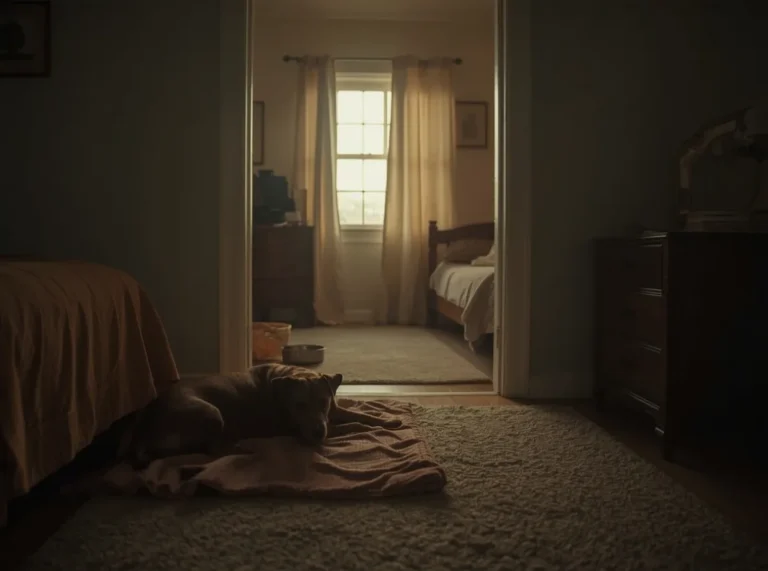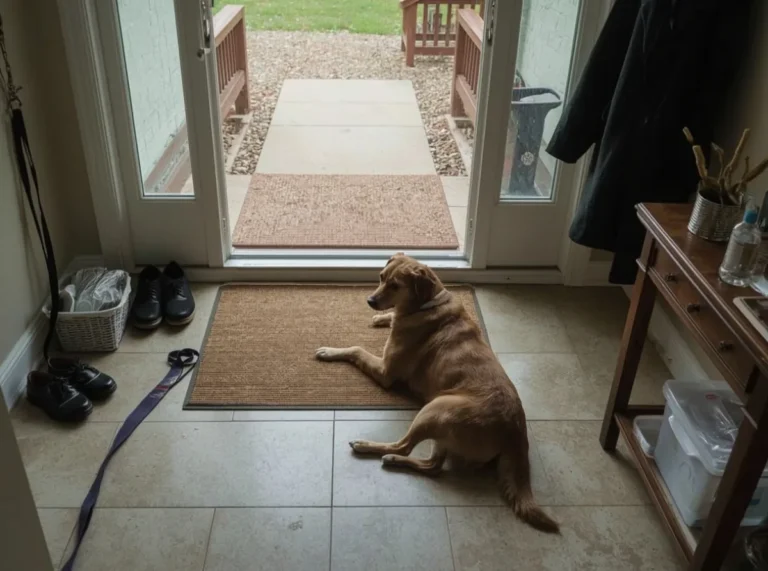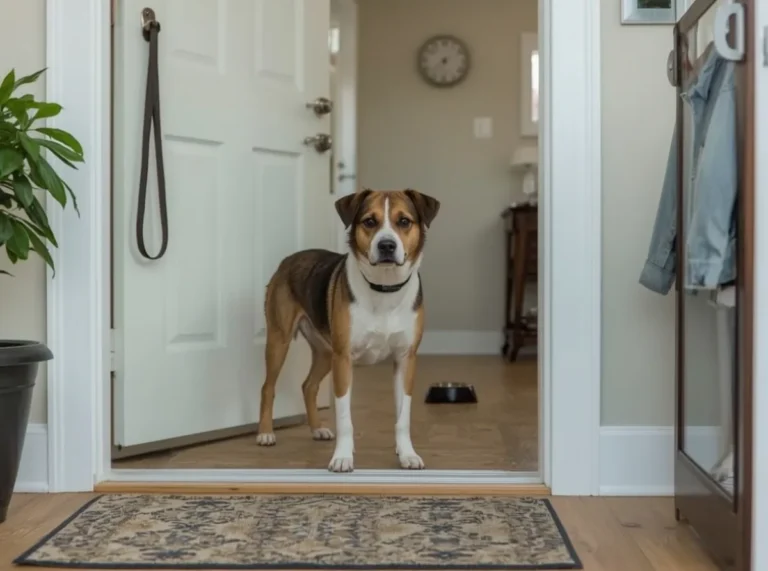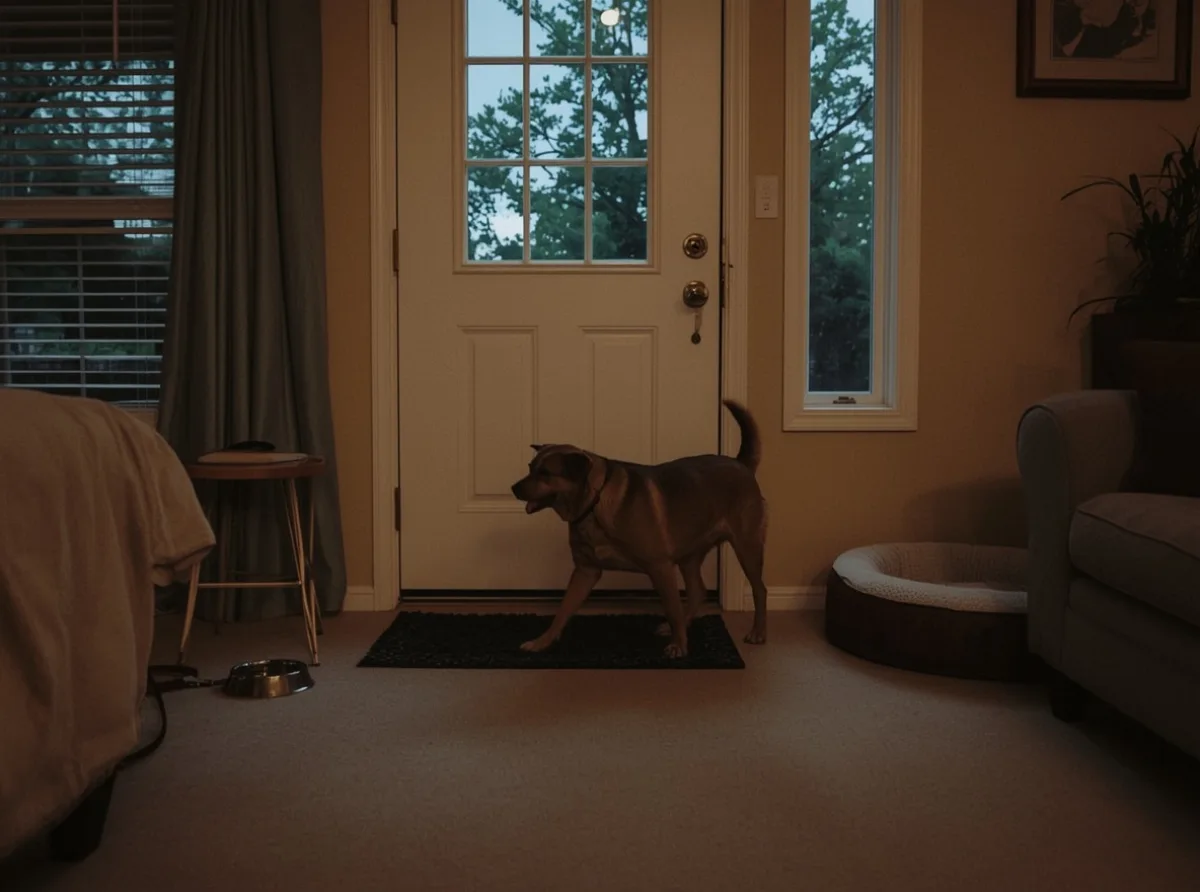
Many dogs develop a noticeable evening rhythm. They start pacing, following the same hallway route, staring toward the door, circling the couch, or nudging for attention at the same time every night. Some settle only after several loops around the room. Others become restless once the sun goes down and seem to repeat the same actions without much variation.
That pattern can look simple on the surface, but it often reflects something about how a dog is feeling, what they expect next, or how the day has gone. Evening is a transition period. The house gets quieter, daily activity changes, and dogs that seemed calm during the afternoon may begin showing a very specific routine. In many homes, those repeated actions are not random at all.
Sometimes the meaning is harmless and predictable. A dog may be anticipating dinner, a walk, a family member coming home, or the usual settling-in sequence before bedtime. Other times, repetitive evening behavior can point to discomfort, frustration, boredom, or a habit that has become more fixed over time. The details matter. The same pacing pattern can have very different causes depending on the dog’s body language, energy level, and overall routine.
What Repetitive Evening Patterns Often Look Like
Evening patterns can be easy to miss at first because they blend into the normal flow of home life. A dog may seem busy rather than distressed. They may follow the same small circuit around the living room, stop at the same spot near the kitchen, then return to a bed or doorway and start again. Some dogs sit and watch the clock with unusual focus, while others begin to shadow a person more closely than usual.
Common examples include:
- pacing between two or three familiar spots
- circling before lying down, then getting up again
- repeatedly checking doors, windows, or stairways
- nudging, whining, or pawing at the same time each evening
- following one family member from room to room
- repeatedly bringing toys, blankets, or other objects
- staring at the food area or walking toward it at the same hour
These behaviors may be brief and easy to predict, or they may continue for long stretches. What makes them meaningful is not just the motion itself, but the pattern. A dog who paces for one minute before dinner is very different from a dog who repeats the same route for an hour every night.
Body language adds important context. A dog who is loose, curious, and easily redirected is often experiencing ordinary anticipation. A dog who looks tense, keeps their head low, pants without exercise, or struggles to settle may be signaling something more complicated. The behavior alone does not tell the whole story.
Why Dogs Repeat the Same Behaviors in the Evening
Dogs are creatures of habit, and evening routines can become deeply familiar to them. They learn quickly when certain events usually happen: a walk after work, food after the news, a final bathroom break before bed, or quiet time once the house calms down. If the sequence is consistent, the dog may begin to prepare for it on their own. What looks repetitive may simply be expectation.
Predictable behavior also gives dogs a sense of control in a world they do not manage themselves. When the day has been busy or noisy, following the same steps each evening can be self-soothing. Some dogs rest better when they have a clear routine. They know what comes next, and that lowers uncertainty.
In other cases, repetition can be linked to unmet needs. A dog that has not had enough exercise, mental engagement, social contact, or outdoor breaks may show more restless activity after sunset. Evening is often when the day’s missing pieces become harder to ignore. Once the household slows down, the dog has more room to notice that they still have energy left.
There is also the possibility of emotional tension. Dogs that are sensitive to changes in the home may become more active at night when family members shift into different routines. If one person leaves, another returns, or the atmosphere becomes quieter, the dog may respond by repeating familiar behaviors that help them cope with uncertainty.
Repetitive evening behavior often sits at the intersection of expectation, habit, and emotional state. The same motion can mean “I know what happens next” or “something still feels unresolved.”
How Routine Shapes Evening Repetition
Routine is one of the strongest influences on evening behavior. Dogs notice patterns in food, walking, attention, and bedtime cues long before humans realize those patterns have become a schedule. If a dog receives dinner at 6:30 every night, they may begin checking the kitchen around 6:15. If the family usually settles on the couch after dinner, the dog may circle that area in anticipation.
That kind of repetition is not necessarily a problem. In fact, it can show that the dog understands the household rhythm well. But routine can also create a rigid expectation. If dinner is late, the walk is skipped, or the usual person is absent, the dog may intensify the same behavior because the pattern they expected has been interrupted.
Household consistency matters too. Dogs in quieter homes sometimes show stronger evening routines because the transition into night is more noticeable. In busier homes, the dog may be reacting to multiple small changes: people moving around, sounds from outside, food preparation, children winding down, or shifting attention from one room to another. The behavior can become a response to the whole sequence rather than one single event.
When routine supports calm
Some evening patterns are actually signs of comfort. A dog may make the same round through the house, check on family members, then lie down in the same bed every night. This can be a settling ritual. Many dogs have one or two behaviors they use to transition from active hours to rest. As long as they relax afterward, the repetition may simply be part of their natural wind-down.
When routine becomes too fixed
If the pattern becomes intense, the dog may be stuck in anticipation. They may stop enjoying the evening and begin waiting for the next event with visible tension. A dog that cannot relax until a meal arrives, a walk happens, or a person returns may be showing a stronger dependence on routine than is healthy or comfortable.
Emotional Reasons Behind Evening Restlessness
Evening can bring out emotional needs that are less obvious during the rest of the day. Some dogs become more attached as the home gets quieter. Others seem to notice absence more strongly after sunset, especially if they have spent many evenings alone or if their favorite person is no longer in sight. Repetitive behaviors can emerge as a way to manage that feeling.
Attachment is a common factor. A dog who follows a person from room to room every evening may not be trying to control the household. They may be seeking closeness, reassurance, or predictability. If the behavior includes whining, fixed staring, or checking the same room repeatedly, the dog may be waiting for connection rather than simply being restless.
Anxiety can also appear in subtle evening habits. Dogs do not always show fear in obvious ways. Some become busy instead of frozen. They walk, circle, sniff, and re-check areas because movement helps them cope. If the home is calmer at night but the dog is more alert, that can suggest they are reacting to inner tension rather than external activity.
Frustration is another possibility. A dog may want something specific and repeat the same action because it has worked before. They may paw at the treat cabinet, bring a toy to the same person, or stand by the door in a way that suggests they are trying to start a familiar event. When the request is ignored, the pattern may continue or increase.
Emotional repetition is often less about “bad behavior” and more about a dog trying to regulate themselves when the evening feels different, slower, or more uncertain than expected.
What the Body Language Can Reveal
The same movement can have different meanings depending on posture, expression, and pace. A dog pacing with soft eyes, a relaxed tail, and an easy return to rest is very different from a dog who paces stiffly, holds their ears back, or seems unable to commit to lying down. Small signals matter.
Helpful signs to notice include:
- tail position and movement speed
- ear placement and facial tension
- whether the dog can stop when redirected
- panting that is not related to exercise or heat
- restlessness combined with avoidance or clinginess
- whether the dog appears alert, worried, or simply excited
A dog who checks the window once and then returns to the bed may be responding to a normal sound or expected arrival. A dog who keeps returning to the same spot every few minutes may be holding on to a state of alertness. The difference may seem small, but it often helps distinguish ordinary routine from something more persistent.
Another important detail is whether the behavior is flexible. Can the dog be redirected to a chew, a mat, or a short interaction and then settle? Or do they keep returning to the same pattern no matter what? Flexibility often points to a lighter, more manageable reason. Inflexibility can suggest stronger emotional or physical involvement.
When Evening Patterns May Point to Physical Discomfort
Not every repetitive evening behavior is emotional. Some dogs move repeatedly because they are uncomfortable. Older dogs, dogs with joint stiffness, and dogs with digestive issues may seem restless when the day ends. Evening can be especially noticeable because the body has been active for hours and then begins to slow down. That slowdown can reveal aches or internal discomfort.
Pacing may increase when a dog cannot find a good position. Repeated circling before lying down can be a sign of discomfort, especially if the dog struggles to settle, shifts weight often, or gets up soon after lying down. A dog may also seem to seek cooler floors, stretch more frequently, or change resting spots several times in one evening.
Other signs to watch for include:
- difficulty lying down or standing up
- stiff movement after rest
- increased licking of the paws or body
- changes in appetite near evening
- restlessness paired with reduced enthusiasm for normal activities
- vocalizing when changing position
If the repetitive behavior appears suddenly, grows stronger, or comes with changes in mobility, appetite, or sleep, discomfort should be considered before assuming it is just a habit. Evening may simply be the time of day when the signs become most visible.
How Environment Influences the Pattern
The home itself can shape evening repetition. A dog may react to windows facing busy streets, sounds from neighbors, doorbells, appliances, or wildlife outside. When daylight fades, some sounds stand out more. The environment becomes less visually busy, but not necessarily less stimulating. A dog who is already alert may spend the evening checking each new noise.
Space matters too. In smaller homes or apartments, dogs often have fewer ways to move naturally. Repeating the same circuit can become the default outlet for energy. In larger homes, some dogs create their own patrol route, moving from room to room in the same order each night. That behavior can reflect monitoring, habit, or a need to keep track of where everyone is.
Changes in the household can make patterns more pronounced. New work schedules, visitors, seasonal changes, and later bedtimes can all alter the dog’s expectations. Even small shifts, like dinner being served at a different time or a shorter evening walk, may be enough to increase repetition. Dogs are often more sensitive to consistency than people realize.
How to Read Different Types of Evening Repetition
There are several broad patterns that can help make sense of what a dog is doing. The table below is not a diagnosis, but it can help organize what repeated evening behavior may suggest.
| Pattern | Common appearance | Possible meaning |
|---|---|---|
| Predictive | Checks kitchen, door, or leash area at the same time | Expectation of dinner, walk, or family arrival |
| Settling ritual | Circles, then lies down in a familiar spot | Transition from active time to rest |
| Attention-seeking | Brings toys, paws, nudges, or follows closely | Desire for interaction or reassurance |
| Restless coping | Pacing, sniffing, repeating routes, hard to settle | Stress, uncertainty, or overstimulation |
| Discomfort-driven | Repeated position changes, stiffness, difficulty lying down | Pain, aging, or physical unease |
The more a behavior repeats in exactly the same context, the more likely it is tied to routine. The more it varies in intensity or appears alongside tension, the more worth attention it becomes. Evening timing alone is not enough to explain it. The broader pattern is what gives it meaning.
How Owners Often Misread the Behavior
One common mistake is assuming repetition always means excitement. Some dogs do act eager in the evening, but eagerness usually looks different from unease. An excited dog tends to be responsive, bouncy, and easy to engage. A worried or uncomfortable dog often seems less flexible. They may keep doing the same thing without really enjoying it.
Another misunderstanding is assuming the dog is being stubborn or manipulative. Dogs do not repeat evening behaviors because they are plotting outcomes. They repeat them because the pattern has a function for them. It may reduce uncertainty, help them get attention, or give them a way to manage energy. Framing it as defiance often misses the real reason.
Some owners also overlook gradual change. A habit that began as simple anticipation can become more intense over time. A little pacing before dinner can evolve into repeated restlessness every night if the dog is under-exercised, stressed, or uncomfortable. Watching for changes in frequency, duration, and body tension helps catch that shift early.
The meaning often lies in how a dog repeats the behavior, not just in the behavior itself. Frequency, intensity, and ease of redirection all change the picture.
When the Pattern Becomes More Noticeable Over Time
Long-term consistency can tell a useful story. If the same evening pattern shows up every day at nearly the same time, it may be closely tied to routine. If it grows stronger after schedule changes, a move, a new pet, or a household disruption, the behavior may be reflecting adaptation. Dogs often show their internal adjustment through repeated actions before anything else becomes obvious.
Age can matter as well. Young dogs may repeat evening patterns because they still have excess energy or have not learned how to settle fully. Adult dogs often show more stable routines. Older dogs may become less flexible, more sensitive to discomfort, or more dependent on predictable evening structure. The same action can mean different things depending on life stage.
If the dog has always followed a certain evening ritual and remains relaxed, the repetition may simply be part of who they are. If the pattern appears suddenly or changes in a noticeable way, it deserves a closer look. Sudden restlessness at night often says more than a familiar, lifelong habit.
What Repetitive Evening Patterns Can Be Telling You
Repeated evening behavior usually falls into one of a few categories: anticipation, self-soothing, attention seeking, environmental alertness, or discomfort. Dogs may shift between these categories from day to day. A dog that paces for dinner one night may pace because of anxiety the next. The context matters every time.
What makes evening patterns especially revealing is their consistency. Nights strip away some of the distractions of the daytime, so the dog’s habits become easier to see. That is why these patterns often expose things that are otherwise hidden. A dog that seems fine all day may reveal tension only once the household grows quiet. Another may show that they have built a dependable ritual around dinner, family time, or bedtime.
Not every repetitive action needs to be corrected. Some are simply part of a dog’s daily rhythm and reflect a healthy understanding of home life. Others point to a need that has not been met, or a body that is not as comfortable as it should be. The most useful response is usually to notice the pattern closely, compare it with the rest of the dog’s day, and pay attention to whether the behavior looks relaxed, fixed, or strained.
Evening repetition becomes meaningful when it is viewed as part of the dog’s whole routine. The path they take, the time they choose, and the way they move can reveal a lot about how they experience the end of the day. Sometimes it is anticipation. Sometimes it is habit. Sometimes it is the first visible sign that something deserves attention.