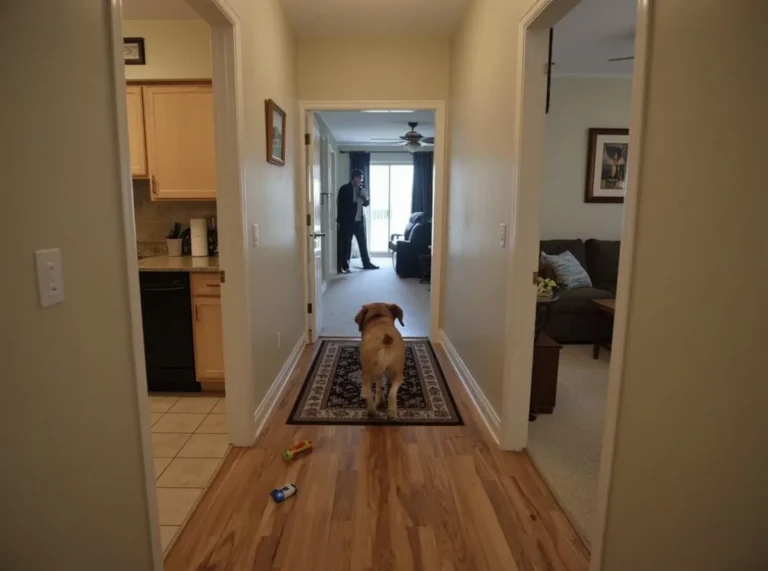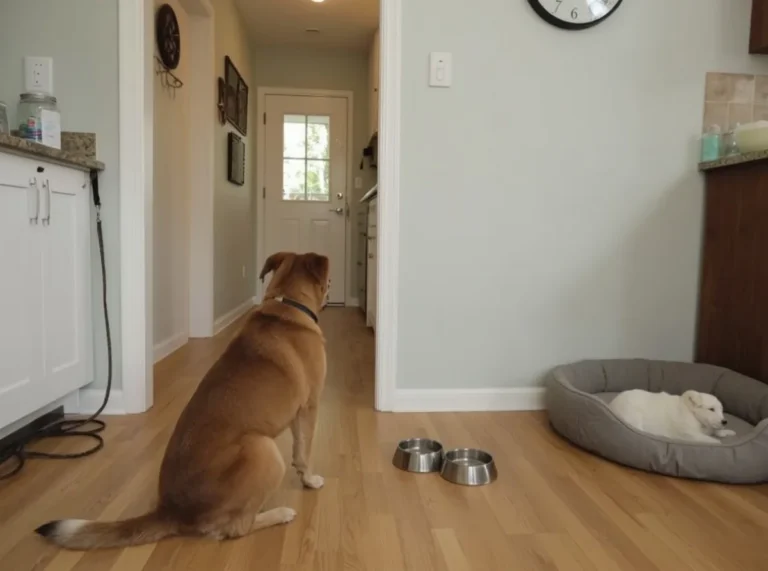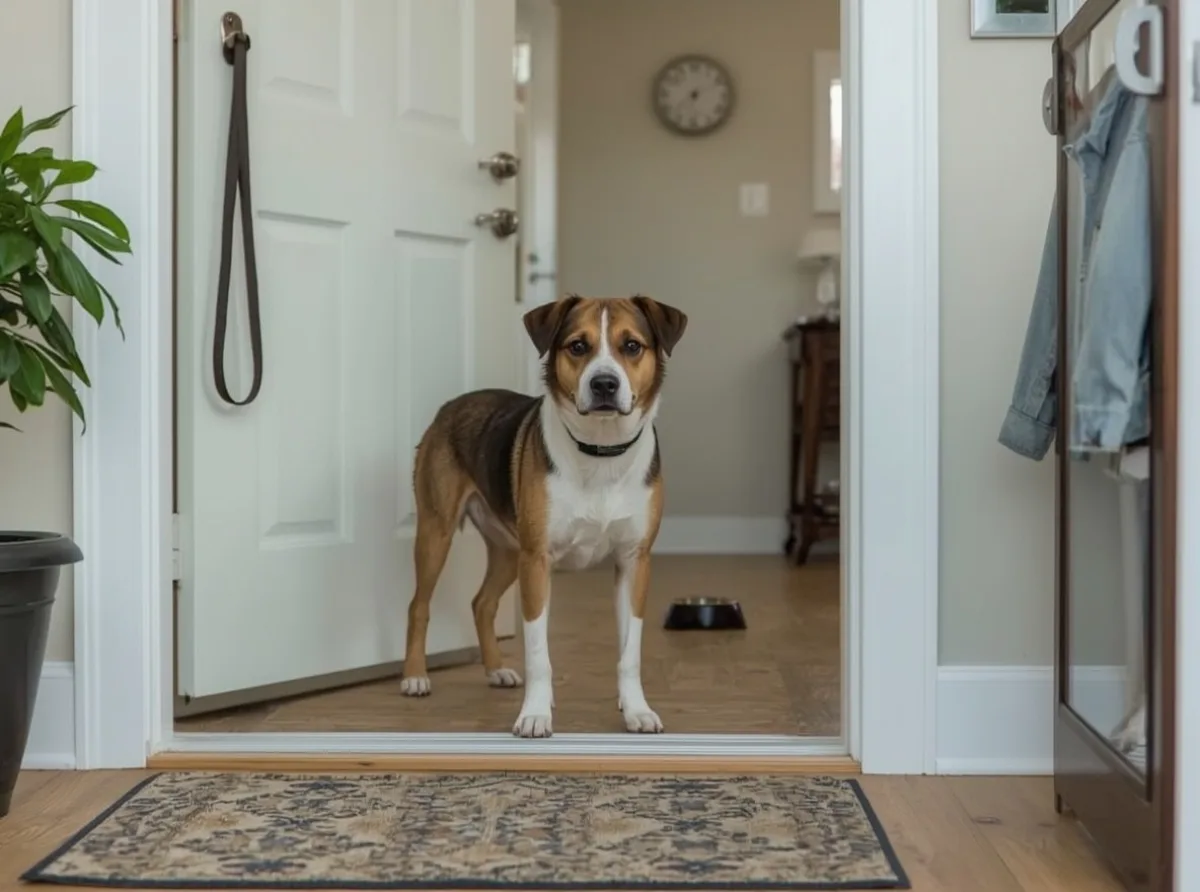
Some dogs seem to know what is coming before anyone says a word. They hear a sound from another room and head for the door. They start waiting by the pantry at the same time every evening. They perk up before the leash appears, before the car keys jingle, before the regular walk, meal, or medication routine even begins.
This can feel almost uncanny, especially when the pattern is accurate day after day. But most of the time, the explanation is less mysterious than it seems. Dogs are extremely skilled at noticing repeated cues, and many of their “predictions” are built from memory, timing, and observation rather than magic.
What looks like anticipation is often a dog reading a whole chain of tiny details. A shift in household movement. A sound. A smell. A change in your pace, posture, or routine. Over time, those details form a dependable map of what tends to happen next.
What Routine Anticipation Looks Like in Everyday Life
In many homes, the pattern shows up in small but unmistakable ways. A dog may appear at the door a few minutes before a family member returns. Another might wait by the kitchen when dinner is usually prepared. Some dogs wake up right before the alarm, while others become alert just before the children get home from school.
These moments often seem like the dog knows the clock. In reality, dogs are usually responding to repeated environmental signals that humans barely notice. They may hear footsteps in the driveway, detect a shift in household noise, or sense changes in movement that happen in a reliable order.
Daily repetition matters. When the same event follows the same pattern enough times, many dogs begin to act as if they are “waiting” for it. That behavior can look calm, excited, restless, or focused depending on the dog’s personality and the kind of event they expect.
Why Repetition Makes Dogs So Good at Predicting
Dogs learn through association, and routine creates strong associations. If the leash comes out after a certain sound every day, the sound itself starts to carry meaning. If you always grab your keys before leaving for work, your dog may begin to connect the keys with your departure long before you reach the door.
What surprises people is how many cues can be linked together. A dog does not need a single obvious signal. It may piece together several small clues: the time of day, the household’s energy level, the order of your actions, and even the way you move through a familiar routine.
Dogs often anticipate routine events because they are excellent pattern learners. Repeated actions become a chain of clues, and the dog begins to recognize what comes next.
Some dogs are especially quick at this. That does not always mean they are more “intelligent” in a broad sense. It often means they are more attentive to human behavior, more sensitive to environmental shifts, or more motivated by the event itself.
How Dogs Read Human Habits So Well
People tend to think they are being subtle, but dogs notice habits that humans repeat without thinking. The same shoes before a walk. The same bag before daycare. The same sequence before breakfast. Even a brief pause near the treat drawer can become part of the signal.
Dogs are also very good at timing. They do not measure the day the way people do, but they recognize regular intervals and recurring patterns. Many dogs can tell when it is close to the usual feeding time or when a household member tends to return.
They also watch body language closely. A person who usually moves faster, speaks differently, or handles objects in a certain order before leaving the house may be giving off a clearer cue than they realize. Dogs often learn the “shape” of a routine, not just one specific action.
Emotional Reasons Behind the Behavior
Not every dog anticipates routine events for the same internal reason. For some, it is simple excitement. The dog has learned that a certain event brings something enjoyable, so it begins to wait for the usual sequence with enthusiasm.
For others, anticipation is tied to attachment. A dog that is deeply bonded to a person may become alert before that person arrives home or begins a familiar ritual. The anticipation is not only about the event itself, but about the social meaning attached to it.
There are also dogs that seem to anticipate because they are slightly uneasy when routines shift. Predictable events reduce uncertainty, and some dogs become especially focused when they can sense an expected pattern unfolding. That focus may look like eagerness, but sometimes it reflects a need for stability.
Anticipation can come from joy, attachment, or concern about change. The same behavior may look similar on the surface while reflecting very different emotional states.
Situations Where It Shows Up Most Often
Meals and treats
Food routines are one of the strongest examples. Many dogs know the dinner schedule long before their owners look at a clock. They may begin circling the kitchen, sitting near the cabinet, or watching every small movement that usually leads to food.
Walks and outdoor time
Some dogs recognize the sequence that leads to a walk. They hear a harness buckle, see a certain pair of shoes, or notice the way their person moves toward the hallway. The anticipation may build before the leash is even touched.
Arrivals and departures
Dogs often become especially skilled at predicting when people come and go. Many learn the cues that signal a return, such as specific times of day, familiar car sounds, or the activity pattern that happens before someone arrives home.
Bedtime or evening routines
Calmer patterns can be just as strong. A dog may head to the bedroom when the household quiets down or start settling in when the lights change and the evening routine begins.
The Role of Environment in Sharpening Anticipation
The home environment can make routine prediction much stronger. In a quiet home, small sounds and subtle movement stand out more clearly. In a busy home, the sheer consistency of repeated actions may become the main thing a dog learns to follow.
Dogs living in very structured households often become experts at reading patterns. When the schedule is stable, the dog has fewer variables to sort through. The same person leaves at the same time, the same door opens at the same hour, and the same event follows. That consistency builds confidence in the dog’s expectations.
In less predictable homes, dogs may still anticipate events, but the pattern can be softer or less exact. A dog might not know the exact minute, yet still begin looking alert once a cluster of familiar cues appears. The more repetitions a dog gets, the sharper the anticipation can become.
When Stimulation Makes the Pattern Stronger
Dogs that live with a lot of repeated activity often become especially skilled at this kind of prediction. A household with frequent walk times, regular feeding, school pickups, training sessions, or daily visitors offers many chances to learn the sequence of events.
High-value experiences also strengthen anticipation. If an event is exciting, rewarding, or comforting, the dog is more likely to pay attention to every clue that leads up to it. A dog may not care much about the sound of a cabinet door in one context, but if that sound always comes before dinner, it quickly gains meaning.
At the same time, too much unpredictability can make some dogs less confident in their predictions. When routines change constantly, the dog may watch more carefully, linger near the owner, or try to gather more information from the environment.
Subtle Signals That Often Accompany Anticipation
Anticipating dogs often show a cluster of small signals rather than one dramatic behavior. These can include focused staring, moving toward the usual location of the event, pacing briefly, changing posture, or holding still in a watchful way.
The tail, ears, and mouth can offer clues too. A dog may appear loose and happy, or alert and tense, depending on what it expects. Some dogs become very quiet, almost as if they do not want to miss the moment. Others become fidgety because the anticipation itself is hard to contain.
- Standing near the door before someone arrives
- Going to the kitchen before meals
- Watching a person who usually starts the routine
- Becoming alert when familiar sounds appear
- Checking the same spot repeatedly at the expected time
These behaviors are often easy to recognize once a pattern has formed. The dog may not be “counting minutes,” but it is clearly tracking a sequence it knows well.
What Owners Often Misread
People sometimes assume a dog is being stubborn, demanding, or manipulative when it actually looks highly focused on a routine. A dog waiting at the pantry is not necessarily trying to control the household. It may simply be reacting to a learned pattern that has become very reliable.
Another common misunderstanding is assuming every alert dog is anxious. Some dogs are calm and confident while anticipating an event. Others do show tension, but that tension may come from uncertainty, high arousal, or a strong desire to avoid missing a familiar part of the day.
It helps to look at the whole picture. Is the dog relaxed and expectant, or restless and unable to settle? Does the behavior happen only around enjoyable events, or does it appear around departures and changes too? The answer changes what the behavior may mean.
Anticipation is not a single emotion. The same waiting behavior can reflect excitement, habit, attachment, or stress depending on the context.
How Internal State Shapes Accuracy
Dogs in a calm state often notice routine cues more clearly. They can track the sequence without getting overwhelmed by it. Their anticipation may look steady, measured, and almost patient.
Dogs in a heightened state may also be accurate, but their behavior can become more intense. They may rush to the usual location, bark earlier than expected, or struggle to relax while waiting. In those cases, the dog is still reading the pattern correctly, but the emotional tone is stronger.
Some dogs become especially tuned in when a routine matters deeply to them. Food, companionship, outdoor access, or a cherished daily ritual can all increase vigilance. The event does not need to be dramatic for the dog to care about it a lot.
Why Some Dogs Seem More Accurate Than Others
Individual differences matter. One dog may be highly observant and quick to connect clues. Another may be less interested in routine or more easily distracted by smells, movement, or other activities.
Breed tendencies can play a role, but they do not decide everything. A dog bred for close human cooperation may naturally pay more attention to people’s movements and habits. A more independent dog may still learn routines well, but may show less obvious outward anticipation.
Past experience matters too. Dogs that have lived in structured environments often become sharp routine readers. Dogs whose schedules have been stable for years may develop very precise expectations. Meanwhile, dogs with inconsistent backgrounds may take longer to trust or recognize a repeated pattern.
How Long-Term Routine Builds Reliable Expectations
Over time, repeated events become part of a dog’s internal map of home life. The dog learns what follows what, and the pattern becomes increasingly confident. Once that map is strong, even small changes can trigger noticeable anticipation.
This is why dogs often appear to know when a familiar event is close even if the owner has not done anything obvious yet. The dog is responding to the broader routine, not just one visible cue. The same sequence has taught the dog what to expect, and that memory is durable.
Long-term routine can create especially precise timing around daily habits. A dog may not understand that it is 6:00 p.m., but it may know that the usual evening sequence is unfolding because the household has followed that order for months or years.
When Anticipation Becomes Mixed or Unclear
Sometimes a dog seems to anticipate an event and then hesitates. That can happen when the usual pattern changes slightly. Maybe dinner is late. Maybe the walk comes from a different person. Maybe the car ride happens at an unusual hour.
In these moments, the dog may still show the early signs of expectation, but the certainty is weaker. It might wait, leave, return, and then wait again. That behavior suggests the dog is comparing the current situation with a learned pattern and noticing that something does not fully match.
Mixed signals are common in real life because household routines are not always perfect. Dogs notice those imperfections quickly. Their reaction often reveals how strongly they rely on routine for orientation.
Routine Anticipation in a Broader Social Sense
There is a social side to this behavior too. Dogs do not live only inside schedules. They also respond to the emotional rhythm of their household. A familiar routine can become a shared expectation between dog and owner, built through repetition and mutual attention.
That shared rhythm can make the dog appear remarkably in tune with human life. But the dog is usually not guessing in a mystical way. It is reading a social pattern that has become very familiar and very meaningful.
For many dogs, this is part of what makes home feel safe and understandable. The prediction itself is important because it reduces uncertainty. Knowing what usually comes next helps the dog move through the day with more confidence.
Quiet Signs That the Pattern Has Become Deeply Learned
Some of the strongest signs are not dramatic at all. A dog may simply choose the right room at the right time. It may settle by the front window before a person returns. It may go still in a particular spot just before a repeated event begins.
These small actions show how tightly a dog can link environment, time, and human habit. Once the association is deep enough, the dog does not need much prompting. The routine itself becomes the cue.
That is why some dogs appear almost eerily accurate. What looks like foresight is often a well-trained memory for the structure of everyday life.
In many households, a dog’s “prediction” is really a learned response to patterns that repeat with remarkable consistency.
A Natural Part of Life with Dogs
Dogs live close to human routines, and that closeness makes them unusually good at reading them. The accuracy of their anticipation comes from observation, repetition, emotional investment, and a strong ability to connect one event to the next. Some dogs are simply more expressive about it than others.
The behavior becomes most noticeable when the routine is stable and meaningful. Meals, walks, arrivals, bedtime, and favorite rituals all give dogs plenty of chances to learn the sequence. Once that sequence is familiar, their waiting can look almost exact.
What stands out most is not just that dogs notice routine events, but that they build trust in those patterns. They learn when the day changes shape, and they respond before the moment arrives. That steady attention is part of how many dogs make the household feel familiar long before anyone opens the door or sets the bowl down.