Some dogs seem to know the home schedule better than the people who live in it. They appear at the kitchen at the same time every morning. They wait by the door a few minutes before someone usually leaves. They get up when the house begins to settle into its evening pattern, as if they are reading the rhythm of the day.
This kind of attention can look almost uncanny, but it is usually rooted in ordinary dog behavior. Dogs pay close attention to repeated actions, small sounds, and the order of events around them. Over time, those details become a reliable map of what happens next.
For many dogs, household rhythms are not just background noise. They are cues. A mug on the counter, keys near the door, a change in footsteps, or the sound of a cabinet opening can all become meaningful signals. The dog is not necessarily trying to control the routine. More often, it is tracking it closely because predictability matters.
What this behavior looks like in everyday life
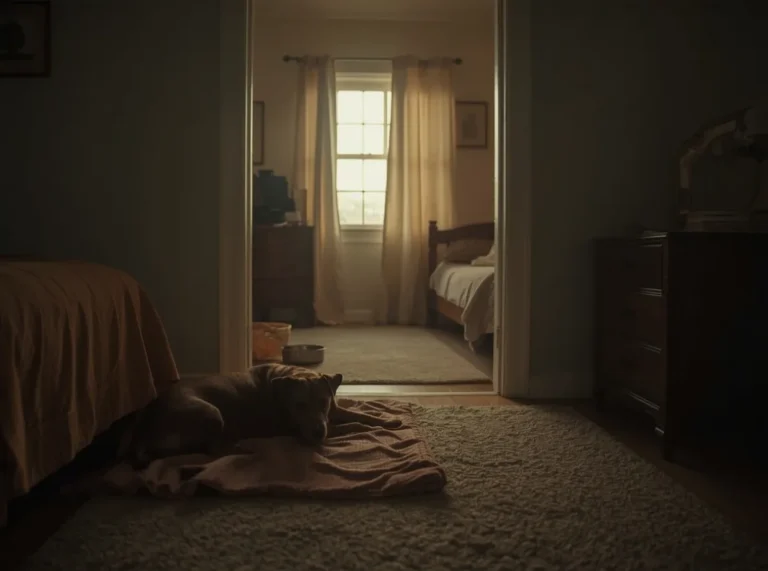
Household rhythm watching can show up in small, easy-to-miss ways. A dog may lie in the hallway when the family usually starts getting ready for bed. Another may follow one person from room to room during the same window of time each afternoon. Some dogs become alert when the morning routine starts and relax once the usual sequence is complete.
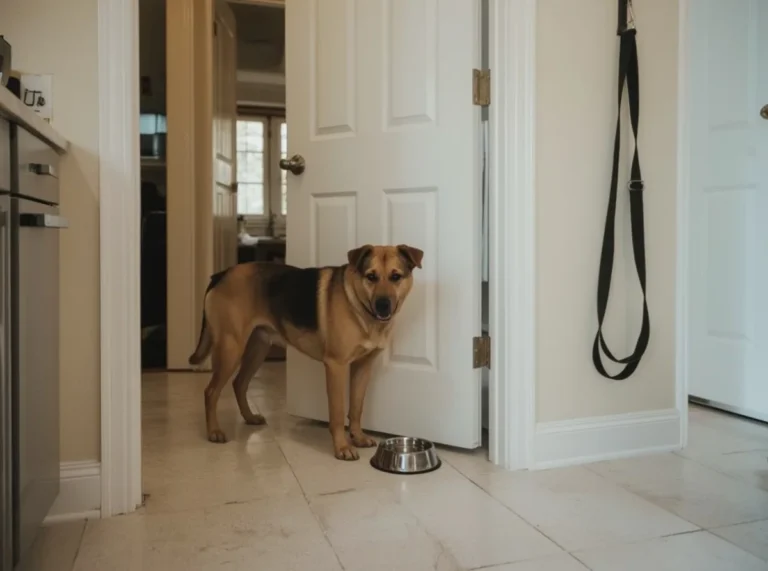
In homes with very regular schedules, dogs often become extremely precise. They may wait by the food area before meals, stare toward the front door before a walk, or become restless when the usual activity does not happen on time. This is not always a sign of anxiety. Sometimes it is simply strong pattern recognition.
The behavior can look different depending on the dog’s personality. A reserved dog may quietly observe from a corner. A more social dog may stay close to the family and track every movement. A sensitive dog may respond to subtle shifts in energy long before anyone says a word.
Common examples owners notice
- Waiting near the kitchen before breakfast or dinner
- Following the person who usually handles walks or feeding
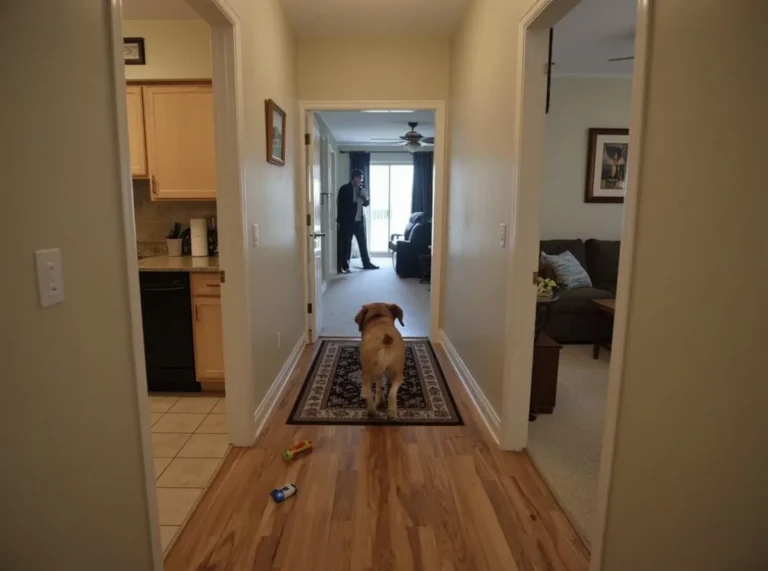
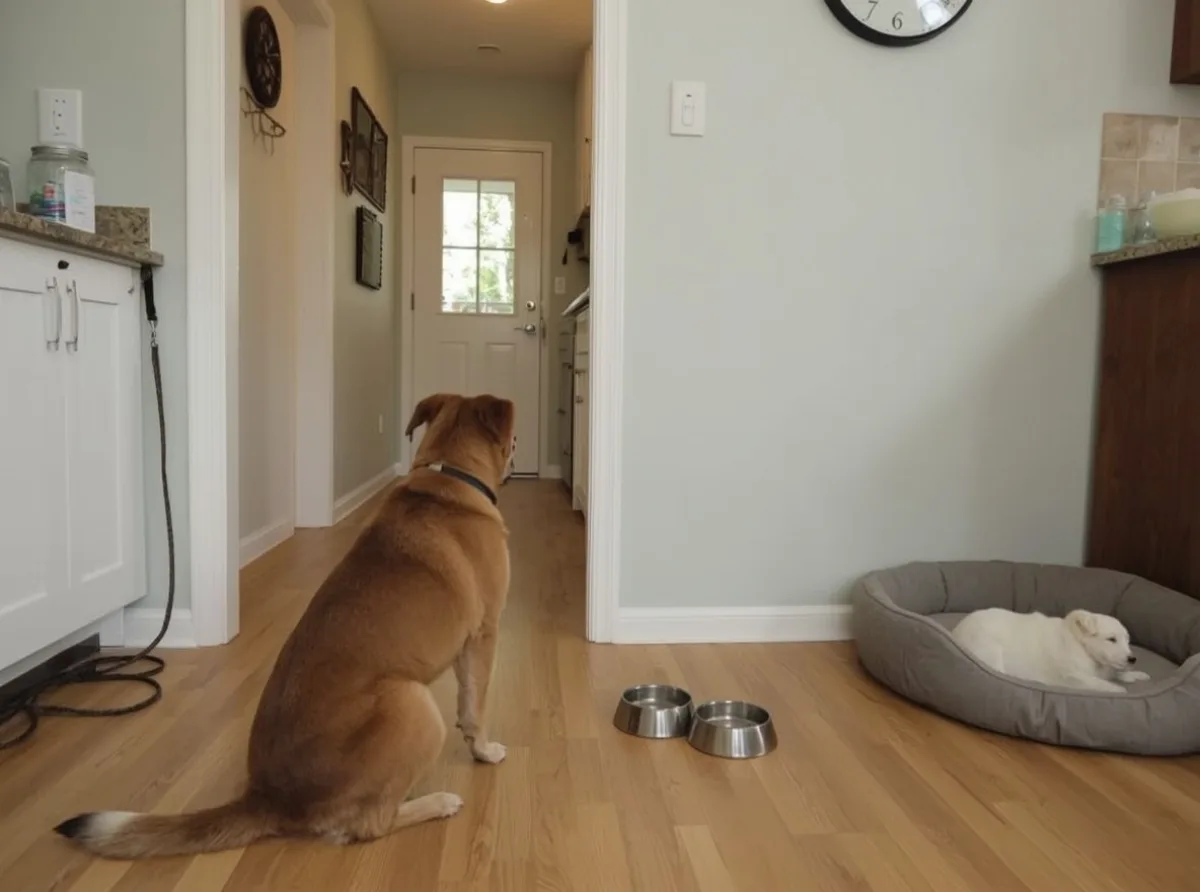
- Watching the door at times when departures normally happen
- Getting alert when shoes, bags, or keys appear
- Settling down when the evening routine begins
- Checking in more often during times of household transition
These behaviors can be easy to overlook because they blend into everyday life. Yet they often reveal how carefully a dog is reading the home environment.
Why dogs become so tuned in to household rhythms
Dogs are highly skilled at noticing repetition. A household that runs on visible patterns gives them plenty of information to learn from. Meal times, walk times, wake-up times, work departures, school pickups, and bedtime routines all create a steady stream of cues.
That steady stream becomes useful. A dog does not need a clock to understand that dinner usually follows a certain sequence. If the family starts moving toward the kitchen, opens specific cabinets, and changes tone or pace, the dog can connect those details to food. After enough repetition, the pattern becomes reliable enough to watch for every day.
Some dogs are especially responsive because they are naturally observant. Breed tendencies can play a role, but individual temperament matters more than labels. A dog that is cautious, social, food-motivated, or highly attached to people may notice household rhythms more intensely than a dog with a more independent style.
Dogs often learn the order of household events rather than the time on a clock. The sequence matters more than the exact minute.
Pattern learning is part of being a dog
Dogs live in a world of repeated associations. A leash usually means movement. A bowl often means food. Certain sounds often lead to certain outcomes. Once a dog learns that one event predicts another, it will start watching for the first part of the pattern.
That is why a dog may become alert before anything obvious happens. The dog is not predicting the future in a human sense. It is noticing a chain of familiar signals and preparing for what normally comes next.
This is also why dogs in the same household may respond differently. One dog may care deeply about the person who handles the morning routine. Another may only react to the sound of a lunch container opening. Each dog may be tracking a different part of the same daily pattern.
Emotional reasons behind the behavior
Not every dog that watches household rhythms is simply being practical. For many dogs, emotional attachment plays a major role. A dog that feels closely bonded to the people in the home may keep track of routines because the routines are linked to contact, comfort, and security.
When a household has predictable movement, the dog knows when social interaction is likely to happen. That can be reassuring. It can also help the dog stay oriented in a busy environment. In this sense, rhythm watching is often a way of staying connected.
Some dogs show this behavior more strongly during periods of change. A move, a new work schedule, a different caregiver, or even a seasonal shift in routine can make a dog pay closer attention. When the pattern changes, the dog may start watching more carefully because the old cues no longer feel as certain.
Attachment and reassurance
Dogs that are strongly bonded to household members often keep track of movement because it helps them feel near the people they trust. They may follow at a distance, wait near a doorway, or place themselves where they can see the next event unfold.
This does not always mean the dog is needy. Sometimes it means the dog is socially attentive. Dogs are naturally attuned to group behavior, and a household functions a lot like a small social group. Watching the rhythm helps the dog know where it fits.
In calmer dogs, this may look like quiet observation. In more anxious dogs, it may look like persistent hovering or difficulty settling until the routine is complete. The difference matters.
If the observation is calm and the dog can relax when the expected event ends, the behavior is often just strong awareness of routine. If the dog stays tense, vocal, or unable to settle, emotional stress may be involved.
How environment shapes the behavior
The home environment has a major influence on how closely a dog observes household rhythms. A quiet home with repeated patterns gives the dog clear information. A busier house with children, visitors, and irregular schedules can make the dog even more alert because there is more to monitor.
Dogs often become especially attentive in homes where the schedule drives daily life. In a household where people wake, eat, leave, return, and sleep at roughly the same times, the dog has many opportunities to learn the pattern. If those rhythms are consistent, the dog may appear almost scheduled itself.
In more unpredictable homes, the behavior may be less visible or more intense. Some dogs react to inconsistency by checking in more often. They may watch people more closely, move between rooms, or appear restless when they cannot tell what is about to happen.
Routine can make a dog more observant
Routine does not just comfort dogs. It also teaches them when to pay attention. A predictable home creates a series of cues that become meaningful through repetition. The dog learns that certain times of day matter because certain events usually happen then.
This can be seen around meals, walks, medication times, school drop-off and pickup, or evening settling time. Even small habits, like turning on a coffee machine before leaving the house, can become part of the dog’s mental map.
Over time, the dog may become more accurate than the household realizes. Many owners are surprised when a dog seems to know it is “almost time” for something even when clocks and calendars have not been discussed. The dog is tracking the home, not the hour.
When the behavior becomes more noticeable
Household rhythm watching often becomes stronger during periods when a dog has more free time, less stimulation, or more uncertainty. A bored dog may pay closer attention to the daily schedule because there is not much else competing for its focus. In that case, the routine itself becomes a major source of interest.
The behavior may also stand out more in dogs that spend a lot of time indoors. If a dog’s world is mostly the home, the household schedule becomes a central part of life. Every small shift matters more because the dog has fewer outside events to balance it out.
Some dogs also become more observant as they mature. Puppies may notice pieces of the routine but not understand them fully. Adult dogs often show much clearer pattern awareness because they have had enough repetition to connect the dots. Older dogs may lean on routine even more because predictability is comforting.
Times of day that often trigger observation
- Morning wake-up and breakfast preparation
- Pre-departure routines like shoes, bags, and keys
- Midday quiet periods when the household changes pace
- Evening return home and re-entry into the house
- Bedtime routines, lights out, and final outdoor breaks
These moments are often loaded with predictable cues. Dogs that observe closely usually know them well.
What the behavior may signal about emotional state
A dog watching household rhythms can be relaxed, curious, social, or mildly anticipatory. The key is to look at the whole picture. Body posture, breathing, facial tension, and ability to settle all matter.
When the dog appears loose-bodied, settles after the routine event happens, and does not seem distressed when things shift a little, the behavior usually reflects ordinary attentiveness. The dog is tracking the home because that is part of how it stays oriented.
When the dog seems stiff, fixated, or unable to disengage, the observation may be tied to worry. Some dogs monitor routines because they are trying to reduce uncertainty. If a change in the schedule seems to raise tension, the behavior may be less about curiosity and more about emotional load.
Signals that add context
- Soft, relaxed body language often suggests simple awareness
- Repeated pacing can point to restlessness
- Whining before a routine event may reflect anticipation or stress
- Fixed staring with a tense body can suggest heightened arousal
- Quick settling after the event usually points to comfort with the pattern
It helps to compare what the dog does before, during, and after the routine. A dog that observes the household rhythm and then moves on is different from one that remains on edge throughout the day.
The behavior becomes more meaningful when you look at what happens if the routine changes. Calm adaptation suggests familiarity. Ongoing distress suggests the dog is depending on the routine for emotional stability.
Subtle signals owners often miss
Many dogs do not announce their observation in dramatic ways. Instead, they use small signals. They may position themselves where they can see entrances, follow people with their eyes rather than their feet, or shift rooms as the household activity changes. These quieter signs can be just as telling as a dog that waits by the door.
Eye contact can be part of this, but not in the simple sense people sometimes imagine. A dog may glance up repeatedly to check what is happening next. It may watch hands, cabinets, or shoes more than faces. The dog is collecting clues.
Movement also matters. Some dogs mirror the pace of the house. They become active when the family becomes active and quiet when the home settles. Others seem to patrol the daily cycle, checking each transition point in sequence.
What looks like watching may actually be coordination
Sometimes a dog is not just observing. It is coordinating its own behavior with the household. If the dog knows that dinner is usually followed by quiet time, it may begin settling early. If it expects a walk after someone puts on specific clothes, it may wait near the hallway before being called.
This kind of coordination is a form of social intelligence. The dog is building a workable understanding of how life in the home moves from one activity to the next. The result can look almost like a shared schedule, even when no one has explicitly taught it.
That is one reason these dogs seem so in step with the house. They are not just reacting to isolated events. They are tracking the flow.
How owners sometimes misread the behavior
It is easy to assume that a dog watching household rhythms is always waiting for food or suffering from separation stress. Those explanations can be part of the picture, but they are not the only ones. Many dogs simply find repeated home patterns meaningful.
Another common misunderstanding is assuming the behavior is a sign of dominance, stubbornness, or manipulation. That framing usually misses the point. Dogs are responding to information, comfort, and habit. They are not running a household strategy.
Owners may also overlook how normal the behavior is until the pattern becomes intense. A dog that quietly tracks the same household cues every day may just be behaving like a dog that has learned its environment well. The same behavior can feel more concerning if it becomes rigid or anxious.
What to pay attention to instead
- Does the dog relax when the routine is complete?
- Can the dog handle a delayed meal or walk without becoming upset?
- Does the behavior appear calm or tense?
- Is the dog interested in the whole household rhythm, or only one event?
- Has the pattern changed recently after a life disruption?
Those details say far more than the observing behavior alone.
How daily patterns affect long-term behavior
Dogs that grow up in homes with stable routines often become excellent at reading household rhythms. They may seem almost automatic in how they respond because repetition has made the pattern familiar. The more consistent the household, the easier it is for the dog to anticipate what comes next.
That consistency can be helpful. It allows the dog to predict meals, rest periods, activity, and social interaction with less effort. Predictability reduces unnecessary uncertainty. Many dogs seem calmer when their home life has a clear shape.
But there is another side to it. If a dog becomes overly dependent on one fixed pattern, even small disruptions can stand out. A later dinner, a missed walk, or a different caregiver may cause confusion. This does not mean the dog is fragile. It means the rhythm has become important enough to notice when it changes.
Flexibility matters as much as routine
Dogs benefit from consistency, but they also need some flexibility. A dog that can adjust to a delayed meal or a different evening schedule tends to show a more balanced relationship with routine. That flexibility often comes from gradual exposure to variation, not from a lack of pattern.
When the household pattern is highly rigid, dogs may watch even more closely because they have learned that small details matter. When the household is reasonably predictable but not exact to the minute, dogs often learn to tolerate change more easily.
In everyday life, that can mean the difference between a dog that calmly waits and one that becomes unsettled the moment the expected sequence is altered.
Why this behavior can be especially strong in some dogs
Certain dogs are simply more observant by nature. They notice movement, sound, and timing with remarkable precision. These dogs often track the household almost the way an attentive person would track a familiar routine.
Food-focused dogs are often quick to learn mealtime rhythms. Social dogs may be most alert to people’s comings and goings. Sensitive dogs may react to emotional changes in the household rather than to the obvious physical cues. A dog with a calm temperament may observe quietly, while a more vigilant dog may seem to scan the home throughout the day.
None of these differences are unusual. They show how the same behavior can grow from different roots. One dog watches because routine is rewarding. Another watches because attention to the environment helps it feel secure. Another may simply enjoy being close to everything that is happening.
Household rhythm watching is often a blend of learning, attachment, and temperament. The behavior may look similar from the outside, but the reason behind it can be different in each dog.
Natural instincts behind the reaction
Dogs are social animals, and social animals pay attention to group movement. In a home, the family becomes the dog’s social group. Watching the rhythm of that group is a natural extension of the dog’s instinct to stay aware of what others are doing.
This attention also connects to survival-related traits. Animals that notice patterns tend to do better at finding food, avoiding confusion, and staying near safety. In a modern home, those instincts do not disappear. They show up as careful observation of routines, entrances, sounds, and repeated actions.
That is why the behavior can feel so intuitive. The dog is doing what many dogs are built to do: pay attention to the group, anticipate movement, and make sense of the environment through repetition.
A closer look at what the rhythm means in daily life
When a dog closely observes household rhythms, it is often showing that the home has become a readable world. The routine is familiar enough to track, important enough to monitor, and steady enough to matter. That combination can create a dog that seems unusually in sync with the house.
Sometimes the observation is about comfort. Sometimes it is about food, interaction, or movement. Sometimes it is simply the dog’s way of organizing the day. The same behavior can sit in the middle of all three.
What stands out most is how practical the behavior is. Dogs do not need formal schedules to live by timing. They learn the shape of the day by watching what people do. In a busy home, that makes them keen observers. In a quiet home, it can make them seem almost clock-like. Either way, the rhythm becomes part of the dog’s understanding of life indoors.