Some dogs barely notice when the day changes shape. The bowl comes out later than usual, a walk is delayed, a guest arrives, or the household leaves the house at an odd hour, and they seem to shrug it off. Other dogs react as if the floor has shifted beneath them. They pace, bark, cling, refuse food, watch every movement, or become restless in a way that is hard to miss.
That stronger reaction is not random. For many dogs, routine is not just convenience. It is structure, predictability, and a map for understanding what happens next. When that map changes without warning, the dog may respond with stress, confusion, frustration, or heightened alertness.
The intensity of that response often depends on temperament, life experience, breed tendencies, level of stimulation, and how stable the dog’s daily environment has been. A dog that feels secure usually adapts more easily. A dog that depends heavily on familiar patterns may need more time, more reassurance, and a gentler pace when something shifts.
What routine disruption looks like in everyday life
Routine disruption does not have to be dramatic to affect a dog. Sometimes it is as simple as breakfast arriving an hour late. Sometimes it is a usual walk route changing, a crate being moved, a family member coming home at an unusual time, or the home being unusually busy for a day or two.
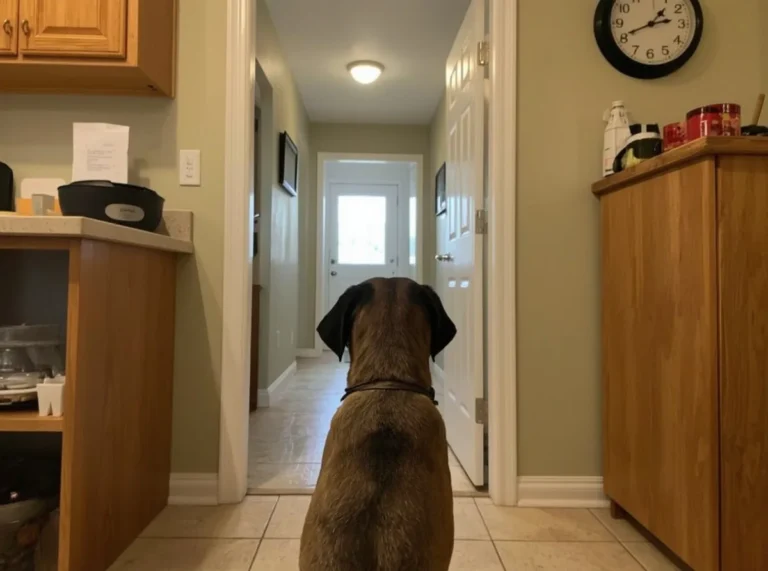
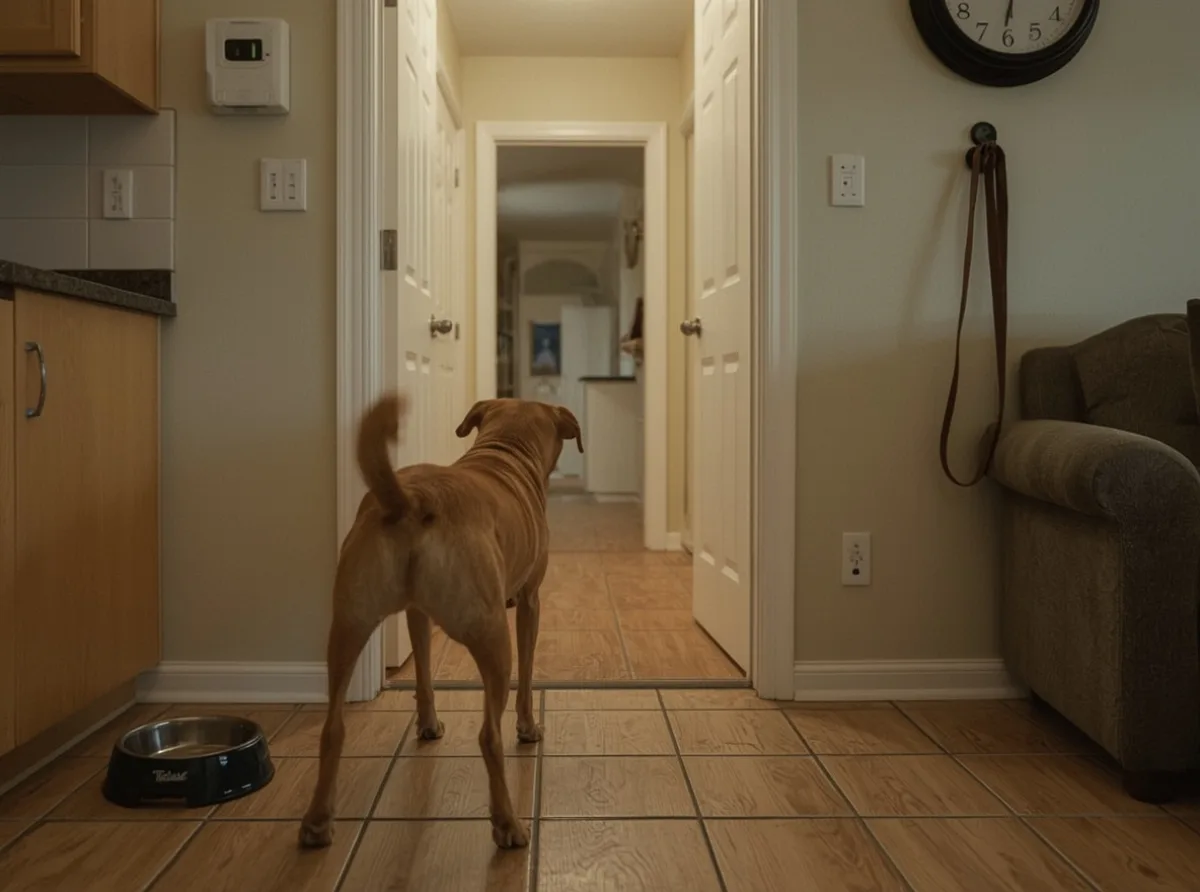
Dogs that react strongly often show the change before owners clearly identify it. They may start checking the kitchen at the usual feeding time, wait by the door before anyone has put on shoes, or follow their person from room to room with unusual intensity. A dog that normally rests calmly may become alert and unable to settle.
These reactions can show up in different ways depending on the dog. Some become vocal and obvious. Others turn inward and quietly hold tension. Both patterns matter.
Common everyday signs
- Pacing or circling
- Increased barking or whining
- Following people more closely than usual
- Refusing food or eating less eagerly
- Restlessness near doors, crates, or windows
- Difficulty relaxing after a change
- Clinginess or shadowing behavior
- Sudden overreaction to small noises or movements
A dog may not react to the disruption itself but to the uncertainty that follows. If the dog cannot predict what comes next, even a calm household can feel unstable.
Why some dogs are more sensitive to change
Dogs are not equally flexible. Some are naturally adaptable, while others are more cautious, more observant, or more reliant on patterns. Those differences are often visible long before adulthood. A puppy that startles easily or a young dog that struggles with transitions may grow into an adult who dislikes sudden shifts in daily life.
Temperament plays a major role. Dogs that are thoughtful, vigilant, or highly bonded to their people often register changes more deeply. That can be a strength in some settings because they are attentive and responsive. It can also mean they are quicker to worry when the household rhythm changes.
Past experience matters too. A dog that has lived through unpredictability may become especially attached to routine because routine feels safe. Rescue dogs, dogs from unstable homes, and dogs with repeated schedule changes sometimes become very focused on what is familiar. Their reaction is not stubbornness. It is often a learned effort to keep life legible.
Routine gives many dogs a way to predict safety. When the pattern breaks, the dog may not see a simple schedule change. It may feel like the rules of the day are no longer clear.
Factors that often increase sensitivity
- High attachment to one person
- Limited exposure to change during development
- History of inconsistent care
- General anxiety or fearfulness
- High environmental alertness
- Breed tendencies toward watchfulness or attachment
- Low tolerance for frustration
These factors do not guarantee a strong reaction, but they help explain why the same disruption can seem minor to one dog and overwhelming to another.
The emotional side of routine disruptions
A dog reacting strongly to a changed schedule is often communicating an internal state rather than trying to challenge anyone. The most common emotions involved are uncertainty, anticipation, and frustration. In some dogs, the reaction is more like, “I don’t know what is happening.” In others, it is closer to, “This is not what I expected, and I do not like it.”
Dogs do not need to understand time the way people do in order to notice patterns. They learn the sequence of events. Shoes mean a walk. A certain sound means the car. A person’s movement toward the kitchen means food. Once a routine becomes familiar, the dog may rely on it heavily.
When that sequence changes, the dog’s arousal can rise quickly. Some dogs move into a state of hypervigilance, scanning for clues. Others show a brief emotional dip, seeming uneasy or discouraged. Either way, the dog is responding to a loss of predictability.
What the dog may actually be feeling
- Confusion about the next step
- Frustration when a familiar event does not happen
- Unease in a busier or noisier environment
- Heightened anticipation that has nowhere to go
- Stress from a loss of control over the daily rhythm
These feelings can be mild or intense. The dog may still function, but not comfortably. That difference is easy to overlook when the behavior looks like simple impatience.
How body language changes when routine shifts
The clearest signs often appear in the body before they appear in behavior. A dog who is reacting strongly may look tight through the face, hold the ears differently, breathe faster, or keep the tail lower or more rigid than usual. The eyes may track people constantly. The dog may look like it is waiting for instructions, yet unable to relax enough to hear them.
Some dogs become physically busy. They can’t settle, can’t choose a resting spot, and keep moving from one place to another. Others freeze in place and watch. That stillness can be mistaken for calm, but in some dogs it reflects tension and anticipation.
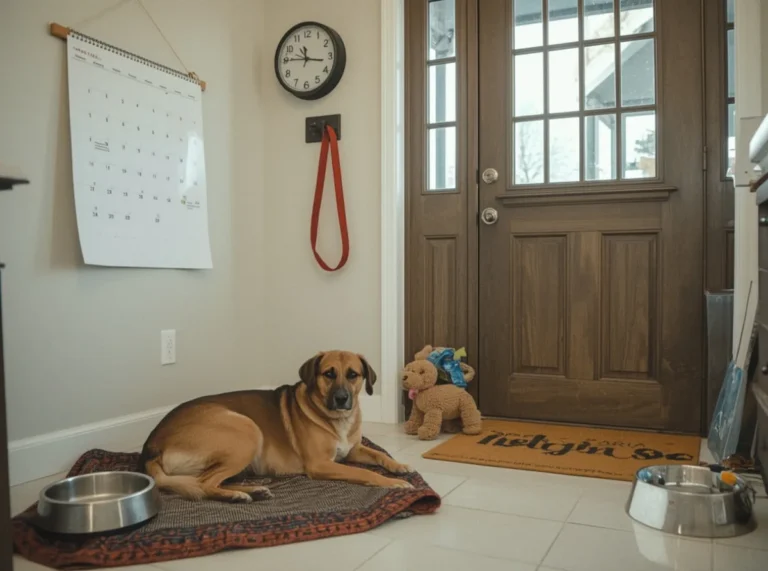
Small changes matter. A dog that normally stretches out on the couch but now sits upright near the door may be communicating concern. A dog that usually naps after breakfast but now paces near the kitchen may be reacting to the loss of a familiar cue.
Subtle signs owners often miss
- Slow blinking less than usual or hard staring
- Repeated yawning when not sleepy
- Lip licking without food present
- Shifting weight from one paw to another
- Sniffing the floor or room more than usual
- Checking doors, windows, or hallways repeatedly
These details may seem small on their own. Together, they often reveal that the dog is not simply energetic. It is unsettled.
Why some disruptions trigger a bigger response than others
Not every change hits a dog the same way. A delayed breakfast may barely register in one household and create a full morning of unease in another. The difference usually comes down to how central the routine is to the dog’s emotional balance, and how many other stressors are already present.
A quiet home with a stable rhythm can make a dog more sensitive to even minor changes because the dog has come to expect a very specific pattern. On the other hand, a busy household with varied activity may produce a dog that is more used to unpredictability, though not necessarily less stressed overall.
Timing also matters. Changes that happen during moments of natural excitement, such as before a walk or around feeding time, often feel bigger because the dog already has high expectations. When a routine disruption happens after a poor night’s sleep, a loud day, or a missed exercise opportunity, the dog may have less capacity to cope.
A disruption is often harder for a dog when it arrives on top of other pressure. The schedule change may look small from the outside, but the dog may already be near its limit.
Examples of high-impact changes
- Meals arriving late for several days in a row
- Exercise being skipped without replacement activity
- A caregiver leaving or returning at inconsistent times
- Household noise increasing suddenly
- Furniture or sleeping areas being moved
- Visitors creating a new daily pattern
- Travel, boarding, or temporary housing changes
These changes affect more than habit. They alter what the dog expects from the environment and from the people in it.
What routine disruptions can signal about the dog’s emotional state
When a dog reacts intensely to changes in routine, the behavior may reflect a broader emotional pattern rather than a single preference. Some dogs rely on predictability because they are naturally cautious. Others lean on routine because they are not getting enough rest, stimulation, or reassurance elsewhere in the day.
A dog that becomes very unsettled when meals or walks are delayed may be telling you that those events are important anchors. That does not mean the dog is spoiled. It means the structure is meaningful. It also may mean the dog has few other reliable ways to self-regulate.
In some cases, the reaction points to separation-related tension. If the dog becomes especially distressed when a person changes departure behavior, adjusts work hours, or alters a morning pattern, the routine itself may be tied to attachment and anticipation. The routine is not only a schedule. It is a relationship cue.
Possible emotional patterns behind the behavior
- Attachment-based anticipation
- Generalized stress from unpredictability
- Frustration intolerance
- Fear of missing expected events
- Need for control through predictability
Understanding which pattern is most active helps make sense of the dog’s response. A dog that worries about the next event needs something different from a dog that is simply under-stimulated or overexcited.
Environment, stimulation, and daily rhythm
The same dog may react very differently depending on the environment. In a calm home with steady routines, even small disruptions can stand out sharply. In a home with more movement, noise, and changing activity, the dog may be accustomed to a wider range of inputs, but that can also create its own kind of strain.
Dogs need a workable balance between predictability and stimulation. Too little activity can make the dog place excessive importance on routine markers like meals or walks. Too much activity can leave the dog too aroused to adapt smoothly when the pattern changes.
Daily rhythm also shapes how much a dog leans on routines. Dogs with long empty stretches may fixate on the next known event. Dogs with regular exercise, mental engagement, and predictable rest periods often handle minor changes more easily because their overall system is less strained.
Environmental conditions that often intensify reactions
- Long periods of boredom
- Inconsistent feeding and walking times
- Loud or unpredictable home activity
- Little rest between stimulation events
- Frequent changes in who cares for the dog
- Cluttered or unsettled sleeping areas
It is not unusual for a dog to appear especially reactive during seasons of family change. New work hours, school schedules, travel, guests, or renovations can all affect the dog’s sense of order.
How different dogs show the same problem in different ways
One dog may bark at the kitchen, another may sulk in a corner, and a third may hover silently but never settle. The outward shape of the reaction can differ a lot, even when the internal trigger is similar. That is why it helps to look beyond the obvious behavior and ask what has changed in the dog’s sense of predictability.
A more outgoing dog may externalize stress through vocalizing, jumping, or demanding attention. A quieter dog may internalize it through stillness, reduced appetite, or withdrawal. Both dogs may be feeling the same basic discomfort: the day no longer makes sense in the way it usually does.
Mixed signals are common. A dog may wag while pacing, or come for comfort while remaining tense. That combination can be confusing, but it often means the dog is seeking contact while still feeling uncertain. The dog wants reassurance and may not know how to fully settle.
Simple comparison of reactions
| Reaction type | What it may look like | What it may reflect |
|---|---|---|
| Calm adaptation | Brief checking, then resting | Low stress, flexible temperament |
| Alert but manageable | Watching, waiting, mild restlessness | Concern with some coping ability |
| Reactive | Barking, pacing, clinginess, refusal to eat | High arousal or stress |
| Withdrawn | Hiding, sleeping more, reduced engagement | Overwhelm or shutdown |
The table is not a diagnosis. It is a way to notice how differently dogs can present the same underlying discomfort.
Why some dogs keep reacting to routine changes over time
For certain dogs, this sensitivity does not fade quickly. They may learn some flexibility, but the need for structure remains strong. That is especially true when routine has become a core coping tool. The dog is not only expecting the schedule. It is using the schedule to feel safe enough to relax.
Long-term consistency often helps, but it does not erase temperament. A naturally sensitive dog may improve with experience and thoughtful management, yet still dislike abrupt changes. Owners sometimes expect the dog to “get used to it” after repeated disruption, but repeated stress can sometimes make the response more pronounced instead of less.
What changes over time is often the dog’s ability to recover. A young dog may spin up quickly and stay agitated for a long stretch. An older dog may notice the change immediately but settle more slowly. Another dog may become more rigid with age, especially if health changes reduce physical comfort or resilience.
Patterns worth noticing across weeks and months
- Does the dog react to the same type of change every time?
- Does recovery take minutes, hours, or the whole day?
- Is the response stronger when the dog is under-exercised?
- Does the behavior appear only with one person’s schedule?
- Are changes in appetite or sleep happening along with the reaction?
These patterns help separate a simple preference from a deeper stress response. A dog that checks the clock mentally may only be inconvenienced. A dog that stays unsettled all day is likely experiencing more than inconvenience.
What owners often misread
It is easy to mistake routine-based stress for bad manners, stubbornness, or overdependence. A dog that refuses to eat after a schedule change may be labeled picky. A dog that paces when the morning walk is late may be seen as impatient. A dog that follows every move may be called needy.
Those labels may miss the point. Many dogs are not trying to control the household. They are trying to regain footing in a day that no longer feels predictable. Even when the reaction is inconvenient, it often has a clear emotional logic.
Another common misunderstanding is assuming that all strong reactions are signs of disobedience. In reality, a dog can know the household rules and still struggle with the emotional disruption of a changed routine. Compliance and comfort are not the same thing.
When routine changes create visible stress, the goal is not to force the dog to “ignore it.” The more useful question is what part of the day has become hard for the dog to predict and absorb.
Why consistency matters so much for these dogs
For a dog that reacts strongly to disruptions, consistency is not a luxury. It is often the framework that makes normal life manageable. That does not mean every event must happen at the exact same minute. It does mean the dog benefits from a clear, stable pattern in the parts of the day that matter most.
Many dogs do best when wake-up times, meals, exercise, rest, and departures follow a recognizable rhythm. When those anchors stay steady, the dog has fewer reasons to scan and worry. The household may still be busy or imperfect, but the dog has enough predictability to settle into it.
Sometimes the dog’s reaction becomes most noticeable not during the change itself, but when the change happens repeatedly. One late dinner is one thing. A week of shifting schedules can build a more persistent state of tension. The dog learns that the day is unreliable and starts staying on alert longer.
Helpful ways consistency shows up in daily life
- Keeping key events within a familiar window
- Using the same cues before meals or walks
- Maintaining a stable resting space
- Avoiding unnecessary schedule changes when possible
- Giving extra decompression time after busy days
These small choices can make a significant difference for dogs that are sensitive to change. They do not remove all stress, but they reduce the amount of uncertainty the dog has to hold at once.
Closing thoughts in the dog’s daily language
A strong reaction to routine disruption is often the product of a dog’s temperament, history, and environment working together. Some dogs lean heavily on predictable patterns because those patterns help them feel secure. When the rhythm changes, the dog may respond with visible stress, vigilance, frustration, or withdrawal.
The behavior is rarely about a single missed meal or delayed walk. It is more often about the meaning the dog has attached to the structure of the day. Once that is understood, the reaction becomes easier to read. The dog is not being difficult. The dog is telling you that the world feels less orderly than expected, and that matters.
In homes where routines shift often, the dogs that struggle most are usually the ones that notice everything. They are the first to detect a pattern, and the first to feel when it breaks. That sensitivity can look inconvenient from the outside, but it is also a sign of how closely they are tuned to the life they share with people.