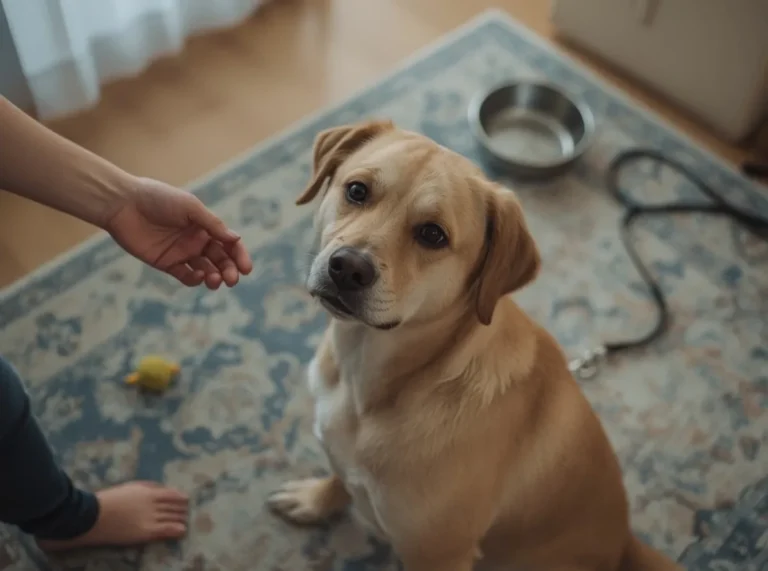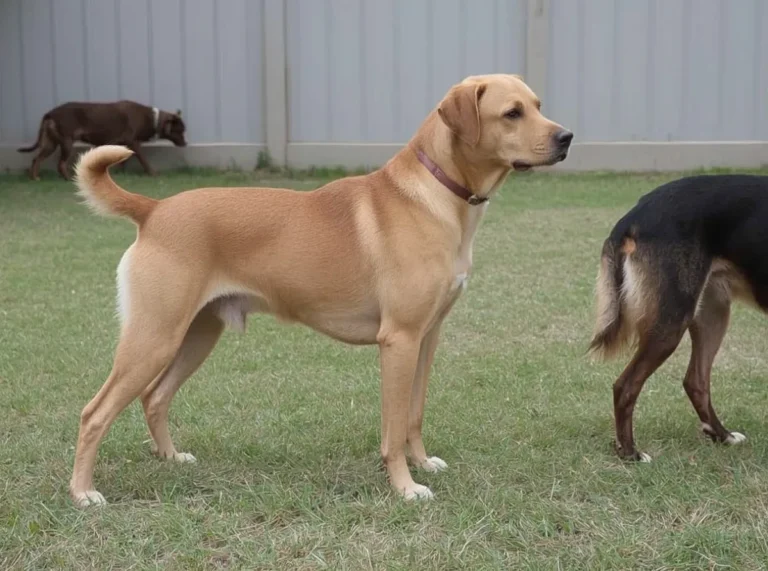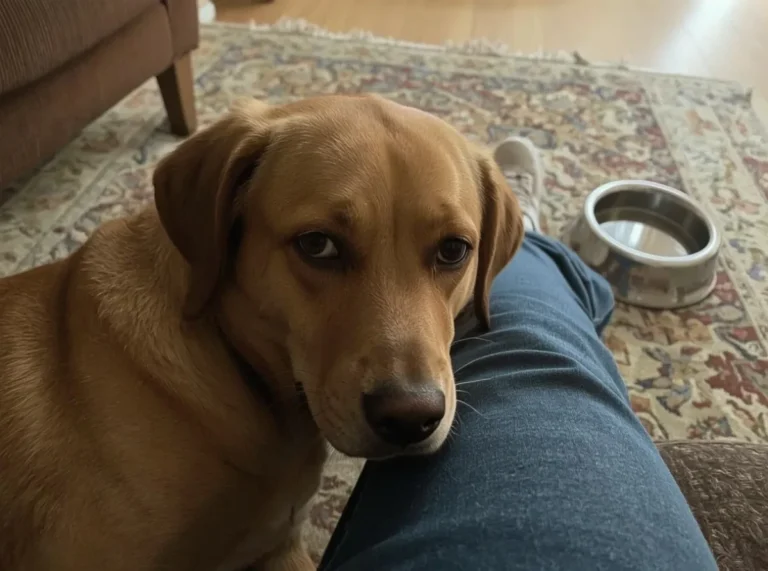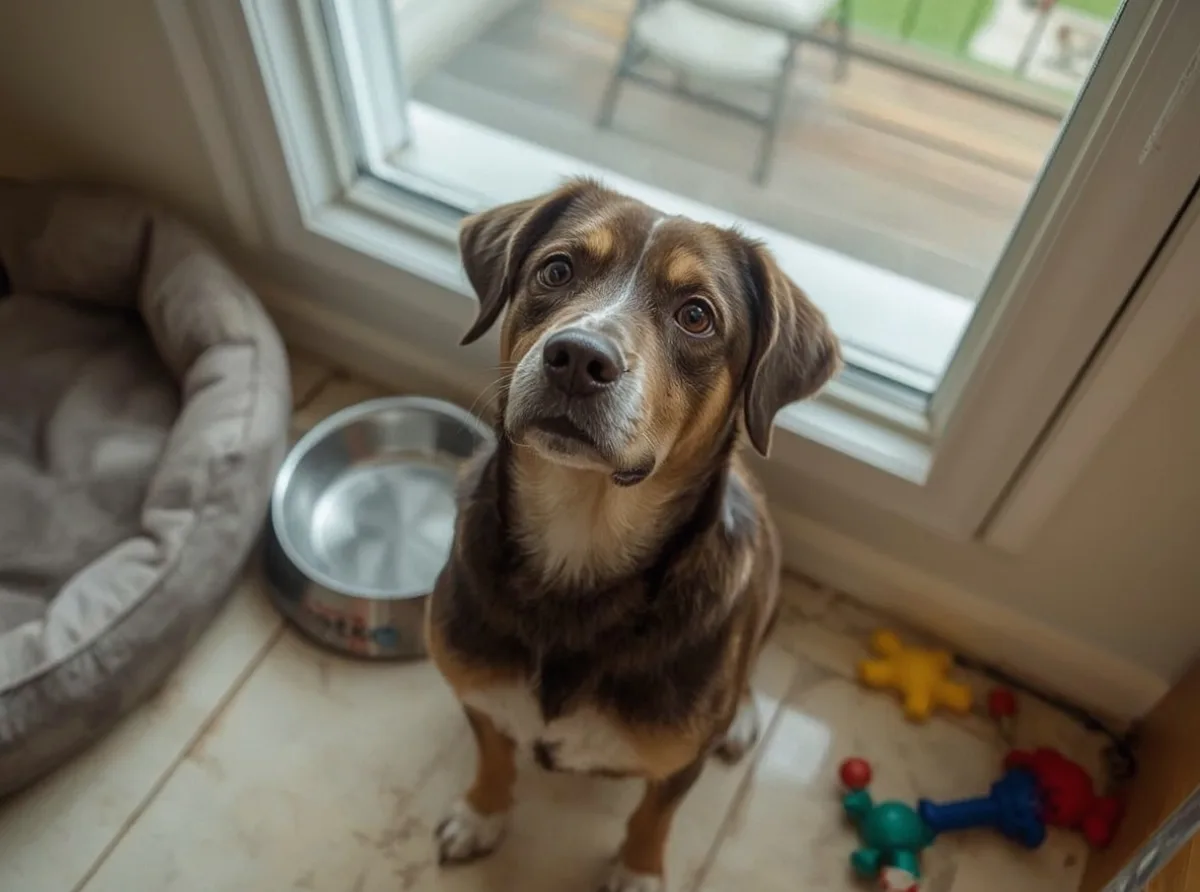
Some dogs seem to speak with their eyes before they do anything else. A quick glance, a soft stare, a raised brow, or a sidelong look can carry more meaning than a bark. To many owners, it feels almost personal, as if the dog is clearly trying to communicate something specific.
That impression is often right, but the reason is not just “personality.” Eye expression in dogs comes from a mix of anatomy, breeding history, emotional sensitivity, learned behavior, and the way they respond to the people around them. Two dogs may feel the same thing and show it very differently. One barely moves a muscle. Another looks as if every thought is written across its face.
In daily life, this difference can be easy to notice during feeding time, when a walk is late, while the leash is in your hand, or when a dog is watching you from across the room. Some dogs seem to track every movement of your face. Others look you directly in the eye only when they want reassurance, help, or closeness.
What makes one dog so visually expressive while another seems harder to read? The answer usually sits at the intersection of body structure, emotional style, and environment. Eye expression is not a single trait. It is a pattern that shows up in how a dog uses gaze, eyelids, brows, and face tension to interact with the world.
What Expressive Eyes Can Look Like in Everyday Life
Dogs rarely use only one signal at a time. When their eyes seem especially expressive, there is usually a whole message happening through the face and body together. The eyes may widen when a sound surprises them, soften when they settle beside you, or lock in with intense focus when something important is happening.
One common example is the “follow the human” look. A dog watches a person move around the kitchen, turning its head and eyes from one task to the next. That dog may not be demanding anything. It may simply be attentive, curious, and highly aware of patterns. Another dog in the same home may stay nearby but seem less visually engaged.
There is also the familiar anticipatory look. Many dogs learn to use their eyes when they expect food, a walk, a toy, or a door to open. The expression can become very polished over time. A dog learns that a certain face or glance often leads to something useful, so the eyes become part of the routine.
Then there is the softer, more affectionate version. Some dogs appear to look at their owners with clear emotional focus, especially during quiet moments. Their eyes may narrow slightly, the face may relax, and the head may rest in a still position. Owners often describe this as “being looked at lovingly,” and while that sounds subjective, it reflects a real social behavior: the dog is using gaze as part of bonding.
Eye expression in dogs is usually not about the eyes alone. It is the combination of gaze, facial tension, posture, and timing that creates the impression of emotion.
Why Some Dogs Use Their Eyes More Clearly Than Others
Part of the answer is simple anatomy. Dogs with larger, rounder eyes or lighter facial markings may seem more expressive because their movements are easier to read. A change in eyelid position or pupil size stands out more on a face with visible contrast. White markings above the eyes can also create the impression of eyebrows, making the dog’s expressions look more human-like.
Breed background matters too. Dogs bred for close cooperation with humans often tend to be highly attentive to facial cues. Over many generations, some working and companion breeds were selected for responsiveness, focus, and social awareness. That does not mean every dog in those breeds behaves the same way, but the overall tendency can be noticeable.
Herding breeds, for example, often use a concentrated stare as part of their natural behavior. Many sporting and companion breeds are especially tuned in to people and routines. Some guardians and terriers may appear more direct or intense in their gaze, while certain independent breeds may show less obvious facial signaling. The differences are broad, not absolute, yet they help explain why one dog may seem emotionally “louder” through its eyes.
Temperament also plays a role. A sensitive dog often responds quickly to changes in tone, posture, and mood. That sensitivity can show up in the face first. A bolder dog may be expressive in a different way, with a steady, confident stare or a sharp alert look. A more reserved dog may still be expressive, but only with people it trusts or in situations that matter to it.
Experience shapes this as well. Dogs that have learned that eye contact gets them attention, food, reassurance, or play will often use it more deliberately. In that sense, expressive eyes are partly a social skill. The dog has discovered that looking at humans works.
Emotional Reasons Behind the Look
Dogs often show emotional states through their eyes before they do through movement or vocalization. A worried dog may have a hard, fixed gaze and tight facial muscles. A relaxed dog may blink slowly, let its eyelids soften, and look away comfortably. A playful dog might alternate between a direct look and a quick break in eye contact, as if inviting interaction.
The emotional meaning depends on the rest of the body. A wide-eyed dog with a stiff posture is not sending the same message as a wide-eyed dog with a loose body and wagging tail. The first may be alert or uncertain. The second may simply be excited. That difference is easy to miss if you focus only on the face.
Many dogs also use their eyes to manage closeness. A dog that feels secure may hold eye contact longer because it expects the interaction to stay pleasant. A dog that is less certain may glance, look away, then glance back again. These small shifts help the dog gather information without committing to a direct stare.
Some dogs appear especially expressive because they are highly socially motivated. They care deeply about human reaction. They may watch a face for approval, a hand for movement, or a body position for clues about what happens next. The eyes become a constant checking system. That can make the dog seem emotionally transparent when, in fact, it is simply very observant.
Soft eyes usually suggest relaxation or trust. Hard eyes, fixed staring, or tense facial muscles can signal stress, arousal, or uncertainty.
Subtle Signals That Often Accompany Expressive Eyes
Owners often notice the eyes first, but the full picture is broader. Dogs pair eye expression with many other small signals that help clarify what they mean. Learning to notice these patterns makes the expression much easier to interpret.
-
Ear position: Forward ears often go with interest or alertness. Back or sideways ears can indicate uncertainty, appeasement, or comfort depending on the rest of the body.
-
Mouth shape: A soft open mouth usually looks different from a tight, closed mouth. Panting can mean excitement, but also stress or heat, so it should be read with context.
-
Body posture: A loose, wiggly body often matches friendly interest. A frozen or leaning-back posture may point to discomfort.
-
Blinking: Slow blinking often appears in relaxed or trusting moments. Rapid blinking can happen when a dog is overwhelmed or trying to avoid conflict.
-
Head movement: A tilted head may show attention, but it can also mean the dog is processing a sound or trying to understand a cue.
When a dog looks especially expressive, it is often combining several of these signals at once. A person who only notices the eyes may think the dog is begging, pleading, or feeling guilty. In reality, the expression may be much simpler: the dog is attentive and waiting for a response.
That is why context matters so much. The same face before dinner, before a car ride, and during a thunderstorm does not mean the same thing. Dogs are context readers. Their eye behavior changes with environment, expectation, and emotional state.
How Environment Changes Eye Expression
A dog living in a calm, predictable home may use its eyes in a different way from a dog living in a noisy, constantly changing household. In quieter settings, subtle looks become easier to notice. There is less competing stimulation, so a dog’s face can seem more prominent. The dog may also become more visually tuned in when daily routines are consistent.
Busy households often create more opportunities for expressive eye behavior. More movement, more sounds, and more people mean more chances for the dog to track activity. A dog may watch doors, hands, food preparation, or family members moving from room to room. That can create the impression of a highly communicative face because the dog is always reading the environment.
Dogs with limited stimulation may also use eye contact more often. If the day is repetitive and there is not much else happening, the dog may focus more on people as the most interesting part of the environment. On the other hand, a dog with enough physical exercise, mental activity, and predictable structure may still be visually expressive, but the expression may be calmer and less urgent.
Routine strongly influences this behavior. Dogs quickly learn the sequence of daily events. If a leash appears before a walk, or a bowl appears before dinner, the dog may begin watching for those clues long before the event itself. Over time, the eyes become part of a learned pattern of anticipation.
Even small changes in the home can make the eyes more noticeable. A new visitor, a different feeding time, a storm outside, or a change in the owner’s mood can alter how a dog looks and acts. Many dogs are excellent at reading human attention, and their eyes often reflect that awareness immediately.
When Expressive Eyes Signal Comfort, and When They Signal More
Expressive eyes are not always a sign of deep emotion in the dramatic sense. Sometimes they simply show that the dog is engaged. A dog staring at a ball during a game is not necessarily emotionally intense. It may just be locked onto a rewarding object. Another dog looking up from the couch may be expressing trust and contentment rather than need.
Still, there are moments when the eyes carry a more important message. A dog that watches too intently, seems unable to relax, or repeatedly checks the environment may be unsettled. A dog with visible whites of the eyes, a stiff face, and a rigid body may be signaling discomfort, even if it is quiet. This kind of expression deserves attention because it often appears before other signs become obvious.
Some dogs become visually expressive when they are conflicted. They want something, but they are unsure. They may look at a person, then at the object they want, then back again. That back-and-forth can look charming, but it may also reflect hesitation or uncertainty about how to proceed.
Another common pattern is the “appeasing” look. A dog may make soft eye contact with a slight head dip or a lowered body, especially if it senses correction, frustration, or tension in the room. This is not guilt in the human sense. It is the dog trying to smooth the social situation.
A dog’s eyes can show excitement, trust, curiosity, appeasement, or stress. The meaning changes with body language, timing, and the situation around it.
How Owners Commonly Misread the Expression
People naturally project human meaning onto a dog’s face. That is part of what makes dogs feel so communicative. But it can also lead to mistakes. A dog that looks “sad” may simply be relaxed with lowered eyelids. A dog that seems “smug” may only be expecting a treat. A dog that looks “guilty” may be responding to a human’s tone rather than remembering a broken rule.
Eye contact is especially easy to misunderstand. In human social life, direct eye contact often means honesty or confidence. In dog communication, it can mean that, but it can also be a challenge, a request, a question, or a sign of pressure. The same stare that feels affectionate in one moment may feel too intense in another.
Owners also tend to underestimate how much dogs watch us. Many expressive-eyed dogs are simply excellent pattern detectors. They notice the sound of keys, the way shoes are put on, the path someone takes toward the pantry, or the difference between a happy voice and a distracted one. Their eyes seem full of meaning because they are constantly gathering information.
Sometimes a dog’s face becomes especially expressive because the people around it have reinforced that behavior without realizing it. A dog that gets attention every time it gives a certain look will repeat that look. This is why some dogs seem to have a very polished “please notice me” expression. It works.
How Dog–Human Relationships Shape Eye Communication
The bond between dogs and humans makes eye expression unusually important. Dogs are one of the few species that actively seek eye contact from another species in everyday life. They do not only use it during conflict or threat. They use it for cooperation, checking in, asking for help, and sharing attention.
That matters in the home because eye behavior often becomes part of the dog’s social routine. A dog may look at the owner before hopping on the couch, before entering the yard, or before approaching a new person. In many homes, this kind of visual checking becomes so common that it feels like part of the dog’s personality.
Some dogs become more expressive because their relationship with a person is especially secure. They know the rules, know the rhythm, and know that their signals are noticed. A dog in that situation may use softer, more relaxed eye contact. Another dog, unsure of what to expect, may keep scanning faces for clues.
It is also worth noting that humans differ in how easily they notice canine expression. A dog that seems very expressive to one person may seem ordinary to another. Some people are simply better at reading small facial changes, while others rely more on body movement. The dog may not have changed at all. The observer has.
Over time, the eyes can become part of the relationship itself. Dogs learn which people answer their looks, which people ignore them, and which people respond quickly. That learning influences how often the dog chooses to use eye contact. In a home where gaze is rewarded with attention, the face often becomes more active.
Patterns Worth Noticing Over Time
Eye expression becomes easier to understand when you watch it over several days or weeks instead of one moment. A dog that only becomes intensely expressive around meals is probably showing anticipation. A dog that watches intently during thunderstorms may be showing sensitivity to environmental noise. A dog that holds steady, relaxed eye contact during quiet evenings may simply enjoy closeness.
Look for patterns rather than one-off moments. Does the dog’s face change with energy level? Does it become more watchful when routines shift? Does it soften after exercise or play? Does it stare more when asked to wait? These details help reveal whether the expression is tied to excitement, uncertainty, social bonding, or simple habit.
Age can influence this too. Puppies often have especially obvious facial expressions because they are still learning how to manage arousal and attention. Adult dogs may show more controlled eye behavior. Older dogs sometimes become less visually reactive overall, though that can vary with health, hearing, vision, and temperament.
What remains consistent in many expressive dogs is the connection between eyes and social engagement. They watch, check, and respond. Their faces feel active because they are always in dialogue with the environment, especially with the people in it.
If a dog’s eye behavior changes suddenly, especially if it comes with stiffness, hiding, or appetite changes, the shift may be emotional or physical rather than simply “quirky.”
A Calm Closing Thought
Some dogs seem more expressive with their eyes because they are built to notice, to respond, and to communicate through small changes in the face. Their gaze may reflect breed tendencies, emotional sensitivity, learned habits, or a close relationship with the people around them. Often, it is all of these at once.
What makes the expression stand out is not just how the eyes look, but how often the dog uses them to check in with the world. A dog that watches your face, follows your movement, and softens when it feels safe is showing a very practical kind of communication. The eyes are not decoration. They are part of how the dog reads life at home.
Once those patterns become familiar, the expression stops feeling mysterious. It becomes a readable part of the dog’s daily rhythm: alert before a walk, soft during rest, intent during uncertainty, bright during play, and watchful whenever something matters.
That is usually what people are seeing when they say a dog has especially expressive eyes. Not a single emotion, but a living sequence of attention, expectation, and connection.