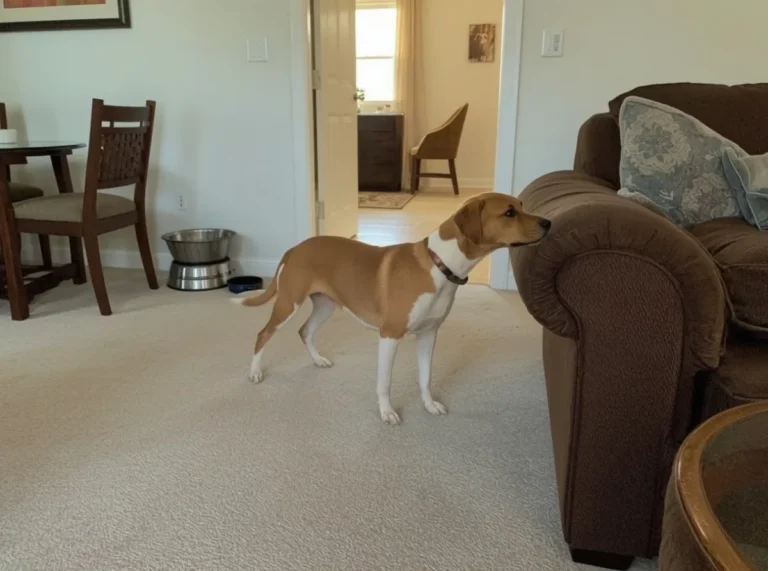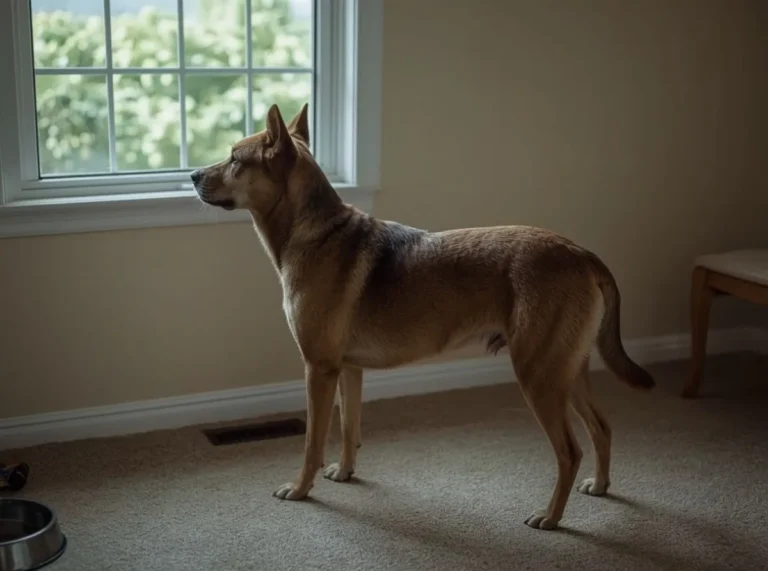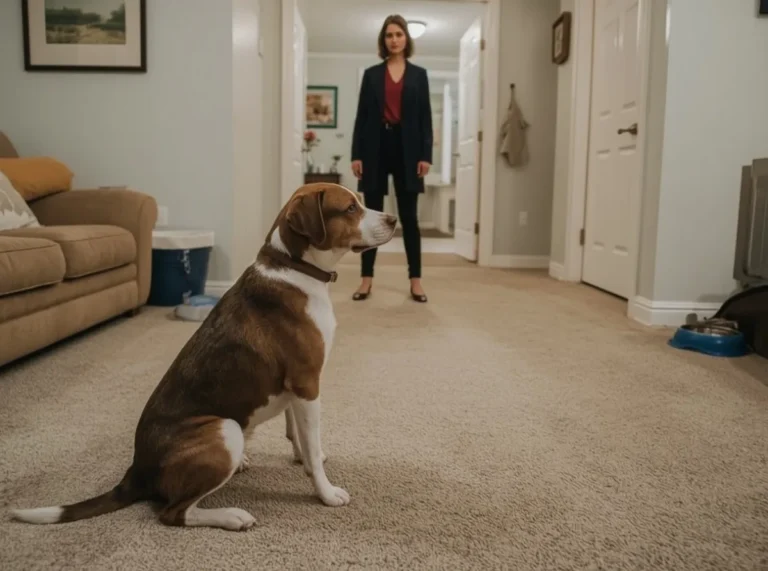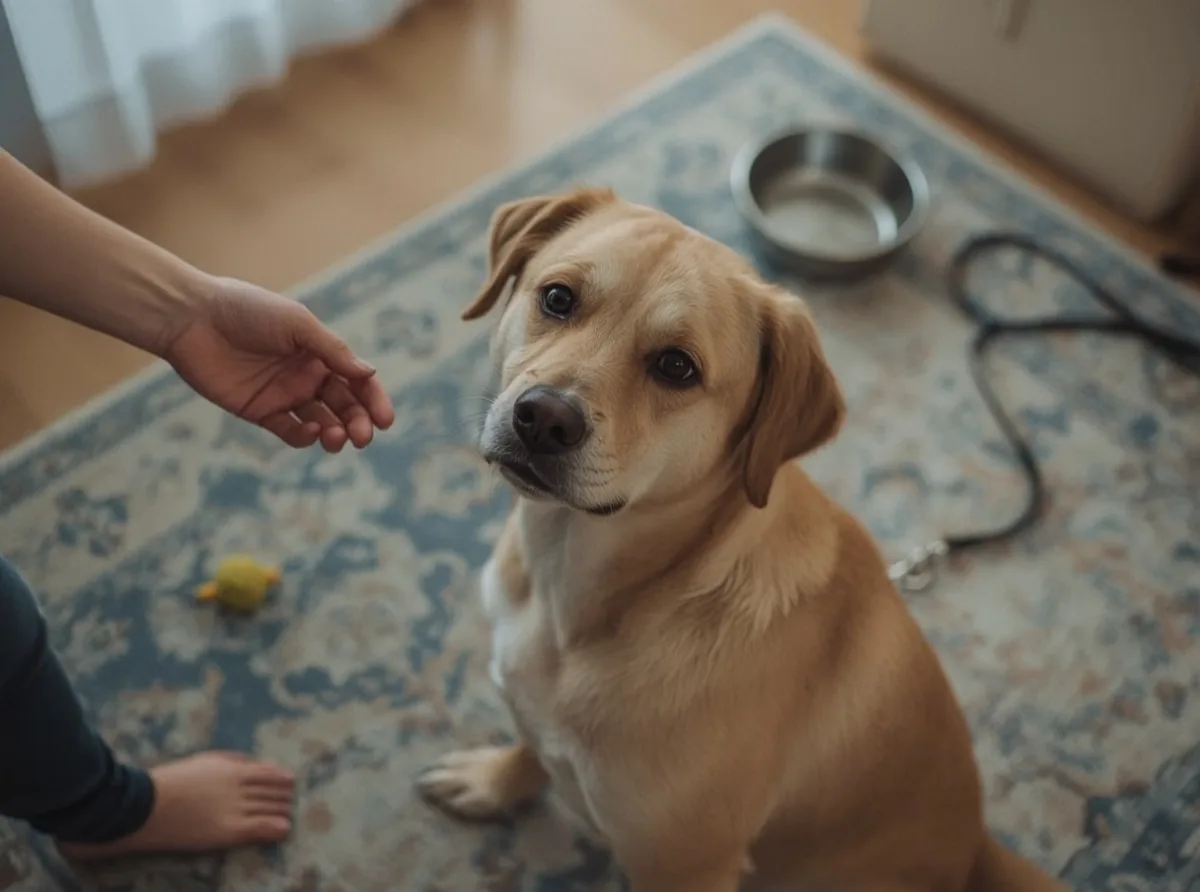
A dog turning its head away during interaction can look confusing at first. One moment the dog is close enough to be touched or spoken to, and the next it is looking to the side, glancing at the floor, or angling its face away from a hand, a camera, or even a familiar voice. That small movement can mean many different things, and the context around it matters more than the gesture alone.
In everyday life, this behavior often appears during petting, greeting, play, grooming, or quiet moments on the couch. Sometimes it is a soft way of saying, “I need a little space.” Other times it is simply a sign that the dog is processing what is happening nearby. Dogs rarely communicate with one single signal. They use a combination of posture, muscle tension, eye movement, ear position, and overall energy.
Turning the head away is not always a negative sign. In many cases, it is a polite, low-key form of communication. Dogs may use it to reduce intensity, avoid direct pressure, or keep an interaction comfortable. Understanding when it is relaxed and when it points to discomfort helps owners read their dog more accurately.
What This Behavior Looks Like in Daily Life
Head turning can happen in subtle ways. A dog may look away while being hugged, while a child leans in too close, or while an owner talks directly into the dog’s face. Some dogs turn their heads when receiving attention they like, especially if the approach feels a little too direct. Others do it when they are unsure, tired, or simply trying to step back without moving their body much.
It may show up as a quick glance to the side, a slow turn of the muzzle, or a full body freeze with the head angled away. In some dogs, the behavior comes with a soft body, blinking eyes, and loose posture. In others, the same movement happens alongside lip licking, yawning, stiff shoulders, or stepping away.
Common everyday situations
- During petting, especially when the dog has had enough contact
- When a person leans over the dog’s face
- When a stranger reaches toward the dog too quickly
- During grooming, brushing, or ear cleaning
- While being photographed with a hand near the face
- During play when the dog wants the interaction to slow down
Some dogs also turn away when they are excited. That can happen when they do not know how to respond to attention that feels overwhelming in a positive way. The movement then looks less like rejection and more like a brief pause, as if the dog is giving itself room to settle.
Turning the head away is often a distance-increasing signal. It may be the dog’s way of making contact feel less intense without creating conflict.
Why Dogs Commonly Use This Signal
Dogs are social, but they are also highly sensitive to face-to-face pressure. In canine communication, staring directly, leaning in, and coming in fast can all feel intense. Turning the head away reduces that intensity. It changes the angle of the interaction and creates a little emotional breathing room.
One reason dogs do this is social politeness. Among dogs, direct face contact can carry meaning, and not every dog wants that level of attention all the time. A head turn can say, “I’m here, but I don’t want to escalate this.”
Another reason is uncertainty. When a dog is not fully comfortable with a person, object, sound, or handling routine, it may avoid direct face contact first. The dog is not necessarily afraid, but it is noticing something that feels a little off. Head turning gives the dog a chance to observe while lowering the pressure of the moment.
Dogs may also turn away because they are trying to maintain control over the interaction. A dog who feels crowded may not want to push away or growl. Turning the head can be a gentler option. It lets the dog express a boundary without making the situation bigger.
Emotional reasons behind the movement
- Seeking space without full withdrawal
- Reducing social pressure
- Managing uncertainty or mild discomfort
- Showing calm disengagement
- Avoiding overstimulation
A relaxed head turn usually comes with a loose body. A stressed head turn often comes with tension elsewhere, not just in the face.
How Body Language Changes the Meaning
The head turn itself tells only part of the story. The rest comes from the body around it. A dog that turns away with soft eyes, loose muscles, and a relaxed mouth is likely trying to keep things calm. That is very different from a dog that turns away while holding its breath, pinning its ears back, or freezing in place.
Eye movement matters too. A dog may avoid direct eye contact by looking slightly to the side, and that can be a normal comfort signal. But if the eyes are wide, the pupils are large, or the gaze seems fixed while the head turns away, the dog may be more conflicted. The same is true for the mouth. A relaxed mouth or gentle panting suggests one thing; a tight jaw or repeated lip licking suggests another.
Signals that often appear with a relaxed head turn
- Loose posture
- Soft blinking
- Neutral ears
- Curved or slightly shifting body
- Steady breathing
Signals that can point to stress or discomfort
- Stiff shoulders
- Frozen body posture
- Yawning when not tired
- Lip licking
- Tucked tail or lowered tail carriage
- Moving away after turning the head
One of the easiest mistakes owners make is focusing only on the face. A dog can turn its head away while the rest of the body stays tense and alert. In that case, the head turn is not a casual gesture. It is part of a larger message that says the interaction is too much right now.
How Environment and Routine Influence the Behavior
The setting can change how often dogs turn their heads away. In a quiet home with predictable routines, dogs often tolerate closeness more easily because they know what to expect. In a busy household, especially one with children, visitors, loud televisions, or frequent movement, dogs may use head turning more often to cope with constant attention.
Routine matters as well. A dog that is used to being approached slowly and given choice is less likely to feel cornered. A dog that is regularly handled in a rushed or grabby way may become more likely to turn away quickly whenever someone comes in too fast. Over time, that can become a habit, not because the dog is unfriendly, but because it has learned to protect its comfort.
Stimulation plays a role too. A tired dog may turn its head away more often because it lacks patience for extra contact. A highly excited dog may do the same when emotions are high and the dog does not know where to direct that energy. In both cases, the behavior is tied to the dog’s ability to regulate the moment.
When the environment is noisy, crowded, or unpredictable, dogs often use small signals earlier and more often.
Patterns that make the behavior more noticeable
- Frequent visitors in the home
- Children touching the dog repeatedly
- Grooming sessions that happen too fast
- Inconsistent handling from different family members
- Long days with little rest
- High arousal from play or outdoor activity
What Owners Often Misread
Many people assume a dog turning its head away means dislike. Sometimes it does, but not always. A dog may love its owner deeply and still prefer not to be stared at, hovered over, or patted on the top of the head for long periods. Affection and comfort are not the same thing as unlimited tolerance.
Another common misunderstanding is thinking the dog is being stubborn or rude. In most cases, the dog is not making a social statement. It is adjusting the interaction to something it can handle. That distinction matters because it changes how the owner responds. Pushing harder usually makes the signal stronger, not weaker.
Some owners also miss the difference between a dog that is checking out and a dog that is avoiding. A dog that calmly glances away and then returns may be self-regulating. A dog that keeps turning away, stiffening, or moving off repeatedly may be asking for more space than a brief pause can provide.
Different Meanings in Different Social Contexts
Dogs do not use the same signals with every person. A dog might turn its head away from a child but stay engaged with an adult. It may accept brief petting from one family member and turn away from another. That difference can reflect handling style, tone of voice, timing, or the dog’s past experiences with each person.
Strangers often trigger head turning more quickly because they approach without a shared history. A direct reach toward the face, especially from someone the dog does not know well, can be too much. Turning away helps the dog create a safer angle while deciding whether to stay close or leave.
In play, head turning can have a lighter meaning. Some dogs turn away during a pause between play bursts. They may be resetting, gathering interest, or deciding whether to continue. If the body remains loose and the dog returns quickly, the behavior is usually part of a normal back-and-forth exchange.
How to read the context
| Situation | Possible Meaning |
| Slow petting on a relaxed dog | Comfortable pause or mild preference for space |
| Hand reaching quickly toward face | Discomfort with direct approach |
| During grooming | Need for more control or breaks |
| During play | Reset, pause, or mild overstimulation |
| With a stranger | Caution or social distance |
When the Behavior Suggests Stress
Head turning becomes more meaningful when it repeats in a tense pattern. If a dog consistently turns away when touched in a certain area, it may be protecting a sore spot. If it turns away whenever someone bends over it, the dog may feel crowded by the posture, not just the person. If the movement appears during training or handling, it may signal that the dog is mentally overloaded.
Stress-related head turning is often small but deliberate. The dog does not need to growl or snap for the signal to matter. In fact, many dogs try the quietest option first. Repeated avoidance, subtle retreat, or a refusal to make eye contact can all appear before more obvious signs of discomfort.
Owners sometimes notice that the behavior happens more in one part of the day than another. For example, a dog may be fine in the morning but turn away in the evening when it is tired. Or it may do it after a long walk, when it is overexcited and no longer able to manage extra social pressure. Tracking when it happens can reveal a pattern quickly.
Repeated head turning in the same context is worth paying attention to, especially if it appears with stiffness, withdrawal, or sensitivity to touch.
How to Respond in a Practical Way
The best response is usually simple: reduce pressure and give the dog a chance to choose. If the dog turns away while being petted, pause for a moment. If it turns away from a hand reaching in, slow the approach and let the dog decide whether to engage. If it turns away during grooming, add breaks and make the session less crowded and less rushed.
Owners do not need to overreact, but they should not ignore the signal either. Respecting a small boundary early often prevents bigger stress later. That can make everyday handling easier over time because the dog learns that communication works.
Helpful adjustments
- Approach from the side instead of straight on
- Let the dog initiate closer contact
- Keep petting brief and observe the dog’s body
- Pause when the dog looks away repeatedly
- Use slower movements during grooming or handling
- Give breaks after stimulating activity
Some dogs simply prefer less direct contact. They may enjoy being near people without wanting constant face-to-face interaction. Accepting that preference does not weaken the bond. It often makes the relationship clearer and more relaxed.
What Long-Term Consistency Can Reveal
When a dog turns its head away only once in a while, the meaning is often situational. When it happens over and over in the same kinds of interactions, it reveals a stable preference or sensitivity. That pattern can be useful. It tells the owner which moments are too intense, which handling styles work best, and where the dog draws its line.
Some dogs become more comfortable over time as they learn that their signals are respected. Others remain naturally more sensitive to direct contact. Neither pattern is unusual. The important part is whether the dog’s communication stays steady and understandable. A dog that consistently turns away before it becomes upset is showing a useful form of self-protection.
If the behavior changes suddenly, that matters too. A dog that used to enjoy touch and now turns away often may be uncomfortable, stressed, or in pain. A shift like that is worth noticing because it is more about change than personality.
Closing Thoughts in Daily Life
A dog turning its head away during interaction is often a small signal with a practical purpose. It can mean the dog wants space, needs a slower pace, or is trying to stay comfortable without ending the interaction completely. In a calm dog, it may simply be a polite adjustment. In a tense dog, it may be the first clear sign that something feels wrong.
What matters most is the pattern around the gesture. The same head turn can mean different things depending on the body, the setting, and the dog’s history. Watching the whole picture makes the behavior easier to read and easier to respect.
Dogs rarely communicate their boundaries in dramatic ways first. More often, they give small, quiet clues. Turning the head away is one of them.