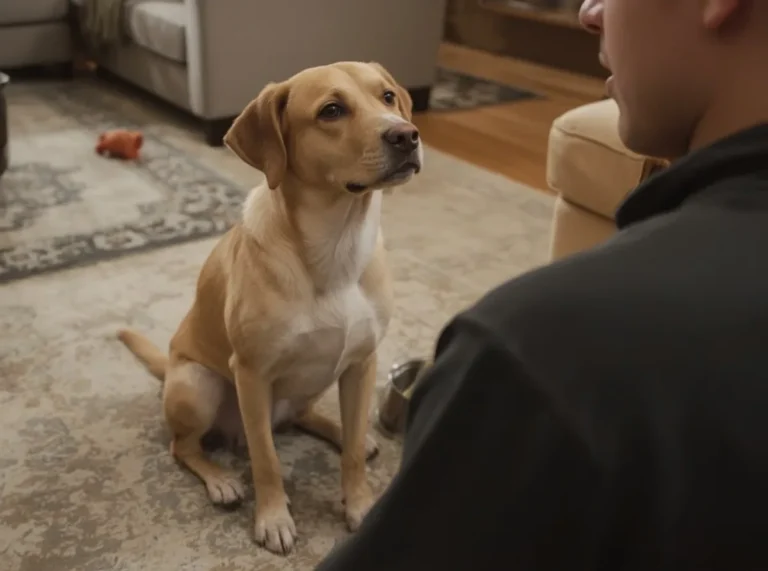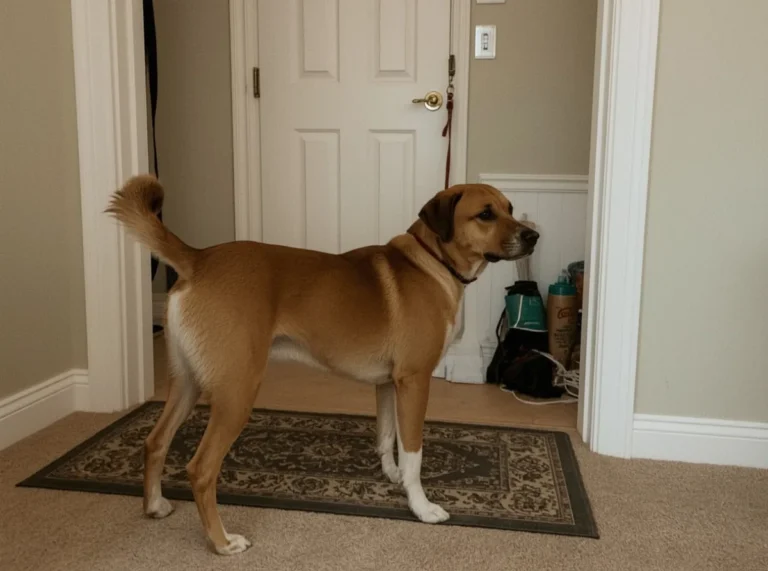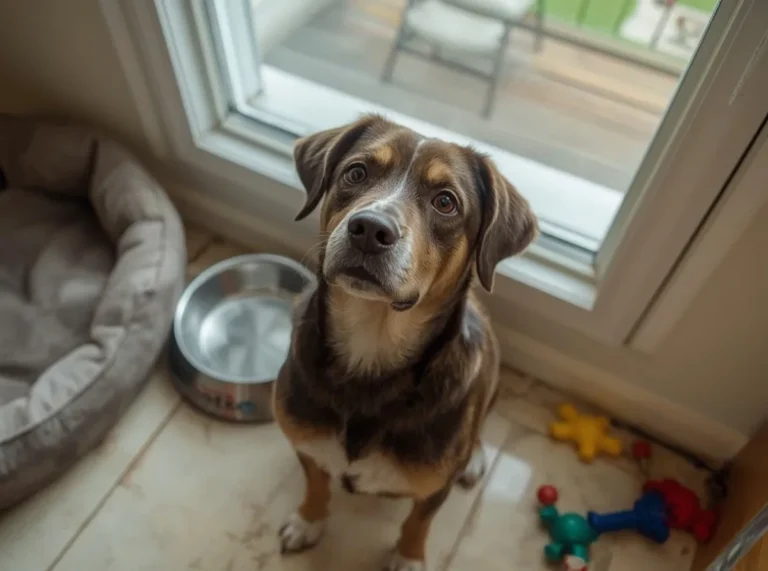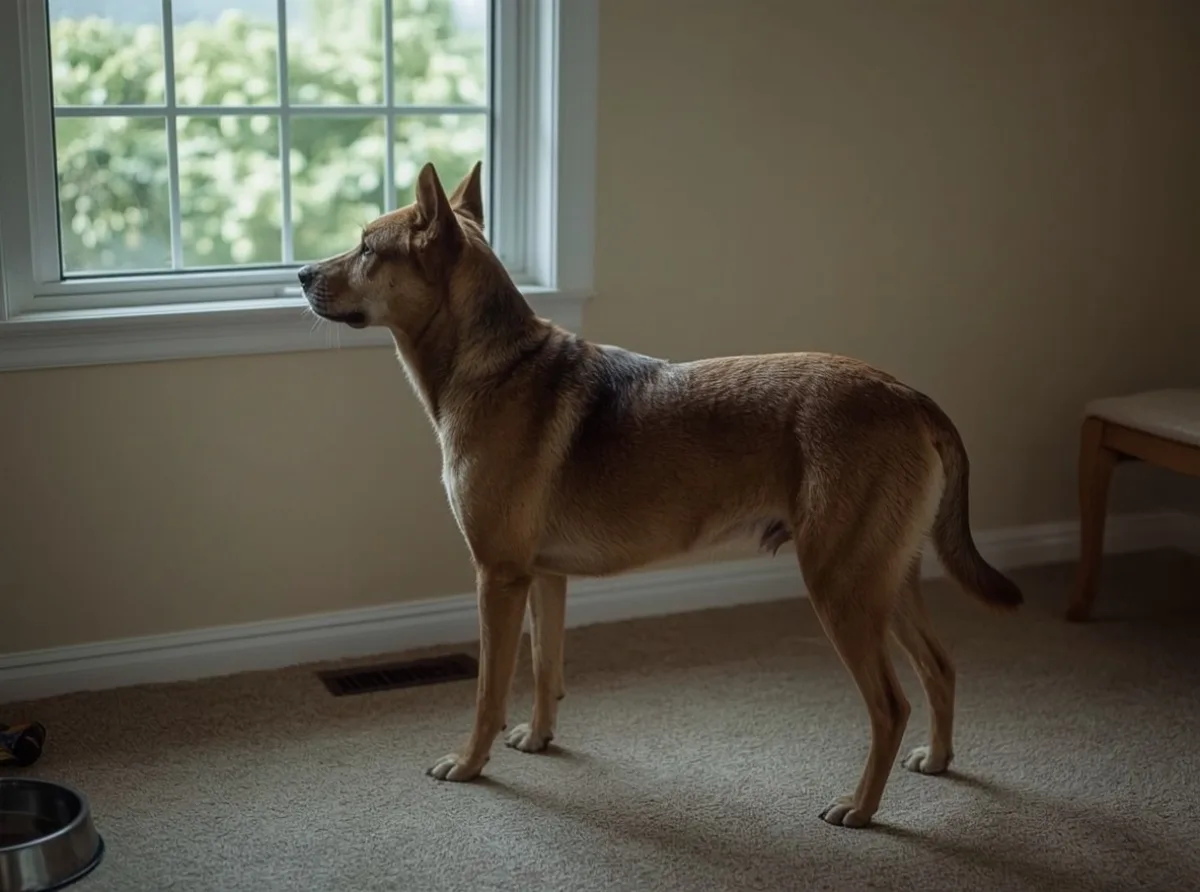
Sometimes a dog will stop in the middle of the room and just watch. No pacing, no barking, no obvious reaction. The stillness can feel strange because it looks so deliberate, almost like the dog is holding its breath.
That motionless stare can mean very different things depending on the moment. A dog may be curious, cautious, deeply focused, tired, or simply processing a sound or movement that seems important to them. The body may look quiet, but the mind is often busy.
Owners usually notice this behavior when a dog locks onto a person, another animal, a doorway, or a small sound outside. The scene can be brief and harmless, or it can be a clue that the dog is feeling uncertain. Reading the rest of the body matters more than the stare alone.
What this still watching looks like in everyday life
Dogs do not usually stay motionless for no reason. In a home, the behavior often shows up when something catches their attention and they decide not to move yet. They may stand with one paw slightly lifted, sit very straight, or simply freeze in place.
Some dogs watch from the hallway when a family member starts cooking. Others stare through a window at passing bicycles, squirrels, or neighbors walking by. A dog can also become still when hearing a faint noise from another room, especially if that sound feels unusual.
Motionless watching can happen in many ordinary settings:
- Near the front door when someone approaches
- By a window facing the street
- During play, right before a chase or pounce
- When a dog hears a new sound but is not sure what it is
- When another animal enters their space
In each case, the stillness is usually part of gathering information. Dogs rely heavily on sight, sound, scent, and pattern recognition. If something seems worth monitoring, they may pause rather than react immediately.
Focus and curiosity are common reasons
One of the simplest explanations is concentration. Dogs often become very still when they are mentally engaged. They are not always frozen with worry. Sometimes they are just paying close attention.
A dog watching a squirrel in the yard may be fully locked in on the movement. The same can happen when a person opens a treat bag or reaches for a leash. The dog may stay perfectly still because moving would feel like breaking concentration.
Curiosity can also create this posture. Dogs investigate the world in stages: notice, watch, assess, then decide whether to act. That pause is useful. It lets them compare the new thing against what they already know.
Stillness is not automatically a warning sign. In many dogs, it is the first step in figuring out what is happening.
Some dogs are naturally more observant than others. Breeds with strong herding, guarding, or hunting traits may show a more intense watchful pause. But any dog can do it. Individual personality matters just as much as breed history.
Caution and uncertainty can look the same at first
Not every motionless stare comes from calm curiosity. Sometimes a dog stops moving because they are unsure. In that case, the body often becomes tight rather than loose. The dog is watching, but the watch has a different feel.
A cautious dog may focus on a stranger, a visiting dog, a vacuum cleaner, or a sudden change in routine. They may keep their feet planted and their head very still while deciding whether the situation is safe. This can be a quiet form of self-protection.
Signs that the stillness may be caution-related include:
- Stiff body posture
- Tail held low or very still
- Ears forward, pinned back, or fixed in one position
- Closed mouth with tight lips
- Eyes that stay hard, wide, or unblinking
When several of these signs appear together, the dog is likely feeling more than simple interest. They may be trying to keep control of the situation by staying still. A dog that watches like this may move away, bark, or lunge if the pressure increases.
That does not mean the dog is being difficult. It often means the dog does not yet feel comfortable enough to relax. The stillness is part of their response to uncertainty.
Emotional processing can happen in silence
Dogs are quick readers of patterns, and sometimes they pause while sorting out what they think something means. That can happen after a familiar routine changes, after a person returns home in an unusual mood, or after a new object appears in a room.
The dog may appear motionless because they are comparing the current moment with stored memory. They remember what the doorbell usually predicts, what the leash means, or how the family behaves before a car ride. Watching helps them confirm the next part of the sequence.
This is one reason motionless staring often shows up around transitions. A dog may stand and stare when the food bowl is being prepared, when shoes come out, or when someone starts putting on a coat. They are not only looking. They are anticipating.
That anticipation can be relaxed or tense. A dog who enjoys routines may watch with quiet excitement. Another dog may stare because they are worried that something uncomfortable is about to happen. The body language around the stare makes the difference.
How the environment shapes the behavior
Dogs often stay still more in environments that feel busy, unpredictable, or rich with stimulus. A quiet dog in a calm home may spend more time lying down, but a dog in a lively household may freeze and watch constantly just to keep track of everything.
Noise level matters. A distant thunderclap, a sudden laugh, a door closing upstairs, or the hum of an appliance can all catch a dog’s attention. Even if the sound is not alarming to a person, the dog may pause to sort it out.
Routine also plays a role. Dogs learn the rhythm of daily life. When something breaks that rhythm, they often become still and observant. A guest arriving early, a different walking route, or a missing family member can make a dog watch more closely than usual.
Stimulation matters too. A dog that has not had enough exercise, sniffing time, or mental activity may become hyperaware of small changes around them. In that state, stillness can be a sign of watchful tension rather than healthy calm. The dog is taking in everything because there is not enough outlet for their energy.
What the body often says beyond the stare
The eyes alone do not tell the full story. When a dog stays motionless, the rest of the body usually gives stronger clues. A relaxed dog and a tense dog can both watch quietly, but their posture is very different.
| Body signal | More likely meaning |
|---|---|
| Loose muscles, soft face | Calm interest or relaxed observation |
| Weight shifted forward | Focus, anticipation, possible intent to move |
| Weight shifted back | Unease, caution, uncertainty |
| Slow blink or soft eyes | Relaxed attention |
| Hard stare, tight mouth | Tension or guardedness |
A dog that is calmly watching may still breathe normally and move easily when called. Their ears may swivel, but the rest of the body stays soft. They look engaged, not trapped.
By contrast, a tense dog often seems to hold the whole body in one shape. The muscles stay rigid. The stare becomes fixed. Even the tail may stop swaying completely. That kind of stillness deserves attention because it can come before a bigger reaction.
Play can also create a frozen moment
Motionlessness does not always mean the dog is unsettled. During play, many dogs pause in a frozen position before suddenly springing forward. It is part of the rhythm of chase, pounce, and pursuit. The stillness can be a playful calculation.
Before a zoom burst or a game of tag, a dog may stare at another dog or a person and wait. The pause builds energy. In this case, the body may look still, but it does not feel stiff. The dog often has a loose rear end, a wagging tail, or bouncy movement right after the pause.
That difference matters because playful stillness is usually fluid. The dog can break out of it easily. There is no obvious discomfort. The watchfulness is part of excitement.
Dogs that enjoy interactive play may use this pause when they are deciding the right moment to chase a ball, tug a toy, or dart around a yard. The stillness becomes a beat in the game, not a sign of fear.
Why some dogs do it more than others
Some dogs seem to spend half their day watching the world from one spot. Others barely pause at all. That difference often comes from temperament, past experience, and the kind of life the dog leads.
Dogs with a strong need to monitor their surroundings may naturally choose stillness. They are more likely to notice movement from a distance and hold position while assessing it. This can be seen in dogs that are especially alert to household changes, visitors, or outdoor activity.
Past experience can sharpen the behavior. A dog that has had to stay cautious in the past may develop a habit of freezing and observing before they commit to action. The habit can remain even in a safe home because it has become their default way of checking the world.
On the other hand, a dog with a stable routine and good exposure to different sights and sounds may watch without much tension. They have learned that many things are not worth panicking about, so their stillness tends to stay softer.
How owners often misread the moment
It is easy to assume a motionless dog is being stubborn, dramatic, or “just weird.” In reality, the behavior often has a clear cause. The challenge is that the cause is not always visible to people.
Owners sometimes think their dog is ignoring them when the dog is actually processing a sound. A dog staring at another pet may not be trying to challenge them. They may be uncertain, vigilant, or hoping to predict what happens next. Even a dog that seems “calm” may be quietly keyed up.
It helps to ask a few simple questions:
- Is the dog’s body loose or tight?
- Did something just change in the environment?
- Is the dog watching one specific thing or scanning the room?
- Can the dog relax and shift attention easily?
These details often reveal whether the stillness is harmless attention or a sign the dog is trying to manage stress. The more consistent the pattern, the easier it becomes to read.
If the dog stays frozen, cannot disengage, or shows signs of escalating tension, the behavior is telling you something about comfort, not obedience.
When the stillness becomes more noticeable
There are times when dogs watch motionless more often than usual. New environments are a common trigger. A move to a different home, a trip to a boarding facility, or even rearranged furniture can make a dog more watchful for a while.
Change in family schedule can do it too. More visitors, noisier days, fewer walks, or less sleep can all make a dog more alert. A dog that once overlooked small sounds may start pausing at every little shift in the house.
Physical discomfort can also change behavior. A dog that does not feel well may move less and spend more time quietly observing. The stillness then comes from low energy or caution about movement, not just attention.
If a dog is still and watching in a way that seems new, it is worth noticing the pattern rather than the single moment. How often does it happen? What comes before it? What happens after? Those details matter more than the stare itself.
What to look for in calm versus concerning stillness
Not all motionless watching needs a response. Some of it is normal dog behavior. Still, it helps to separate relaxed attention from a more guarded state.
- Calm watching: soft eyes, loose body, normal breathing, easy to interrupt
- Curious watching: forward attention, mild stillness, quick recovery, possible head tilt or ear movement
- Guarded watching: rigid body, fixed gaze, mouth closed tightly, movement paused for longer than usual
- Stress-related watching: stiff posture, whale eye, low tail, inability to settle, reaction to small triggers
These categories are not rigid boxes. Dogs often move between them depending on the situation. A single dog can watch calmly one minute and cautiously the next. Context is everything.
The most useful question is not “Why is my dog not moving?” but “What does the whole body look like right now?” That answer usually tells a more accurate story than the stare alone.
How household life can reinforce the habit
Dogs are excellent learners of household patterns. If still watching reliably gets them information, they may use it often. A dog that sees people open the fridge before dinner may stand and watch every time the kitchen activity starts. A dog that hears the leash before a walk may freeze in place, waiting for the next step.
This does not mean the behavior is bad. It simply shows that the dog has learned to predict outcomes by watching closely. Over time, that habit can become very automatic. The dog may not even seem to think about it anymore.
In homes with a lot of movement, this habit can be even more visible. The dog watches children moving through a room, a second pet entering the space, or a delivery at the door. The stillness helps the dog stay oriented in a changing environment.
Some dogs become more comfortable when daily life feels predictable. Others remain watchful no matter what. The difference may reflect how sensitive they are to change and how much they rely on observation to feel secure.
The deeper reason dogs choose stillness
Stillness is often a smart choice for dogs. It reduces noise from their own movement, makes them less noticeable, and gives them time to interpret what they are seeing. In nature, that kind of pause could help a dog avoid trouble or spot an opportunity.
In a home, the same instinct remains. The dog may be looking at a visitor, a pet, a loud appliance, or a movement in the yard, and their body settles into pause before action. It is a practical response. Watch first. Decide later.
That is why the same behavior can mean different things in different settings. A dog staring quietly at birds through a window may simply be observing. A dog staring motionless at a strange person on the porch may be assessing risk. The body language around the stillness decides which is which.
For many dogs, this pause is part of how they stay balanced in a busy human world. They cannot ask what is happening, so they watch. And when they watch without moving, they are often doing exactly what makes sense to them in that moment.