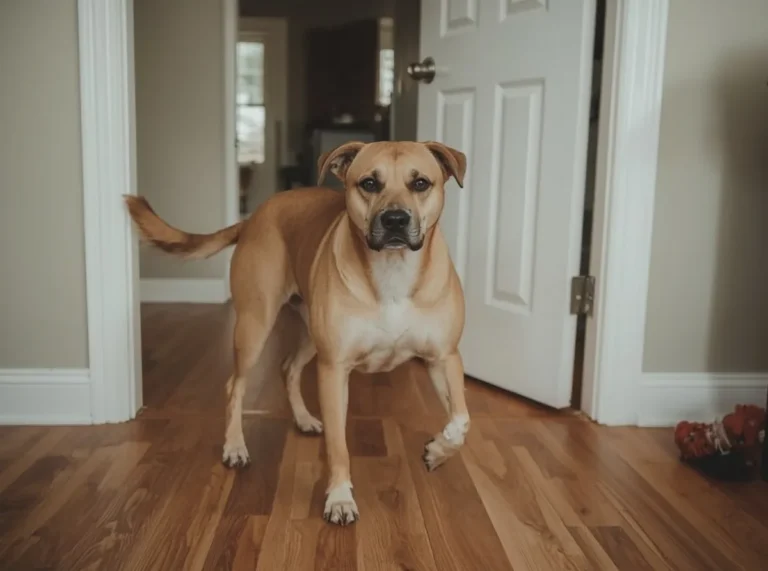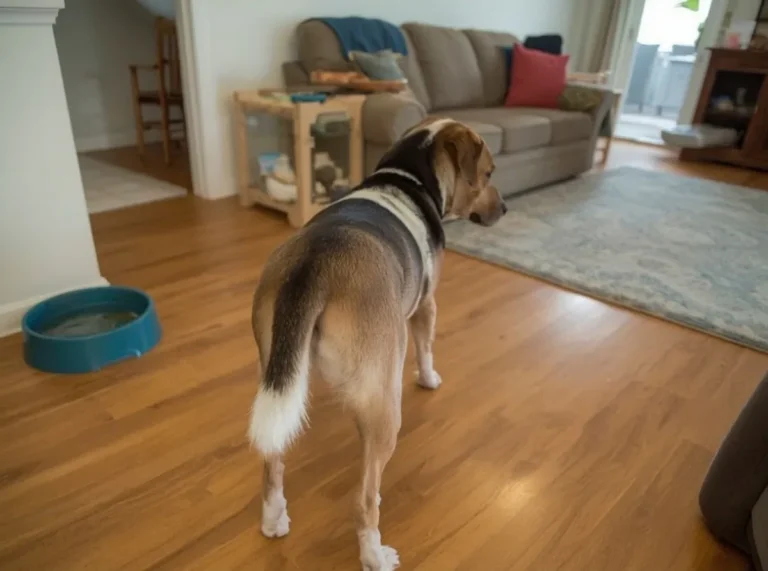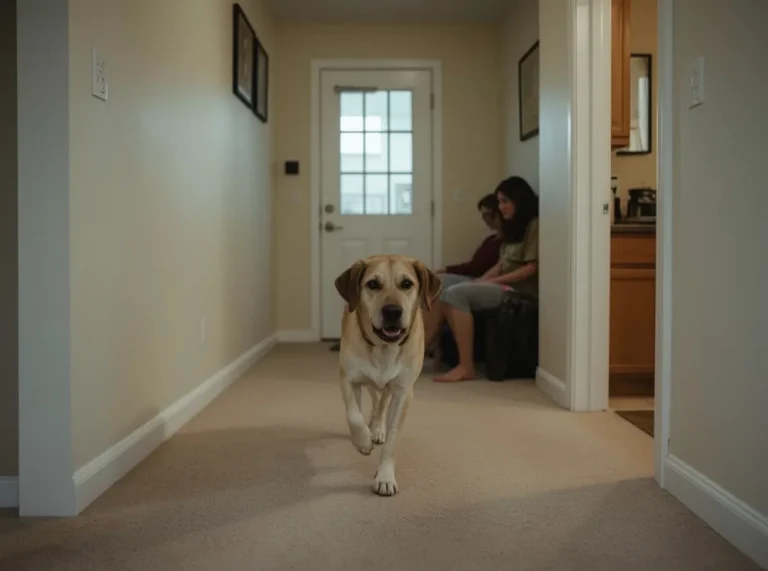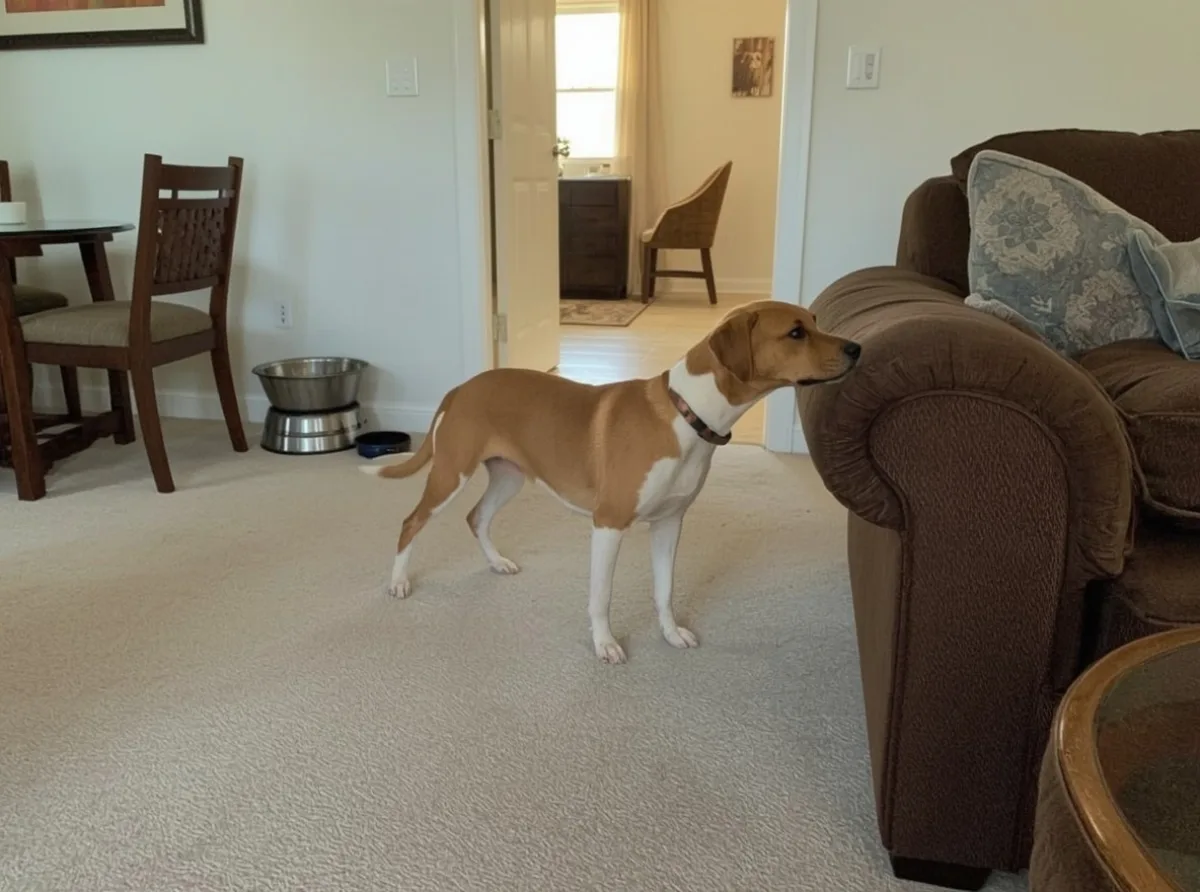
A dog that shifts its body position around certain people is often doing more than simply getting comfortable. The movement can be subtle: a dog stands, then sits again; turns its shoulder away; circles before lying down; or keeps swapping sides in relation to one person while staying still with others. These changes may look minor, but they often reveal how a dog is reading the room.
Some dogs move to stay close. Others move to keep distance without fully leaving. A few seem to “rearrange” their body around one person in a way they never do around anyone else. The reason is not always obvious from the outside, because body position is one of the quiet ways dogs respond to emotions, past experiences, and social pressure.
In everyday life, this behavior can show up during greetings, on the couch, at the dinner table, or when a person enters a room. A dog may angle its body toward one family member, then turn away from another. It may choose a spot that keeps one person in view. Or it may keep changing posture as if it cannot settle. Those shifts can mean comfort, curiosity, uncertainty, affection, vigilance, or a blend of several feelings at once.
What the behavior looks like in ordinary situations
Body-position changes are easiest to notice when a dog is around people it does not respond to in exactly the same way. The differences are often small, but they are consistent enough to catch your eye over time.
One dog may lie down with its back toward most people but keep facing a particular person. Another may move to the far side of a chair when a certain guest sits down, then later return when that guest relaxes. Some dogs keep rotating their body so they can watch a person while avoiding direct front-facing contact.
These choices are not random. Dogs use position to manage comfort, attention, and access. In practical terms, position helps them decide how close to be, how much to watch, and whether to stay ready to move.
- Turning the body away slightly can signal caution or a desire to reduce pressure.
- Sitting or lying with one shoulder angled toward a person can show interest without full commitment.
- Circling before settling may help a dog evaluate the person and the environment.
- Constant repositioning can suggest uncertainty, arousal, or difficulty relaxing.
When the shifts happen only around specific people, the dog is usually responding to something about those individuals, not just the room itself. That “something” may be scent, posture, tone of voice, movement speed, past association, or the emotional atmosphere that person brings with them.
Why some dogs change position near certain people
Dogs are social animals, but social does not mean uniform. They do not react to every human in the same way. A familiar dog can feel safe with one person and guarded with another, even inside the same house.
One common reason is learned association. If a dog has repeatedly experienced treats, calm handling, or predictable routines from a person, it may orient toward them more readily. If another person tends to move quickly, lean over the dog, or handle it in a rushed way, the dog may keep shifting to create a little more space.
Another reason is sensitivity to body language. Dogs are very aware of human posture. A person who stands stiffly, crosses their arms, or leans over a dog can make the dog adjust its own body position in response. Even if nothing dramatic is happening, the dog may feel that person is “too much” and keep repositioning to stay comfortable.
Body shifts are often a form of communication, not disobedience. A dog that moves around a person may be trying to increase comfort, manage uncertainty, or keep options open.
In some cases, the behavior reflects attachment. Dogs often position themselves near the people they trust most. They may sit with their body touching a favorite person, face the door when that person is nearby, or follow them from room to room while constantly adjusting angle and distance. The shifting itself can be part of staying connected.
There is also the possibility of conflict. A dog may want attention from a person but feel unsure about the interaction. That tension can look like repeated repositioning: approach, hesitate, turn, settle, then move again. The dog is not being dramatic. It is balancing desire and caution.
Emotional reasons behind the movement
The emotional side of this behavior is often more important than the visible movement. A dog’s body position can reveal whether it feels secure, conflicted, alert, or overstimulated.
Comfort and trust
When a dog trusts someone, it may still shift position, but the movement tends to look loose and unhurried. The dog can settle, readjust, and settle again without looking tense. It may turn its body to remain near that person while resting in a relaxed way.
This can happen with a preferred family member, a gentle guest, or someone who has built a steady relationship with the dog. The dog is not avoiding the person. It is choosing how to be near them.
Uncertainty
A dog that is unsure may reposition frequently. It may sit, stand, lower its head, move away a few inches, then return. The body is trying to find the safest arrangement. This is common around people whose behavior is inconsistent, too energetic, or difficult for the dog to predict.
Uncertainty does not always look fearful. Sometimes it looks polite. The dog remains in the space, but it keeps adjusting because it has not fully decided what to do.
Guardedness
Some dogs shift their body to protect space. They may angle themselves so they can watch a person while keeping distance. They may put furniture or another object between themselves and the person. These choices can be subtle signs that the dog feels the need to monitor, not relax.
A guarded dog may appear calm on the surface. The body tells a different story. Weight forward, muscles tight, head fixed, frequent repositioning, or a stiff turn of the hips can all suggest the dog is staying prepared.
Excitement
Not every position change is about discomfort. Some dogs do it because they are eager. They cannot decide whether to approach, sit, or pace. This is common with people who arrive home after an absence, people who usually bring food, or people who trigger a strong social response.
Excited repositioning tends to be quicker and more energetic. The dog may wag, bounce, and shift in rapid bursts. The movement feels active rather than cautious.
How posture and movement give clues
To understand why a dog keeps shifting position, it helps to look at the full picture, not just the movement itself. A single posture can mean very little. Repeated patterns tell more.
| Body signal | Possible meaning |
|---|---|
| Loose body, soft eyes, easy movement | Comfort, interest, or friendly engagement |
| Stiff torso, frozen pause, slow repositioning | Uncertainty or caution |
| Turning head while body stays ready to move | Watching carefully without full relaxation |
| Circling, pacing, inability to settle | Arousal, stress, or restlessness |
| Moving closer, then leaning away | Mixed feelings about the interaction |
Eye contact matters too. A dog that keeps shifting around one person while glancing back often wants to monitor them. That can be affectionate, but it can also mean the dog is checking for cues before making the next move.
Tail position is useful, but it should not be read alone. A wag does not always mean relaxation. A dog can wag while still shifting its body to create space. The rest of the posture tells you whether the wag belongs to confidence, excitement, or tension.
When a dog’s body keeps changing but its muscles stay tense, the movement usually reflects inner discomfort more than playfulness.
How routine and environment shape the pattern
Dogs do not shift position in a vacuum. The environment often makes the behavior more or less noticeable. A calm home, a busy home, and a noisy gathering can produce very different responses from the same dog.
In a predictable home, a dog may settle more easily around familiar people and shift only when someone’s behavior feels unusual. In a busy household, constant motion, changing voices, and frequent interruptions can make the dog reposition often just to keep track of where everyone is. The dog is trying to organize a lot of social information at once.
Routine matters as well. A dog that knows exactly when meals, walks, and quiet time happen often feels less pressure to monitor people. But if the day is irregular, or if certain people appear only at unpredictable times, the dog may stay alert longer and move more often around them.
Noise, crowding, and tight spaces can intensify the pattern. A dog that is calm in the yard may shift repeatedly in a small living room full of guests. It may not be the person alone; it may be the combination of person, space, and activity level.
Common environmental triggers
- Visitors entering and leaving without warning
- Children moving quickly or making sudden sounds
- People leaning over the dog or reaching too fast
- Food being present, especially near favorite people
- Furniture layouts that limit escape routes
- Conflicting signals from different household members
In these settings, repositioning can become a coping strategy. The dog is not necessarily upset enough to leave, but it is not fully at ease either. It keeps adjusting until the situation feels clear enough to tolerate.
Different people can trigger different kinds of movement
A dog may shift around one person because that person feels safe and rewarding. Around another, the same dog may reposition because it feels watched, pressured, or uncertain. The behavior can look similar from the outside, but the meaning is not the same.
For example, a dog may repeatedly sidle closer to the family member who usually feeds it, then lie down facing that person. That pattern often reflects anticipation and attachment. The dog wants to stay tuned in.
With a different person, the dog might keep circling the room, choosing spots where it can keep distance. That pattern may indicate that the dog is trying to control how much contact happens. It is not refusing all interaction. It is setting terms in the only way it knows how.
Some dogs are especially responsive to certain types of people. They may shift more around tall adults, loud voices, children, or people who smell like other animals. These reactions are personal and often based on a mixture of past experiences and current sensitivity.
What owners often think it means versus what it may mean
It is easy to misread body-position changes because the dog is still present and still engaged. People sometimes assume that being near a person means the dog is fully comfortable, or that moving away slightly means the dog dislikes them. In reality, the middle ground is common.
A dog that keeps changing position around a person may not be rejecting them. It may be trying to stay close without feeling trapped. That is a very different message. Dogs often manage closeness in gradual ways rather than with clear yes-or-no behavior.
Owners sometimes also assume the behavior is stubbornness. But most dogs are not trying to be difficult when they keep moving around one person. They are responding to pressure, anticipation, excitement, or ambiguity.
If a dog repeatedly changes position around the same person, the key question is not “Is the dog being difficult?” but “What makes this interaction hard to settle into?”
That shift in thinking matters. It encourages a closer look at the dog’s posture, the person’s habits, and the setting itself. Small changes in how a person approaches, sits, or speaks can change the dog’s need to keep adjusting.
When the behavior is playful, neutral, or stress-related
Not all shifting means the same thing. The context and the quality of movement matter a great deal.
Playful shifting
Playful movement is bouncy, fluid, and responsive. The dog may position itself near a person, then move away in a looping pattern that invites interaction. The body looks springy, not tight.
This can happen when a dog wants to play chase, tug, or rough-and-tumble games. The repositioning has a purpose: to create action.
Neutral shifting
A neutral dog may simply keep adjusting to stay comfortable. It might change sides on the floor, stand up to stretch, or reorient itself because the room activity changed. There is no obvious edge to the behavior.
This is the kind of movement many dogs do around people they know well. It is ordinary, practical, and not especially emotional.
Stress-related shifting
Stress-related movement is often repetitive or difficult to interrupt. The dog may not seem able to settle. It may keep standing and lying down, wandering near a person, and then moving off again. The body may look tight, and the dog may avoid direct contact.
In this case, the repeated shifting is less about preference and more about coping. The dog is trying to find relief.
How age and life experience can change the pattern
Dogs do not always shift their body position the same way throughout life. Puppies, adolescents, and mature dogs often show the behavior for different reasons.
Puppies may reposition frequently because they are still learning which people feel safe and what kinds of approach are normal. A puppy can be socially curious one moment and hesitant the next. That back-and-forth is common as the puppy builds confidence.
Adolescent dogs often become more selective. They may shift around certain people more than they did earlier, especially if they are testing boundaries or reacting more strongly to stimulation. This can look like changing posture, moving closer and then backing off, or not settling easily when a new person is present.
Older dogs may shift for practical reasons such as comfort, visibility, or joint stiffness, but they can also show increased selectivity about people. A mature dog with a strong history of positive experiences may settle quickly around trusted humans and reposition less often. Another older dog may move more carefully around people who crowd it or handle it roughly.
Life experience shapes the meaning of the movement. A dog that has had stable, respectful interactions usually has less need to keep adjusting. A dog with mixed or unpredictable social history may always be a little more alert.
How to read the pattern without over-interpreting it
It helps to look for consistency rather than one-off moments. A single evening of shifting position does not tell you much. A repeating pattern around the same people can tell you a great deal.
Notice where the dog chooses to sit, how fast it changes position, and whether it relaxes after the person leaves or settles when that person behaves differently. A dog that calms down when a guest sits quietly may have been reacting to movement, not the guest’s presence itself.
It is also worth noticing what happens before the shift. Did the person speak loudly? Reach over the dog? Enter the room quickly? Bring food? Sit on the floor? These details often explain the dog’s response better than the movement alone.
Some of the most useful observations are simple ones:
- Does the dog shift more around one person than others?
- Does it relax after a little time, or stay restless?
- Does it move closer while keeping an escape path open?
- Does the posture look loose or tense?
- Does the behavior appear in certain rooms, times, or routines?
Patterns like these are usually more revealing than labels. They show how the dog is experiencing the interaction in real time.
Long-term meaning of repeated body-position changes
When a dog consistently shifts its body position around the same person, the pattern often reflects an established relationship. That relationship may be warm, complicated, or both. Dogs can feel affection and caution toward the same human. They can be eager and unsure at once.
Repeated shifting can also point to a stable preference. A dog may always orient toward the person who feeds it, plays calmly, or respects its space. In other cases, the pattern is a sign that the dog has not fully settled into comfort with a person’s habits.
The important thing is that the dog is giving information in the only way it can. Its body is showing where comfort begins and ends. Around some people, that boundary is wide and loose. Around others, the dog keeps adjusting because the boundary feels narrower.
When a dog’s position changes around certain people, the behavior is rarely meaningless. It is usually a quiet record of how that dog experiences closeness, pressure, and safety in everyday life. The body moves because the dog is making small decisions in real time, one posture at a time.