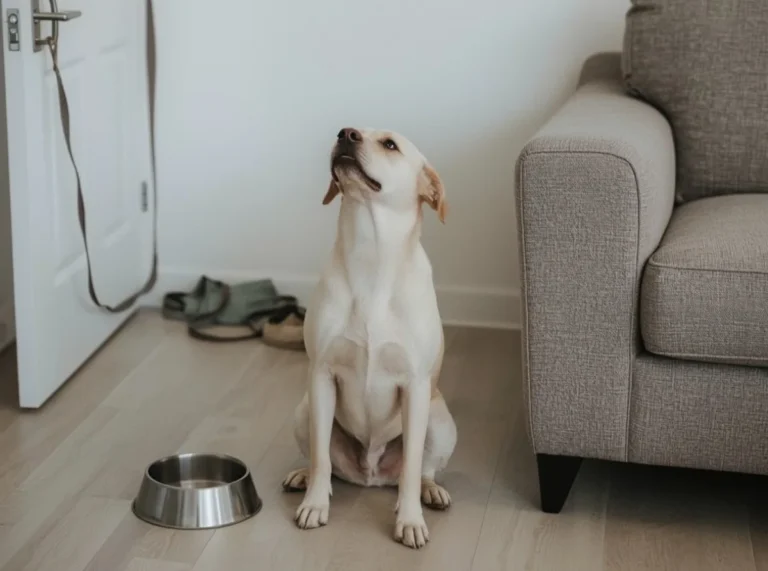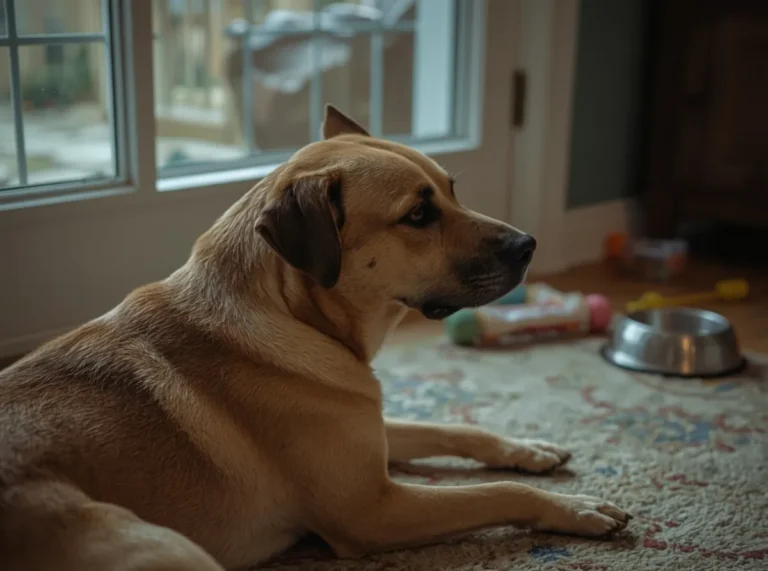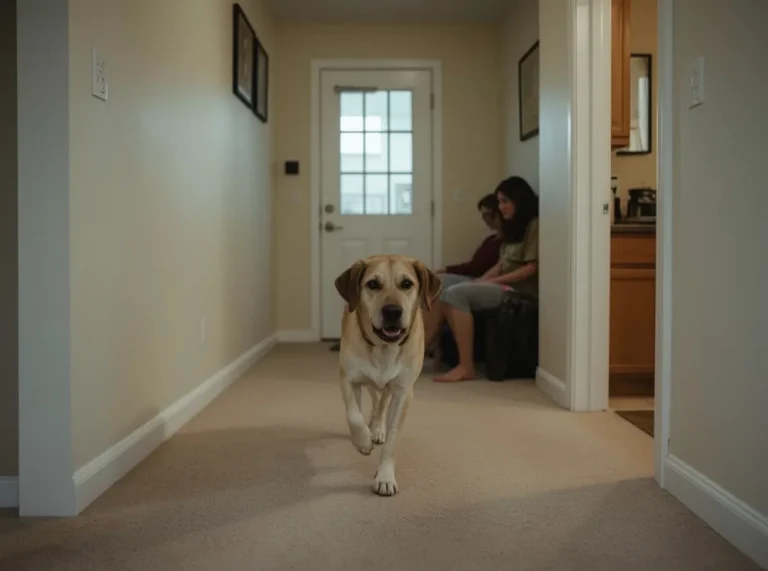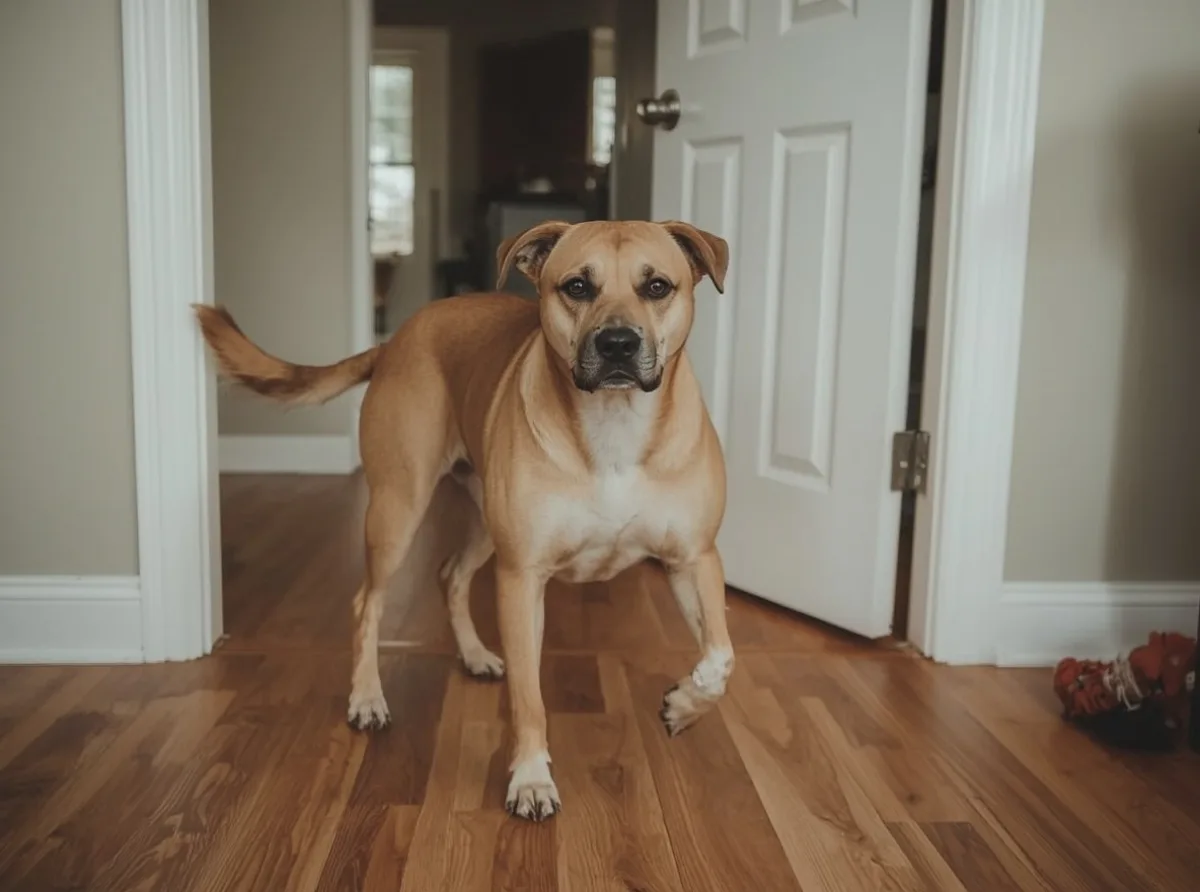
A dog that keeps one paw slightly raised is easy to notice, and it often makes people pause. The posture looks small, but it can carry a lot of meaning. Sometimes it is nothing more than a brief moment of balance or attention. Other times it is a signal that the dog is thinking, uncertain, or uncomfortable.
This gesture can appear while a dog is standing at the window, waiting near a food bowl, watching another animal, or listening to a sound that a person did not even notice. It may last a second or stay for a longer stretch. The same paw lift can mean very different things depending on the rest of the body, the setting, and the dog’s usual habits.
One raised paw is not a diagnosis. It is a clue. To understand it well, it helps to look at the whole picture: posture, face, tail, breathing, movement, and the situation right before the paw came up.
What the raised paw can look like in daily life
Many dogs lift one paw only slightly, without moving the rest of the body. The paw may hover just above the floor, or rest on a toe touch with less weight than usual. In a calm dog, it can happen while sniffing something interesting or watching a person open a treat bag. In a more alert dog, it may appear when the dog is focused on a sound outside or a stranger near the door.
Some dogs raise the same front paw often. Others do it only in specific moments, such as during training, when anticipating a walk, or when standing still and observing. The behavior may be subtle enough that it blends into the dog’s normal stance. Still, once you notice it, you may start seeing how often it appears and how clearly it tracks with certain situations.
It is also common for the paw to lift during pause-and-assess moments. Dogs do this when they are deciding whether to move forward, back away, bark, investigate, or wait. The raised paw can be part of a larger body language pattern rather than a separate behavior on its own.
When a raised paw is simply part of focus
One of the most common reasons a dog keeps one paw slightly raised is concentration. Dogs often freeze or slow down when something catches their attention. The lifted paw can show that the dog is taking in information before acting. It is a small sign of mental processing.
This is especially common when a dog is sniffing a scent trail, tracking movement in the yard, or listening to a faint sound. A dog that is deeply focused may reduce movement overall. The raised paw fits that stillness. It helps the dog stay poised, ready to shift direction quickly if needed.
A raised paw can mean “I am paying attention” just as easily as it can mean “I am unsure.” The rest of the body gives the real context.
In some dogs, this posture shows up during play or alert observation. They may be interested, engaged, and completely comfortable. The face stays soft, the breathing remains even, and the tail may move naturally. In those cases, the lifted paw is more like a pause than a warning.
Uncertainty and hesitation
A slightly raised paw can also reflect hesitation. Dogs do not always charge into a new situation. They often stop, study, and test the scene before deciding what to do. The paw lift may appear when the dog is evaluating a person, animal, object, or place that feels unfamiliar.
This version of the behavior often comes with other cautious signals. The body may lean back a little. The ears may angle forward or sideways. The dog may close its mouth, lower its head slightly, or glance away and then back again. The raised paw becomes part of a careful, questioning posture.
Hesitation is not the same as fear, though fear can be part of it. A dog may be unsure without being panicked. Many dogs prefer to gather information before committing to an action, and a lifted paw can show that pause. In everyday life, this may happen at the edge of a new sidewalk, near a loud appliance, or when meeting someone who moves too quickly.
Stress, discomfort, or mild conflict
Sometimes a raised paw appears when a dog is feeling pressure. The pressure may be social, physical, or environmental. The dog may want to approach but also want space. It may be interested in a treat but distracted by a noise. It may want to greet a person and also feel uncertain about the interaction.
When the paw lift is tied to discomfort, the rest of the body often tells the story. A tense mouth, stiff shoulders, fixed stare, tucked tail, or slow backing away can signal that the dog is not fully relaxed. In these moments, the lifted paw can be a quiet sign of internal conflict.
Dogs also sometimes raise a paw when they are dealing with mild physical discomfort. If standing on a surface feels odd, if the paw itself hurts, or if a joint is stiff, the dog may shift weight and hold the paw a little higher than normal. This is more likely if the dog also licks the paw, avoids putting weight on it, limps, or seems reluctant to move.
If the raised paw appears with limping, licking, swelling, yelping, or repeated weight shifting, the issue is no longer just body language. It may be a pain signal.
How environment changes the meaning
The same paw posture can mean different things depending on where the dog is. A dog at home in a quiet room may lift one paw while listening to a sound from the hallway. In a busy park, the same posture might show caution or overstimulation. The environment gives the behavior its shape.
Routine matters too. A dog that knows exactly when meals, walks, and rest happen may show a lifted paw before those events simply from anticipation. Another dog may do it when a normal routine is disrupted. A missed walk, a visitor at an unusual time, or a change in household noise can make a dog more watchful and less settled.
Stimulation plays a big role. Some dogs become more alert when they have had too little mental activity. Others become more tense when the day is packed with too much movement, excitement, or social contact. In both cases, one raised paw can appear as the dog slows down and tries to sort out what is happening around it.
Common settings where the behavior appears
- At the door when someone arrives
- While watching wildlife or neighborhood activity through a window
- During training sessions when the dog is processing a cue
- Near food, treats, or toys when anticipation builds
- In unfamiliar places with new smells and sounds
- When the dog hears a strange noise and pauses to assess it
Emotional signals that often accompany a raised paw
To read this behavior well, it helps to look at the whole dog. A soft, relaxed dog with a slightly raised paw is very different from a tense dog with the same posture. The emotion underneath the gesture matters more than the gesture itself.
A relaxed dog may have loose shoulders, a normal tail position, a soft gaze, and an easy mouth. The paw may lift for a moment and then lower as the dog shifts weight or changes focus. This often happens when the dog is curious or simply thinking.
A tense dog may show a harder stare, tight lips, reduced blinking, and a body that seems held in place. The paw can remain lifted longer in these situations because the dog is stuck between approach and retreat. That pause can be important. It suggests the dog is trying to manage a situation carefully rather than acting automatically.
Some dogs are naturally more cautious than others. Sensitive dogs may show subtle body language more often. More confident dogs may still lift a paw, but usually in very specific contexts, such as intense concentration or anticipation. Over time, you may notice a pattern tied to your dog’s personality.
What people often misunderstand
People sometimes assume that a raised paw always means the dog is trained, pointing, or asking for something. Those explanations can fit in certain contexts, but they are not the whole story. A dog can learn to lift a paw for attention or cues, yet the same posture may also appear when the dog feels unsure or is trying to make sense of a moment.
Another common mistake is reading the raised paw as proof of fear. It can be a sign of concern, but it can also reflect alertness, curiosity, or anticipation. Dogs use many small adjustments to manage their environment. A single gesture rarely gives the full answer.
Some owners also overlook physical causes. A dog that seems “just a little off” may actually be dealing with something minor but real, like a thorn, sore nail, irritated paw pad, or joint discomfort. If the behavior is new, frequent, or paired with changes in gait, it deserves a closer look.
How body language around the paw changes the meaning
The raised paw becomes clearer when you compare it with other parts of the dog’s body. A loose, balanced stance often suggests calm interest. A stiff, frozen stance suggests concern. The difference is easy to miss if you focus on the paw alone.
Signs that point toward relaxed focus
- Soft eyes
- Easy breathing
- Loose shoulders
- Neutral tail movement
- Normal weight shifting
Signs that point toward tension or caution
- Body held very still
- Closed mouth with tight lips
- Head slightly lowered or pulled back
- Tail tucked or held rigid
- Repeated looking away and back
Some dogs switch quickly between these states. They may raise a paw, lower it, step forward, then pause again. That back-and-forth can be meaningful. It often shows the dog is reading the situation in real time.
Breed tendencies and individual habits
Certain dogs seem more likely to use the raised paw posture, especially dogs that are bred for tracking, pointing, or careful observation. Their natural working style can make them more likely to pause and assess. That does not mean every paw lift is instinctive, but it helps explain why some dogs do it more often than others.
Still, breed is only part of the picture. Individual temperament matters a great deal. A steady, easygoing dog may rarely raise a paw unless something truly interesting is happening. A sensitive, thoughtful dog may use the gesture often in everyday life. A young, curious dog may do it while learning about nearly everything.
The same dog may also change over time. A dog that lifted a paw often as a puppy may do it less as an adult once confidence grows. Another dog may become more cautious with age, pain, or a changed environment. The behavior can be stable, but it is not fixed forever.
Puppies, adults, and older dogs
Puppies sometimes lift one paw while figuring out balance, attention, and movement. Their bodies are still developing, and their responses can be uneven. A puppy may pause with one paw raised while deciding whether to chase, bark, investigate, or retreat from a new object. Much of this is part of learning.
Adult dogs usually show the behavior with more consistency and clearer triggers. By that stage, the posture often reflects a familiar pattern: anticipation, assessment, or social uncertainty. If an adult dog suddenly begins lifting a paw much more often than before, it is worth observing closely.
Older dogs may do it for a different reason altogether. Stiff joints, reduced strength, and mild pain can make weight shifting more noticeable. A senior dog might not fully lift the paw in a dramatic way, but the change in balance may still stand out. Age-related discomfort can make the posture more frequent or more prolonged.
When it is worth paying extra attention
Most brief paw lifts are not emergencies. Still, some patterns deserve closer attention. A behavior that appears suddenly, keeps repeating, or comes with physical changes can indicate a problem that should not be ignored.
Watch for signs that the dog is trying to avoid using the paw, licking it repeatedly, favoring one side, or becoming less interested in movement. Also note whether the dog seems restless, less social, or more withdrawn than usual. Behavioral change plus physical change is more meaningful than either one alone.
New or persistent one-paw lifting, especially when paired with limping, licking, swelling, or discomfort, should be treated as a possible health issue rather than a quirk.
Even when the cause is emotional rather than physical, patterns matter. If the dog lifts a paw every time the same trigger appears, that trigger may be creating too much pressure. A doorbell, a loud neighbor, a particular dog on walks, or a certain handling routine can all be part of the picture.
What the behavior may be saying in real time
A raised paw often sits in the space between action and pause. The dog is not fully moving forward, but not completely backing away either. That in-between state is useful. It gives the dog time to gather information.
In a social moment, the paw can say, “I am considering this.” In a cautious moment, it can say, “I am not ready yet.” In a comfortable moment, it can say, “I am focused.” The same stance can carry different meanings because dogs communicate with combinations, not single signals.
That is why context matters so much. A paw held up while a dog waits for dinner is very different from the same paw held up while the dog stares at a stranger. One may be pure excitement. The other may be conflict or caution. The expression on the rest of the dog gives the answer more reliably than the paw alone.
How to think about the behavior without overreading it
It helps to treat one raised paw as part of a larger conversation. The dog is not speaking in full sentences. It is offering a small clue. The more often you notice the setting, the dog’s posture, and what happens next, the easier it becomes to read that clue accurately.
In a peaceful home routine, the behavior may simply show alertness or anticipation. In a new environment, it may mark careful observation. In a stressful moment, it may be one of several subtle signs that the dog needs more space or time. In a physical issue, it may be the first visible hint that something hurts.
That range is what makes the posture so interesting. It is tiny, but it is not meaningless. A dog that keeps one paw slightly raised is usually telling you something specific about the moment, even if the message is quiet and easy to miss.
Over time, the pattern becomes clearer. A dog that lifts a paw while thinking, waits before moving, or shifts into a careful stance is often simply showing how it handles information. Some dogs are quick to act. Others prefer to pause, sort things out, and then choose their next step with care.