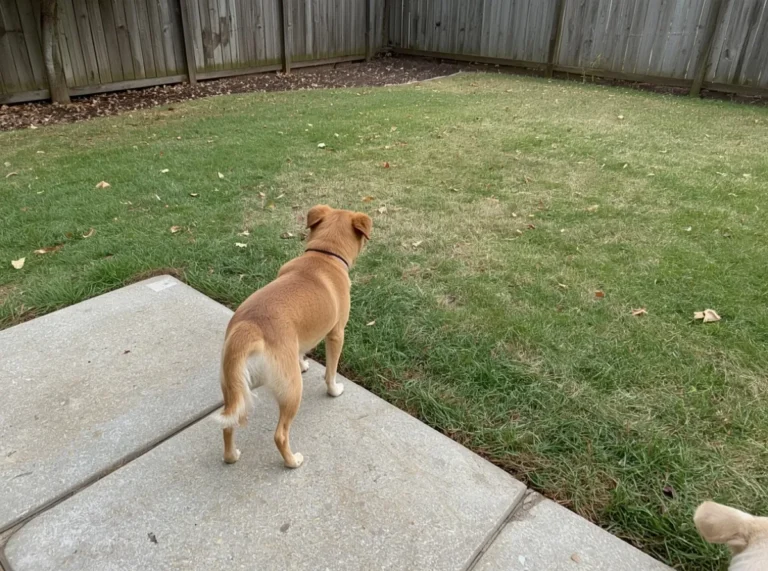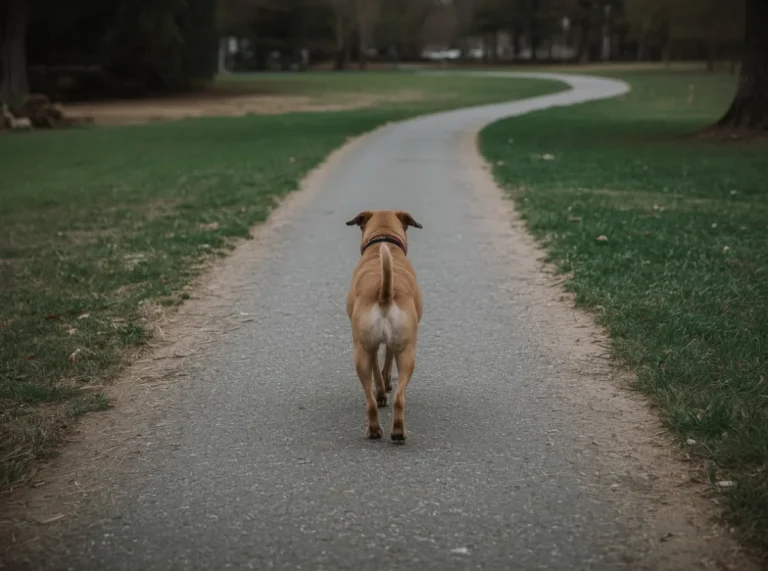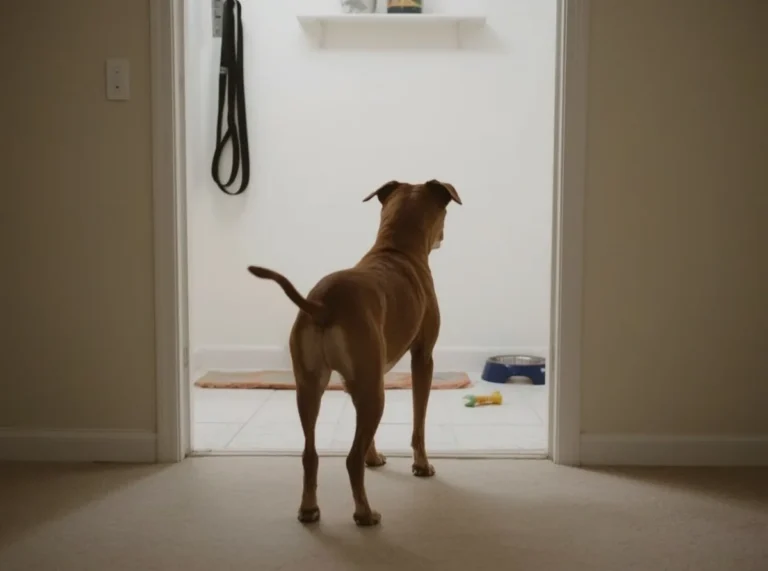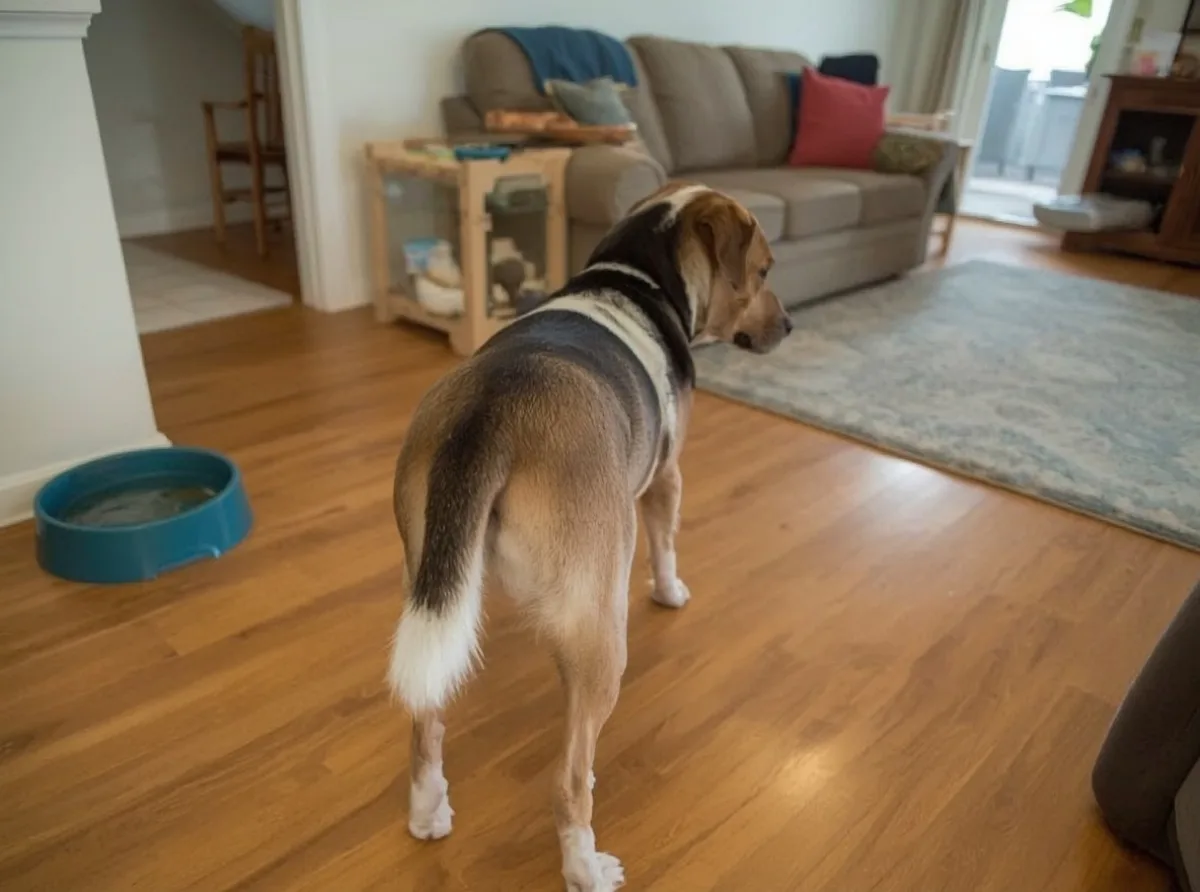
A dog’s tail is rarely just decoration. It shifts, softens, tightens, flicks, and settles in ways that reveal a lot about how the dog feels in the moment. At home, many owners notice that a dog who seems relaxed in one room may still carry the tail lower than expected while walking through the house, greeting family members, or lying nearby.
That lower tail position does not always mean fear. Sometimes it reflects comfort, quiet attention, uncertainty, or a dog’s natural resting posture. The same tail can tell a different story depending on the rest of the body, the setting, and what is happening around the dog.
In a familiar home, where dogs spend long stretches of time without pressure from the outside world, this behavior can be especially noticeable. Some dogs keep their tails low when they are calm and settled. Others do it when they are unsure, tired, sensitive to movement, or waiting for cues from the people around them.
What a Lower Tail Often Looks Like at Home
A low tail position can appear in several everyday ways. Some dogs hold the tail slightly below the line of the back while standing or walking. Others tuck it more clearly under the body, especially when they hear a noise, approach a new object, or wait for interaction. A few dogs rest with the tail low even when lying down or moving through familiar rooms.
The same posture can look different from one dog to another. A long, loose tail that hangs naturally is not the same as a stiff tail held close to the belly. One suggests ease or mild caution; the other can point to tension or defensive comfort. The details matter more than the simple fact that the tail is low.
Signs that help interpret a lower tail
- Loose hips and shoulders usually suggest a relaxed state
- Stiff legs or frozen movement often point to caution
- Soft eyes and normal breathing usually support calmness
- Ears pinned back or a tucked body may signal stress
- Slow tail movement can mean uncertainty rather than fear
At home, a dog may also keep the tail low for practical reasons. Older dogs, dogs with long backs, and dogs with physical discomfort may change their posture simply because it feels easier. That is why the tail should never be read alone. The rest of the body gives the more useful answer.
Calm Can Still Mean a Lower Tail
Many owners assume a low tail always means something is wrong. In reality, some dogs naturally carry their tail lower when they are relaxed. This can be part of their normal resting posture, especially in the house where they feel no need to present themselves in a high-energy way. The dog may be content, quiet, and fully settled, just not especially expressive through the tail.
Dogs with naturally low tail carriage are often misunderstood. Their neutral position may look “sad” to people, but the dog may simply be comfortable. Breeds differ too. Some dogs are bred or built with tails that curve, hang, or stay lower than others, which makes comparison with other dogs less useful than observing the individual dog over time.
A tail that sits low in a loose, unforced way can be part of a dog’s normal at-home posture. The difference between relaxed and worried usually shows up in the whole body, not the tail alone.
When the body is soft, the mouth is relaxed, and movement stays fluid, a low tail may just mean the dog is in a calm, resting mode. This is common after meals, during quiet evenings, or when the household has slowed down. Some dogs even lower their tail more as they transition into rest, almost as if their body is setting itself down piece by piece.
Emotional Reasons Dogs Keep Their Tail Lower Indoors
Emotions shape tail position, especially in the home where dogs respond to familiar routines and subtle changes. A dog may hold the tail lower when unsure about a situation. That situation does not need to be dramatic. It could be a new piece of furniture, a change in the daily schedule, a visitor’s smell on clothing, or a sound from outside that the dog has not fully sorted out.
Some dogs lower the tail when they are trying to avoid conflict. This can happen during family activity, around other pets, or when a dog senses tension in the room. The lower tail becomes part of a polite, cautious posture. The dog is not necessarily frightened, but it may be choosing a smaller, less assertive presence.
There is also the effect of attachment. Dogs who are very bonded to their people often monitor faces, voices, and movement closely. If something feels unclear, they may reduce their body profile, including the tail. That can look like shyness, but it may simply reflect sensitivity and a desire to read the room before fully joining in.
Emotional states that can lower the tail
- Mild uncertainty about a person, sound, or object
- Quiet anticipation before something happens
- Submissive or appeasing behavior during interaction
- Fatigue or low-energy recovery after activity
- Heightened awareness in a busy or unpredictable home
Some dogs also lower the tail when they are feeling conflicted. They may want to approach but still feel cautious. The body then shows mixed signals: moving forward with the head, keeping the tail low, pausing, sniffing, and then moving again. That combination is very common at home because dogs are constantly balancing interest with caution.
How Home Environment Shapes Tail Position
The home environment strongly affects body language. A quiet home may produce a low, loose tail because the dog has little reason to stay “on.” A busy household may do the opposite. Frequent movement, children running, doors opening, and overlapping sounds can all make a sensitive dog carry the tail lower as a general state of alertness.
Routine matters too. Dogs often relax more when life is predictable. If mealtimes, walks, and rest periods happen regularly, the dog may hold the tail in a more neutral, low position because there is less need for constant scanning. When routines shift, tail posture may change before owners notice anything else.
Stimulation also plays a role. A dog who gets enough physical exercise and mental engagement may spend more time with a soft, low tail during rest. A dog who is under-stimulated can appear flat or withdrawn, and the tail may hang lower than usual simply because the dog has not had a satisfying outlet for energy. On the other hand, a dog that is overstimulated may also lower the tail after the excitement passes, especially when the nervous system starts to settle.
| Home situation | Common tail posture | What it may suggest |
|---|---|---|
| Quiet evening | Loose, low, unforced | Relaxation or winding down |
| New visitor | Lower and still | Caution or uncertainty |
| Busy family activity | Lower with watchful movement | Alertness, self-protection |
| After play | Lower but soft | Recovery and calm down |
| Change in routine | Lower and slower to lift | Adjustment or mild stress |
Even temperature and comfort can influence posture. A dog that feels chilly, sore, or tired may carry the tail differently indoors. That is one reason long-term patterns matter more than a single moment.
Situations Where Dogs Most Often Lower Their Tails at Home
The behavior often appears in predictable places and moments. Many dogs lower the tail at the front door when they hear footsteps, even if they know the sound belongs to a neighbor. Some do it in the kitchen, where they are waiting for food or watching people move around them. Others show it during evening quiet time when the household transitions from activity to rest.
Tail position can also shift during social interactions. A dog may approach with a low tail when greeting someone familiar after a long day. That can be a calm, respectful greeting. The dog may sniff, wag lightly, and keep the body soft. In another home, a different dog may lower the tail around children simply because the pace and noise are a little much.
Multi-dog homes create their own patterns. One dog may lower the tail near another dog to show deference or avoid escalation. Another may do it when guarding a favorite resting spot or moving through a narrow hallway. These moments are not always obvious, but dogs use posture to keep interactions smooth.
Common at-home moments linked to a lower tail
- Greeting people at the door
- Waiting near the kitchen or dining area
- Passing close to another pet
- Adjusting to loud household sounds
- Entering a room with unfamiliar objects or changes
Some of these scenes are ordinary, not concerning. A dog lowering the tail while waiting for breakfast may simply be focused and respectful. The same tail position during a tense encounter with another animal may mean something entirely different. Context gives the signal its meaning.
What the Tail May Signal About the Dog’s Emotional State
A lower tail can point to several emotional states, and the difference is often subtle. Relaxation tends to come with looseness. The dog moves easily, breathes normally, and does not seem compressed. Uncertainty brings stillness, slower movement, and a more careful way of approaching things. Fear usually adds visible tension, with the body narrowing and the tail held close or tucked.
Owners often focus on the tail because it is easy to notice, but the chest, neck, ears, and mouth usually tell the fuller story. A dog with a low tail and a soft face is not the same as a dog with a low tail and a hard stare. One may be simply calm. The other may be managing stress.
Look for patterns, not single moments. A low tail paired with relaxed movement often means something very different from a low tail paired with stiffness, avoidance, or shrinking away.
Emotional state can also change within seconds. A dog may greet a family member with a low tail, then lift it once the person crouches down and speaks softly. The body adapts quickly when the situation feels safer or clearer. That flexibility is normal.
How Owners Often Misread a Lower Tail
One common mistake is assuming the dog is unhappy or “feeling guilty.” Dogs do not lower their tails at home because they know they made a mistake in the human sense. They respond to immediate feelings, body pressure, voice tone, and environmental cues. If a dog lowers the tail after being called to the kitchen, it may be reacting to uncertainty about what comes next, not guilt.
Another common misunderstanding is treating every low tail as a behavior problem. Some owners react by trying to cheer the dog up immediately or by repeatedly making the dog face whatever seems to cause the posture. That can miss the point. The dog may simply need space, predictability, or a slower introduction to a situation.
It is also easy to overlook the difference between a relaxed low tail and a defensive tucked tail. One dog may seem “down” when it is actually resting. Another may look nearly the same from a distance but feel pressured, especially if the ears are back and the body is tight. Small changes in posture can carry a lot of meaning.
When a Lower Tail Becomes More Noticeable
Some dogs show this posture more often during transitions. They may lower the tail when the family arrives home, when the lights change, or when the usual evening rhythm shifts. These are moments when the environment is familiar but not fully predictable. Many dogs become more body-aware during transitions and respond by keeping the tail lower until things settle.
It can also become more obvious during life changes. A move to a new house, a new pet, a baby in the home, or a different work schedule can all alter how safe or settled a dog feels. The tail may stay lower for longer periods while the dog learns the new rhythm.
Age matters as well. Puppies often carry the tail differently depending on confidence and social learning. Adult dogs may become more consistent in how they hold their tails, while senior dogs sometimes lower the tail because of stiffness, discomfort, or reduced energy. A sudden change in an older dog’s tail carriage deserves closer attention because physical causes become more likely with age.
Long-Term Patterns Worth Watching
Looking at one day rarely gives a full answer. The more useful question is whether the dog’s lower tail is part of a stable personal pattern or a recent shift. A dog that always rests with a low tail may simply be built that way. A dog that suddenly starts holding the tail lower in familiar rooms may be communicating discomfort, stress, pain, or a change in confidence.
Owners can watch for consistency across settings. Does the tail stay low only indoors, or also outside? Does it change around certain people, noises, or times of day? Does it lift during play and lower again during rest, or does it remain low almost all the time? Those details help separate temperament from situation.
Questions that help identify the pattern
- Has this been the dog’s normal tail carriage for months or years?
- Does the tail change with comfort, rest, or excitement?
- Are there signs of stiffness, limping, or discomfort?
- Does the dog lower the tail around specific people or sounds?
- Has anything changed in the home routine recently?
If the lower tail seems tied to physical discomfort, the rest of the body usually gives additional clues. A dog may hesitate before jumping, move more slowly, or guard its hindquarters. In that case, the tail position is only one piece of a broader picture.
When the Tail Is Low but the Dog Is Fine
Many dogs simply have an easygoing, lower tail carriage at home. They may sleep well, interact normally, seek affection, and show no signs of stress. In these cases, the tail is part of the dog’s natural style. It may dip lower as the dog walks through the house, then rise a bit during excitement, then settle again during rest. Nothing about that pattern is unusual.
What matters is the combination of signals. A dog that eats normally, plays willingly, stretches comfortably, and approaches family members with soft, steady movement is usually giving a reassuring picture, even if the tail does not sit high. Dogs do not all express confidence in the same way.
For some, a lower tail is simply the home version of neutrality. The dog does not need to announce itself. It just moves through the rooms in a steady, understated way. That can be entirely normal.
The most useful interpretation is the one that matches the whole dog: posture, movement, breathing, facial expression, and the situation around them.
When Lower Tail Position Deserves Attention
A lower tail becomes more meaningful when it appears with other changes. If the dog is also avoiding touch, losing interest in routine, moving stiffly, or seeming hesitant in places that were once comfortable, the posture may be part of discomfort or stress. A sudden and lasting change is more important than a brief moment of caution.
It is also worth noting if the tail is consistently tucked during ordinary home life, especially if the dog seems unable to settle. Constant low carriage is not the same as a relaxed hang. One is a posture; the other may be a response to pressure, pain, or uncertainty.
In everyday terms, the key is whether the dog seems able to switch into ease. A dog that lowers the tail when the vacuum starts but relaxes again afterward is likely responding normally. A dog that keeps the tail low through most of the day may be telling a different story.
What This Behavior Means in Daily Life
At home, a lower tail often reflects a dog’s way of adjusting to the atmosphere around it. Some dogs do it because they are calm and resting. Others do it because they are reading the room, moving carefully, or feeling a little unsure. The behavior becomes clear only when matched with the rest of the dog’s body and the rhythm of the household.
That is why the same posture can belong to very different moments. A dog may lower the tail while settling beside the couch, during a polite greeting, or when unsure about a sound from the hall. The posture alone is not the message. The situation gives the meaning.
When observed over time, the tail becomes less of a mystery and more of a familiar habit. Some dogs carry it lower by nature. Some lower it in response to daily life. Some do both, depending on the hour. The answer lives in the pattern, not the snapshot.
For owners who pay attention to those small shifts, the lower tail becomes one more useful part of understanding how a dog experiences the home. Quietly, it shows comfort, caution, or adjustment long before a bigger reaction appears. And that makes it worth noticing, especially in the everyday moments when dogs are simply being themselves.