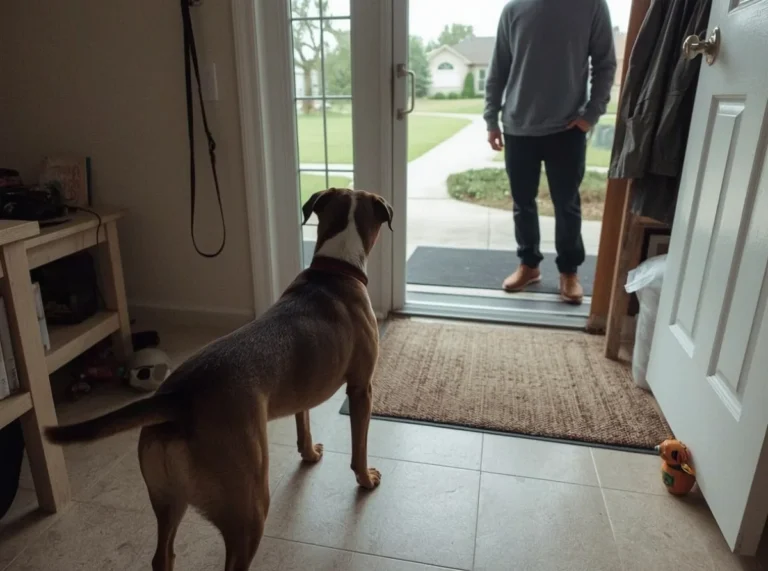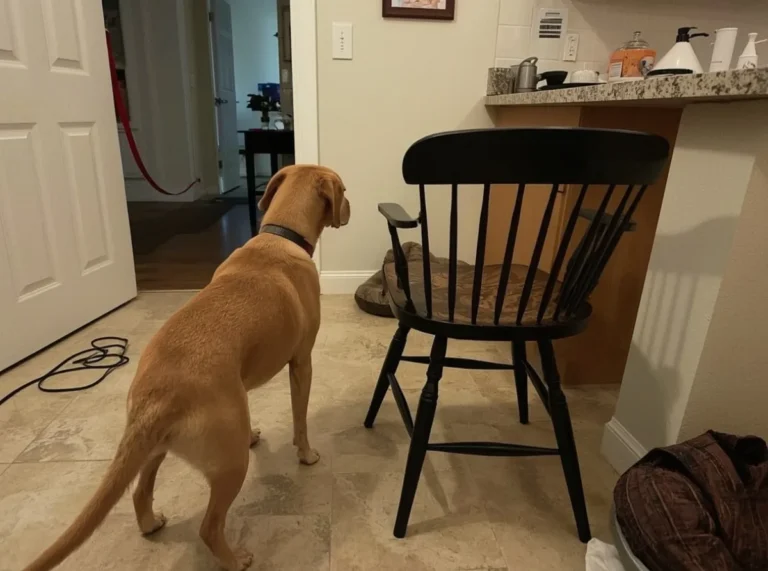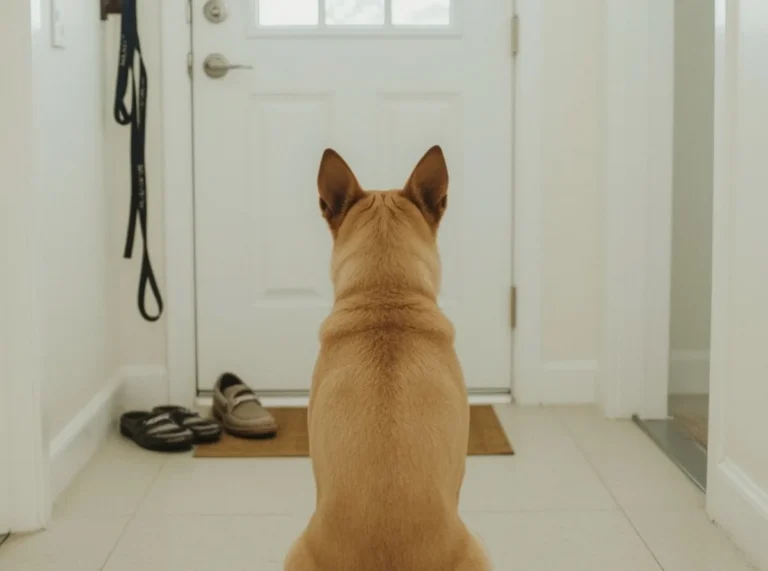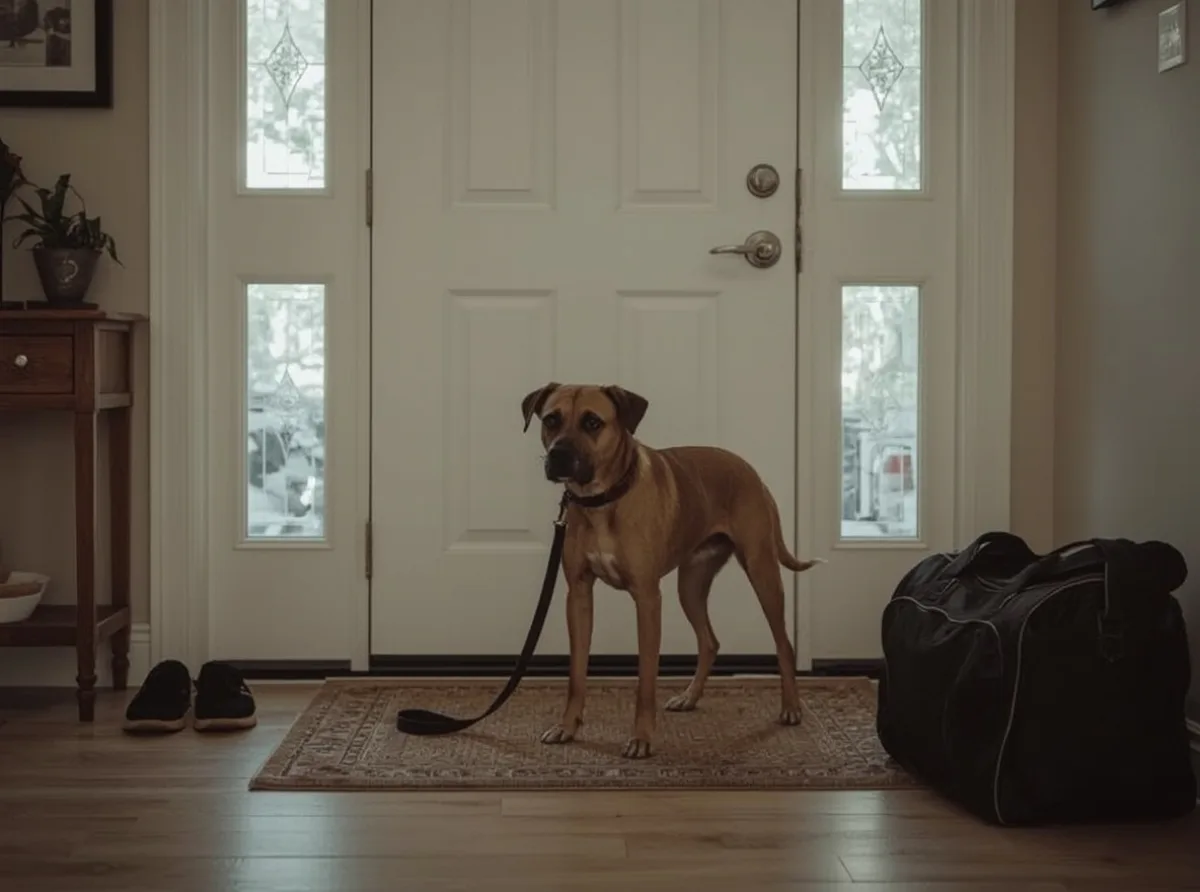
Some dogs seem to take a person leaving the room as a small event. Others treat it like the end of the world. The difference can be striking: one dog settles by the door, another starts pacing, whining, barking, or following every step with intense focus. That strong reaction is not random, and it usually says something important about how the dog experiences separation.
At home, this behavior can show up in quiet ways first. A dog may become restless when someone picks up keys, stand up as soon as shoes are on, or watch the exit with unusual concentration. In more intense cases, the reaction grows fast once the person is actually gone. The dog may vocalize, scratch at doors, pace from room to room, or stop eating and drinking until the person returns.
Not every strong response means the same thing. Some dogs are deeply attached to one person. Some are easily startled by changes in routine. Others have learned that departures are unpredictable, and that uncertainty creates tension before the door even opens. The reaction can look simple from the outside, but the feelings behind it are often layered.
What Strong Reactions to Separation Look Like
The first clue is usually timing. Many dogs begin reacting before the person has fully left. They notice small cues: a specific jacket, a bag being lifted, a hand reaching for the leash, or the sound of keys. The body may tense, the ears may shift forward, and the dog may follow closely rather than settling nearby.
Once the person is gone, the reaction can take several forms. Some dogs become vocal right away. Others move constantly, unable to rest. A few try to block the door, guard the exit, or scratch at windows. In some homes, the evidence is quieter but still clear: chewed doorframes, bent blinds, accidents in the house, or signs that the dog has been too unsettled to relax.
There is also a difference between mild discomfort and a stronger emotional response. A mildly worried dog may whine briefly and then lie down. A more affected dog may stay activated for a long time, unable to shift out of that state even after the household goes quiet. That lasting tension is one reason the reaction stands out so much.
Why Some Dogs Become So Upset
Attachment is part of the answer. Dogs are social animals, and many of them bond closely with the people who feed them, guide them, and shape their daily rhythm. For some dogs, one person becomes the main source of safety and predictability. When that person disappears, the dog is not simply noticing an empty room. It is losing a familiar anchor.
Temperament matters too. Some dogs are naturally more sensitive than others. They notice small changes quickly, stay alert to movement around them, and have a harder time letting situations pass without monitoring them. A sensitive dog may react strongly even in a stable home, especially if separation is linked to uncertainty rather than a known routine.
Past experience can leave a deep mark. Dogs that have been rehomed, spent time in shelters, experienced frequent household changes, or gone through long stretches of inconsistency may struggle with departures more intensely. If coming and going has not felt predictable in the past, a dog may brace for loss every time a person starts to leave.
Strong reactions to separation are often less about “being stubborn” and more about how safe, predictable, and manageable the absence feels to the dog.
Learning also plays a role. If leaving has repeatedly been followed by stress, the dog may begin to anticipate that pattern. Over time, even small departure cues can become emotionally loaded. The reaction then starts earlier and becomes harder to interrupt.
The Emotional State Behind the Behavior
Dogs do not all experience being alone the same way. Some handle it like a normal part of the day. Others seem to experience a real drop in comfort once their person is no longer present. That shift can look like sadness, but in practical terms it often includes worry, frustration, or a strong need to regain connection.
Worry tends to show up as vigilance. The dog keeps checking the environment, listening for movement, and staying mentally engaged with the missing person. Frustration may appear as barking, scratching, or frantic movement, especially when the dog is trying to reach the exit or understand what happened. Some dogs switch between these states quickly.
The emotional load is often visible in body language. A dog may hold its body tightly, keep the tail low, lick lips repeatedly, pant without exercise, or struggle to lie down and stay down. Even when the dog is not destroying anything, the internal state may still be highly activated. That is why a dog can seem “fine” for a minute and then suddenly unravel.
Common emotions that can sit under the reaction
- Fear of being left alone
- Uncertainty about what happens next
- Frustration at being separated from a person
- Overattachment to one specific household member
- General sensitivity to change or disruption
It is also worth noting that some dogs are not upset by solitude itself as much as by the process of separation. The departure routine can become the main trigger. The keys, shoes, and changed energy in the room may create more distress than the actual absence.
How Routine Shapes the Reaction
Routine can help dogs feel secure, but it can also make departures more noticeable. A very consistent schedule teaches a dog to expect certain events at certain times. When the usual pattern shifts, the dog may react more intensely because the change stands out so clearly.
In a calm, predictable home, some dogs learn to anticipate short absences without much trouble. In a busier household, departures may feel more chaotic. Different people leaving at different times, irregular mealtimes, and frequent changes in activity can make it harder for a dog to understand what is normal. That uncertainty can raise the emotional volume around separation.
Daily stimulation matters as well. A dog with too little activity may have extra energy and nowhere to put it when alone. A dog with enough exercise but very little mental engagement may still become restless. On the other hand, a dog that has had a satisfying day of movement, sniffing, interaction, and rest is often better able to settle when the house gets quiet.
Routine does not just help dogs know when someone will return. It also helps them decide that the absence is not an emergency.
Environmental cues can amplify the reaction. If the dog can hear the garage door, footsteps in the hall, or family members returning and leaving repeatedly, the expectation of reunion and loss can stay active for a long time. In some homes, that constant on-and-off pattern keeps the dog from fully relaxing.
Situations Where the Reaction Becomes Stronger
Some dogs only react strongly in specific contexts. One common example is the favorite-person effect. A dog may remain calm when one adult leaves but become noticeably distressed when a particular family member goes out. That usually points to stronger attachment, not necessarily a general problem with solitude.
Transitions can also intensify the reaction. Moving to a new home, shifting work schedules, holiday travel, or the arrival or departure of another pet can all make a separation response more visible. Even positive changes can unsettle a dog if they alter the rhythm the dog has come to trust.
There are also moments when a dog is simply more vulnerable. A dog recovering from illness, getting used to a new adoption, or going through adolescence may have a harder time staying regulated. Puppies, in particular, can show a dramatic reaction because they are still learning how to handle brief periods without their chosen person nearby.
Examples of common triggers
- One specific family member leaving
- Departure cues like shoes, purse, or leash
- Sudden schedule changes
- Being left alone after a very stimulating day
- Returning to solitude after illness, travel, or a move
The reaction may also be stronger in dogs that lack a safe resting pattern. If a dog does not know how to settle alone in a predictable space, separation can feel like an open-ended problem. A crate, room, or bed is only helpful if the dog already associates that space with calm rather than panic.
What Owners Often Misread
One common misunderstanding is assuming that a dog is being dramatic or deliberately difficult. In reality, the dog is usually responding to an internal state that feels hard to manage. The barking or pacing is not the core issue. It is the surface expression of distress.
Another misread is interpreting clinginess as simple affection. Affection may be part of it, but intense follow-every-move behavior can also signal dependence and uncertainty. A dog that cannot tolerate even brief distance may not be comfortable, even if it appears devoted. The difference is subtle but important.
Some owners also underestimate early warning signs. They may focus on damage or noise while missing the quieter signals that come first. A dog that stares at the door, licks its lips, scans the room, or refuses to settle may already be telling a fuller story. By the time barking starts, the dog may have been stressed for several minutes.
What looks like “acting out” often begins as a small rise in tension that the dog could not resolve on its own.
There is also a tendency to assume that every strong reaction means the dog dislikes being alone in general. Sometimes that is true. Sometimes the issue is narrower: only one person’s departure, only a certain routine, or only times when the dog is already overstimulated. Noticing the pattern helps make sense of the behavior.
The Role of Attachment and Social Behavior
Dogs are built to pay close attention to social cues. In a household, that can become a real strength. It helps them learn routines quickly and stay tuned to the people around them. But it can also mean that separation is felt very directly, especially in dogs that have a strong social orientation.
Some breeds and individual dogs seem to track human presence more closely than others. That does not make them weak or spoiled. It simply means they are highly responsive to the social environment. When a person leaves, the dog experiences not just physical distance but a change in the social map of the home.
This is one reason separation reactions can feel so persistent. The dog is not just waiting for a door to reopen. It is monitoring the absence itself. That monitoring can keep the dog alert long after the person has gone, especially if the dog has learned that departures are unpredictable or emotionally charged.
In multi-dog homes, the picture can be different. A dog may be calmer if another dog remains nearby, or the presence of other dogs may not matter much if the bond with the missing person is especially strong. Social structure matters, but it does not automatically solve the problem.
How the Reaction Can Change Over Time
Some dogs become less reactive as they gain confidence and experience. They learn the rhythm of the house, recognize that departures are temporary, and gradually settle more easily. Other dogs remain fairly sensitive throughout life, especially if their temperament leans toward vigilance or if early experiences made separation feel risky.
Young dogs often show the behavior more strongly because they have less practice managing distance. Adolescence can be a tricky stage too. A puppy that once handled short absences reasonably well may suddenly become more reactive as it grows more alert and more attached. That change can surprise owners who thought the issue had already passed.
In adult dogs, the behavior can either stabilize or intensify depending on life events. A move, a new schedule, loss of a companion, or reduced daily structure can make a previously easygoing dog struggle again. The pattern is not always permanent, but it can be fairly consistent when the underlying emotional drivers remain in place.
Older dogs may also react differently. Some become more dependent on routine and familiarity. If their sensory abilities change, or if their world narrows, departures can feel more significant. A dog that once shrugged off short absences may later prefer closer contact and become more unsettled when left behind.
Reading the Behavior in Real Life
At home, the reaction is best understood as a pattern, not a single moment. One whine before the person leaves means less than repeated signs across many days. Does the dog relax quickly after departures, or does stress last a long time? Does the behavior happen with everyone or only one person? Does it show up only after changes in routine?
Those details matter because they reveal whether the dog is dealing with simple disappointment, stronger attachment, uncertainty, or a broader struggle with being alone. A dog that only follows one person from room to room may be showing a specific social preference. A dog that cannot settle no matter who leaves may be dealing with more general separation distress.
Observation also helps avoid overreacting to a single bad day. Dogs, like people, can have off days. But when the same cues bring the same strong response again and again, the pattern deserves attention. Repetition is often where the real story sits.
Some dogs are calm in the moment of departure but unravel later. Others react the second a shoe is touched. Some show distress only when left in one part of the house. That variation is part of why the behavior can be confusing at first. It is not always loud, and it is not always immediate.
Why the Reaction Feels So Intense to the Dog
From the dog’s point of view, separation can compress several uncomfortable ideas into one experience. The person who predicts the day is gone. The routine changes. The sounds in the house shift. The social connection drops. If the dog already has a sensitive temperament, that cluster of changes can feel overwhelming.
That intensity is why a dog may seem to “lock onto” the departure process. The body is trying to keep up with what the mind is registering. Pacing, vocalizing, and checking the exits are not random habits. They are attempts, however unhelpful, to manage the discomfort and regain a sense of control.
When the reaction is strong, it often persists because the dog keeps receiving the same emotional message: separation is hard, departure cues matter, and being alone feels difficult to predict. The behavior becomes tied to expectation as much as to the actual absence. That is what makes it so powerful.
A Closer Look at the Main Influences
| Influence | How it can affect the reaction |
| Attachment level | Stronger bond with one person can make departures feel more intense |
| Temperament | Sensitive or vigilant dogs may struggle more with change |
| Past experience | Moves, shelter time, or inconsistency can increase uncertainty |
| Routine | Predictability can help, while frequent change can heighten stress |
| Stimulation | Underused energy may make it harder to settle alone |
| Household structure | Busy or irregular homes can create more mixed signals for the dog |
Each of these factors can matter on its own, but in many homes they overlap. A sensitive dog with a strong bond to one person and an irregular daily rhythm is more likely to react sharply than a dog that has learned stable routines in a calm environment. The behavior rarely comes from one cause alone.
That complexity is why strong reactions to separation deserve careful reading. The dog is not simply “attached.” It is reacting to a combination of memory, temperament, expectation, and current household life. When those elements line up in an uneasy way, even a short departure can feel like a major event.