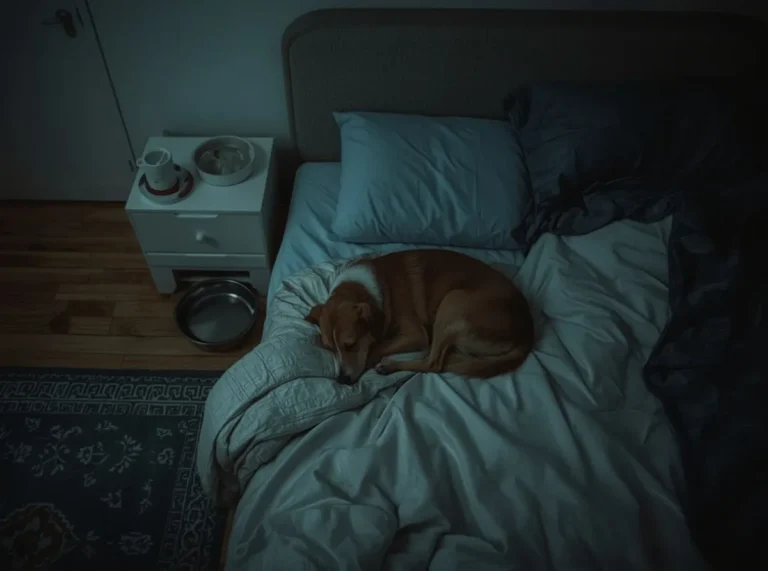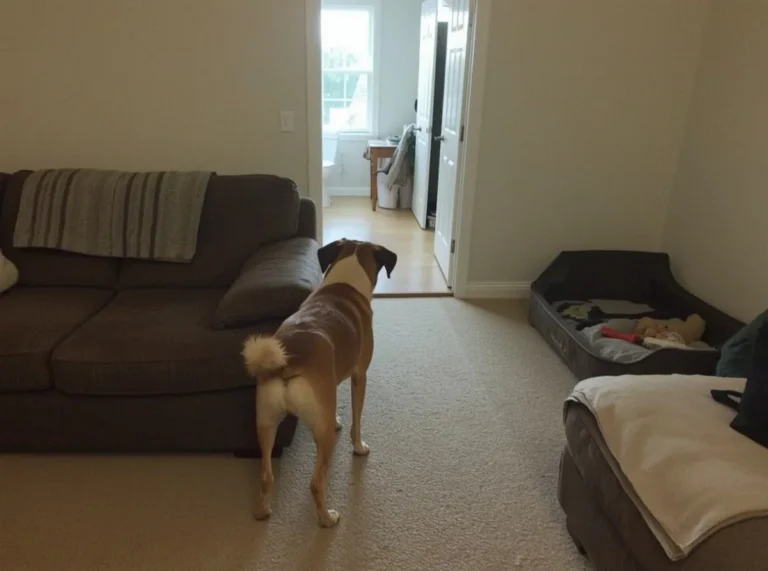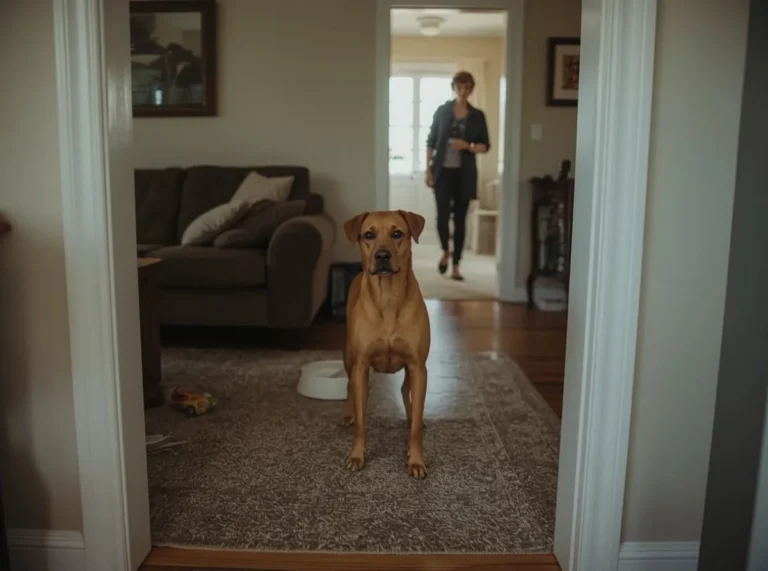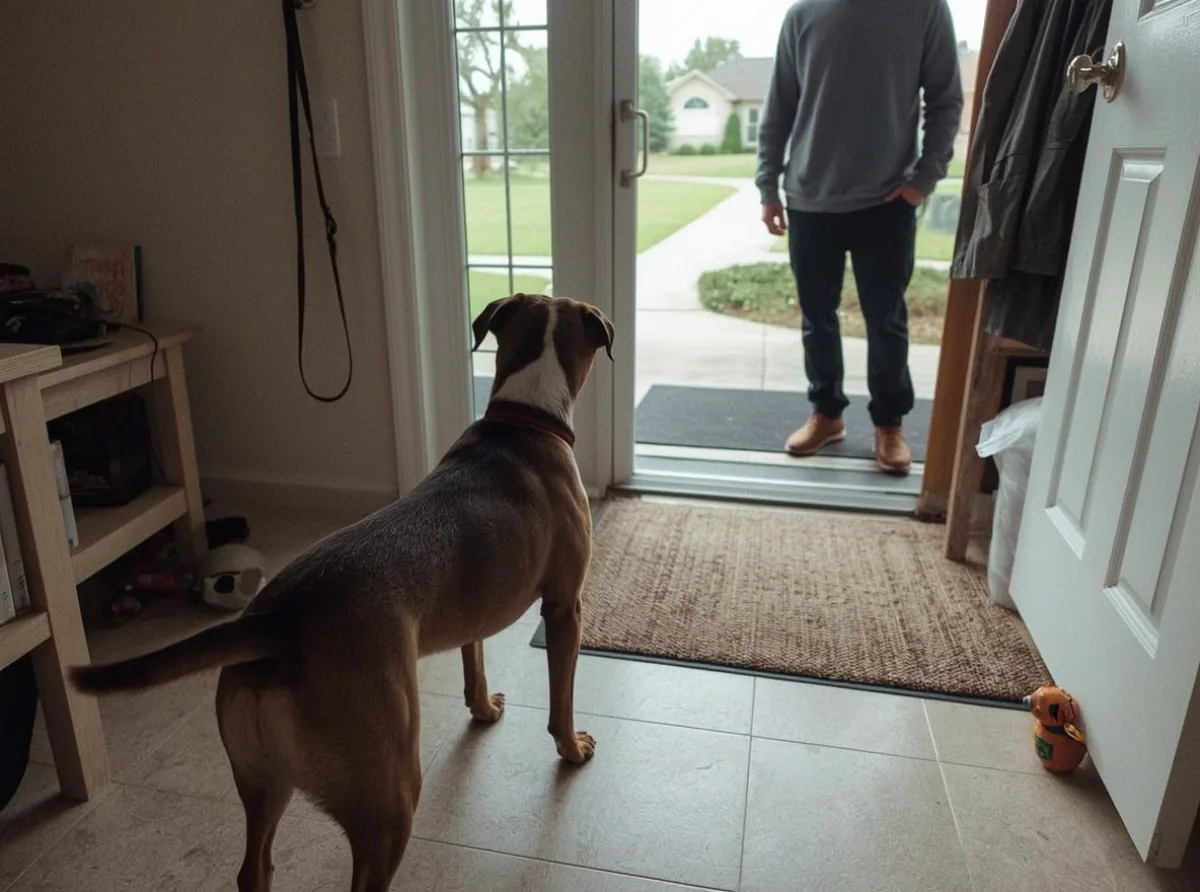
Some dogs greet a stranger with a wagging tail and an open mouth, while others freeze, hide, bark, or suddenly ignore the whole room. The shift can be subtle or dramatic. A dog that seems easygoing at home may become cautious at the front door, and a social dog can still act strangely when someone new walks in.
This change does not always mean fear, and it does not always mean friendliness either. Dogs read strangers through scent, movement, sound, posture, and past experience, often much faster than people realize. What looks like a simple personality quirk is often a layered response to uncertainty, excitement, habit, and protection of space.
In everyday life, dogs often behave differently around strangers because strangers change the rules of the environment. A familiar routine gets interrupted. The smell in the room shifts. Voices sound different. Even a dog that enjoys people may need a moment to decide whether a new person is safe, interesting, too intense, or not worth attention.
What this behavior often looks like in real life
Dog owners usually notice the difference in ordinary situations: a visitor at the door, a neighbor passing by the yard, a stranger crouching to say hello, or a delivery driver walking up the steps. The dog may bark once and then retreat, or stay close to the owner instead of moving forward. Some dogs become unusually silent and watchful. Others act overly friendly in a way that feels almost frantic.
The same dog can respond one way to a person who enters calmly and another way to someone who reaches out quickly. Timing matters. So does body language. A stranger who speaks softly and ignores the dog at first may get a very different reaction from one who leans over, stares, and extends a hand immediately.
These everyday reactions can be easy to misread. A dog who backs away may not be “bad with people.” A dog who jumps and spins may not be confident. Both responses can come from uncertainty, overstimulation, or a strong urge to investigate a new person without knowing how to do it safely.
Why strangers feel different to dogs
For a dog, a stranger is not just a new face. It is a bundle of unfamiliar information. The person brings a different scent, gait, voice, clothing texture, rhythm of movement, and emotional energy. Dogs notice these details quickly, and they often decide whether to approach, observe, or withdraw before a human even finishes saying hello.
One reason dogs act differently around strangers is that familiarity gives them predictability. With family members, the dog knows the patterns. Who opens the fridge. Who sits on the couch. Who sounds excited before a walk. A stranger does none of those things in a known way, and that uncertainty can create hesitation or alertness.
Many dogs also make instant judgments based on previous experiences. If a dog has been startled by a person wearing a hat, touched by someone without warning, or crowded by guests in the past, the next stranger may trigger a cautious response. The dog is not thinking in a human story-like way, but the body remembers patterns. That memory can shape future reactions very quickly.
A dog’s response to a stranger is often less about “liking” or “disliking” the person and more about deciding whether the situation feels predictable, safe, or overwhelming.
Emotional reasons behind the reaction
Fear is one possible reason, but it is only one piece of the picture. Some dogs act differently because they are unsure and need time. Others are excited and cannot regulate themselves well in new social situations. A few are naturally cautious and prefer to watch before they move. These reactions can look similar at first glance, yet the emotional tone behind them is not the same.
A fearful dog usually tries to increase distance. That may mean hiding behind legs, tucking the tail, avoiding eye contact, or barking from afar. The goal is not to meet the stranger. The goal is to feel safer. A dog that is excited but under control may pull forward, sniff repeatedly, and wiggle with loose muscles. The dog wants contact, but the feeling is urgent rather than calm.
Then there are dogs that seem indifferent at first and later become more engaged. This slow-burn response is common in dogs that need time to process. They may stand still, take in the person’s scent, watch facial movement, and only after a minute or two decide to approach. People sometimes mistake this for aloofness, but it can actually be a careful, thoughtful style of social behavior.
Common emotional patterns
- Caution: the dog watches, hesitates, or keeps distance.
- Excitement: the dog rushes in, jumps, or becomes highly vocal.
- Defensiveness: the dog barks, stiffens, or tries to block access.
- Curiosity: the dog approaches in short steps and then pauses.
- Overwhelm: the dog freezes, pants, or loses the ability to settle.
These patterns can overlap. A dog may bark first and then sniff. Another may act playful after a brief period of tension. Behavior around strangers is often mixed, not neatly one thing or another.
Body language that often appears with stranger-related behavior
When dogs react differently around strangers, the real story is usually in the body. Tail movement alone does not tell enough. A wagging tail can happen with tension, excitement, uncertainty, or friendly interest. Looking at the whole body gives a clearer picture.
A dog that feels uneasy may hold the body stiffly, keep weight shifted backward, pin the ears, or flick the eyes toward the stranger and away again. The mouth may close suddenly. Breathing may become shallow. The dog may appear still rather than relaxed. Stillness is not always calm; sometimes it is a pause before deciding what to do next.
Dogs that are eager but unsteady often move in bursts. They rush in, stop, circle, retreat, and rush in again. Their movements can seem chaotic. This is common in social dogs that lack practice settling around new people. They want interaction but do not yet know how to manage it smoothly.
Loose muscles, soft eyes, and curved movement usually suggest comfort. A rigid body, fixed stare, and backward weight shift often suggest uncertainty or caution.
Signals people often overlook
- Yawning when no sleep is involved
- Lip licking during a greeting
- One paw lifted off the ground
- Turning the head away while keeping the body still
- Sniffing the floor instead of the person
- Sudden interest in a toy, doorway, or owner’s feet
These signals can be easy to miss because they are quiet. But they often show that the dog is processing stress or trying to create distance in a subtle way.
How the environment shapes the response
The same dog may behave very differently depending on where the stranger appears. A visitor in the living room may be fine. A stranger at the gate may be a problem. A person passing on a narrow sidewalk may trigger a reaction that never happens in a wide park. Space matters because dogs feel safer when they can control distance.
Noise and movement also change the response. A busy home with slammed doors, children running, and constant conversation can make some dogs more reactive around strangers simply because the whole scene is already charged. The dog has less mental room left to process a new person. In a quiet room, the same dog might handle the interaction with ease.
Routine has a strong influence too. Dogs that know what comes next often handle surprises better. If guests always arrive with chaos, bending over, and loud voices, the dog may link strangers with that kind of pressure. If new people are introduced calmly and without crowding, the dog is more likely to remain steady.
Environmental factors that often matter
- How close the stranger gets at first
- Whether the dog has a safe exit or hiding place
- How many people are present at once
- Whether the stranger is loud, fast, or still
- How much background activity is already happening
A calm environment does not guarantee a calm response, but it often makes the dog’s reaction more readable. A stressed environment can turn a small hesitation into barking or retreat.
How routine and repeated exposure change the pattern
Dogs learn through repetition, and stranger behavior often changes with experience. A puppy who only sees family members during the first months of life may become more cautious later when new people appear. A dog who regularly meets visitors, walkers, neighbors, and vet staff may stay more neutral because strangers are not unusual.
Even so, repeated exposure is not simply about quantity. Quality matters. Ten rushed encounters can create more tension than two calm ones. A dog that is forced to tolerate petting from multiple people may start using avoidance or barking as a way to protect personal space. On the other hand, a dog given time and choice often becomes more flexible.
That is why some dogs seem to “outgrow” stranger worry while others become more selective with age. Life experience changes what the dog expects. If new people usually predict something unpleasant, the dog’s response can harden. If new people often predict treats, quiet voices, and nothing intrusive, the dog may loosen up.
Different dogs, different social styles
Not every unusual reaction around strangers points to anxiety. Some dogs are simply more reserved. Others are deeply social but only with certain kinds of people. Breed tendencies, early social experiences, and individual temperament all play a role. A dog may adore one visitor and ignore another for no obvious reason beyond scent and energy.
There are also dogs that are protective by nature. They may position themselves near the front door, watch guests closely, and become more alert when someone enters the home. That does not automatically mean aggression. It may reflect a strong territorial or watchful instinct, especially if the dog feels responsible for the household space.
At the same time, a very friendly dog can still act oddly around strangers because friendliness does not always equal calmness. Some dogs are so eager to connect that they lose self-control. They may leap, mouth, whine, or whirl in circles. The behavior looks sociable, but underneath it may be poor impulse control, insecurity, or both.
How behavior may differ by personality
- Reserved dogs tend to observe before engaging.
- Outgoing dogs may approach quickly and too intensely.
- Guarding dogs often monitor the environment first.
- Sensitive dogs may react strongly to tone and movement.
- Independent dogs may simply choose not to interact.
These styles can remain fairly stable, but they still change with context. A dog that ignores strangers at home may be perfectly curious on a leash. Another that is confident in the yard may be uneasy indoors.
What the behavior may signal about the dog’s state of mind
When a dog acts differently around strangers, the behavior often reflects a mix of emotional state and immediate context. The dog may be saying, in effect, that the situation feels new, too fast, too close, or interesting but not yet safe. The response is not a moral judgment and not a sign of disrespect. It is communication.
Some dogs need more time to build trust. Others need more space. Some need less intense greetings. A few need a predictable routine before they can manage surprise visits without reacting. Paying attention to the pattern matters more than focusing on one dramatic moment.
It also helps to notice whether the dog recovers quickly. A dog that barks once, then relaxes and sniffs the room, is showing a different level of concern than a dog that remains stiff and avoids the stranger for the entire visit. Recovery time gives useful clues. So does whether the dog can take food, follow a familiar cue, or settle near the owner after the initial greeting.
Fast recovery usually suggests the dog was startled or uncertain. Slow or incomplete recovery can point to a stronger emotional load or a situation that feels persistently uncomfortable.
How people often misunderstand the reaction
Owners sometimes assume a dog that avoids strangers is being rude, stubborn, or poorly trained. Others assume a jumping dog is happy and therefore nothing needs attention. Both ideas miss part of the picture. Behavior around strangers is often about emotional management, not manners.
A dog who barks from behind the couch may be trying to create distance. A dog who presses into every visitor may be asking for help slowing down. A dog who seems “fine” but keeps a rigid posture may be suppressing discomfort rather than enjoying the interaction. The surface action alone does not always show the full state of mind.
This is why the most useful question is often not, “Is the dog friendly?” but rather, “What does the dog need in this moment?” That can mean distance, a slower introduction, a chance to sniff from afar, or simply the ability to walk away. Once the dog is given room to respond naturally, the stranger often becomes less of a problem.
Why the reaction can stay consistent for years
Some dogs change a lot with age, and some do not. A puppy may become more confident with the right exposure, while an adult rescue dog may always prefer careful introductions. Long-term consistency often reflects a combination of temperament and learning history. If the dog has repeatedly practiced the same response, the pattern can become very solid.
That said, consistent does not mean fixed forever. Dogs often become more selective as they mature. A young dog may accept everyone, then start showing caution after a few uncomfortable experiences. Another dog may soften over time if life becomes quieter and interactions become easier to predict. The pattern is often shaped by the dog’s daily world more than by a single defining event.
Watching the dog across different settings can reveal this. Some dogs are most reactive at home, where they feel responsible for the space. Others are more reserved in public because the outside world gives them too much input. Some dogs only struggle when the stranger comes too close too quickly. The details matter, and they change the meaning of the behavior.
What tends to matter most in everyday handling
Slow introductions usually help more than forced greetings. A dog that can observe first, sniff later, and choose whether to approach often settles better than a dog that is immediately surrounded or petted. Consistency also helps. If visitors behave one way one day and a completely different way the next, the dog has a harder time predicting what strangers mean.
Owners often get the best picture by watching patterns instead of isolated events. Does the dog act differently around men, women, children, hats, canes, loud voices, or quick movement? Does the reaction happen only inside the home, or also outside? Does the dog relax after a few minutes, or stay on edge the whole time? Those answers are usually more informative than the simple fact that the dog “acts weird” around strangers.
Over time, the dog’s behavior becomes easier to understand when the setting, the stranger’s approach, and the dog’s own comfort level are all considered together. A dog is rarely responding to one thing alone. The stranger is part of a bigger picture made of space, memory, expectation, and the dog’s need to feel secure before engaging.
That is why two dogs in the same house can react in opposite ways to the same visitor, and why one dog may seem loving in the morning and defensive at night. The context changes. The dog changes too. Stranger behavior is often the place where all of those small differences become visible at once.
When a dog chooses distance, the message may be simple: not yet. When the dog leans forward with loose movement, the message may be equally clear: I can check this out now. The difference between the two is often found in the first few seconds, before anyone says a word.