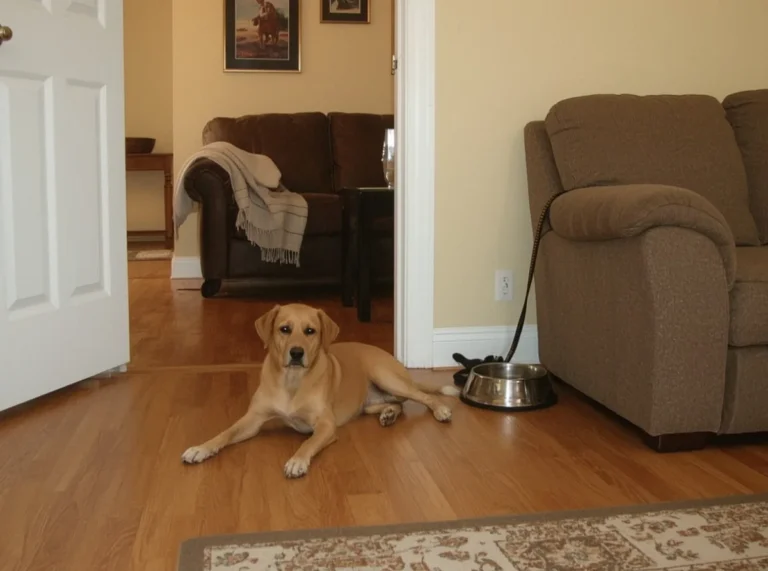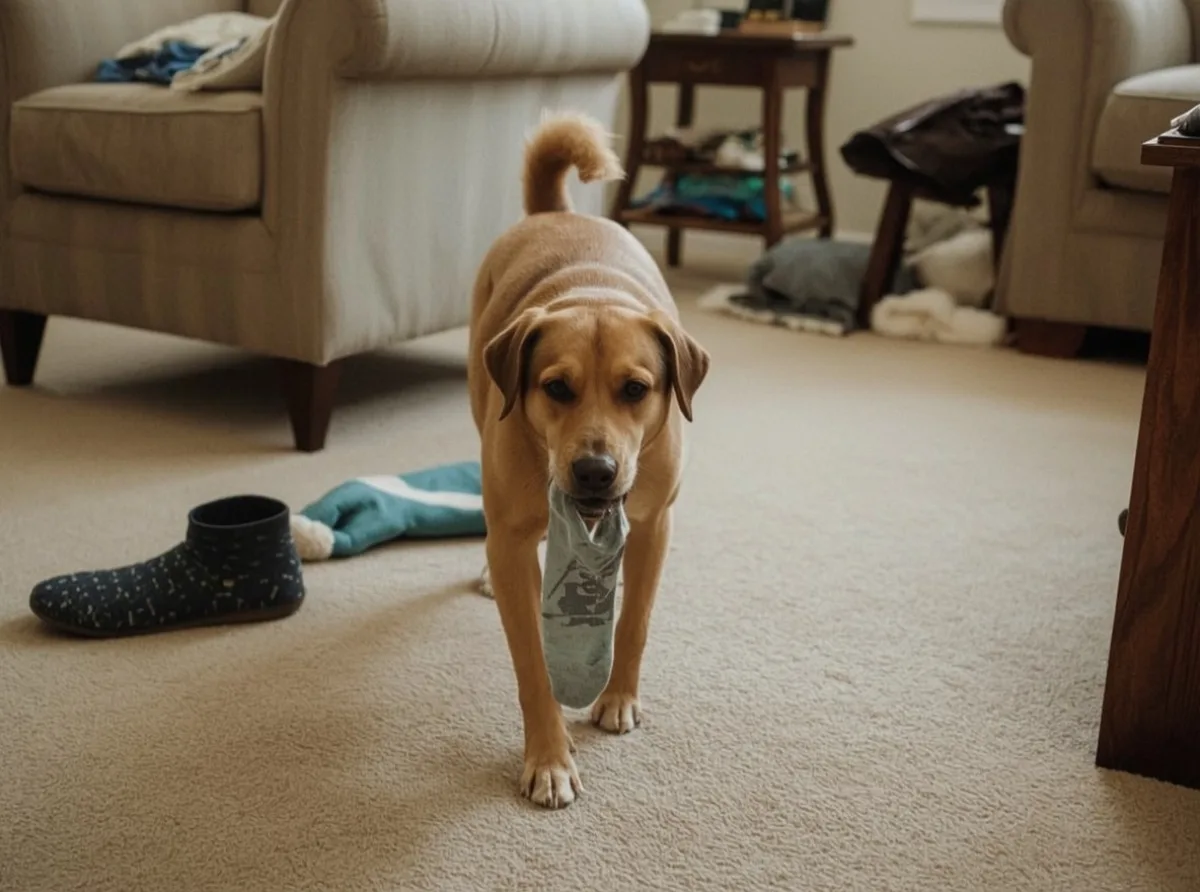
A dog walking up with a sock, a toy, a shoe, or even a random stick can feel oddly specific. Sometimes it looks charming and playful. Other times it seems deliberate, almost like the dog is trying to say something without words.
That little delivery can mean several different things depending on the object, the dog’s body language, and what usually happens next. Some dogs bring things to start play. Some want attention. Others are seeking comfort, checking in with their person, or simply following a habit that has become part of daily life.
What matters most is not the object itself. It is the context around it. The same tennis ball carried proudly across the room may mean something very different from a damp sock dropped at your feet after a noisy afternoon.
What this behavior looks like in everyday life
Dogs rarely bring random objects in a perfectly clear, one-size-fits-all way. The behavior can look gentle and relaxed, or rushed and intense. A dog might pick up an item and trot over with a loose tail and soft eyes. Another dog may grab something quickly, almost as if they were waiting for the right moment.
Some dogs place the object directly into your hand. Others drop it near your feet and step back, waiting for you to respond. A few dogs parade around the room with the item in their mouth, hoping someone notices. These details matter because they help reveal why the dog chose that object and what they want from the interaction.
Common everyday examples include:
- bringing a toy to start a game of fetch
- carrying a shoe or clothing item when bored
- picking up an object that smells strongly of the owner
- delivering something after a period of separation
- bringing an item during moments of excitement or household activity
Sometimes the behavior is less about the object and more about the routine. If a dog learns that bringing something leads to laughter, eye contact, or a game, the habit can become very strong. Dogs are excellent at noticing patterns, even small ones that people do not realize they are creating.
When a dog brings you a random object, the item is often a message carrier, not the message itself. The surrounding behavior usually tells the real story.
Possible emotional reasons behind the behavior
Many dogs bring objects because they want connection. Dogs are social animals, and in a household environment, that connection often takes familiar forms. A toy, towel, or slipper can become a bridge between the dog and the person they are trying to engage.
Attention seeking
Attention is one of the most common reasons behind the behavior. A dog may have learned that holding something in their mouth gets a response faster than standing quietly nearby. Even a simple “what do you have?” can reinforce the habit.
This does not automatically mean the dog is demanding or pushy. It usually means they have found a reliable way to begin interaction. In a busy home, that can be the easiest path to being noticed.
Play invitation
Some dogs bring objects as a clear invitation to play. This often comes with an upright posture, quick movement, bouncy steps, and alert expression. The object itself may not be important. What matters is the game that could follow.
In these moments, the dog is not necessarily seeking an exact toy. They may simply want a shared activity. Fetch, tug, or a short chase around the room can all be part of the same social pattern.
Comfort and self-soothing
In calmer cases, a dog may carry an object because it feels reassuring. Soft items with a familiar scent are especially common. The item can help the dog settle, especially in homes with changing noise levels, visitors, or shifting routines.
This is often seen in dogs who like to lie down with a toy in their mouth or carry something from one room to another and then rest. The behavior may have a soothing quality rather than an active one.
Attachment and social bonding
Some dogs seem to use object delivery as part of their relationship with a specific person. They may bring items to the person they trust most, or the person they expect will respond in a predictable way. This can be a subtle sign of attachment.
It may also reflect the dog’s preference for shared routines. If the dog offers an object every time you sit on the couch or come home from work, the action can become part of how they reconnect with you.
A dog that brings you objects repeatedly is often not being random at all. The dog may be choosing the object because it creates a social result.
How the dog’s environment shapes the behavior
The home environment has a strong influence on this habit. Dogs living in quiet, predictable homes may bring objects in a calm, steady way. Dogs in active households may do it more often, because there are more exciting moments to react to and more chances to spark engagement.
Routine plays a major role as well. A dog may bring a toy every morning when the household wakes up, or every evening when the family settles down. If the behavior happens at a consistent time, it often reflects expectation rather than randomness.
Boredom and lack of stimulation
Dogs that are under-stimulated may turn to object carrying as a self-directed activity. They may fetch items from around the house simply because they need something to do. In these cases, the object itself may change, but the pattern stays the same.
That does not always mean the dog is anxious. Sometimes it means the day has been too quiet. A dog with excess energy may invent a job for themselves, and carrying random objects can become part of that job.
Household noise and activity
Busy homes can bring out the behavior in different ways. A dog may carry a toy when guests arrive, when children are moving around, or when sounds become more intense. The object gives the dog something familiar to hold onto while navigating the excitement.
In some dogs, this looks like confidence. In others, it can be a mild coping strategy. The difference is usually visible in body language: loose and eager versus tense and uncertain.
Access to interesting objects
If a dog has easy access to household items, they may choose things that belong to the family instead of their own toys. Shoes, gloves, laundry, and remote controls can all become appealing simply because they are available and smell important.
The dog is not always trying to be mischievous. Often the item has texture, odor, or novelty that makes it interesting. Dogs explore the world with their mouths, so a random object can feel more valuable than a clean toy.
What the behavior may signal about the dog’s emotional state
Object carrying can mean a dog is excited, relaxed, uncertain, or seeking reassurance. The same outward action can reflect very different internal states. That is why it helps to look beyond the object and notice how the dog behaves while bringing it.
Relaxed and social
A relaxed dog often walks with a loose body, soft mouth, and steady tail movement. They may approach casually and drop the object without tension. In this case, the behavior may simply be part of their social routine.
These dogs often seem comfortable in their environment. They are not urgently trying to solve a problem. They are just initiating contact in a way that makes sense to them.
Excited and playful
An excited dog may move faster, bounce more, and seem very intent on getting a response. Their eyes may be bright, and the object may be held proudly. This usually points to high social energy rather than stress.
These dogs often want interaction now. They are not being subtle. The object is a direct request for participation.
Uncertain or mildly stressed
Some dogs bring objects when they feel unsure. They may hold the item tightly, move more carefully, or pause before approaching. The object can act like a comfort item or a familiar anchor in a situation that feels a little overwhelming.
Look for signs like crouching, avoidance of direct eye contact, pinned ears, or stiff movement. Those details suggest the behavior may not be purely playful. The dog may be trying to regulate their own emotional state.
Seeking reassurance after change
Dogs may also bring random objects after a change in the household. A new schedule, a visitor, a storm, a move, or a day with less interaction than usual can all affect behavior. The object then becomes a way to reconnect or settle.
In these moments, the behavior can be small but meaningful. The dog is often trying to reestablish a predictable social link. That link may feel safer than simply waiting in place.
Body language tells you whether the object is part of play, comfort, or uncertainty. The mouth may carry the item, but the posture explains the reason.
Subtle signals that often accompany the behavior
To understand why a dog brings random objects, it helps to watch the whole picture. Dogs communicate through posture, movement, and timing just as much as through the object itself.
Signs of a playful invitation
- loose, springy movement
- tail carried naturally or wagging in wider motions
- open, relaxed mouth
- quick glances toward the person
- play bow or bouncing at the knees
These signals often mean the dog wants engagement rather than comfort. The object is simply the opening move.
Signs of a calmer, bonding behavior
- slow approach
- soft eyes
- gentle tail position
- dropping the object and settling nearby
- minimal vocalizing
This version of the behavior often appears during quiet parts of the day. The dog may not want a full game. They may just want to be close and present.
Signs of tension or mixed emotion
- stiff body carriage
- tight grip on the object
- hesitation before approaching
- watching the person carefully
- rapid movement followed by freezing
When these signals appear, the behavior deserves a closer look. The dog may still be trying to connect, but the emotional tone is different. The object might be a coping tool as much as a social gesture.
How owners often misunderstand the behavior
It is easy to assume every object delivery is an invitation to play. That is sometimes true, but not always. Some dogs are asking for attention, not necessarily fetch. Others are trying to show they are uneasy, and the object is part of how they manage that feeling.
Another common misunderstanding is assuming the dog is being naughty when they bring household items. A shoe or sock is not always a “bad choice” in the dog’s mind. It may be the nearest available object with the strongest scent or most interesting texture.
People also sometimes miss how often they reward the behavior without noticing. Laughing, talking, chasing the dog, or immediately taking the item away can all make the habit more likely to continue. Even negative attention can be reinforcing if the dog wanted engagement more than the object.
What the dog may actually be learning
If a dog brings an object and something interesting happens every time, the dog learns a pattern. The result may be a game, a conversation, or a burst of attention. Over time, the object delivery becomes a dependable way to create that result again.
That learning process can be harmless, useful, or mildly frustrating depending on the object involved. But it is usually logical from the dog’s point of view.
When the behavior becomes more noticeable
Some dogs bring random objects more often at certain moments. Those moments can reveal a lot about the dog’s needs and habits.
After being left alone
Dogs that have been alone for part of the day may greet their person with a toy, blanket, or household item. The object can be part of the reunion. It may help the dog transition from waiting to interacting.
Some dogs do this immediately. Others need a few minutes first, then bring something once they have settled back in.
During high-energy times
Morning bursts, evening play periods, and times when the household becomes lively often bring out object carrying. The dog may be ready for motion and interaction. The object is the easiest way to start.
These moments are usually easy to recognize because the behavior feels lively rather than secretive. The dog is broadcasting intent.
When routine changes
Dogs can become more object-focused when the day does not unfold the way they expect. A skipped walk, a delayed meal, visitors, or a different work schedule can all alter behavior. Bringing an object may help the dog regain a sense of normalcy.
In a stable routine, the behavior may stay mild. When the routine shifts, it can become more frequent or more intense.
How to read the difference between random and meaningful objects
Not every object is truly random. Dogs often choose items based on scent, texture, shape, and memory. A dog may repeatedly bring the same blanket, soft toy, or household item because it carries comfort or significance.
There is also a difference between carrying and offering. A dog that picks up an object and wanders around may be entertaining themselves. A dog that walks directly to you and drops it in front of you is usually trying to engage more intentionally.
| Behavior | Likely meaning |
|---|---|
| Brings a toy and waits | Likely wants play or attention |
| Carries a soft item and settles | May be self-soothing or comfort seeking |
| Grabs household objects during busy times | Could be excitement, boredom, or learned habit |
| Approaches stiffly with an item | May be uncertain or mildly stressed |
This kind of pattern recognition becomes easier over time. The more you notice what happens before and after the object delivery, the clearer the behavior becomes.
Long-term consistency and what it tends to mean
Some dogs only bring random objects during certain life stages or situations. Puppies may do it while exploring and teething. Young adult dogs may do it out of energy and playfulness. Older dogs may settle into the habit because it has become part of how they initiate contact.
If the behavior stays consistent across time, it often points to a stable trait such as sociability, curiosity, or a strong preference for routine interaction. If it changes suddenly, the reason may be tied to the environment, stress level, or physical comfort.
That is why it helps to notice patterns instead of isolated moments. One sock carried across the kitchen means less than a month of repeated object-giving after the same daily event.
Consistency usually matters more than the object itself. Repeated behavior across different days gives the clearest clue about what the dog is communicating.
What this behavior says about the dog–human relationship
When a dog brings you random objects, the action often reflects an active relationship. The dog is not just wandering with something in their mouth. They are initiating a social exchange.
That exchange may be playful, affectionate, practical, or emotionally driven. The important part is that the dog has learned to turn to a person with a purpose. The object becomes a kind of social tool, and the person becomes part of the behavior itself.
In many homes, this becomes one of the small daily rituals that shape life with a dog. A toy appears beside the couch. A shoe is dropped near the door. A familiar towel is carried from room to room. Each moment is small, but together they reveal how the dog experiences the household.
What looks random from the outside is often full of structure from the dog’s point of view. The object, the timing, and the reaction it gets all fit into a pattern the dog understands very well.