Some dogs seem steady and relaxed when they are with their owner, but tense, restless, or overly alert the moment that person is out of sight. Then, as soon as the owner returns, the same dog softens. The shoulders drop. The breathing changes. The whole body looks easier to live in.
This shift can be subtle or obvious. A dog may pace around the house for everyone else, yet curl up quietly next to one particular person. Another may bark at noises, react to visitors, or scan the environment constantly, then become noticeably calmer beside its owner. That contrast is not random. It usually reflects a mix of attachment, learned safety, routine, and the dog’s own sensitivity to the world.
For many dogs, calmness is not a permanent trait. It is something they offer in the places and relationships that feel most predictable. The owner becomes part of that predictability. The dog recognizes a familiar scent, voice, movement pattern, and response style. In that setting, the nervous system can settle more easily.
What Calmness Near an Owner Often Looks Like
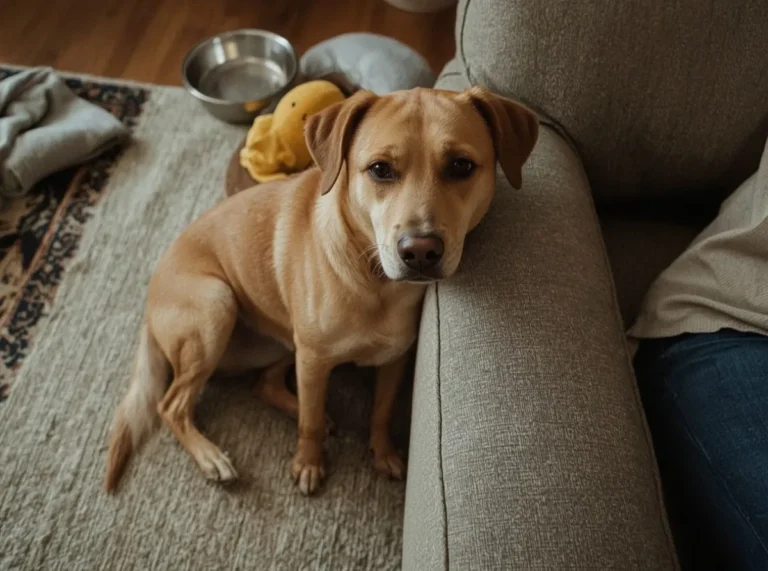
Dogs rarely communicate their comfort with one dramatic signal. It usually shows up in small changes. A dog that is keyed up in the rest of the house may become still near its owner. A restless dog may stop checking the room and start resting its chin on a foot or leg. A dog that barks at passing sounds may keep quiet when sitting close to the person it trusts most.
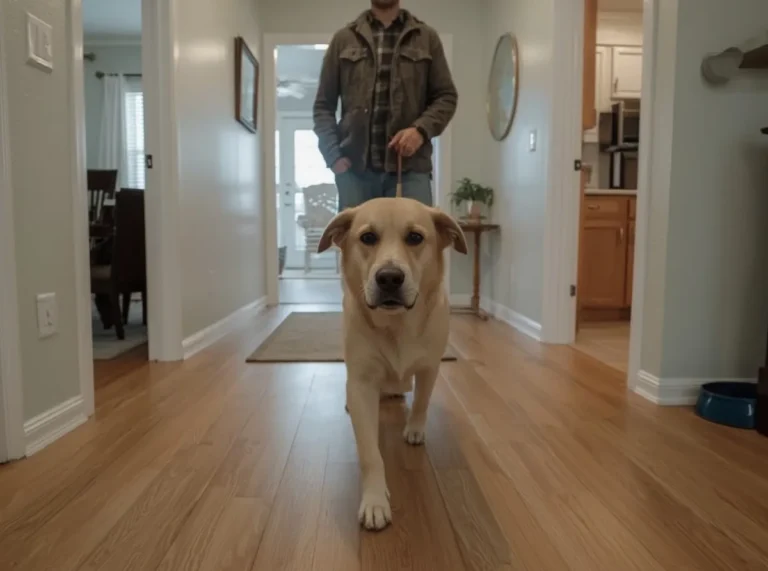
In daily life, this can look like a dog following one owner from room to room, then lying down once it reaches them. It may also show up during walks, car rides, or visits to new places. The dog might remain suspicious or distracted until its owner crouches down, speaks in a familiar tone, or simply stands nearby.
What matters is the pattern. The dog is not just being obedient. It appears more regulated near one person than it is anywhere else. That difference often reveals emotional safety, not just preference.
Common everyday signs
- Slower movement and fewer sudden turns
- Looser body posture
- Less scanning of the environment
- Reduced barking or whining
- More resting, leaning, or lying close by
- Better tolerance for new sounds or activity
When a dog only seems calm near its owner, the calmness is often a sign of trust, familiar routine, and lowered stress rather than simple laziness or “clinginess.”
Why One Person Can Feel Safer Than the Rest of the World
Dogs are social animals, but they do not bond evenly with everyone around them. They build specific attachments. In many homes, one person becomes the dog’s main source of comfort because that person is most closely connected to daily care, feeding, walking, play, or quiet companionship. Even small habits can matter. The owner who always speaks softly before petting, who keeps a steady routine, or who responds predictably to the dog’s signals may become the one the dog trusts most.
Safety is not only about affection. It is also about pattern recognition. Dogs pay close attention to what happens before and after things they care about. If one owner consistently makes life feel more predictable, the dog will often settle faster around them. That can happen in homes where there is a lot of noise, children moving quickly, guests coming and going, or mixed handling styles among family members.
Some dogs are naturally more alert, more socially cautious, or more sensitive to environmental change. Those dogs often need a stable anchor. The owner becomes that anchor. Near the owner, the dog can stop monitoring everything and simply exist.
Factors that strengthen the bond
- Feeding and daily care handled by one person
- Calm, consistent responses from the owner
- Shared routines at the same times each day
- Comforting touch the dog enjoys and understands
- Positive experiences during stress, noise, or transitions
Emotional Reasons Behind the Behavior
Calmness near an owner can come from attachment, but attachment itself has several layers. One layer is reassurance. The dog has learned that this person will usually respond in a way that makes sense. Another layer is co-regulation. Many dogs borrow calm from the people they trust. They watch posture, tone, and movement closely. A steady owner can help a dog’s emotional state settle without doing anything dramatic.
There is also the matter of uncertainty. A dog may not fully understand what is happening in the larger environment, especially in a busy household or unfamiliar place. The owner reduces that uncertainty. Near that person, the dog may anticipate fewer surprises and less conflict.
Fear-based dogs often look most relaxed around the one person who never pushes them too hard. Nervous dogs may choose an owner because that person respects space, avoids sudden grabbing, and does not force interaction. Over time, that gentler relationship can become the place where the dog finally exhales.
A dog that settles only near its owner is often telling you that the owner feels safe enough to lower vigilance, not that the dog has no feelings anywhere else.
How the Home Environment Shapes This Pattern
The same dog can behave very differently depending on the environment. In a quiet home with routine and few interruptions, a dog may spread its calm across the whole day. In a louder or more chaotic home, calmness may get attached to one person because that is the only part of the environment the dog can reliably predict. The owner becomes a moving pocket of stability inside a busier setting.
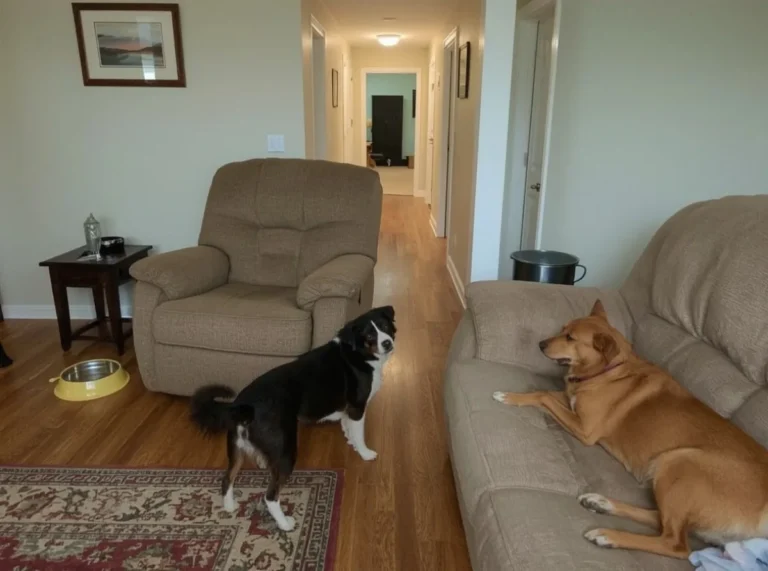
Noise matters. So does activity level. Dogs living with frequent visitors, children, multiple pets, or irregular schedules often have less opportunity to relax fully. If the owner is the only consistent feature in that changing environment, the dog will naturally seek them out when it needs relief.
Physical space matters too. Some dogs settle better in one room than another. But even when the environment is the same, the owner’s presence can change how that environment feels. A dog that ignores a couch alone may curl up on it if the owner sits nearby. The room did not change. The social context did.
Environmental influences that can make calmness owner-specific
- Busy households with constant movement
- Inconsistent schedules for meals, walks, and sleep
- Frequent loud sounds or sudden interruptions
- Limited quiet space for the dog to rest
- Different handling styles among family members
How Routine and Predictability Teach a Dog to Relax
Routine is powerful because it helps dogs forecast what comes next. A dog that knows when morning walks happen, when meals arrive, and how an owner usually behaves before leaving or returning can spend less energy staying on guard. That predictability often becomes linked to the owner specifically, not just the schedule.
If one person handles the calm, ordinary parts of life consistently, the dog learns that person is the center of stability. The dog may not be seeking constant affection. It may simply be seeking the person who makes the day easier to understand.
That is why the calmness can become more obvious at certain times. Some dogs are most relaxed with their owner after exercise, after a meal, or during the quiet stretch before bedtime. Others calm down once the owner has returned from being away. The owner is not magical. The owner is familiar, and familiarity helps regulate the dog’s state.
Daily patterns that often reinforce the behavior
- Regular wake-up and bedtime routines
- Predictable walks and potty breaks
- Consistent feeding times
- Quiet time together after activity
- Low-pressure interactions that do not overwhelm the dog
What the Behavior May Signal About the Dog’s Inner State
A dog that is calm only near its owner is usually communicating something about comfort, but the exact meaning depends on the rest of the picture. In some dogs, it reflects secure attachment. In others, it reflects anxiety outside that attachment. The behavior itself is neutral until you look at what the dog does everywhere else.
If the dog is calm near the owner and generally able to explore, eat, sleep, and interact normally at other times, the pattern may simply show a preferred bond. If the dog seems tense, startled, or unable to settle without the owner, the pattern may point to stronger dependence on that person for emotional regulation.
That difference matters. A dog that rests near an owner but still handles brief separations well is using the relationship as support. A dog that cannot relax at all without that person may be relying on them to manage stress that comes from elsewhere in the environment or from the dog’s own temperament.
Possible emotional meanings
- Strong attachment to one familiar person
- Reduced uncertainty near a trusted caregiver
- General anxiety in busy or unfamiliar settings
- History of needing extra reassurance
- Sensitivity to sound, movement, or handling
Subtle Body Language That Often Accompanies the Calm
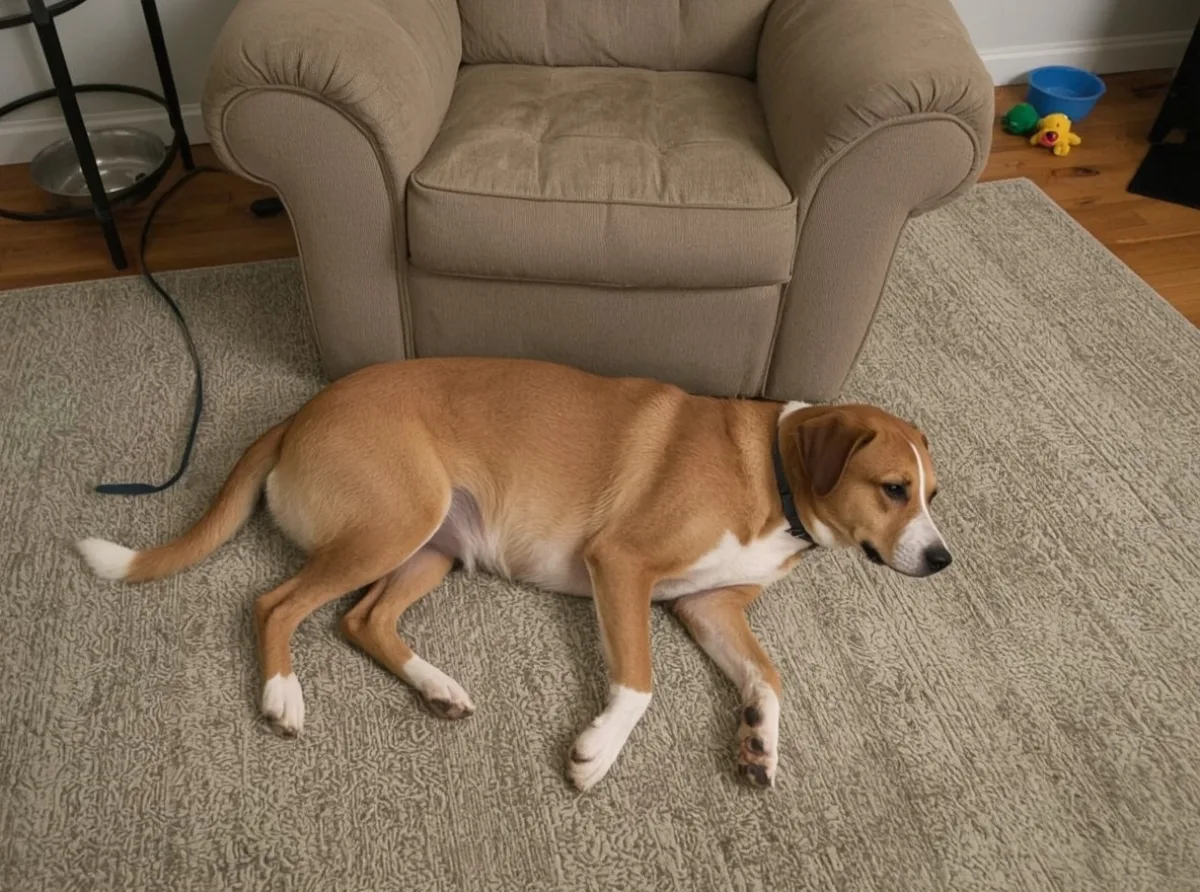
Dogs do not usually announce relaxation with one clear signal. It is a cluster of small changes. Near the owner, the eyes may soften. The mouth may open slightly. The body may sink lower into the floor or couch. Breathing often becomes slower and less obvious. Some dogs stretch out fully instead of staying ready to jump up at any moment.
These details matter because a dog can look calm on the surface while still holding tension. True ease usually appears in the whole body, not just the face. A dog that lies next to the owner but keeps its muscles rigid, ears pinned forward, and head constantly rotating may be using the owner as a shield rather than truly relaxing.
Watch for the difference between settling and freezing. Settling looks soft and functional. Freezing looks controlled and watchful. The distinction can be subtle, but it changes how the behavior should be understood.
Signals of genuine relaxation
- Even breathing
- Side-lying or loose resting posture
- Minimal startle response
- Open, soft mouth
- Slow blinking or unfocused gaze
- Natural shifting between rest and brief movement
Why Owners Sometimes Misread the Behavior
People often assume a dog that calms down only near them is simply being affectionate or needy. That can be true, but it is only part of the story. Some dogs seek the owner because they enjoy closeness. Others do it because the rest of the world feels harder to manage. The same behavior can come from very different emotions.
Owners also sometimes mistake dependency for preference. A dog may cling because it has learned that staying close prevents stress, not because it is naturally content with constant contact. In those cases, calmness near the owner is real, but it is fragile. It may vanish when the owner leaves the room or when the dog encounters something unfamiliar.
Another common misunderstanding is assuming the dog is “fine” as long as it looks quiet. Quiet does not always equal relaxed. A dog can be silent and still highly alert. It can lie still and still feel on guard. What matters is how easily the dog can shift between rest and movement, and whether that rest looks physically and emotionally loose.
Not every calm dog is confident, and not every attached dog is anxious. The context around the behavior tells the fuller story.
Situations Where the Pattern Often Becomes Stronger
This behavior often becomes more noticeable during transition. New homes, boarding, travel, vet visits, thunderstorms, construction noise, holidays, and schedule changes can all make a dog lean harder on its owner for comfort. In those moments, the owner may become the one stable point the dog can recognize.
It also shows up in homes with multiple caretakers. A dog may be pleasant with everyone, but only truly soften around one person. That person may be the one who offers the most consistent emotional tone, or the one the dog associates with the least pressure.
Sometimes the pattern appears after a stressful experience. A dog that once seemed comfortable with several people may narrow its circle after a move, illness, conflict, or long period of unpredictability. The owner’s presence can become more important when the dog has learned that fewer things in the world feel easy to trust.
Common situations that intensify the behavior
- Moving to a new home
- Recovering from illness or injury
- Storms, fireworks, or loud weather
- Holiday visitors and disrupted routines
- Travel or long car rides
- Veterinary environments
Different Dogs, Different Attachment Styles
Not every dog forms this pattern in the same way. A confident, social dog may simply prefer one owner’s company without becoming distressed elsewhere. A shy dog may rely heavily on one person to feel grounded. A highly sensitive dog may need more time and repetition before it can relax broadly across the home.
Breed tendencies can play a role, but they do not decide everything. Early life experiences, handling, and household rhythm matter just as much. A dog that grew up with stable, gentle routines may spread its calm more easily. A dog with limited early security may choose one person as its emotional base and stay there for a long time.
Age matters too. Puppies often attach quickly and can appear calm only near the person who handles most of their care. Adult dogs may show a more settled version of the same pattern. Older dogs sometimes become more selective and more attached to predictable people as the world feels less manageable. The behavior can shift, but the underlying need for safety usually stays recognizable.
What Long-Term Consistency Usually Means
If a dog has always calmed most easily near its owner, the pattern may be part of its normal emotional makeup. Some dogs simply build their strongest state of ease around one person and keep that preference for years. If the pattern changed over time, it may reflect something in the dog’s life that changed too.
Long-term consistency tells you something useful. A dog that only ever relaxes with one owner is likely showing a stable attachment pattern, not a temporary mood. A dog that started doing this after a stressful event may be signaling that the owner became its safest anchor during a difficult stretch. Those are different histories, even if the visible behavior looks similar.
That is why observation over time matters. One calm afternoon does not tell the whole story. Repeated patterns across meals, walks, visitors, bedtime, and transitions reveal whether the dog is simply choosing closeness or actually depending on proximity to regulate stress.
| Behavior pattern | Possible meaning |
|---|---|
| Calm near owner, normal elsewhere | Strong preference and secure attachment |
| Calm only near owner, tense in most other settings | Reliance on owner for stress relief |
| Calm only after routine is predictable | Need for structure more than constant contact |
| Calm near owner but still rigid | Partial comfort, lingering vigilance |
When Calm Near the Owner Becomes a Daily Habit
Over time, many dogs learn to seek out the owner as their default resting place. This can look sweet and ordinary. The dog lies nearby during work calls, naps at the owner’s feet, or quietly follows from room to room before settling. In a stable home, that habit may reflect comfort more than concern.
But the habit also tells you something practical: the dog has chosen a coping strategy. Instead of managing uncertainty alone, it reduces strain by staying close to the person it understands best. That choice may be especially important in homes where the dog has to share space, tolerate noise, or adapt to frequent activity.
In many households, the pattern becomes part of the dog’s identity. Family members know that if the owner is in the room, the dog will probably rest. If the owner leaves, the dog may become more alert. That rhythm can be completely ordinary, but it is still worth noticing because it shows how deeply a dog’s sense of calm can be tied to one relationship.
What This Behavior Often Reveals About Dog-Human Interaction
Dogs read people constantly. They notice timing, tone, posture, and emotional consistency. A dog that calms only near its owner has likely learned that this particular human predicts safety in a way others do not. That is not a small thing. It shows that the relationship has real behavioral weight.
Sometimes the dog is drawn to a person who simply makes less of a fuss. Sometimes it is the person who stays steady during stress. Sometimes it is the one who respects the dog’s signals and gives it room to settle. The reason may be simple, but the effect is meaningful. The owner has become a reliable reference point in the dog’s world.
That is why the behavior should be read as a relationship pattern, not just an isolated habit. It reflects how the dog has organized comfort, attention, and safety around a familiar human presence. In everyday life, that can be the difference between a dog that only survives the environment and one that can actually relax inside it.
And often, that relaxation starts with very little: a quiet room, a known scent, a steady hand, and the one person the dog already trusts to make sense of things.