Some dogs seem perfectly content to settle anywhere in the house, while others always choose the spot closest to their person. They follow from room to room, wait outside the bathroom door, and stand up the moment their owner moves. This behavior can feel sweet, comforting, and sometimes a little intense, especially when the dog never seems fully relaxed unless a human is nearby.
That constant closeness is not always a problem. For many dogs, staying near their owner is simply part of how they feel safe, organized, and connected. But the reasons behind it are not all the same. In one dog, it may reflect strong attachment. In another, it may come from boredom, uncertainty, habit, or a need for reassurance.
To understand why some dogs always want to stay near their owner, it helps to look at the behavior the way a dog experiences it. Closeness can mean comfort. It can also mean predictability, protection, and access to what matters most: food, attention, routine, or the presence of a trusted person.
What this behavior looks like in everyday life
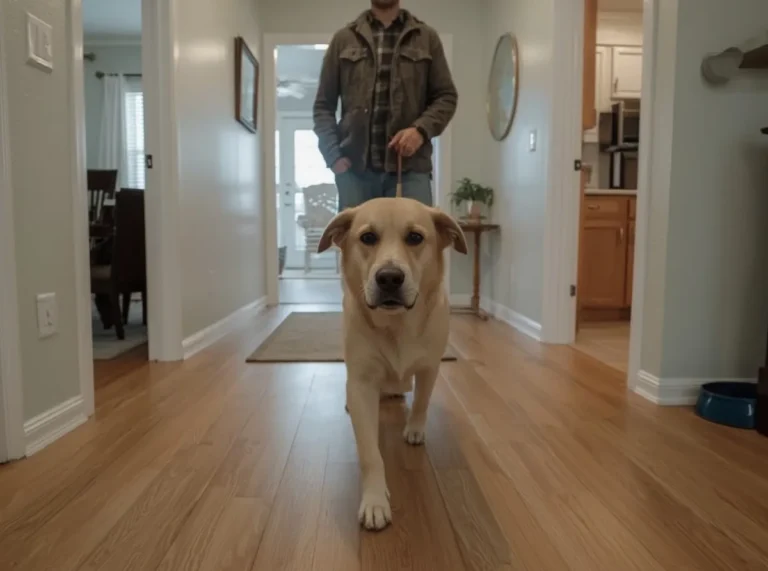
Dogs that want to stay close do not always act the same way. Some quietly shadow their owner from one room to another and lie down nearby without making a fuss. Others become more noticeable, pacing when their person leaves the room, nudging for contact, or sitting so close that movement becomes difficult.
In many homes, this behavior shows up during simple routines. A dog follows its owner into the kitchen and waits near the counter. Another gets up every time a chair moves. Some dogs do not like closed doors and may scratch, whine, or stand alert on the other side until the person returns.
Not every close dog is anxious. Some are calm and settled, simply preferring company over solitude. But the pattern itself still says something about the dog’s needs and comfort level.
Closeness is not one single behavior. It can reflect affection, habit, uncertainty, or a dog’s strong preference for social contact.
Attachment is often part of the picture
Dogs are social animals by nature. Many form strong bonds with the people who feed them, care for them, and provide structure. In a household setting, that bond can become very visible. The owner is not just a source of food or walks. They are also part of the dog’s sense of safety.
For some dogs, staying near their owner is the easiest way to feel settled. Being close means they can monitor what is happening, respond quickly if attention is available, and remain connected to the person they trust most. This is especially common in dogs that are naturally people-oriented.
Breeds with a history of working closely with humans often show this more often, though breed alone does not explain everything. Individual temperament matters just as much. Two dogs from the same litter may behave very differently depending on confidence, early experiences, and daily life.
Signs the dog is attached rather than distressed
- Follows the owner calmly without whining or panic
- Settles nearby once the owner stops moving
- Can rest alone for reasonable periods
- Shows interest in other parts of life, not only the owner
- Greets the owner happily but does not fall apart during brief separation
When closeness comes from healthy attachment, the dog usually still has some flexibility. It wants to be near its person, but it can also relax on its own when the moment calls for it.
Some dogs are simply more socially oriented
Not all dogs value independence in the same way. A more socially oriented dog wants to be part of the action, even if that action is just ordinary household life. These dogs often dislike being left on the sidelines and may choose proximity because it keeps them included.
This kind of dog tends to watch faces closely, respond quickly to movement, and seek contact at natural pauses throughout the day. It may lean against a leg, rest a chin on a knee, or wait at the edge of a room rather than fully leaving the owner’s side. The behavior can look needy from the outside, but it often reflects temperament more than trouble.
Some dogs are like this from puppyhood. Others become more people-focused after learning that closeness is rewarding. If staying near the owner consistently leads to petting, treats, conversation, or being included in activities, the habit can grow stronger over time.
Routine can make the habit stronger
Dogs are pattern learners. If a dog spends most of the day following predictable routines with very little independent activity, it may begin to stay close simply because that is what the day has taught it to do. The dog learns where the action happens and positions itself there.
A quiet home can make this more noticeable. If there are few toys, little outdoor enrichment, or long stretches with nothing to do, the owner becomes the most interesting part of the environment. Even a dog that is not especially anxious may choose companionship over lying alone on a bed across the room.
Busy households can create a different version of the same behavior. In a home where people are constantly moving, talking, and changing rooms, a dog may follow because it wants to stay connected to the rhythm of the house. The dog is not necessarily clingy. It is simply tracking the flow of activity.
| Household pattern | How closeness may show up | What it often means |
|---|---|---|
| Quiet, low-stimulation home | Dog follows constantly, seeks attention often | Boredom, habit, or preference for company |
| Busy, active home | Dog moves with people from room to room | Social interest and desire to stay involved |
| Predictable routine with few independent tasks | Dog waits near owner most of the day | Learned dependence on the owner’s presence |
Sometimes the behavior is about uncertainty
A dog that stays close may not be feeling fully confident about the world around it. New sounds, unfamiliar guests, slippery floors, loud appliances, or unpredictable activity can make some dogs prefer the security of a trusted person. In those moments, proximity acts like a buffer.
This does not always look dramatic. A mildly uncertain dog may simply follow more closely in a new environment or stay beside its owner during a visit to a strange house. The dog might not whine or tremble. It may just keep its body aligned with the person’s legs, as if drawing comfort from having a familiar anchor nearby.
Dogs with lower confidence often show other small signs as well. They may pause before entering a room, move cautiously, or scan the environment while staying close. Their attachment to the owner can become more visible whenever the setting feels unfamiliar.
When a dog increases closeness in new or stressful settings, the behavior may be about reassurance rather than constant dependency.
Stress can look like closeness, too
Not every dog that sticks close is simply affectionate. Some are using the owner as a safety signal because they feel stressed, uncertain, or overstimulated. The difference is often in the body language. A relaxed dog may rest comfortably. A stressed dog may appear tense, watchful, or unable to fully settle.
Stress-related closeness often becomes more obvious during specific triggers. Thunderstorms, fireworks, visitors, changes in schedule, or household conflict can make a dog shadow its owner more intensely. The dog may seek contact, stay underfoot, or react strongly if the person leaves the room.
Common stress signs that may accompany closeness include:
- Tight body posture
- Frequent lip licking or yawning without tiredness
- Wide eyes or fixed staring
- Restlessness and difficulty lying down
- Increased startle response to normal sounds
When these signs appear, staying near the owner is less about preference and more about coping. The owner’s presence helps the dog manage a situation it does not fully understand.
Separation patterns can matter
Some dogs stay close because they do not like being separated from their owner, even for short periods. This can range from mild discomfort to more serious separation-related distress. The difference is important. A dog that simply follows is not necessarily struggling. A dog that becomes upset when the owner disappears may need a closer look.
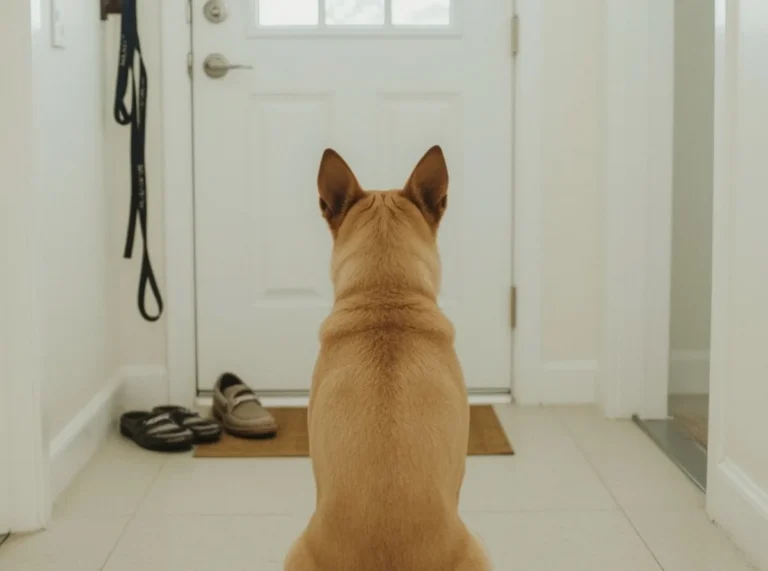
Brief separation distress often shows up in subtle ways first. The dog may get up immediately when the owner stands, watch doors carefully, or wait near exits and thresholds. In more intense cases, the dog may vocalize, pace, scratch at doors, or fail to settle until the owner returns.
Owners sometimes assume all of this is loyalty. Loyalty may be part of it, but the emotional experience matters more than the label. If the dog cannot relax unless the owner is visible, the behavior may be rooted in discomfort with separation rather than ordinary affection.
Age and life stage can change the pattern
Puppies often stay near people because they are still learning the world. Their confidence is limited, and humans represent warmth, direction, and security. At that stage, closeness is expected. It usually softens as the puppy gains confidence, develops routines, and learns that being alone for short periods is safe.
Adult dogs may become more attached after major life changes. A move, the loss of another pet, a change in household schedule, or a new adoption can all increase a dog’s desire to stay close. In these cases, the dog may be adjusting to a different kind of normal.
Older dogs can also become more people-focused. Some seek greater comfort as their senses change or their confidence fades. A dog that once napped in another room may begin following more often simply because the owner is easier to orient toward than a noisy or confusing environment.
What changes with age
- Puppies often follow because they need guidance and security
- Adult dogs may follow because of learned habit, attachment, or stress
- Senior dogs may follow more due to reduced confidence or sensory decline
The difference between calm closeness and intense attachment
Two dogs can both want to stay near their owner, but the meaning behind the behavior may be very different. One dog is calm and flexible. The other is tense and worried. That difference matters when deciding whether the pattern is simply part of the dog’s personality or a sign that something is off.
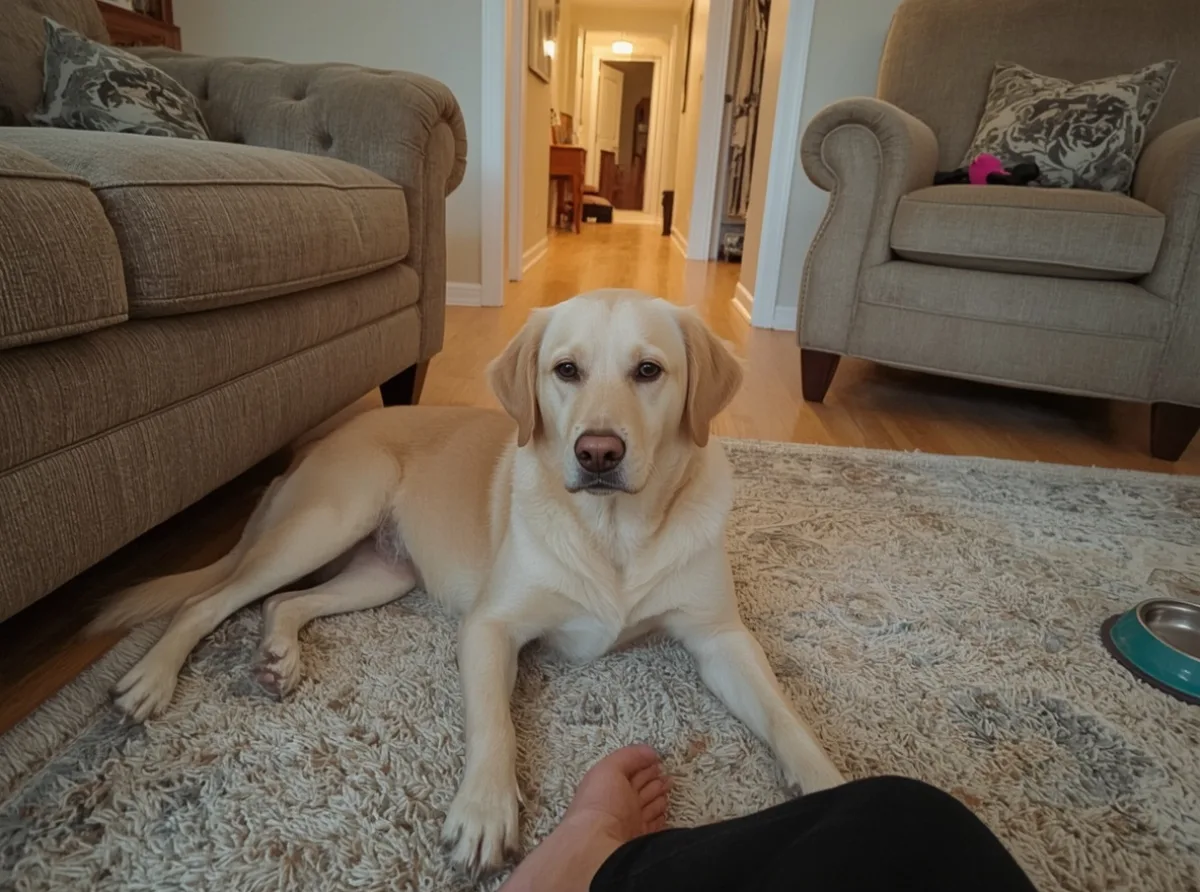
Calm closeness usually includes relaxed muscles, soft eyes, easy breathing, and the ability to settle once the owner stops moving. The dog may follow because it enjoys company, but it can still lie down, chew a toy, or nap nearby without constant monitoring.
Intense attachment looks more urgent. The dog may react quickly to every movement, avoid resting deeply, or seem unable to switch off. It may become distressed when the owner disappears for a few minutes, not just a long stretch. In those cases, the closeness deserves more attention because it may be tied to emotional discomfort.
What owners often misunderstand
People often read closeness as either pure devotion or bad behavior, but it is usually more layered than that. A dog that stays near its owner is not automatically spoiled, and it is not automatically insecure. The same habit can come from very different places.
Another common misunderstanding is thinking a dog is “fine” because it does not bark or destroy things. Some dogs are quiet when they are uncomfortable. They may simply remain glued to their owner and look alert all day. That quietness can hide the fact that the dog never truly relaxes.
It is also easy to underestimate the impact of reinforcement. If following always leads to petting, speaking, or being included, the dog is learning that closeness works. Over time, it may choose that strategy more often, even if it began as a small preference.
A dog can be close because it loves company, because it feels safer near a person, or because it has learned that staying nearby is rewarding.
Environmental clues can help explain the pattern
Where the dog lives affects how often closeness shows up. A dog in a home with few windows, little outdoor time, or limited enrichment may depend more heavily on its owner for stimulation. In that situation, following becomes a way to break up the day.
Environmental stress can also increase the behavior. Loud neighbors, frequent visitors, crating issues, long workdays, or inconsistent schedules can all make a dog seek the steadiness of one person. The owner becomes the most predictable part of the environment.
Even small details matter. A dog bed placed far from the family area, a home where people close doors often, or a lack of clear daily structure can all change how much a dog chooses to remain nearby. Dogs notice these patterns quickly.
How the behavior usually appears in mixed form
In real homes, the behavior is rarely simple. A dog may be affectionate most of the time, but more clingy when the house is noisy. It may seem independent in the morning and shadow its owner in the evening. It may be relaxed during one season and more attached after a change in routine.
That shifting pattern is normal. Dogs respond to context. A dog that wants to stay near its owner during a thunderstorm may go back to napping elsewhere the next day. Another dog may follow closely when guests arrive but otherwise enjoy a little distance. These changes help show whether the behavior is situational or deeply habitual.
Watching when the behavior appears is often more useful than focusing only on how often it happens. Timing tells a story. So does the dog’s body language in those moments.
Why some dogs simply prefer proximity
For many dogs, the answer is not complicated. They like being near their owner because that is where comfort, predictability, and access to social contact live. In a domestic environment, closeness can be a normal part of how a dog organizes its day.
Some dogs are more watchful. Some are more affectionate. Some are more dependent on routine. Those traits can combine in ways that make a dog seem glued to one person, even when nothing is wrong. The behavior becomes part of the relationship dynamic, not necessarily a sign that the dog is in trouble.
Still, the details matter. A calm dog that stays close, settles easily, and handles short separations without distress is expressing a very different need than a dog that cannot relax alone. Looking at posture, timing, and consistency makes the pattern easier to read.
When a dog chooses to remain nearby, it is often saying something simple: this person is important, this space feels safest with them here, and staying close makes the day easier to navigate.