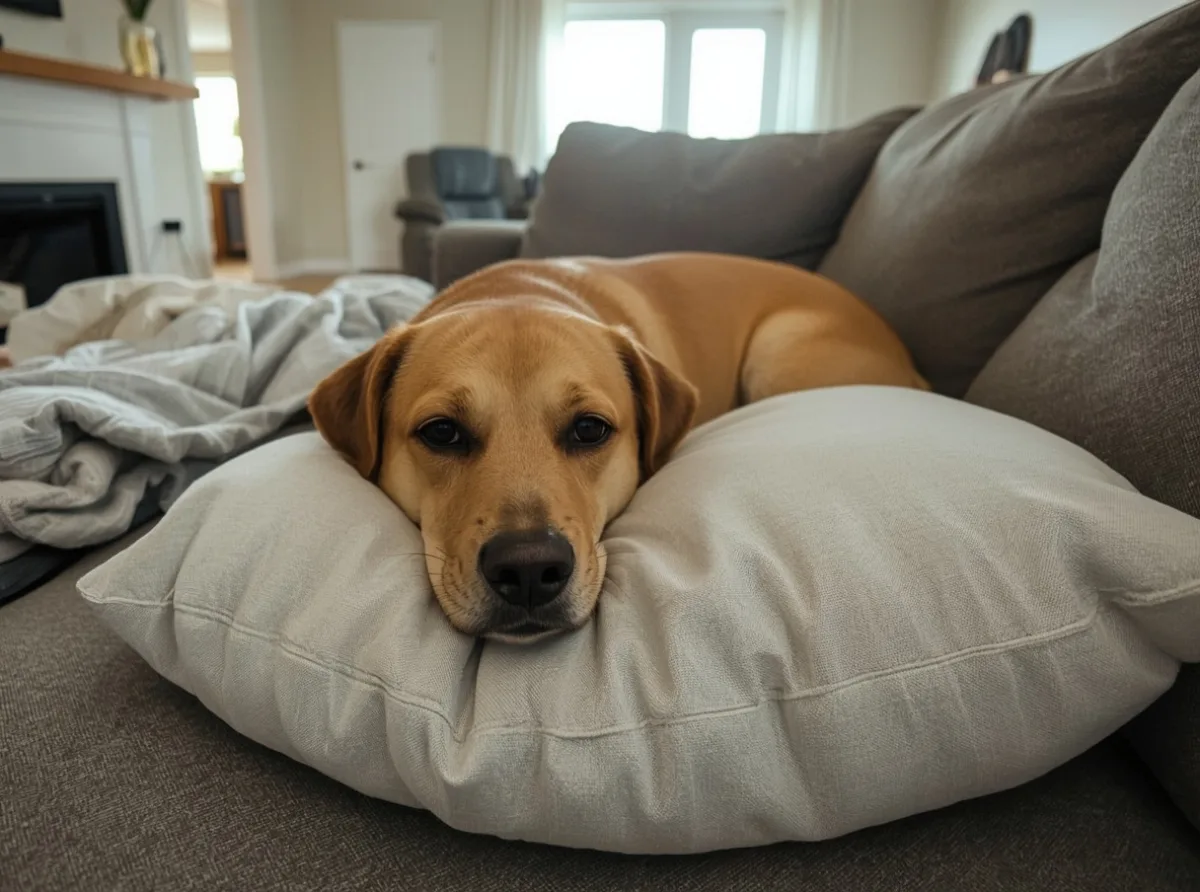
A dog that rests its head on a particular person is doing more than finding a comfortable spot. The gesture can look simple, but it often carries a mix of trust, habit, social awareness, and emotional need. In many homes, it becomes one of those quiet behaviors that seems small until you notice it keeps happening with the same person again and again.
Sometimes the choice is obvious. The dog goes to the person who is calm, predictable, and physically easy to lean on. Other times the pattern feels more personal. The dog may rest its head on one family member but ignore everyone else in the room, even when several people are offering attention. That kind of selectivity is what makes the behavior interesting.
Dogs communicate with body placement as much as they do with barking, tail movement, or eye contact. A head resting on a lap, arm, shoulder, or chest can mean comfort, connection, or a request for reassurance. It can also be part of a dog’s way of checking in, settling down, or staying close to a person who feels important in its social world.
What the Behavior Looks Like in Everyday Life
Head-resting often appears in ordinary moments rather than dramatic ones. A dog may place its chin on a person’s knee while they read, lean its head against a leg during a movie, or gently rest its muzzle on a hand after coming in from outside. The behavior may last only a few seconds, or it may become a long, steady posture that signals the dog is settling in for a while.
Some dogs do it with obvious softness. Their bodies stay loose, their breathing slows, and their eyes may half close. Others look more alert even while leaning in, keeping track of the room while maintaining contact with the chosen person. Both versions can be meaningful, but they do not always mean the same thing.
There are also dogs that use head-resting in a more deliberate way. They may bump gently and then stay there, as if asking for attention or trying to hold a person’s focus. A dog that repeats the behavior with one specific person is usually responding to a consistent pattern, not a random preference.
Why Dogs Choose Certain People
Dogs are highly sensitive to routine and emotional tone. They quickly learn which humans feel safe, which ones respond predictably, and which ones offer the kind of physical contact they like best. The person who gets the head rest is often the one whose presence matches the dog’s needs in that moment.
Comfort matters. A dog may lean on the person who sits still, speaks softly, or tolerates close contact without moving away. Dogs often prefer people who allow them to approach at their own pace rather than those who constantly reach out. That calm, nonintrusive energy can make one person much more appealing than another.
Physical familiarity also plays a role. If a person is the one who feeds the dog, shares couch time, goes for walks, or handles bedtime, the dog may associate that person with safety and routine. Over time, the habit becomes stronger. What starts as simple convenience can turn into a preferred form of affection.
When a dog chooses one person for head-resting, the behavior often reflects a blend of comfort, familiarity, and emotional security rather than a single cause.
Attachment and Social Bonding
Many dogs develop a stronger attachment to one household member than to others. That does not always mean the dog loves everyone else less. It usually means the dog has found a person whose energy, habits, or interactions feel especially reliable. Head-resting can be one visible sign of that bond.
Dogs are social animals, but they do not build relationships in the same way humans do. They often rely on proximity, touch, and repeated positive experiences to decide who feels like part of their inner circle. A head on the knee or shoulder can be a quiet version of “you are my safe place.”
Breed tendencies, early socialization, and life history can influence attachment patterns, but the day-to-day relationship matters even more. A dog that has been handled gently and consistently by one person will often seek that person out first. The same dog may still enjoy other people, but it will return to the person who feels most emotionally steady.
Signs the Behavior Is Bond-Based
- The dog follows the person from room to room.
- It settles faster when that person is nearby.
- It seeks contact after noisy or active moments.
- It relaxes deeply during the head-resting posture.
- It repeats the behavior across different settings, not just one favorite spot.
Comfort, Reassurance, and Emotional Regulation
For some dogs, resting a head on a person is partly about self-soothing. The physical pressure can be calming, much like curling into a blanket or settling into a corner. If the dog feels uncertain, overstimulated, or tired, leaning on one trusted person may help it regulate itself.
This is especially common in dogs that are sensitive to noise, movement, or changes in routine. After a busy walk, visitors in the home, or a stressful event like thunder, a dog may seek out the person it trusts most and rest there for a while. The behavior does not always mean fear, but it can show the dog is trying to find stability.
Some dogs are simply more tactile than others. They like contact, pressure, and closeness, and they choose the person most likely to allow it. In those cases, the head-resting behavior may be less about stress and more about enjoying a familiar form of comfort.
Body Language That Helps Explain the Meaning
The head itself gives only part of the picture. The rest of the dog’s body usually tells you whether the behavior is relaxed, needy, playful, or uncertain. A loose body, soft mouth, and slow tail movement often point toward ease. A stiff neck, tense shoulders, or scanning eyes may suggest the dog is seeking reassurance rather than simply affection.
Pressure matters too. A light chin rest can mean connection or a request for petting. A heavier, more persistent lean may signal fatigue, worry, or an effort to anchor itself to the person. The difference is subtle, but it changes the interpretation.
Signals Often Seen Alongside Head-Resting
- Soft eyes and relaxed ears
- Slow breathing
- Loose tail wagging or a still tail
- Full-body leaning, not just the head
- Seeking eye contact and then settling again
- Following the person before and after the lean
A relaxed dog usually looks soft throughout the body. A dog leaning for reassurance may look focused, alert, or slightly tense even while staying close.
How Environment Shapes the Behavior
The setting can make a big difference in how often a dog chooses to rest its head on one person. In a quiet home, the behavior may happen during long, peaceful stretches of the day. In a busy household, it may appear after the dog finally finds a calm moment with the person who feels easiest to settle beside.
Routine is important. Dogs often repeat actions that fit naturally into daily rhythms. If one person always sits in the same chair after dinner, the dog may develop the habit of coming over and leaning in at that exact time. The behavior can become part comfort, part ritual.
Stimulation level matters as well. A dog that has had too little exercise or mental engagement may seek contact in a more insistent way. A dog that has had plenty of activity may rest its head on someone simply because it is ready to wind down. The same gesture can emerge from different internal states.
Environment Factors That Increase Head-Resting
- Predictable mealtimes and couch routines
- Low household noise
- A person who stays seated for long periods
- Recent exercise or a long walk
- Visitors, storms, or other changes that make the dog seek comfort
Why One Person Gets Chosen More Often
Selection usually comes down to a mix of personal history and present-day comfort. The chosen person may not be the one who feeds the dog most often. Sometimes it is the person who moves more slowly, smells familiar, or has a way of sitting that invites closeness without pressure.
Dogs notice tiny patterns humans rarely think about. A person who pets with a steady touch, laughs gently, or avoids sudden grabs can become the dog’s preferred resting partner. Even scent can matter. Dogs live in a world where familiar smell carries a strong sense of recognition.
There is also the simple reality that some people feel easier to lean on. A dog may prefer a person with a stable lap, a predictable chair position, or a habit of staying still during downtime. That practical comfort can shape emotional preference over time.
What Owners Often Misread
It is easy to label every head-resting moment as pure affection. Sometimes that is true. Other times the dog is asking for attention, trying to calm itself, or looking for a break from too much activity. The behavior is meaningful either way, but the meaning is not always romantic or dramatic.
Another common misunderstanding is assuming the dog has “picked a favorite” in a way that excludes everyone else. Dogs can form different kinds of bonds with different people. One person may be the comfort person, another the play person, and another the walking partner. Head-resting often reflects one of those roles rather than the whole relationship.
It is also worth noticing whether the dog only leans in during times of rest or whether it does so when something is happening around it. A dog that rests its head on one person during loud gatherings may be looking for safety. A dog that does it while everyone is calm may simply be enjoying closeness.
The same gesture can mean affection, habit, reassurance, or a request for attention. The setting and the dog’s body language clarify the message.
When the Behavior Becomes More Noticeable
This habit often becomes stronger during certain life phases. Puppies may nuzzle and rest their heads as they seek security and warmth. They are still learning which humans feel safe and what kinds of touch are comforting. As they mature, the behavior may become more selective and directed toward the person they trust most.
Adult dogs often show the pattern in relation to routine. The behavior may show up on the couch after work, in bed before sleep, or in the car after a long outing. Mature dogs tend to be consistent about where and with whom they seek closeness, especially if their daily rhythm is stable.
Older dogs may lean more often if they are slowing down physically. They may prefer a trusted person because movement feels less appealing, and staying near that person helps them settle comfortably. Age can make the behavior gentler, more frequent, and more deliberate.
How to Read Calm, Playful, and Tense Versions
Not every head-resting moment carries the same emotional weight. A relaxed version usually comes with a soft body, slower movement, and the sense that the dog could stay there a while. The dog may seem almost sleepy, content simply to be near the person.
A playful version looks different. The dog may bump in, remove its head, then return with a wag or a bounce. It may be testing for interaction rather than settling completely. This kind of contact often leads into petting, play, or a brief social exchange.
A tense or defensive version is less common but important to recognize. The dog may keep its head pressed in while its body remains tight, especially in crowded or unpredictable spaces. In those cases, the behavior may signal a need for grounding rather than an invitation for more stimulation.
Ways the Same Gesture Can Differ
| Version | Body Language | Likely Meaning |
|---|---|---|
| Relaxed | Loose body, soft eyes, slow breathing | Comfort and closeness |
| Playful | Brief contact, movement, eagerness | Attention or interaction |
| Tense | Stiff posture, fixed gaze, stillness | Reassurance or coping |
The Role of Daily Relationship Patterns
Repetition builds preference. If one person is consistently calm when the dog approaches, the dog learns that leaning in brings a pleasant result. If another person tends to stand up, shift away, or interrupt the contact, the dog will usually stop choosing that person as often.
Small habits matter. The person who quietly invites the dog up, pats the couch, or pauses long enough for the dog to settle is teaching the dog that closeness is welcome. Over weeks and months, those tiny interactions can shape a strong preference for head-resting on that person.
The behavior can change if the household routine changes. A dog may shift its preferred person after a move, a change in work schedule, or a period of illness. What looks like a personality trait is often a living pattern that adjusts with the environment.
What the Pattern Can Reveal Over Time
Watching the behavior over time tells you more than a single moment ever could. If the dog only rests its head on one person when tired, the behavior may be mostly about comfort. If it does it after stress or during uncertainty, reassurance is likely part of the picture. If it happens around predictable activities, habit may be the strongest factor.
Consistency matters. A dog that chooses the same person across weeks, seasons, and different household moods is showing a stable preference. A dog that shifts between people depending on the situation is communicating something more flexible. Neither pattern is better. They just point to different needs.
Some dogs are naturally more physically affectionate than others, but even the most independent dog may have one person it regularly seeks out. That preference usually develops through repeated contact, trust, and a sense of calm that the dog can count on.
Head-resting is often less about one grand emotional reason and more about a dependable pattern of comfort repeated in small, everyday moments.
A Quiet Form of Choosing
When a dog rests its head on a certain person, it is making a choice in the only way it can. The gesture may be gentle, practical, affectionate, or all three at once. In many homes, it becomes one of the clearest signs that the dog has identified a person who feels easy to be near.
That choice is shaped by body language, routine, sensitivity, and the dog’s own history. Sometimes it reflects trust. Sometimes it reflects the need for calm. Often, it reflects both. The head settles where the dog feels most at ease, and that decision is rarely accidental.