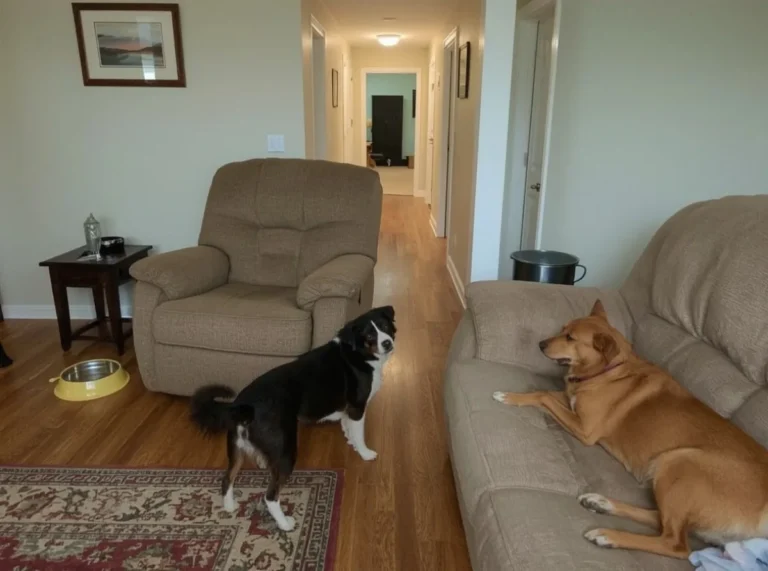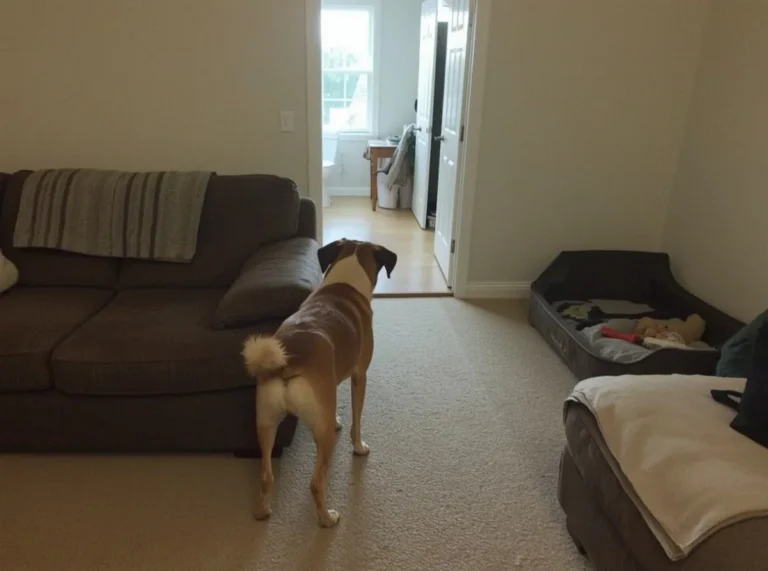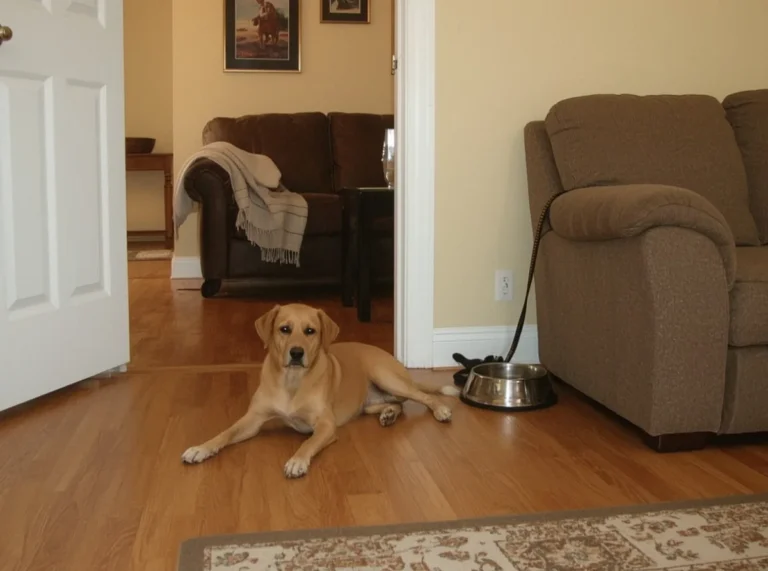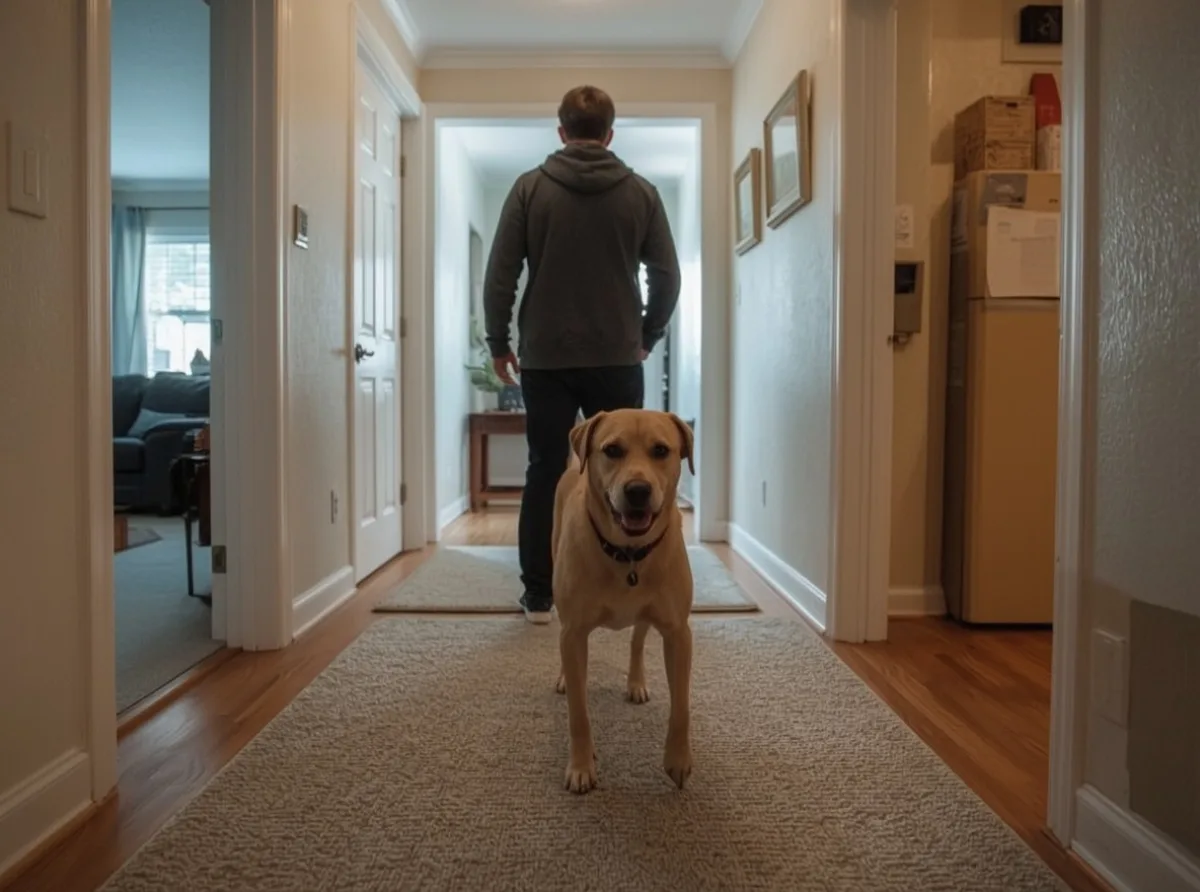
A dog that shadows one person from room to room is often doing more than just staying nearby. Sometimes it is simple preference. Sometimes it is habit. And sometimes it is a clue about the dog’s emotional state, daily routine, or sense of security.
This behavior can look sweet and devoted, but it can also become exhausting if the dog never relaxes unless that one person is in sight. The same pattern may mean very different things depending on the dog, the household, and what is happening in the moment.
Some dogs follow one person because that person is their favorite source of comfort. Others do it because the person is the one who feeds them, walks them, or responds fastest. A few dogs follow closely because they feel uncertain when they are alone, bored in a quiet home, or highly tuned in to human movement.
What Following One Person Often Looks Like in Daily Life
The behavior can be subtle at first. A dog gets up when one person stands, then settles when they stop moving. Or the dog waits outside the bathroom door, lies beside the kitchen counter, and appears every time that person changes rooms.
In some homes, the pattern is constant. The dog may ignore other family members and track one person everywhere, even across short distances like the hallway or from the sofa to the laundry room. In other homes, it happens only during certain parts of the day, such as early morning, after work, or when the house is quiet.
What matters most is not just that the dog follows. It is how the dog does it. A relaxed dog may move easily, lie down nearby, and seem content. A tense dog may pace, whine, stare, or panic when the person disappears from view.
Common everyday signs
- Getting up whenever one person leaves the room
- Sleeping directly beside or under one person’s chair
- Waiting at closed doors instead of settling elsewhere
- Watching one person closely while ignoring others
- Following the person during routine household tasks
Why Dogs Often Pick One Person
Dogs are social animals, but they do not spread attention evenly the way people sometimes expect. Many dogs build stronger attachment to one individual. That person may be the most predictable, the most active, or simply the one who makes the dog feel safest.
Routines matter a great deal. A dog usually bonds more strongly with the person who handles feeding, walking, grooming, play, and bedtime. Repetition creates familiarity, and familiarity builds trust. Over time, the dog learns that this person is tied to good things and clear patterns.
Personality also plays a role. Some dogs are naturally more social and more likely to attach broadly. Others are cautious, sensitive, or selective. They may prefer one calm human over a louder household, or one patient person over someone who moves quickly and speaks loudly.
Following one person is not automatically a problem. It becomes a concern when the behavior is tied to distress, fear, or an inability to settle without that person nearby.
Reasons a dog may favor one person
- That person provides most of the dog’s daily care
- The dog feels safest with that person’s voice, scent, or routine
- The dog has learned that this person pays attention most consistently
- The dog is more comfortable with a calmer or gentler handler
- The dog is experiencing insecurity or uncertainty in the home
Attachment, Comfort, and Social Preference
Some dogs are simply more attached. They want closeness, predictability, and contact with a particular person. This can be especially common in dogs that are affectionate by nature or have learned that one person is their main point of connection.
Attachment often shows up in practical ways. The dog may follow the person into the kitchen, rest near their feet, or try to position itself where it can see them clearly. There is no drama in the behavior. It is quiet, repeated, and easy to overlook until it becomes a daily pattern.
In a stable home, this kind of preference often looks relaxed. The dog tracks the person but still settles. It can nap while the person works, wait without distress, and accept short separations. That difference is important. Comfort and dependence are not the same thing.
Signs of healthy preference
- The dog follows but can still relax alone for periods of time
- There is no whining, scratching, or panic when the person leaves briefly
- The dog interacts with other people when needed
- The behavior does not escalate during ordinary household separation
When the Behavior Is Driven by Anxiety or Uncertainty
Sometimes following one person is less about affection and more about feeling unsafe without them. A dog that seems glued to a person may be showing anxiety, especially if it becomes restless the moment that person is gone. The dog may not know how to settle, may startle easily, or may seem unable to relax unless that person is in the room.
This can happen in dogs with a history of change, inconsistency, or rough handling, but it can also appear in dogs with no obvious trauma. A move, a schedule shift, a new baby, another pet, or a change in household energy can be enough to make a sensitive dog cling more tightly.
In these cases, the dog is not just choosing company. It may be seeking reassurance. The behavior can become stronger if every sign of need is met immediately, or if the dog never gets practice settling on its own.
Clinginess that comes with distress usually looks different from simple affection. Watch for pacing, trembling, shadowing, vocalizing, or trouble eating when the favored person is absent.
Possible stress-related signals
- Whining or barking when the person leaves
- Following with a tense body and fixed gaze
- Refusing to lie down far from the person
- Pacing from room to room without settling
- Becoming restless near exits, doors, or hallways
How Routine and Environment Shape the Pattern
A dog’s environment can make this behavior stronger or weaker. In a quiet house with little activity, one person may become the center of the dog’s day simply because there is not much else to do. In a busy home, the dog may still choose one person, but the behavior might be less obvious because there are more sounds, movements, and distractions.
Routine is powerful. A dog that always eats with one person, goes outside with one person, and receives all affection from one person will often begin to track that person naturally. The pattern grows stronger each day because the dog learns that this individual predicts the good parts of life.
Stimulation matters too. A bored dog is more likely to follow someone just to stay engaged. A dog that has enough exercise, training, chewing opportunities, sniffing time, and rest may be more able to lie down independently. The behavior does not disappear overnight, but the pressure around it can decrease.
| Household factor | Effect on following behavior |
|---|---|
| Quiet, low-activity home | Dog may focus more on one person |
| Predictable routine | Dog may attach strongly to the main caregiver |
| Frequent changes | Dog may become more uncertain and clingy |
| Enough activity and rest | Dog may settle more easily away from people |
Why Some Dogs Follow More at Certain Times of Day
Many owners notice the behavior most clearly in the morning, evening, or during transitions. That makes sense. Dogs pay attention to patterns, and they quickly learn when a person usually gets up, leaves, returns, or prepares meals.
Morning following often happens because the dog wants breakfast, a potty break, or the beginning of the day’s routine. Evening following may be tied to tiredness, anticipation of dinner, or a desire to stay close when the household is winding down. Some dogs become especially attached after the main person returns from work, almost as if they are making up for lost time.
Transitions can make the behavior more visible. A dog that is calm most of the day may suddenly shadow one person during guests, chores, noise, or bedtime. These are moments when the dog may look for stability.
Patterns that make the behavior stronger
- Meal times
- Coming and going through doors
- Bedtime routines
- Household noise or visitors
- Periods when the favorite person is especially active
What the Behavior May Signal About the Dog’s State of Mind
A dog following one person can reflect trust, anticipation, dependence, or unease. The same behavior does not always mean the same thing. Body language helps tell the difference.
A loose tail, soft eyes, relaxed movement, and an ability to lie down are usually encouraging signs. A dog that follows with stiffness, a tucked tail, or repeated checking may be more unsure. A dog that cannot disengage at all may be over-aroused or anxious rather than simply affectionate.
The emotional context is usually clearer when you look at what happens after the person stops moving. A content dog often chooses to rest nearby. A stressed dog may keep circling, whining, or blocking doors. That difference changes how the behavior should be understood.
Helpful body language clues
- Relaxed: soft face, easy breathing, flexible posture, ability to settle
- Uncertain: slow movement, hesitation, frequent checking
- Stressed: tension, whining, pacing, inability to rest
How Owners Often Misread It
People often assume a dog that follows one person everywhere is being unusually loyal. Sometimes that is true. But the behavior is not always purely loving. It may also reflect learned dependence, habit, or stress.
Another common misunderstanding is assuming the dog is being stubborn or manipulative. Dogs do not follow people because they want to control the household. They follow because it serves a need, whether that need is comfort, access, safety, or stimulation.
Owners may also overlook how much their own habits shape the behavior. If one person always feeds the dog, always picks up the leash, and always responds to attention, that person will naturally become the center of the dog’s attention. The dog is reading patterns, not assigning roles in a human way.
The most useful question is not “Why is my dog so attached?” but “What does the dog get from following this person, and how does the dog feel when that person is absent?”
How Age and Life Stage Can Change the Behavior
Puppies often shadow people as part of normal learning. They are new to the home, unsure of routines, and eager to stay close to a source of warmth and guidance. At that stage, following one person is often less selective and more exploratory. The puppy may be attached to whoever is nearby at the moment.
Adult dogs tend to be more consistent. By then, they usually know which person feeds them, comforts them, or gives them the most structure. The behavior can become more focused and more predictable. A mature dog may show a strong preference for one household member even if others are kind and involved.
Older dogs may follow one person more closely again, especially if hearing loss, vision changes, or general uncertainty make them more dependent on a familiar presence. They may want easier access to the person they trust most, or they may simply feel more secure staying close.
Life stage differences
- Puppies: curiosity, learning, dependence, fast attachment changes
- Adults: stable preference, routine-based following, stronger consistency
- Seniors: increased need for reassurance, familiarity, and low-stress contact
When Following Becomes Too Intense
There is a point where following turns into difficulty separating. A dog may bark when the person closes a door, wait in alarm outside the bathroom, or seem unable to eat or rest when alone. In more intense cases, the behavior can spill into destructive scratching, accidents indoors, or frantic attempts to reach the person.
Those signs suggest the dog may not be coping well with absence. The behavior has moved beyond preference. It is now tied to emotional strain. At that stage, the pattern deserves attention because the dog is telling you that closeness is not only enjoyable, it may feel necessary.
Intensity can also build gradually. What starts as innocent shadowing can become a reliable habit if the dog never practices being comfortable a few feet away, in a different room, or with another person. Small daily patterns matter.
Signs that the pattern may be crossing into distress
- Inability to relax unless the favored person is visible
- Vocalizing whenever the person leaves the room
- Destructive behavior aimed at doors or barriers
- Refusal to eat, chew, or rest when alone
- Strong reaction to very short absences
How Other People in the Home Fit Into the Picture
It is common for a dog to follow one person even in a full household. That does not mean the dog dislikes everyone else. Often, the favored person simply has a stronger daily role or a more predictable presence.
Sometimes the dog may interact politely with other family members but still reserve its deepest attention for one person. In other homes, the dog may ignore others because the relationship is underused. Dogs tend to repeat what works. If one person always rewards closeness and another feels less familiar, the choice is easy for the dog.
Household dynamics can also intensify the pattern. If people take turns being active, loud, or inconsistent, the dog may gravitate toward the calmest person. If one person is the only one who ever walks the dog or gives quiet time, that person becomes the dog’s anchor.
Reading the Behavior in Context
To understand why a dog follows one person everywhere, it helps to look at the whole day, not just the moment. Ask when the behavior happens, what the dog does after following, and whether the dog can still rest without constant contact. Those details matter more than the behavior alone.
A dog that follows for short periods, then settles in another room, is showing a very different pattern from a dog that becomes distressed the second the person leaves. One points to preference. The other may point to insecurity or poor coping skills.
Context also changes with time. A dog may follow more closely after a move, during illness, after a schedule change, or when the household becomes noisier. What looks like a personality trait may actually be a response to a temporary shift in life.
What the dog does when the person is present is only half the story. What the dog does when the person leaves is often more revealing.
Natural Reasons Behind the Habit
Dogs are social by design. They notice movement, routines, and emotional cues very well. Following one person can be a natural expression of that social awareness. The dog is tracking the person because people are where important things happen: food, doors, outside access, comfort, and attention.
There is also a simple practical side. Dogs often choose the person who moves in the most predictable way. The one who gets up at the same times, speaks calmly, and sticks to routine can feel easier to understand. That predictability can make a dog feel safer, and safety invites closeness.
In a modern home, these instincts show up in small ways every day. A dog stands by the sink while one person washes dishes. It waits at the bedroom door while one person gets dressed. It follows not because it has an elaborate plan, but because staying near the person has become meaningful.
When the Dog Follows One Person but Seems Fine Otherwise
Some dogs are simply one-person dogs. They can be affectionate, steady, and calm, while still showing a clear preference. They follow one person, but they do not panic, they do not ignore life, and they do not appear distressed. In these dogs, the behavior is more of a relational style than a problem.
That kind of preference can remain stable for years. It may shift a little with routine changes, but the core pattern stays. The dog feels at home near one particular person and is content to organize its day around that relationship.
When the behavior remains easy and relaxed, it usually reflects a bond shaped by familiarity and trust. The dog is not demanding constant attention. It is simply choosing a favorite human to stay close to.
What Makes the Difference Between Sweet and Concerning
The difference is often found in flexibility. A dog that can follow, pause, rest, and tolerate separation is usually expressing attachment in a manageable way. A dog that cannot disengage, cannot settle, and becomes upset when that person is out of sight may need closer attention.
Body language, household routine, and response to absence all matter. A relaxed follower is not trapped by closeness. A distressed follower may be. That distinction shapes the meaning of the behavior far more than the outward act of following itself.
Watching the pattern over several days, not just one moment, gives a clearer picture. Some dogs simply like company. Others seem to need it. The behavior can look similar from across the room, but the emotional reason underneath is often very different.