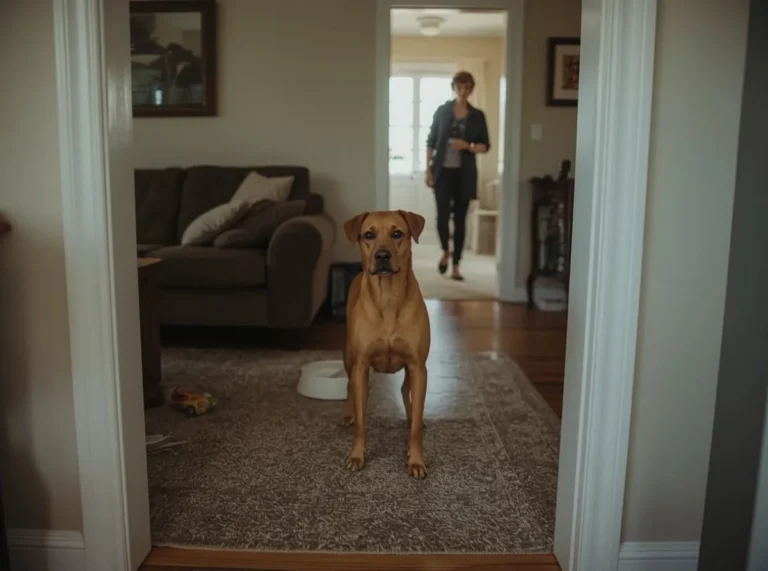
Some dogs walk through the house as if every room has to be checked twice. They follow a person from the kitchen to the couch, pause at the doorway, and glance back for confirmation before settling down. A gentle word, a hand on the shoulder, or even simple eye contact seems to help them relax for a moment.
This need for constant reassurance indoors is not always about poor manners or being “spoiled.” In many dogs, it reflects a mix of temperament, past experience, attachment style, and the way their home life is organized. The same dog that seems needy in one house may look completely at ease in another, simply because the environment speaks to its nervous system in a different way.
When a dog keeps looking for reassurance, the behavior often appears small at first. A brief whine, a restless pace, or a habit of hovering near the nearest human can be easy to dismiss. Over time, though, those little signals can reveal a pattern: the dog does not fully trust that the indoor world is predictable enough on its own.
What this behavior looks like in everyday life
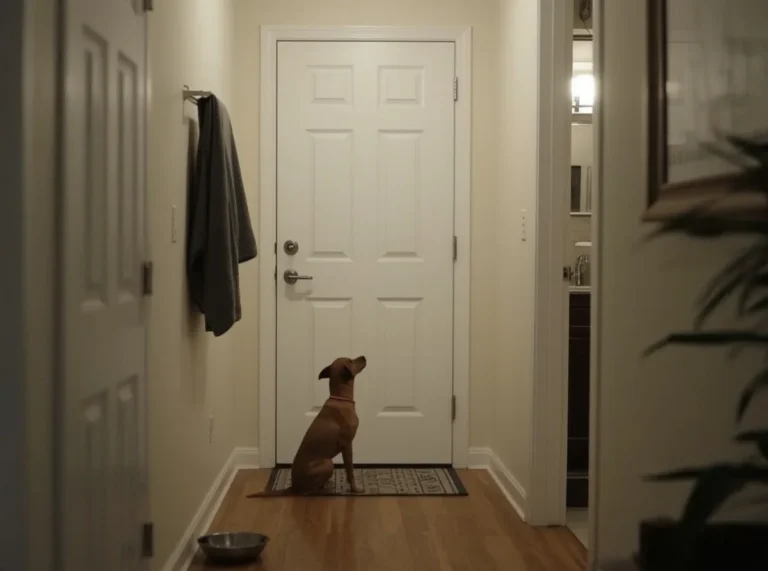
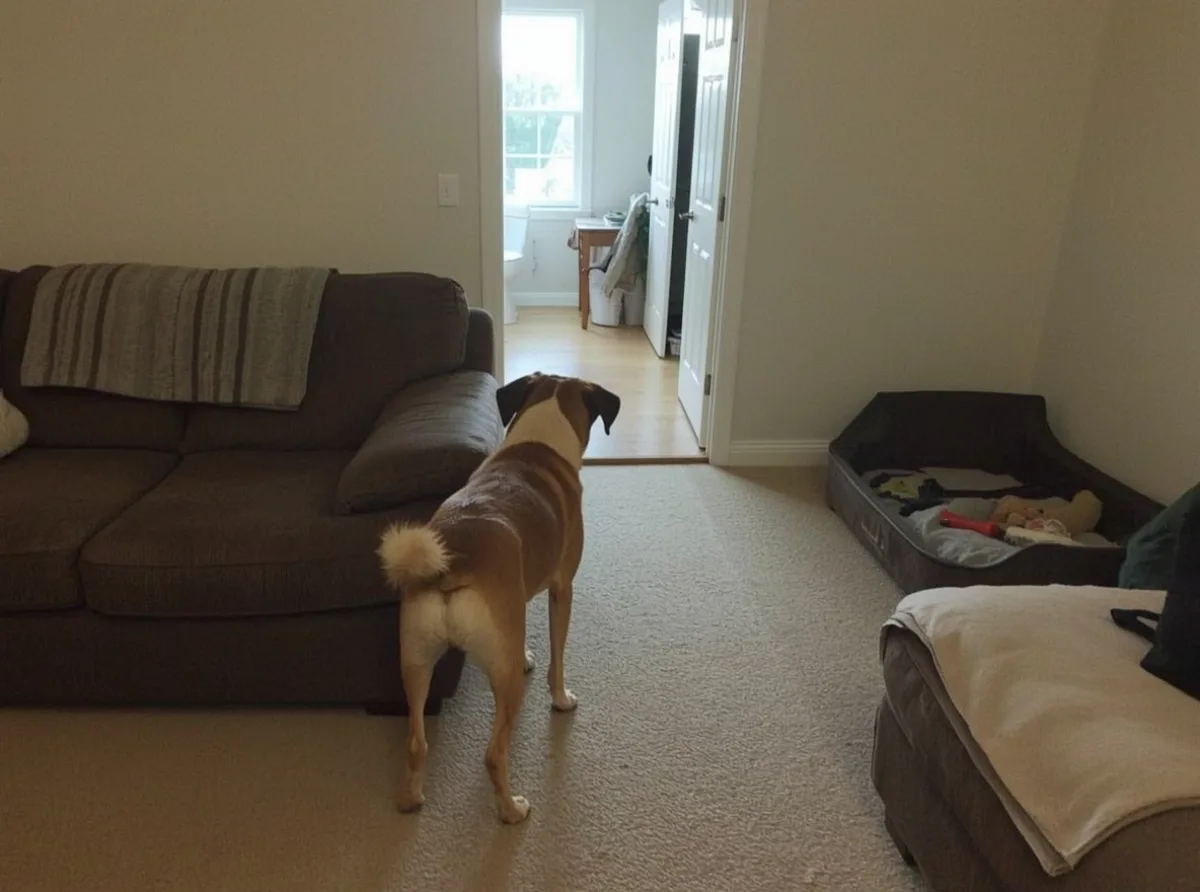
Inside the home, reassurance-seeking can take many forms. Some dogs shadow their owner from room to room and become uneasy when left alone, even for a few minutes. Others settle only after repeated checking in, as if they need to confirm that nothing has changed.
Common signs include:
- Following people closely around the house
- Watching for facial expressions or body language before lying down
- Whining, sighing, or pawing for attention
- Starting to rest, then getting up again without a clear reason
- Reacting strongly to small noises, movement, or changes in routine
- Returning to a person after exploring a room, as if asking for permission to stay calm
These behaviors do not always mean the dog is anxious in a dramatic sense. Some dogs are simply more socially tuned in than others. They prefer checking the room through their person rather than relying on their own sense of safety.
Reassurance-seeking indoors often appears most clearly when a dog has not yet learned that the home is a stable, low-risk place where nothing needs to be managed moment by moment.
There is also a difference between a dog who enjoys closeness and a dog who cannot relax without it. A confident companion may choose to stay near a person because it feels pleasant. A less secure dog stays near because separation, uncertainty, or unpredictability feels harder to tolerate.
Why some dogs lean so hard on human reassurance
Dogs are social animals, but social behavior is not the same in every individual. Some are naturally more dependent on connection, more observant of human mood, or more sensitive to environmental change. That sensitivity can show up indoors, where the dog has fewer distractions and more time to notice what feels uncertain.
Temperament plays a major role
Certain dogs are simply born with a softer edge. They may be cautious with new sounds, slow to settle, or quick to look for guidance. These dogs often do well with routine, but they may need more verbal and physical reassurance to feel safe while learning how the home works.
That does not make them fragile. It means their threshold for uncertainty is lower. A dropped pan, a new visitor, a rearranged chair, or a sudden change in the household schedule can matter more to them than it does to a more easygoing dog.
Past experiences shape current behavior
Dogs with inconsistent early care often struggle more indoors. A puppy raised with limited handling may not have learned that people are reliable sources of comfort. A rescue dog may have lived in places where movement, voices, or sounds were tied to stress. Even a dog with no obvious trauma may have spent enough time in unstable surroundings to become watchful and dependent on human cues.
That history can create a habit of checking. The dog learns that safety comes from scanning the room and monitoring the person. Reassurance becomes a strategy, not just a preference.
Attachment can become overactive
Healthy attachment helps dogs feel connected to their families. But attachment can become so intense that the dog struggles to self-settle indoors. Instead of checking in occasionally, the dog may need near-constant feedback that the situation is fine.
This often shows up when a person stands up, walks to another room, or changes posture. The dog reacts before anything has happened. It is responding to the possibility of disconnection or change, not necessarily to a real threat.
How the indoor environment influences reassurance-seeking
The home itself can either support calm behavior or keep a dog on edge. A quiet, predictable space often helps sensitive dogs decompress. A noisy, busy, or inconsistent home can do the opposite, even when everyone is being kind.
Routine matters more than many owners expect
Dogs tend to relax when the day has a familiar rhythm. Meals, walks, bathroom breaks, and rest periods give the nervous system a map. When that map keeps changing, some dogs stay alert and begin looking to their people for help making sense of the day.
Large gaps between activities can also increase clingy behavior. A dog that has been waiting too long for exercise, attention, or mental stimulation may appear needy indoors when the real issue is under-filled time. The dog is not always asking for affection. Sometimes it is asking for structure.
Noise and movement can keep a dog unsettled
In some homes, the environment never fully goes quiet. TVs, phones, kitchen sounds, children running through hallways, and frequent door use can all keep a sensitive dog from dropping into rest. The dog may hover near a person because that feels like the most stable point in the room.
Even subtle household patterns can matter. A dog that gets nervous when the blinds move in the wind, when footsteps echo above, or when another pet gets active nearby may keep returning to a human for confirmation. The reassurance comes from the person’s presence, but the deeper issue is a low tolerance for environmental uncertainty.
Too little stimulation can create its own tension
Some dogs seek reassurance because they are under-stimulated. They are not tired in the peaceful sense; they are bored, restless, and unsure what to do with themselves. In that state, they often check in more often, lean on people, and seem unable to settle without direction.
This is especially common in dogs that are intelligent, highly social, or bred for active work. Indoors, they need something to organize their attention. Without it, they may turn toward a human and ask for repeated emotional guidance.
| Household factor | How it can affect a sensitive dog |
|---|---|
| Predictable routine | Helps the dog relax and settle more easily |
| Frequent loud noise | Increases vigilance and checking behavior |
| Irregular attention | Can make the dog seek more feedback |
| Low stimulation | May lead to restlessness and hovering |
| Safe resting spaces | Supports independent calm |
What the dog may be feeling underneath the behavior
Reassurance-seeking is often the visible part of a deeper emotional state. The dog may be mildly worried, unsure of its role in the home, overstimulated, or simply unable to switch off easily. The outward behavior can look small while the internal experience feels significant to the dog.
Uncertainty is a common driver
A dog that keeps checking in indoors may not know what to expect next. It watches people for cues because people seem to explain the world. If the household has irregular schedules, conflicting rules, or frequent interruptions, that uncertainty becomes even more noticeable.
Some dogs are especially sensitive to transitions. The moment a person gets up from the couch, the whole emotional tone can change. The dog may follow not because it wants to be demanding, but because transitions feel unfinished until it receives more information.
Fear and low confidence can look subtle
Not every fearful dog trembles or hides. Some dogs show fear by staying very close, scanning the room, and checking the owner’s face. They may appear affectionate, but the behavior carries a cautious edge. Their body is near a person while their nervous system is still working hard.
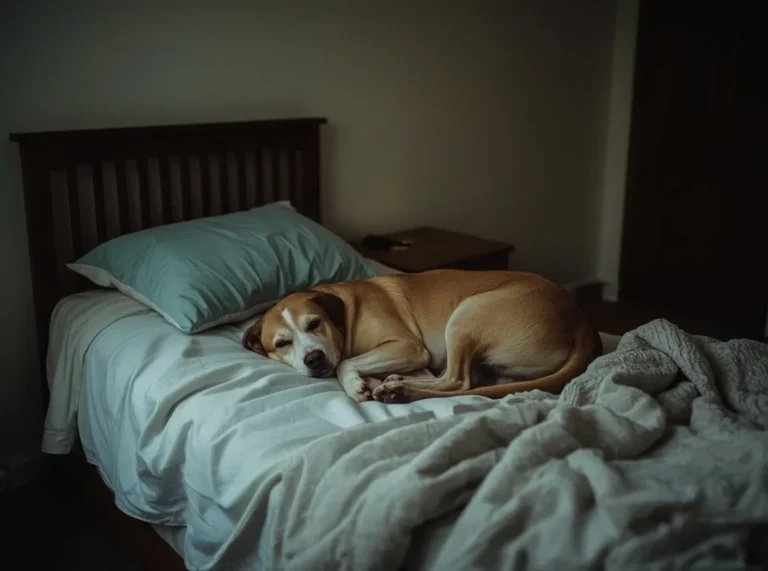
Look for tension in the body. Tight muscles, a tucked tail, a rigid posture, or quick glances toward doors and windows can suggest the dog is not fully resting. The dog may lie down only after receiving repeated verbal reassurance or physical contact.
A dog that constantly seeks reassurance indoors may be asking for help regulating discomfort, not just attention.
Some dogs are highly people-focused by nature
A few breeds and individuals are especially tuned to human presence. They read motion closely and prefer to remain in contact with their owner’s routine. In a calm dog, this shows up as companionship. In a less secure dog, it can slide into dependence.
The difference often lies in flexibility. A balanced dog can enjoy closeness and still settle alone. A dependent dog seems unable to trust the room unless a person is actively nearby.
How owners often misread the behavior
Many people interpret reassurance-seeking as simple attachment, and sometimes it is. But when the behavior becomes frequent, it often carries more complexity. A dog that keeps asking for comfort is not necessarily being dramatic. It may be struggling with self-regulation.
“My dog just wants attention” is only part of the story
Attention-seeking and reassurance-seeking can overlap, but they are not identical. A dog that wants play may bring a toy, bark, or act lively. A dog that wants reassurance often looks uncertain, watches closely, and settles only after confirmation.
That difference matters because the response should match the need. If the dog is truly anxious or overstimulated, constant excitement may make things worse. If the dog is bored, quiet companionship or a more structured day may help more than repeated soothing words.
Clinginess can hide discomfort
Some dogs stay near their people because it reduces their sense of exposure. Indoors, that can look like sweet devotion. Underneath, it may be a habit shaped by insecurity, especially if the dog rarely chooses to rest in another part of the house.
Owners often notice that the dog relaxes only when touched or spoken to. That pattern suggests the reassurance is functioning like a stabilizer. The dog is using the owner as a kind of anchor.
When the behavior becomes more noticeable
Reassurance-seeking often increases during specific moments. Those moments can reveal what the dog finds hardest about indoor life.
After schedule changes
A later walk, an unexpected visitor, a missed meal, or a different work-from-home routine can unsettle a dog that depends on predictability. The dog may become more vocal, more watchful, or less willing to settle on its own.
Even positive changes can trigger this. A new bed, a moved crate, or a different sleeping arrangement can make the indoor environment feel unfamiliar for a while.
During quiet evenings
Some dogs do better when the house is active because movement gives them context. When the household becomes quiet, they seem to realize that they are responsible for deciding what happens next. That can bring out more checking behavior.
Others are the opposite. They settle more easily once the day slows down. The pattern itself is informative. A dog that only relaxes when the house is busy may be using outside stimulation to avoid paying attention to internal unease.
When people are emotionally inconsistent
Dogs notice tone, posture, and energy quickly. A household that is calm one day and tense the next can encourage extra monitoring. The dog may start tracking people closely because it cannot predict how the room will feel from one hour to the next.
This does not mean owners need to act perfectly calm all the time. It means the dog benefits from enough consistency that it does not have to keep checking whether the emotional weather has changed.
What helps a dog feel safer indoors without overdoing reassurance
Comfort matters, but the goal is not to create a dog that can only settle when being constantly soothed. The better path is to make the home feel understandable, stable, and worth relaxing in.
Reliable routines support confidence
Regular feeding times, predictable potty breaks, and a fairly steady daily rhythm can reduce the need for repeated checking. When the dog can anticipate what comes next, it often becomes less dependent on human cues for every transition.
Routine should be realistic, not rigid. Dogs do not need perfection. They need enough pattern to stop feeling surprised by ordinary parts of the day.
Calm independence can be built into the day
Dogs that need reassurance often benefit from short, successful periods of being on their own in the same room. A comfortable bed, a chew, or a quiet corner can help them practice settling without direct contact every second.
The point is not to ignore them. It is to show that the home still feels safe when attention shifts elsewhere. Small successes matter more than long training sessions.
Physical and mental activity reduce inner restlessness
A dog that has had enough exercise and mental work is usually better able to rest indoors. Sniffing games, short training bursts, and walks with time to explore can lower the pressure to seek constant reassurance later. The dog’s brain has had something useful to do.
For some dogs, the difference is striking. They still enjoy proximity, but they no longer act as if they need a human to interpret every moment of the day.
If a dog seems unable to relax indoors, the answer is not always more attention. Sometimes it is a steadier rhythm, a quieter room, or more opportunities to use energy in a meaningful way.
How the behavior changes with repeated experience
Dogs are adaptable. A dog that leans hard on reassurance today may become more balanced over time if its environment becomes predictable and its confidence grows. But the pattern can also deepen if every small concern is immediately reinforced by constant soothing and no other skills are allowed to develop.
That is why the same behavior can mean different things at different stages. A newly adopted dog may need close contact for a while simply to understand the household. A mature dog who still cannot rest without checking in may be showing a longer-term sensitivity that needs more thought.
What matters most is whether the dog can eventually settle without continuous input. If it can, the behavior may just reflect a temporary adjustment period. If it cannot, the dog is telling you that indoor life still feels harder than it should.
The quiet signal behind the need for constant reassurance
A dog that keeps seeking comfort indoors is usually responding to something specific, even when the cause is not obvious. The room may be too unpredictable, the routine too loose, the dog’s temperament too sensitive, or past experiences too strong to ignore. Often it is a blend of several things.
Once the pattern is seen clearly, the behavior makes more sense. The dog is not being difficult. It is asking the people around it to make the indoor world feel steady enough to trust.
When that steadiness is present, the dog does not have to keep checking quite so often. It can finally rest, not because it was told to, but because the home has started to feel safe on its own.