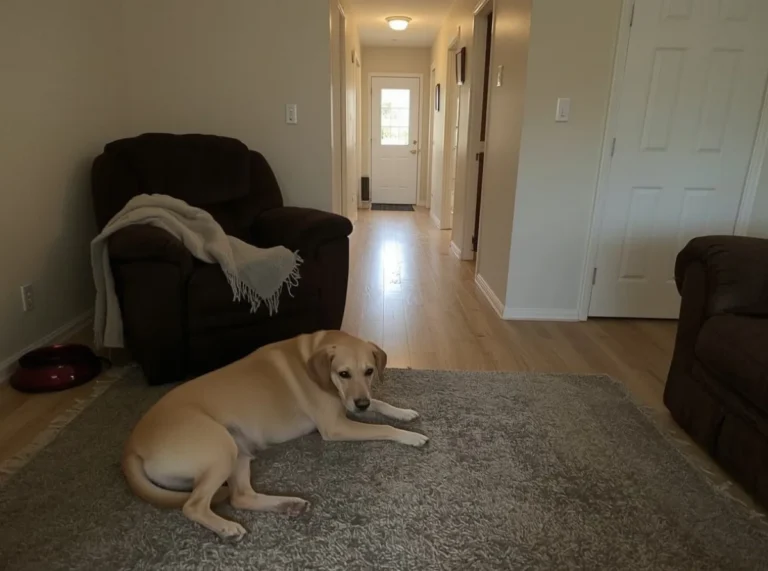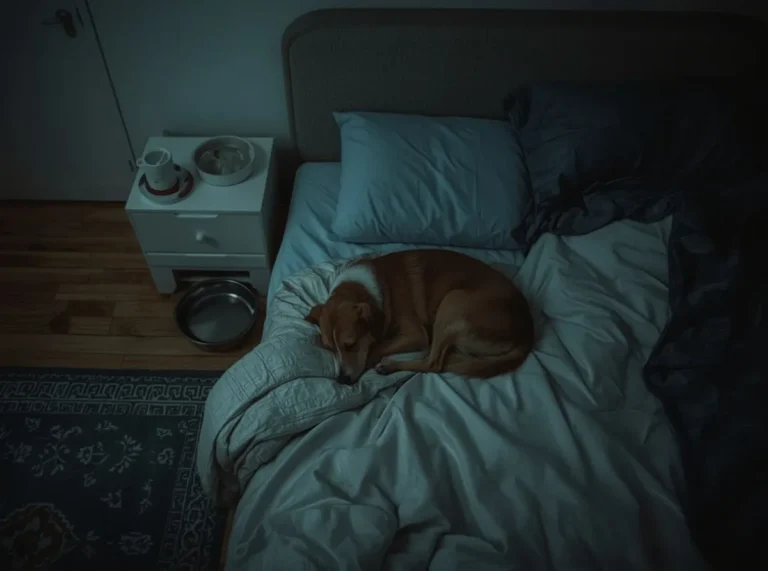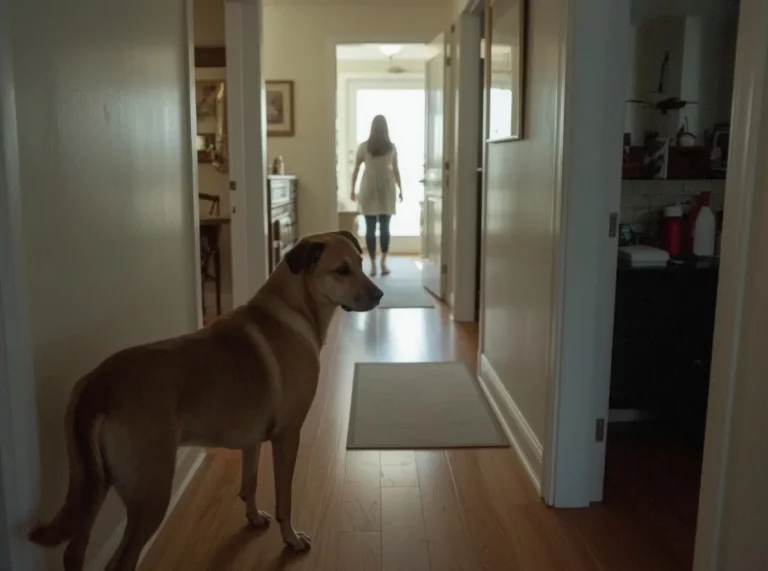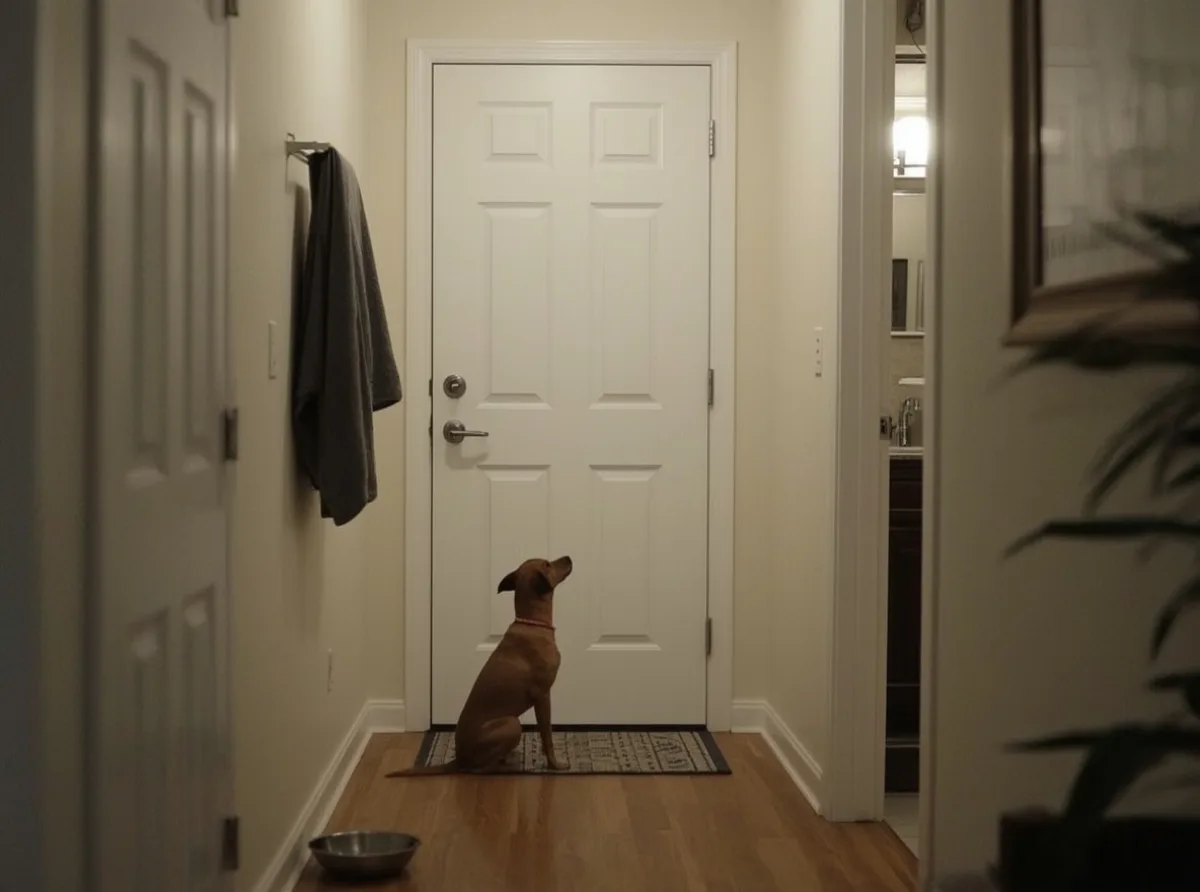
It is one of those small household mysteries that dog owners notice right away. You close the bathroom door, and moments later there is a quiet presence on the other side. Sometimes the dog lies down with a sigh. Sometimes it sits alertly, ears tuned to every sound. Sometimes it paws once, then settles in to wait.
This behavior can look amusing, clingy, thoughtful, or a little bit dramatic. In most homes, though, it is not random. A dog waiting outside the bathroom door is usually showing a mix of attachment, routine, curiosity, and a strong preference for staying close to its people.
The exact reason can change from one dog to another. For some, the bathroom door is just the shortest path to the person they care about. For others, it is a place where an interesting ritual always happens. And for a few dogs, the habit may reflect boredom, uncertainty, or a dislike of being separated, even for a few minutes.
What the behavior looks like in daily life
Dogs do not all wait outside the bathroom in the same way. Some stand directly at the door with their nose pressed to the gap. Others rest a few feet away, but never go far. A few choose the hallway and keep watch from a distance, as if they are respecting the boundary while still remaining available.
In many homes, the behavior appears most clearly during predictable moments. Morning routines, bedtime, and times when the household is quieter often make it more noticeable. The dog may follow its person from room to room all day, but the bathroom door seems to matter more because it closes suddenly and interrupts contact.
That small interruption can be enough to trigger a response. Dogs are social animals. They notice patterns fast. If a person walks away without warning and the bathroom door blocks access, the dog may simply wait because that is the easiest way to stay connected.
Attachment is often the simplest explanation
Many dogs wait outside the bathroom door because they like being near their person. This is not necessarily anxiety. In a comfortable, secure dog, closeness is often a normal preference. The bathroom door becomes just another place where the dog chooses to remain within reach.
Dogs build their day around their humans more than many people realize. They learn where the important activity happens, who opens the refrigerator, who goes outside at certain times, and which door usually means “not now.” When a favorite person disappears behind a bathroom door, the dog may not understand why that one short separation feels different from all the rest.
For some dogs, it is about simple social bonding. They want to be part of whatever is happening. They may not need constant interaction, but they still prefer proximity. Waiting outside the bathroom is an easy way to keep that connection without doing much at all.
When a dog waits calmly outside the bathroom door, the behavior often reflects closeness rather than neediness. Calm waiting usually means the dog feels safe enough to stay nearby.
The bathroom may be part of a familiar routine
Dogs thrive on repetition. A repeated daily pattern can turn almost any location into a meaningful place. If a person often talks to the dog, gives a quick pat, or opens the door after a few minutes, the dog begins to learn that waiting there leads to the next part of the day.
Routine also explains why some dogs become especially interested in bathroom visits at certain times. Morning bathrooms trips often happen before breakfast, before walks, or before the household starts moving. Evening bathroom visits may come right after a walk or during the quiet transition toward sleep. The dog notices these links and begins to anticipate them.
There is also the matter of habit reinforcement. If a dog once waited outside the bathroom and then received attention, praise, or a cheerful reunion, the behavior may become more likely. Dogs repeat what seems to work. Even a tiny reward can strengthen a pattern over time.
Common routine-based triggers
- The person always comes out soon after
- The bathroom visit happens before something enjoyable, like a walk or meal
- The dog has learned that bathroom time is part of the daily sequence
- The household is quiet, making the door closure stand out more than usual
Curiosity plays a larger role than many owners expect
Dogs pay attention to movement, scent, and sound. A bathroom can be a strangely interesting place because it is packed with all three. There are unique smells, running water, cabinet sounds, and the familiar scent of the person inside. To a dog, that combination can be compelling even without any emotional drama attached to it.
Some dogs wait because they are curious about what is happening behind the door. They may hear a sink turn on, a cabinet open, or a shower begin. Even if the dog has no intention of entering, the room itself holds attention because it signals a change in the environment.
In homes with very observant dogs, bathroom time may become one more thing worth monitoring. The dog is not necessarily focused on the bathroom as a special place. It may simply be responding to the fact that a person has stopped moving and a closed door has created a small mystery.
Separation sensitivity can show up in subtle ways
Sometimes the habit is more than routine or curiosity. A dog that seems unable to relax away from the bathroom door may be showing mild separation sensitivity. That does not always mean a serious problem. It can appear as quiet dependence, fussing, or an inability to settle when a favorite person is out of sight.
The difference is often in the body language. A relaxed dog may lie down, yawn, or drift into sleep. A more worried dog may pace, whine, scratch at the door, or repeatedly check the hallway. It may also follow its person with unusual intensity before the bathroom door closes, as if trying to prevent the separation from happening at all.
In these cases, the bathroom becomes a test of tolerance. Because the separation is brief and unavoidable, the dog shows its feelings clearly. Some dogs handle it with patience. Others find it harder than expected.
A dog that waits quietly is usually signaling comfort. A dog that cannot settle, whines, or scratches may be telling a different story about stress or insecurity.
Body language tells the real story
The same behavior can mean very different things depending on how the dog carries itself. A loose body, soft eyes, and a relaxed posture suggest calm attachment. A dog might even look sleepy while waiting. That usually points to comfort and routine.
Tension changes the picture. A stiff body, fixed stare, pricked ears, or repeated movement toward the door can suggest alertness rather than calm waiting. Some dogs stand close to the door with their weight shifted forward, ready to move at the slightest sound. That kind of posture can reflect concern, not just interest.
Vocalizing matters too. A single sigh is very different from persistent whining. Gentle waiting is usually easy to live with. But repeated distress signals may deserve more attention because they suggest that the dog is not simply being social. It may be struggling with the idea of being separated, even briefly.
Signals that usually look relaxed
- Loose posture
- Slow blinking or soft eyes
- Lying down instead of pacing
- Quiet breathing
- Brief interest followed by calm waiting
Signals that may suggest stress
- Whining or scratching
- Restlessness and pacing
- Stiff body posture
- Repeated checking of the door
- Inability to settle until the door opens
The behavior can be stronger in busy or tightly bonded households
Household rhythm matters. In a quiet home where people move slowly and doors stay open, a dog may barely notice bathroom time. In a fast-paced home, the bathroom door may represent one of the few closed-off moments in an otherwise active day. The contrast can make the dog more likely to wait close by.
Strong attachment also increases the chances. Dogs that shadow their humans around the house often treat the bathroom as no exception. They do not necessarily want to go inside. They just do not want to lose track of where their favorite person went.
This can happen more often with dogs that are especially people-oriented by nature. Some breeds and individuals are simply more likely to follow, observe, and maintain contact. Still, personality matters more than breed labels in many cases. A single dog’s habits can differ widely from another dog of the same breed.
Age can influence how strongly the habit appears
Puppies often wait outside the bathroom because they are still learning where people go and how the house works. Everything is new. A closed door can feel unusual, and a puppy may respond by following, watching, or calling out for attention.
Adult dogs may settle into the habit because it has become part of the household pattern. They know their person will come back. The waiting becomes ordinary and even comforting. Many adult dogs are happiest when they can remain nearby without needing direct interaction.
Older dogs may also wait outside the bathroom, though the reasons can become more practical. A senior dog may prefer familiar locations, regular routines, and close proximity because those things feel predictable. If mobility changes with age, staying near the bathroom door may simply be easier than wandering off to another room.
Different motivations can overlap
It is common for more than one reason to be involved at the same time. A dog may be attached, curious, and routine-oriented all at once. That combination can make the behavior look stronger than it really is. The dog is not choosing between emotions the way a person would. It is responding to several cues together.
For example, a dog might wait outside the bathroom because the person is important, the smell is familiar, and there is a habit of talking through the door. Another dog may wait simply because the hallway is the shortest route back to the kitchen, where the next activity usually happens. Small details matter.
That is why context is so useful. One dog waiting quietly for two minutes is not the same as another dog that becomes distressed whenever a door closes. The outward behavior may look similar, but the emotional weight behind it can be very different.
When the behavior is playful or neutral
Not every dog waiting outside the bathroom is making a deep emotional statement. Sometimes the behavior is completely neutral. The dog may have chosen the spot because it offers a clear view of the hallway, a cooler patch of floor, or the best angle to hear the door open.
Other times the behavior is lightly playful. A dog may bring a toy, lie down with exaggerated patience, or peek around the corner every few seconds. These small gestures can make the waiting look more dramatic than it is. The dog may simply be participating in the household rhythm in its own way.
Neutral or playful waiting usually does not come with tension. The dog can disengage if something else catches its attention. It might wander off to drink water, find a toy, or settle in another room. That flexibility is a useful sign.
When the behavior may need closer attention
Waiting outside the bathroom is usually harmless. Still, the pattern becomes more meaningful if it comes with clear signs of distress or if the dog appears unable to function comfortably without constant access to its person. The behavior deserves more attention when it escalates into persistent anxiety.
Look for patterns rather than one-off moments. A single episode after a loud noise or unusual day does not say much. Repeated whining, door scratching, or frantic following can point to a dog that is struggling with separation, uncertainty, or a need for stronger routine.
Changes in the household can make the behavior more intense as well. A move, a new schedule, a recent adoption, visitors, or reduced exercise can all make a dog more alert to where people go. In those moments, the bathroom door may become a focal point for the dog’s need to stay connected.
If a dog only waits quietly, the habit is often simple. If the waiting turns into distress, the same behavior may be carrying a much heavier emotional load.
Why the bathroom specifically becomes the place to wait
The bathroom is often the only room in the house that closes completely and frequently. That alone makes it different. Unlike a bedroom or kitchen, it is usually entered and exited several times a day for short periods, which gives the dog many opportunities to learn the pattern.
It is also a place where the person’s sounds become especially noticeable. Water running, cabinet doors opening, and the change in footsteps all provide information. A dog outside the door is close enough to track every detail. That proximity can be reassuring.
And then there is the simple fact that the bathroom does not smell like the rest of the house. Dogs notice scent changes immediately. A room full of familiar human smell can become a strong magnet, even if the dog never steps inside.
How owners usually misread the habit
Many people assume the dog is being nosy or trying to invade privacy. Sometimes that is partly true, but the habit often has a softer explanation. Dogs are not usually motivated by human ideas of privacy. They are motivated by proximity, routine, and the need to stay connected to the social group.
Another common misunderstanding is assuming all bathroom waiting signals anxiety. It does not. Plenty of dogs do it calmly and without distress. The key is whether the dog can relax. A dog that lies down and waits peacefully is very different from one that seems upset the moment the door closes.
Some owners also underestimate how much dogs rely on visible movement. A closed door can interrupt the dog’s sense of where everyone is, especially in a busy home. Waiting outside the bathroom is often just the dog’s way of restoring that sense of order.
What the habit can tell you about the dog-human relationship
Dogs are constantly reading the social landscape of the home. Waiting outside the bathroom door often reflects a relationship built on trust and repeated contact. The dog has learned that the person returns, that the home is safe, and that staying nearby is usually the right choice.
That closeness can be reassuring for both sides. It does not always require extra training or correction. In many homes, it is simply part of how the dog participates in family life. The habit becomes one more small expression of attachment and familiarity.
At the same time, the behavior reveals how much dogs depend on consistency. A door is never just a door to them. It can be a signal about access, connection, and what comes next. Waiting outside it is often the dog’s way of keeping the day in balance.
Small changes that can affect the habit
Sometimes a dog that used to wait calmly begins pacing, whining, or refusing to leave the bathroom door. Other times the opposite happens, and a once-needy dog becomes more relaxed. Those shifts often trace back to changes in routine, energy, or environment rather than to the bathroom itself.
Exercise levels matter. A dog that has had enough activity is more likely to settle quietly. A dog with pent-up energy may struggle to wait calmly and instead turn the bathroom door into a point of fixation. Mental stimulation matters too. A busy mind is usually less likely to cling to one spot.
Household noise can also play a role. In a lively home, the dog may stay close because it wants to keep track of moving people. In a quieter home, waiting outside the bathroom can become more noticeable simply because there is less happening elsewhere.
A familiar habit with many possible meanings
When a dog waits outside the bathroom door, the most likely explanation is also the simplest one: it wants to stay near its person. That may reflect affection, routine, curiosity, or a mix of all three. Sometimes it is just a quiet part of family life. Sometimes it hints at more sensitivity beneath the surface.
The details matter. A dog lying calmly on the rug is giving a very different message from a dog pacing back and forth or scratching at the door. By watching posture, movement, and consistency over time, the behavior becomes easier to understand without turning it into something bigger than it is.
In the end, the bathroom door is often less important than what it represents. For many dogs, it marks a brief pause in access to the person they trust most. Waiting outside is simply their way of making that pause feel shorter.