Some dogs settle next to one person and seem to choose that spot night after night. They may ignore an open bed, a couch corner, or even another family member who would gladly share the same space. The habit can look simple on the surface, but it usually grows from a mix of comfort, routine, emotional attachment, and the way the dog experiences the home.
In many households, the choice is not random at all. A dog notices who moves slowly, who feels predictable, who lets them rest without being disturbed, and who gives them the kind of contact they like best. Sleeping beside one person can become part of the dog’s nightly pattern because that person feels familiar and safe in a very specific way.
It also helps to remember that dogs do not always choose based on affection alone. Temperature, habits, scent, body movement, previous rewards, and even sleeping position can influence where a dog wants to lie down. What looks like a strong emotional preference may be tied to several ordinary details that add up over time.
What This Behavior Looks Like in Everyday Life
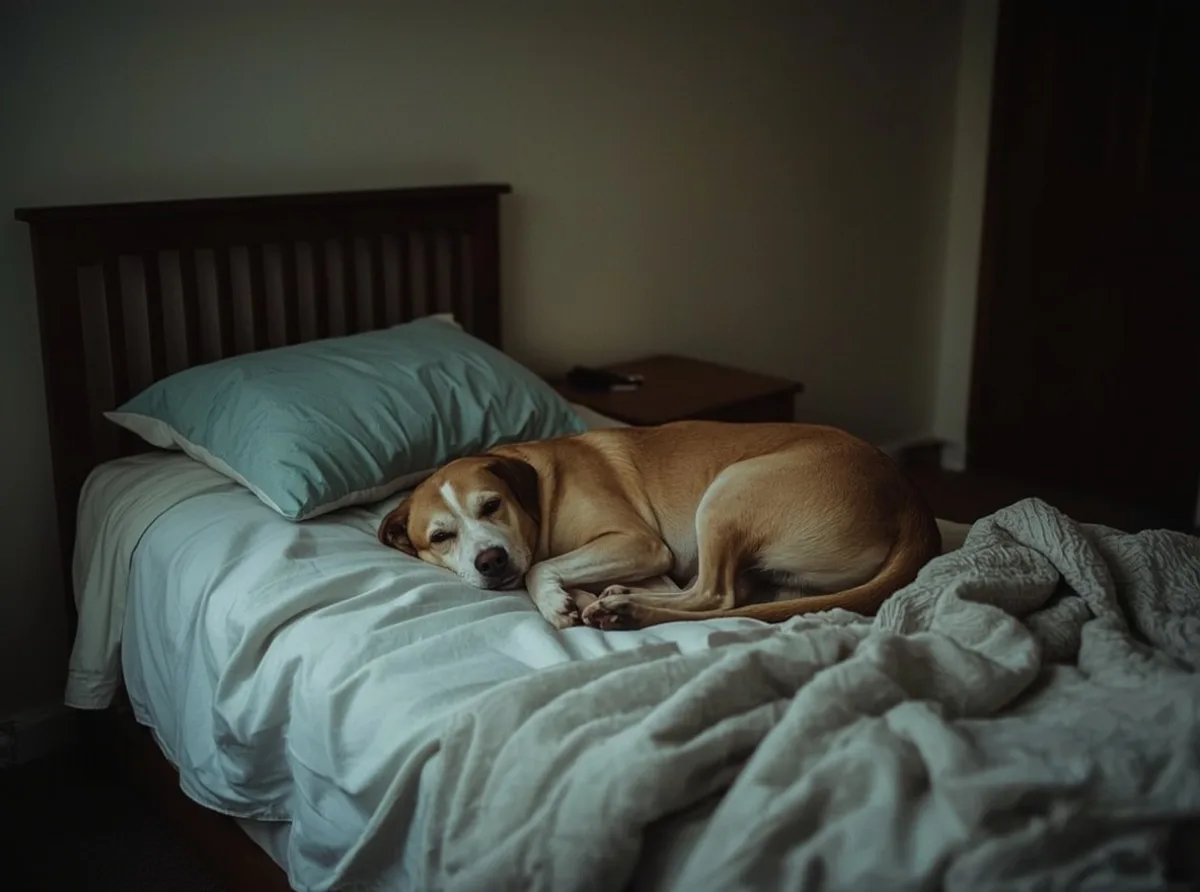
The pattern can show up in several familiar ways. Some dogs curl tightly against one person’s legs, while others sleep with their back touching a shoulder, hip, or foot. A dog may follow that person to bed, settle quickly, and ignore attempts from anyone else to invite them over.
Sometimes the preference appears only at night. During the day, the dog may move freely between people, but when it is time to rest, the same person becomes the clear choice. In other homes, the behavior is more constant. The dog naps beside that person on the couch, waits by their chair, and returns to the same side of the bed every evening.
Some dogs are subtle about it. They may not press close right away, but they still choose the same side of the room or the same end of the bed. Others are much more direct. They climb up, circle once or twice, and then settle in a way that leaves little doubt about their preference.
Common everyday patterns
- Sleeping with one person while ignoring others in the home
- Returning to the same side of the bed each night
- Choosing the person who falls asleep first or stays still longest
- Following one person from room to room before bedtime
- Settling more easily when that person is present
Why Some Dogs Gravitate Toward One Person
One of the most common reasons is familiarity. Dogs build strong associations through repetition, and the person who feeds them, walks them, or handles bedtime routines often becomes the most predictable presence in the house. Predictability matters a great deal to many dogs. It tells them what will happen next and lowers the amount of effort they need to spend figuring things out.
Physical comfort also plays a role. A dog may prefer the person who sleeps more quietly, turns over less, or keeps a steady position through the night. Some dogs like warmth. Others like coolness, open space, or a body that creates a stable boundary they can lean against. The dog is often selecting a sleeping arrangement, not just a favorite person.
Scent is another major factor. Dogs process the world through smell, and each person carries a distinct scent profile that can be deeply familiar to the dog. That scent can be calming, especially in a quiet room at night when other signals are reduced. A dog may lie beside one person because that smell feels like home.
Dogs often choose the person who combines predictability, comfort, and familiar scent. The behavior may reflect emotional attachment, but it can also reflect simple sleep preferences.
Emotional reasons that can shape the choice
- Attachment to the person who provides care most often
- A sense of safety around a calm, steady sleeper
- Preference for a person who responds gently to closeness
- Comfort with a familiar scent and nightly routine
- Past experiences that made one person feel especially reassuring
How Routine Shapes the Preference
Dogs are routine readers. They notice repeated patterns long before people realize it. If one person consistently handles bedtime, gives the last walk, or settles into bed at the same time each night, the dog learns that this person is tied to the transition into rest. Over time, that connection becomes strong.
Routine also influences how a dog feels about sleeping near people in general. A dog with a stable daily rhythm often becomes more settled at night because the evening sequence feels familiar. If one person is central to that sequence, the dog may lock onto them as the anchor point. The behavior becomes even more noticeable when the home gets quiet and the rest of the household starts to wind down.
Changes in routine can shift the pattern quickly. A dog that normally sleeps beside one person may become restless if that person starts working late, travels, or changes bedtime habits. When the routine changes, the dog may temporarily sleep elsewhere or wait longer before settling. That does not always mean the bond has changed. Often, the pattern simply lost one of its strongest cues.
Routine factors that matter more than people expect
- Who handles the last potty break or walk
- Who turns off lights and settles the room
- Who is still and quiet enough for the dog to relax near
- Whether bedtime happens at a consistent hour
- Whether the person’s presence usually leads to calm, undisturbed rest
Personality Differences Between Dogs
Not every dog responds to the same household in the same way. Some are naturally more social and want to be close to one preferred person most of the time. Others are independent but still choose one person at night because that relationship feels easiest or least complicated when they are tired.
Dogs with a sensitive temperament may gravitate toward the person who feels most emotionally steady. These dogs often notice tension quickly. They may seek the person who moves softly, speaks quietly, and does not interrupt their rest. More confident dogs can also show the same preference, but their reasons may be practical rather than emotional. They simply like one sleeping arrangement better than the others.
Age can matter too. Puppies often attach strongly to whoever meets their immediate needs and helps them feel secure. Adult dogs may show a more stable preference based on long-term habit. Older dogs sometimes become more selective, choosing the one person who offers the most consistent comfort and least disturbance.
What the Behavior May Signal About the Dog’s State of Mind
In many cases, sleeping beside one person is a sign of ease. The dog feels settled enough to lower their guard and rest deeply. That is not a small thing for an animal that remains alert to movement, sound, and changes in the environment even while asleep.
But the same behavior can sometimes reflect something more complicated. A dog that follows one person everywhere, including to bed, may be seeking reassurance because they feel uneasy when left alone. The difference is usually visible in the rest of the dog’s body language. A relaxed dog looks loose, soft, and unhurried. A stressed dog may stay tense, watch the person closely, or struggle to settle if that person is out of sight.
It helps to observe the whole pattern rather than the sleeping spot alone. A dog that chooses one person and then sleeps deeply, changes position comfortably, and seems relaxed during the day is showing a different picture from a dog that becomes anxious when separated, paces at bedtime, or refuses to rest anywhere else.
The same sleeping choice can mean very different things depending on the dog’s overall behavior. Calm attachment and worry can look similar at first glance.
Signs of relaxed closeness
- Loose muscles and easy breathing
- Changing positions without difficulty
- Sleeping deeply once settled
- Leaving the bed or couch and returning calmly
- Showing the same relaxed behavior during other parts of the day
Signs the behavior may be tied to insecurity
- Restlessness if the chosen person is not nearby
- Tension in the body even while resting
- Following the person very closely throughout the day
- Difficulty settling when the person leaves the room
- Vocalizing, pacing, or scanning the room at night
How the Home Environment Influences the Choice
The physical setting can make one person much more appealing than the others. Dogs often prefer the side of the bed with less movement, more room, or fewer disruptions. If one person sleeps more quietly or stays in the same position longer, the dog may naturally return to that side because it offers a smoother night.
Temperature matters more than many people realize. A dog may choose the person whose body heat feels best, especially in cooler months. In warmer homes, they may prefer the person who leaves more space or does not trap them under blankets. Even small details, like a person’s pillow habits or how often they get up during the night, can influence where the dog wants to rest.
Household noise can also shape the pattern. In busy homes, a dog may choose the one person who creates the calmest environment. That person may talk less at night, move with less urgency, or simply be easier for the dog to relax around. In quiet homes, the preference can still be strong because a dog learns which sleeping setup leads to the most uninterrupted rest.
When the Preference Becomes More Noticeable
The behavior often stands out during periods of change. If a dog is recovering from illness, adjusting to a new schedule, or living through a household shift, they may become more selective about where and with whom they sleep. One person may feel especially steady during those periods, and the dog may lean into that stability.
It can also become more visible when the dog is tired, overstimulated, or emotionally worn out. After a long day of visitors, outdoor activity, or loud household movement, many dogs want the easiest path to rest. That usually means choosing the person who feels most familiar and least demanding at the end of the day.
In some cases, the habit becomes stronger after a repeated positive experience. If the dog has slept better beside one person for weeks or months, the choice starts to feel automatic. The body remembers comfort. The dog returns to the same place without needing a reason that looks obvious to people.
How People Often Interpret It vs. What It May Actually Mean
Many owners assume the dog has picked a favorite in the same way a child might choose a favorite parent. Sometimes that is partly true. Dogs can absolutely form deeper bonds with one person. Still, the sleeping preference is often more layered than simple favoritism.
A dog may be choosing the person whose habits best match their own needs. That person may be the warmest, calmest, most predictable, or least disruptive sleeper in the house. They may also be the one who built trust through daily care and quiet consistency. Affection and practicality often overlap.
This is why the behavior can be misleading if viewed too narrowly. A dog sleeping beside one person does not automatically mean they love everyone else less. It may simply mean that one person offers the best combination of safety, routine, and comfort for that particular dog at night.
A sleeping preference is often a mix of emotional bond and practical comfort. It is rarely one single thing.
What to Notice in the Broader Pattern
The most useful clues come from looking beyond the bed. Notice who the dog seeks during calm moments, who they relax beside on the couch, and who they watch for when the house gets quiet. Notice whether the preference is steady or only appears during certain seasons, schedules, or stressors. A pattern that changes with circumstances usually points to comfort and routine. A pattern that stays fixed across many situations may suggest a deeper attachment.
Body language matters as well. A dog that settles with a soft face, loose limbs, and easy breathing is telling a different story from one that clings tightly and seems unable to relax elsewhere. The same sleeping position can carry different meaning depending on the dog’s comfort level, confidence, and daily behavior.
Sometimes the preference is simply the result of accumulated experience. The dog has learned that one person gives the smoothest bedtime transition, the quietest sleeping environment, and the safest place to rest. That alone can explain a great deal.
Closing Thought in Practice
When a dog keeps sleeping beside one person, the reason is usually rooted in comfort that has been repeated enough times to become a habit. The person may feel calmer, move less, smell familiar, or offer the kind of routine the dog understands best. Over time, those details become part of the dog’s idea of where rest belongs.
What makes the behavior interesting is how ordinary it often is. A dog does not need a dramatic reason to choose one side of the bed or one familiar body to lean against. Small comforts accumulate. Quiet patterns matter. And in a household full of noise, motion, and shifting schedules, one person can become the place where sleeping finally feels simple.