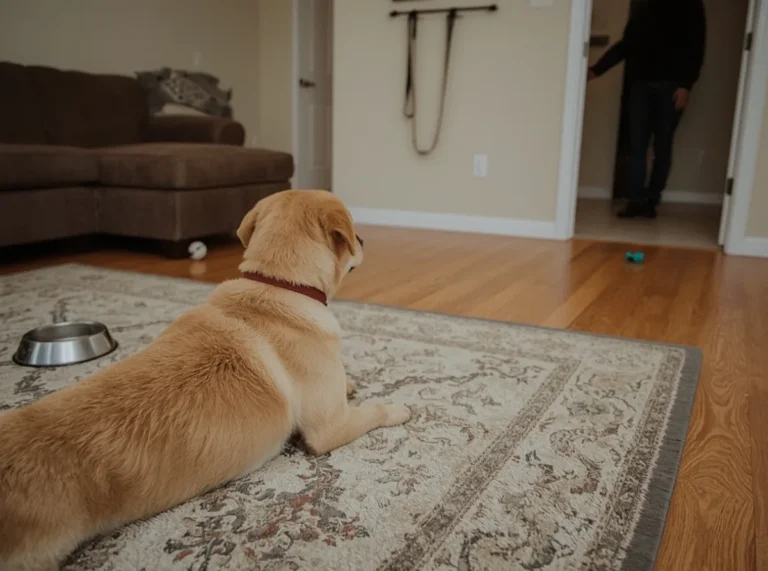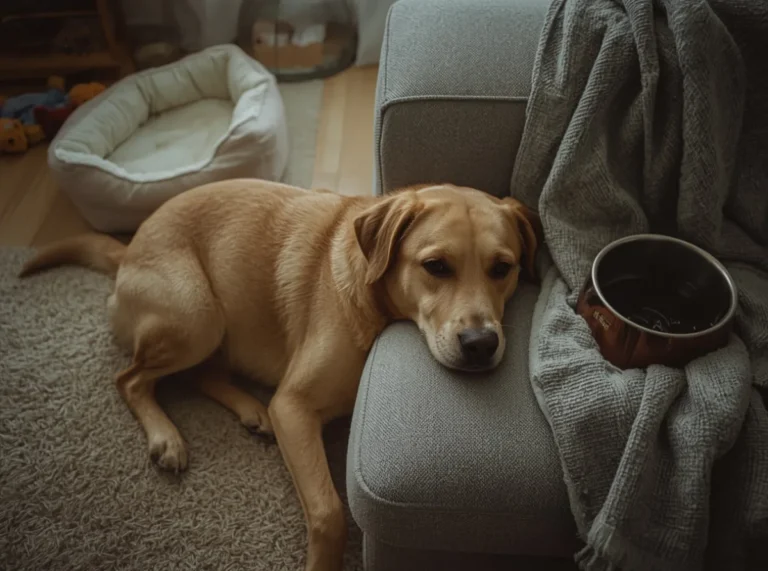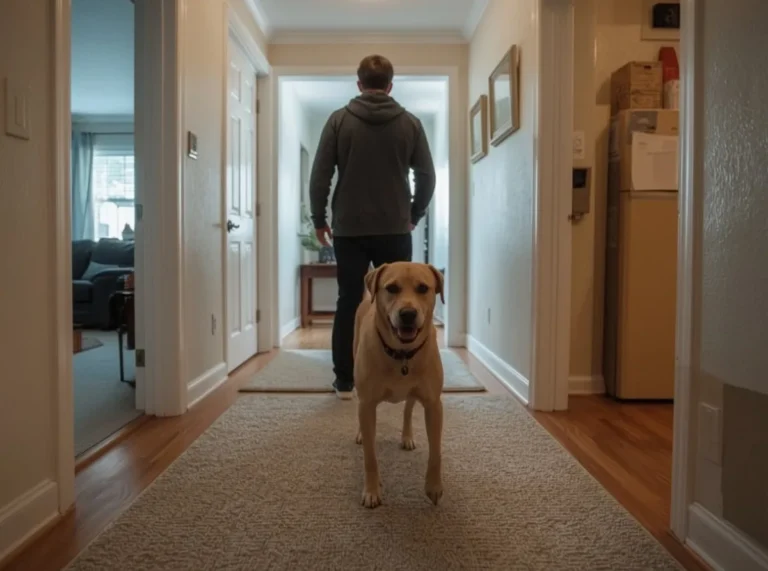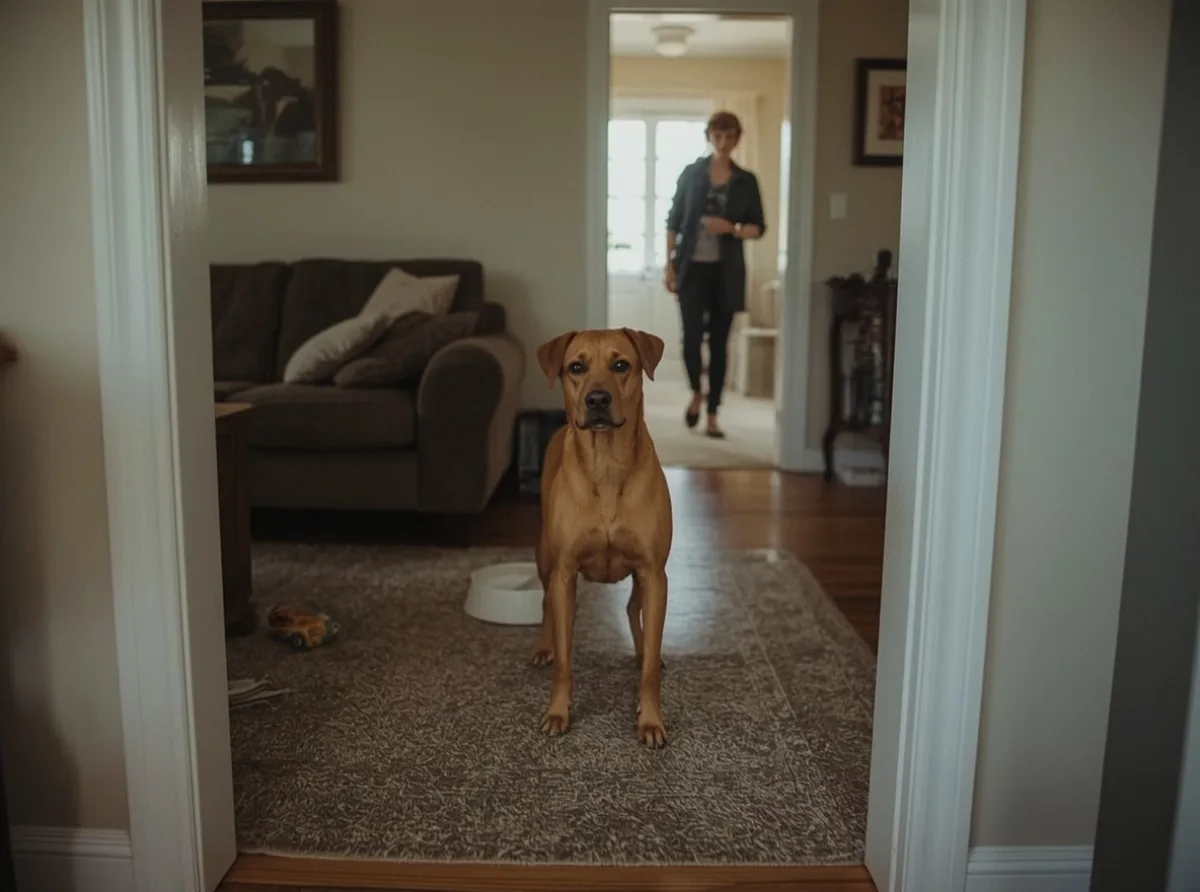
A dog that keeps checking on its owner is not always being clingy, and it is not always showing worry. Sometimes the behavior is soft and casual. Other times it happens again and again, almost as if the dog is taking quick mental notes: Are you still there? Are you okay? What are you doing next?
That repeated checking can show up in many small ways. A dog may follow from room to room, glance up from across the house, nudge a hand, or quietly appear near the doorway every few minutes. It often looks simple on the surface, but the reasons behind it can be layered.
Some dogs check in because they feel closely bonded to one person. Others do it because they are alert to movement, sensitive to routine changes, or unsure what comes next. The behavior can also reflect habit. Once a dog learns that staying near you leads to food, attention, reassurance, or access to the next activity, the pattern can become very strong.
What matters most is not just that the dog is checking on you, but how it is doing it. The same action can mean comfort, curiosity, anticipation, or stress depending on the dog’s posture, timing, and overall body language.
What Repeated Checking Looks Like in Daily Life
Many owners notice this behavior without naming it. The dog does not need to be glued to your leg to be checking in. A few looks from the hallway, a walk into the kitchen whenever you stand up, or a pattern of popping into the room when you move around can all count.
Some dogs are subtle. They sit nearby and keep one eye on their owner. Others are more obvious and shadow every step. A dog may nap in another room but wake up the moment it hears you open a cabinet, shift in a chair, or head toward the door.
In homes with routines, the checking often follows a rhythm. The dog notices when you make coffee, get dressed, pick up keys, or move toward the leash drawer. It is not always about emotion. In many cases, the dog is tracking patterns and trying to stay one step ahead of what happens next.
Repeated checking can also become more noticeable during transitions. A guest arrives. The house gets louder. Dinner is delayed. You work longer than usual. A dog that normally rests can suddenly become much more attentive, moving in and out of sight while monitoring the household.
Bond, Attachment, and the Need to Stay Close
One of the most common reasons dogs check on their owners is attachment. Dogs are social animals, and many build a strong preference for a particular person. That bond can make the owner feel like the dog’s reference point for safety, routine, and social connection.
This is especially clear in dogs that settle best when their person is nearby. They may not want constant contact, but they like to confirm where their owner is before relaxing fully. The repeated glance or quick visit can be a way of maintaining that connection without demanding interaction every time.
Some dogs are naturally more people-oriented than others. Breeds and individual temperaments vary widely, but the pattern is not only about genetics. Early experiences, consistency in the home, and daily interaction all shape how strongly a dog tracks its owner.
Repeated checking is often less about “neediness” and more about maintaining social contact and predictability.
In a close household relationship, the dog may have learned that the owner represents calm, feeding, safety, or companionship. Checking becomes a small habit that keeps the connection active. It can be reassuring for the dog even when nothing unusual is happening.
Curiosity and Information Gathering
Dogs are constantly collecting information. They watch movement, sound, and changes in routine. A dog that checks on its owner may simply be doing what dogs do best: observing and updating its sense of the environment.
This is easy to miss because the behavior can look emotional even when it is mostly practical. If you stand up, the dog wants to know whether you are leaving, feeding, opening a door, or starting a new activity. If you sit down with a phone or laptop, the dog may watch for a shift in attention.
Some dogs are especially tuned in to environmental cues. They pick up on small sounds and subtle body language. A glance from the dog may be a quick scan for clues rather than an expression of worry.
Curiosity often becomes stronger in dogs that do not have much else to do. In a quiet home, the owner’s movements become the most interesting event in the room. That does not mean the dog is anxious. It may simply have learned that you are the most important source of change in the environment.
How Routine Shapes the Behavior
Daily patterns can make repeated checking much more likely. Dogs are excellent at reading routines, and they quickly notice the sequences that matter. If a certain time of day always leads to a walk, food, or play, the dog may start checking in more often as that time approaches.
A dog may begin looking for its owner when the home becomes more active in the late afternoon. Another may check repeatedly after hearing the usual sounds of morning preparation. Over time, the behavior can become linked to specific moments rather than to the owner in a broad sense.
Routine also matters because it reduces uncertainty. A dog that knows what happens next often appears calmer and more settled. A dog that cannot predict the day may check more frequently, almost as if it is trying to fill in the missing pieces.
Common routine-related triggers
- Waking up and leaving the bedroom
- Preparing food or hearing kitchen activity
- Getting dressed for work or errands
- Picking up keys, bags, or shoes
- Moving between rooms without speaking
- Changes in the usual walk or meal schedule
When the checking lines up with a pattern, it usually means the dog has learned to anticipate what comes next. That can be comforting, but it can also create a habit of constant monitoring if the home life is highly variable.
Emotional State: Calm, Curious, Uneasy, or Alert
The emotional reason behind repeated checking is not always the same from one dog to another. A relaxed dog may check on its owner and then lie back down without tension. Another dog may do the same thing with a stiff posture, quick movements, and difficulty settling afterward.
That difference matters. The behavior itself is only one piece of the picture. A soft face, loose tail, and easy return to rest usually suggest comfort or mild interest. A tense body, fixed stare, pacing, or repeated inability to relax may point to unease.
The key question is not just “Is my dog checking on me?” but “How does my dog look while doing it?”
Some dogs are simply alert. They stay mentally engaged with their person because that is their normal social style. Others are scanning because something feels off. The same walk into the room can mean either of those things depending on the dog’s overall state.
A dog that checks repeatedly after a change in the home may be reacting to uncertainty. Loud visitors, construction noise, a new pet, different work hours, or a recent move can all increase vigilance. In those situations, the dog may be looking for reassurance or trying to make sense of the new pattern.
Subtle Signals That Often Travel With the Behavior
Repeated checking rarely happens alone. The surrounding body language gives important clues. A dog that is comfortable usually moves smoothly, keeps a loose posture, and settles again after looking at or approaching the owner. The behavior is brief and calm.
When the dog is more emotionally activated, the signs can become harder to miss. It may pant without heat, follow closely, shift weight from foot to foot, or keep returning even after being encouraged to rest. The eyes may stay fixed on the owner longer than usual.
Body language to notice
- Loose, relaxed tail movement
- Soft eyes and a neutral mouth
- Quick check-in followed by resting
- Pacing or repeated position changes
- Stiff body posture
- Persistent staring or hovering
- Frequent nudging or blocking behavior
Dogs often combine checking with physical closeness. Some lean against a leg, rest a chin on a knee, or stay just inside the owner’s line of sight. Those behaviors can be affectionate, but they can also be part of a pattern of seeking confirmation and stability.
When the checking is paired with inability to relax, the dog may not be fully comfortable on its own. That does not automatically mean a serious problem, but it does suggest the dog is using the owner as an emotional anchor more than usual.
What Owners Often Misread
People often assume repeated checking means the dog is bored, spoiled, or overly attached. Sometimes those ideas miss the mark. A dog may be watching because it has learned your habits extremely well. It may be waiting for a predictable event, not demanding attention for its own sake.
Another common misunderstanding is to treat the behavior as proof of separation anxiety. In reality, many dogs check on their owners without showing the broader pattern associated with true distress. If the dog can rest, eat, play, and stay calm when left with trusted care, the checking may be part of normal attachment rather than a deeper problem.
Owners also sometimes overlook the fact that attention can reinforce the habit. If every check-in gets immediate petting, talking, or feeding, the dog may learn that returning to the owner always produces a reward. That can strengthen the cycle even in dogs that were only mildly interested at first.
At the same time, ignoring the behavior completely is not always the answer. Dogs often check in for good reasons, and a little response can help them feel secure. The practical challenge is knowing whether the dog is seeking information, comfort, or stimulation.
When the Home Environment Makes It Stronger
Environment plays a major role in how often a dog checks on its owner. A calm, predictable home may produce brief, occasional check-ins that feel easy and natural. A busier home can create more frequent monitoring because there is more happening to track.
Noise matters. So do movement, visitors, and changes in temperature or light. A dog that hears doors opening all day may become more alert. A dog in a quiet house may focus almost entirely on the owner because there are fewer competing distractions.
Physical space can also shape the behavior. In a smaller home, the dog may keep track of the owner because movement is easy to notice. In a larger house, checking may happen in bursts as the dog moves between rooms to reconnect and reorient itself.
Dogs that do not get enough exercise or mental engagement often become more invested in the owner’s activities. This is not always due to anxiety. Sometimes the person simply becomes the main source of stimulation in an underfilled day.
Environmental patterns that can increase checking
- Frequent schedule changes
- Long periods of indoor inactivity
- Busy households with unpredictable noise
- Limited independent activities for the dog
- New pets, guests, or household stress
- Rooms that separate the dog from regular sightlines
Age, Experience, and Life Stage
Puppies often check on their owners because they are still learning how the household works. They need help understanding what is safe, what is expected, and where to go for comfort. A puppy that keeps returning to a person’s side is often gathering confidence as much as affection.
Adult dogs may show the behavior in a more settled way. They already know the people and the routine, so repeated checking can become a steady habit rather than a sign of uncertainty. The dog may look in on its owner simply because that is part of its daily rhythm.
Older dogs can check in more frequently for different reasons. Some become more dependent on predictable routines. Others become more visually or hearing-sensitive and use proximity to stay oriented. Age-related changes can make the owner feel like a safer reference point.
A dog’s history matters too. Rescue dogs, dogs with unstable backgrounds, and dogs that have experienced many household changes may watch their owners closely at first. Some keep that habit for years. Others relax as they learn that their environment is dependable.
How Different Forms of Checking Point to Different Meanings
Not all check-ins look the same. A relaxed glance from across the room carries a different meaning from a dog that rushes in, circles, and cannot settle. The difference may seem small, but it changes the interpretation a lot.
Calm checking
This is usually brief and soft. The dog looks over, perhaps walks by, then returns to resting or another activity. It tends to reflect connection, awareness, or curiosity.
Frequent, restless checking
This version is more active. The dog may keep returning without relaxing, especially during changes in routine or after long periods of inactivity. It can signal uncertainty, overstimulation, or anticipation.
Protective or vigilant checking
Some dogs check on their owners while also monitoring the room, the door, or a specific sound. They may be responding to a sense that something important is happening. Their focus is broader than the owner alone.
These differences are why context matters so much. The same dog may show one version in the morning and another in the evening. The behavior is not fixed. It shifts with energy level, environment, and emotional state.
What the Behavior May Be Telling You Over Time
Repeated checking is often a stable pattern, but its meaning can change. A dog that checks quietly while feeling secure may keep doing that for years. A dog that begins checking more intensely after a move or schedule change may be signaling that it needs help adjusting.
Long-term observation helps reveal whether the pattern is steady or growing. If the dog checks occasionally, then returns to rest, that is one picture. If the checking becomes constant, tense, or difficult to interrupt, that is a different picture and deserves closer attention.
Changes in the behavior can be useful clues. More checking after loud noises, household tension, or reduced exercise often points to a change in the dog’s daily balance. Less checking after routines become predictable may suggest the dog is settling in and feeling more secure.
A repeated check-in is often a small message, but the pattern around it tells the real story.
Owners who pay attention to when the behavior happens usually learn a lot. Time of day, location, recent events, and body language together create a clearer picture than the action alone ever could.
Everyday Reasons the Behavior Becomes More Noticeable
Some moments invite more checking than others. When owners are sick, working at home, recovering from stress, or spending more time in one room, dogs often become more observant. They may be trying to match the new rhythm or respond to a shift in the household atmosphere.
Dogs also tend to check more when something in the day feels unfinished. If a walk was shorter than usual, dinner came late, or playtime was skipped, the dog may keep returning to the owner as if asking for the missing piece.
Even small changes can matter. A different coat, a new bag, visitors staying longer than expected, or an unusual amount of phone use can all catch a dog’s attention. Repeated checking may simply be the dog’s way of keeping the picture updated.
In some homes, the behavior fades when the dog’s life becomes richer and more predictable. More exercise, structured feeding, regular rest, and independent enrichment can reduce the need to monitor the owner so closely. In other homes, the checking remains part of the dog’s personality. It becomes one of the ways the dog stays connected.
A Natural Part of Dog–Human Communication
Dogs live very closely with people, so they learn to read us in small, practical ways. Repeated checking is one of those quiet forms of communication. It can mean “I see you,” “What happens next?” “I’m staying close,” or “Something feels different today.”
The same behavior can hold more than one meaning at once. A dog may love its owner and still be unsettled by noise. It may be independent in some settings and watchful in others. It may simply enjoy being part of the owner’s movements through the house.
That is why the most useful response is usually observation, not assumption. Watch the posture. Notice the timing. Pay attention to what changed just before the behavior started or intensified. Those details often explain more than the act itself.
Repeated checking is one of the clearest ways dogs show that their people matter to them. Sometimes it is warm and easy. Sometimes it is a sign that the dog wants more stability. Either way, it is part of the everyday conversation dogs have with the people they trust most.