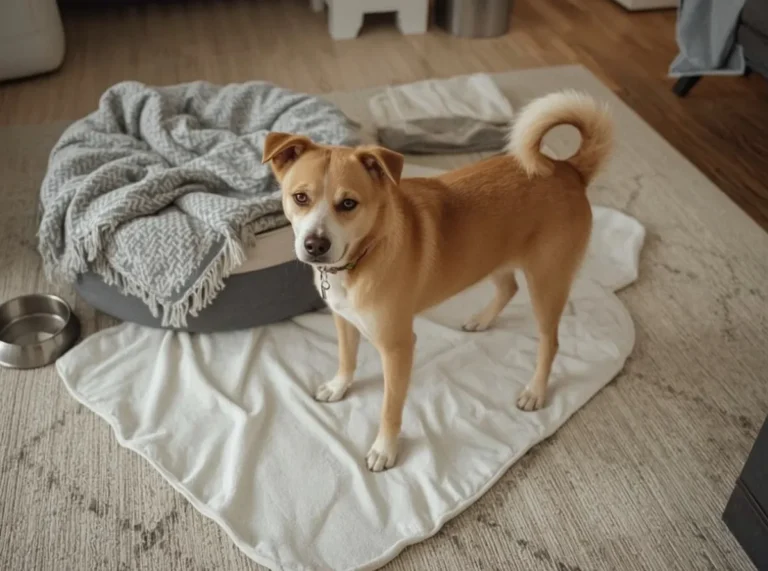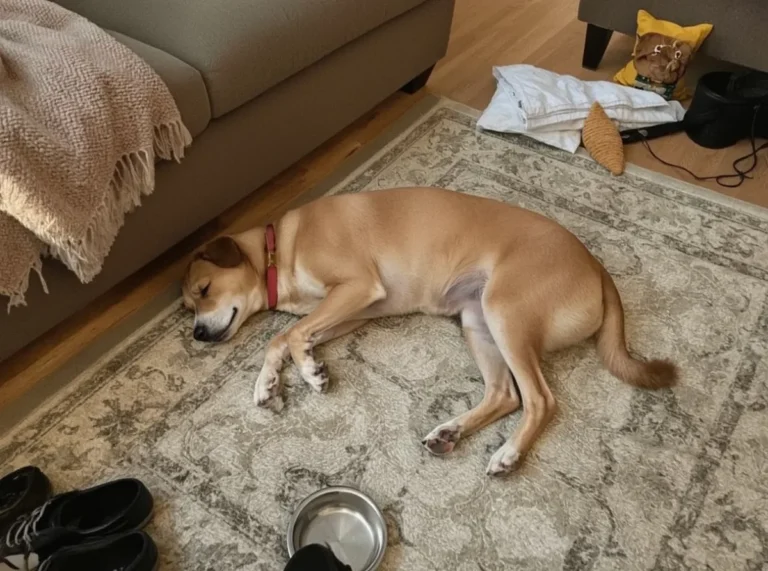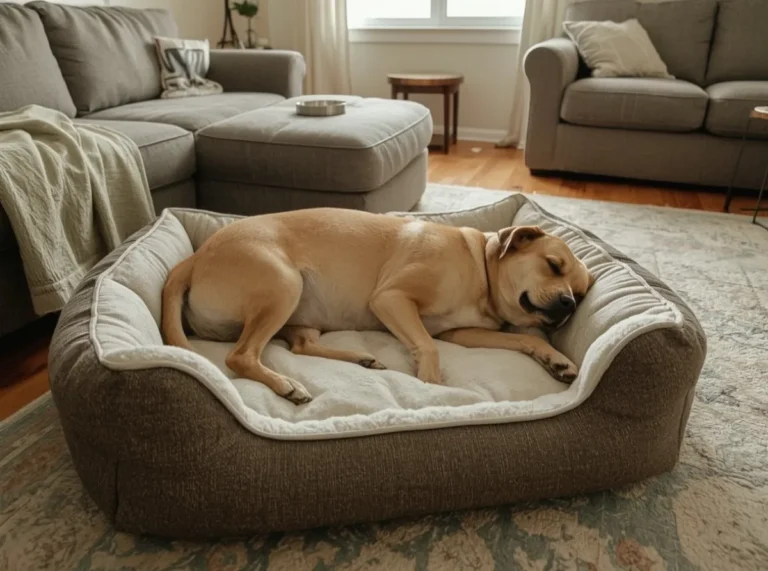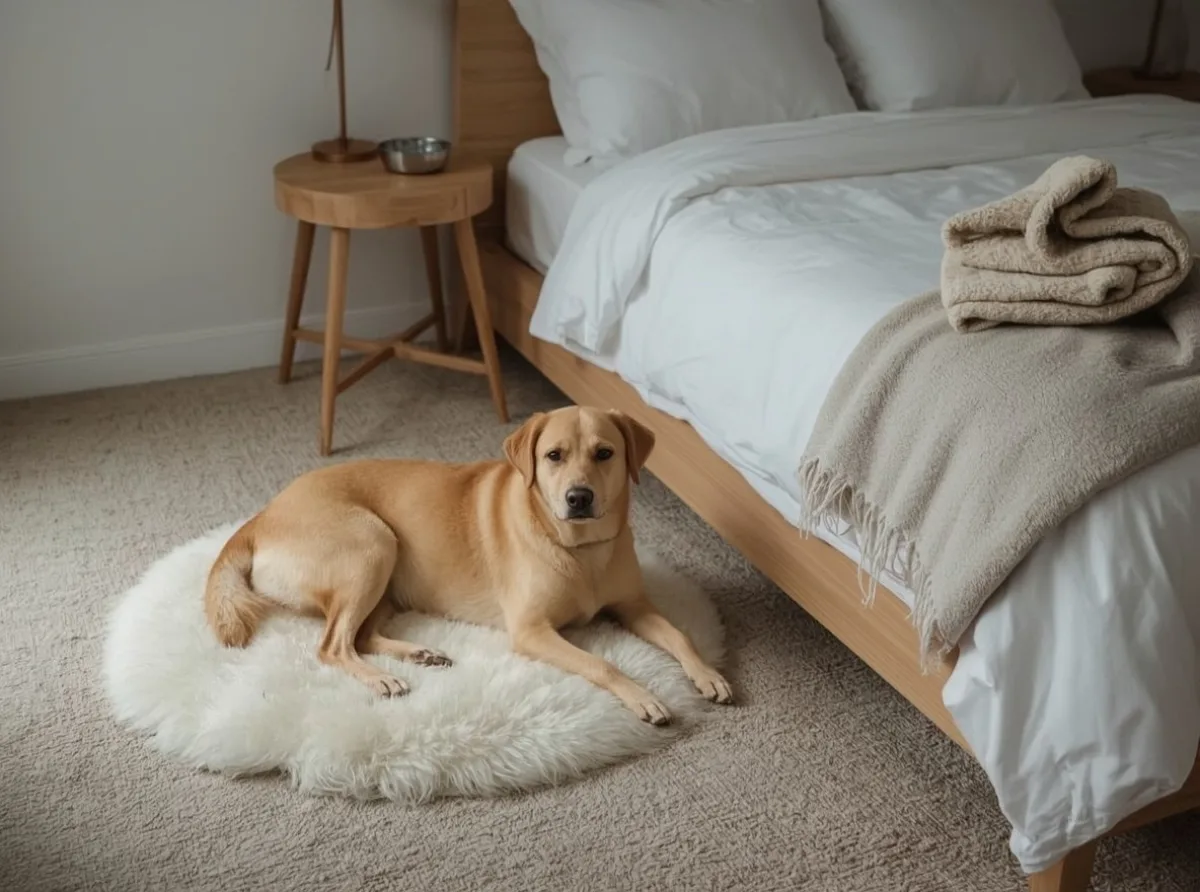
Some dogs settle beside their owner the moment the lights go out. Others circle the room, test a few spots, and then choose the edge of the bed, a rug near the couch, or the floor right next to a favorite chair. The pattern can seem simple on the surface, but it often reflects a mix of comfort, habit, attachment, and awareness of what is happening around them.
Sleeping near a person is not always about neediness. For many dogs, it is a practical choice. The owner’s scent is familiar, the household sounds are easier to read, and the location feels predictable. A dog may not be trying to make a statement at all. It may simply be choosing the place that feels safest and most restful.
That choice can also change from night to night. A dog that usually sleeps across the room may move closer during storms, after a busy day, or when the home feels different than usual. A dog that normally wants full contact may suddenly prefer a few feet of space. These shifts often tell a more interesting story than the habit itself.
What Sleeping Near the Owner Often Looks Like
The behavior shows up in different ways. Some dogs press against a leg or tuck themselves under a blanket near the bed. Others sleep on the floor beside the mattress, next to the couch, or near the doorway to the bedroom. A few follow their owner from room to room and choose the nearest resting place once the person stops moving.
In many homes, this behavior blends into everyday life. The dog may nap nearby during the day and sleep in the same area at night. It might rise when the owner gets up, then settle again once the person returns. That repeated closeness can be quiet and low-key, yet still very deliberate.
Not every version of this behavior means the same thing. A relaxed dog may stretch out nearby, breathe evenly, and sleep deeply. A more watchful dog may remain partially alert, turning an ear toward each sound in the house. The location can be the same while the meaning behind it is very different.
Common everyday signs
- Choosing a spot within sight of the owner
- Following the owner from room to room before resting
- Sleeping at the bedroom door or bedside
- Moving closer during nighttime noises
- Changing position to stay near a familiar scent
Attachment Is Often Part of the Story
Dogs are social animals, and many naturally build strong bonds with the people who feed them, handle their routines, and offer daily comfort. Sleeping nearby can be one way that bond appears in daily life. The owner is not just a person in the house; in the dog’s mind, that person may represent safety, consistency, and access to the rhythm of the household.
This does not automatically mean separation is difficult for the dog. Plenty of stable, confident dogs still prefer to sleep close because closeness is pleasant and familiar. They are not necessarily anxious. They are choosing a social position that feels rewarding.
Sleeping near an owner can reflect attachment without indicating distress. The same behavior can come from comfort, routine, and social preference, not just anxiety.
Some dogs are simply more relationship-oriented than others. Breed tendencies, early experiences, and everyday reinforcement all shape that preference. A dog that has spent years sleeping near family members may continue to do so because it is now part of the household pattern, not because it is especially dependent.
Security Matters More Than Many Owners Realize
A dog often sleeps near its owner because that location feels easier to trust. At night, the house becomes quieter, movement slows down, and small sounds stand out more clearly. Being close to a familiar person can help a dog relax in a setting that otherwise feels less active and more uncertain.
In a dog’s mind, proximity can reduce the need to monitor the entire room. If the owner is nearby, the dog may feel less pressure to patrol or stay on constant alert. That can lead to deeper rest. The body softens, breathing slows, and the dog can drop into sleep more fully.
This is especially noticeable in dogs that are naturally sensitive. A dog that startles easily may choose a spot close to the owner because the environment feels easier to manage there. Even if nothing upsetting is happening, the preferred sleeping place may be the one that requires the least vigilance.
Situations that can increase the need for closeness
- Thunderstorms or heavy rain
- Houseguests or unfamiliar overnight activity
- Moving to a new home
- Changes in routine, such as travel or late nights
- New noises from neighbors, appliances, or construction
Routine Shapes the Habit More Than People Expect
Dogs are quick to learn patterns. If sleeping near the owner has repeatedly led to warmth, calm, petting, or simply fewer surprises, the habit can become very strong. The dog may not be choosing closeness every night from scratch. It may be following a learned preference that has been reinforced for months or years.
Small details matter. A dog that gets tucked in beside the bed every night may begin to expect that setup. A dog that is allowed to climb onto the sofa after the household settles down may start to view that exact location as its natural sleeping place. These patterns are often built by ordinary repetition rather than major decisions.
Routine can also explain why a dog sleeps near one owner more than another. If one person is the one who gets up earlier, spends more time in the evening with the dog, or provides the most predictable bedtime routine, the dog may settle nearby more often. Familiarity and sequence make a difference.
A dog’s sleeping spot is often a habit shaped by repetition. What feels “natural” to the dog may simply be the place where good things have happened most often.
Emotional Comfort Can Be Quiet and Easy to Miss
Some dogs sleep near their owner because the relationship itself is soothing. This can be especially true for dogs that enjoy physical closeness, calm touch, or the sound of a person breathing nearby. The owner’s presence may help the dog feel settled in a way that is hard to notice from the outside.
The dog may not appear clingy during the day. It may explore, play, and rest on its own without trouble. Then night comes, and the dog chooses the owner’s side of the room. That pattern can point to a simple preference for proximity at rest, not a general inability to be independent.
There is also a sensory side to this. Dogs use scent heavily, and a sleeping owner carries a strong, familiar smell. That alone can be reassuring. The sound of movement, the rise and fall of breathing, and the overall rhythm of the room all contribute to the dog’s sense of ease.
Quiet emotional signals that often accompany the behavior
- Loose body posture before settling
- Soft eyes or briefly closing the eyes near the owner
- Turning the back or side toward the person while sleeping
- Deep, even breathing once settled
- Minimal repositioning throughout the night
When the Behavior Is About Awareness, Not Just Affection
Sleeping near an owner can also be linked to alertness. Many dogs like to know what is happening in the house, even while resting. Being close to a trusted person allows them to monitor the environment without feeling isolated. They may not be guarding in a dramatic sense. They may simply prefer to stay in the loop.
This is common in dogs that notice every footstep, every knock, and every opening door. Their resting style may be light rather than deeply shut down. A nearby owner gives them a reference point. If the household changes, they can check in quickly without having to move far.
In some cases, that watchfulness is tied to a real need for predictability. Dogs that have experienced instability, frequent schedule changes, or stressful environments may stay close because proximity helps them track the situation. That does not mean the dog is broken or overly sensitive in a dramatic way. It often means the dog has learned that closeness makes the night easier to manage.
Different Dogs Prefer Closeness for Different Reasons
One of the most useful ways to think about this behavior is to separate the possible motives. The same sleeping spot can come from affection, habit, comfort, caution, or a mix of all four. Looking only at the location can hide the reason behind it.
| Possible reason | What it may look like | Common context |
|---|---|---|
| Comfort | Loose body, deep sleep, relaxed breathing | Predictable home, familiar bedtime routine |
| Attachment | Following the owner, settling immediately nearby | Strong social bond, frequent contact |
| Security | Choosing a spot close during noise or change | Storms, visitors, new environments |
| Alertness | Light sleep, frequent repositioning, quick response to sound | Busy home, sensitive dog, new household rhythms |
These categories can overlap. A dog may enjoy affection and still be cautious. Another may be highly bonded but sleep quite soundly. The better question is not “Why does the dog sleep near me?” but “What changes when the dog chooses that spot?”
How Household Life Changes the Pattern
The same dog may sleep differently depending on the day. After long exercise, a full meal, and a calm evening, it may stretch out in a separate room and sleep deeply. After a noisy gathering, extra activity, or a late schedule, it may return to the owner’s side for the night. That shift is often about regulation rather than preference alone.
Temperature matters too. A dog may move closer when the house is cool or when the bed offers warmth. In summer, the same dog may lie farther away, especially if it tends to overheat. Bedding, floor texture, and room layout all influence the choice more than many people realize.
Even the owner’s own habits can shape the result. If a person reads in bed for a long time, gets up frequently, or changes rooms a lot in the evening, the dog may stay nearby because the routine still feels active. Once the household quiets down, the dog settles. The sleeping spot is part of a larger rhythm.
Age and Life Stage Can Change the Preference
Puppies often sleep near their people because they are new to the world and still adjusting to being alone. That closeness is normal and usually fades or softens as confidence grows. Some puppies continue the habit into adulthood, especially if the behavior has been consistently reinforced.
Adult dogs may develop a stronger preference after moving into a new home, joining a different household, or going through a change in daily schedule. A mature dog that was once independent might become more people-focused after a stressful event or simply after learning that nearby sleep is pleasant. Behavior is not fixed forever.
Older dogs can shift too. A senior dog may choose to sleep near the owner because movement feels less certain, hearing may be weaker, or the dog wants quicker access to reassurance. At the same time, some senior dogs prefer a bit more distance if touch becomes uncomfortable or if they need more space for joints and temperature regulation.
Changes in sleeping distance often reflect changing needs, not changing love. A dog’s preferred spot can move as comfort, confidence, and physical needs change over time.
How Owners Sometimes Misread the Behavior
People often assume that a dog sleeping nearby is either spoiled or anxious. Both ideas can miss the broader picture. A dog can be secure and still want closeness. It can also be mildly uneasy without showing dramatic signs. The sleeping spot alone does not give the whole answer.
Another common mistake is treating the behavior as proof that the dog cannot be alone. That is not always true. Plenty of dogs sleep near their owners at night and remain relaxed when left in another room for short periods. Nighttime preference and daytime independence can coexist.
It is also easy to overread affection. A dog may lie at the bedside because it likes the temperature, the scent, or the quiet. That does not lessen the bond. It just means the dog’s choice is practical as well as social.
Clues that help separate comfort from stress
- Relaxed sleep and easy settling suggest comfort
- Repeated pacing or inability to settle may suggest stress
- Choosing closeness only during noisy events can point to caution
- Following the owner constantly may reflect stronger dependence or habit
- Sleeping nearby but remaining calm when left alone usually suggests preference, not distress
What the Pattern Means in Real Life
When a dog prefers to sleep near its owner, the behavior usually sits somewhere between social bonding and environmental management. The dog may want warmth, scent, stability, and a clearer read on the household. It may also simply enjoy proximity because that is where rest feels easiest.
In practical terms, the pattern becomes most meaningful when it changes. A dog that suddenly stops sleeping nearby, or one that starts doing so after a period of distance, may be responding to something in the home, in its body, or in its routine. That shift can be more informative than years of consistent behavior.
Still, the most common explanation is often the simplest one: the dog feels better there. Not every close sleeper is anxious. Not every distant sleeper is independent. Dogs make bedtime choices the same way they make many other choices, by balancing comfort, history, and the environment in front of them.
That is why the quiet moment beside a bed or couch can be so revealing. It shows where the dog believes rest will be easiest tonight. And for many dogs, the answer is near the person whose presence has become part of home.