A dog can go from full-speed excitement to seeming almost stuck in place. The jumpy greeting, the spinning, the barking, the tugging, and then the long pause afterward can feel confusing if it happens often. Some dogs bounce back quickly, while others need a much longer stretch to settle their breathing, posture, and attention.
That difference is not always about age or obedience. It can come from temperament, body sensitivity, past experience, and even the way the home is structured. A dog that looks “over it” on the outside may still be carrying a lot of internal arousal long after the exciting moment has passed.
Recovery after excitement is not only about calming down. It is about how fast a dog can move from high alert back to a balanced state. For some dogs, that shift happens smoothly. For others, the body stays revved up, and the mind needs more time to catch up.
What longer recovery often looks like in daily life
Long recovery after excitement does not always mean a dog is still visibly wild. Sometimes the signs are subtle. The dog may lie down but keep scanning the room, lick its lips repeatedly, pace from one spot to another, or ignore familiar cues that are usually easy to follow. The energy is still there, just less obvious.
In everyday situations, this can show up after visitors arrive, after play with another dog, after a car ride, or after a noisy walk. The exciting moment ends, but the dog does not immediately return to a quiet, relaxed baseline. Instead, there is a lag. The dog may need a long time before eating, resting, or choosing to engage calmly again.
Some dogs also show what looks like delayed settling. They may seem fine for a minute, then suddenly start barking at small sounds or becoming restless again. That pattern often reflects a nervous system that has not fully downshifted.
Common signs that a dog is still recovering
- Repeated pacing or circling
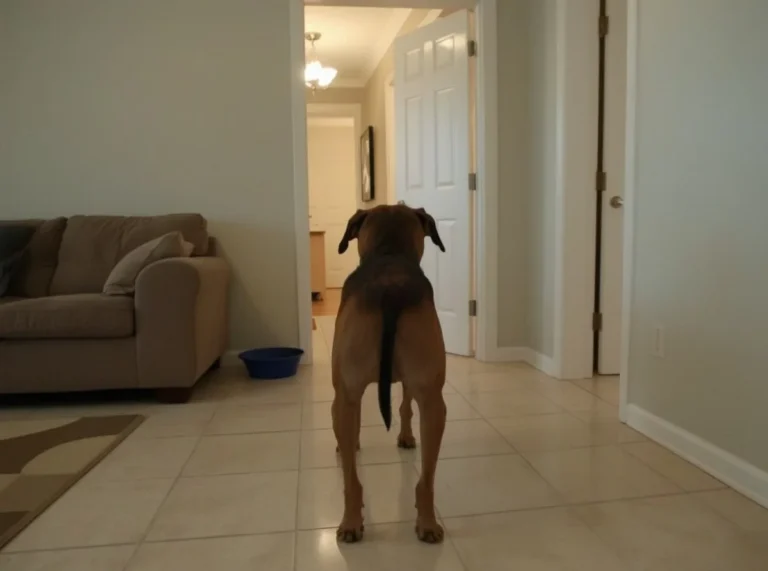
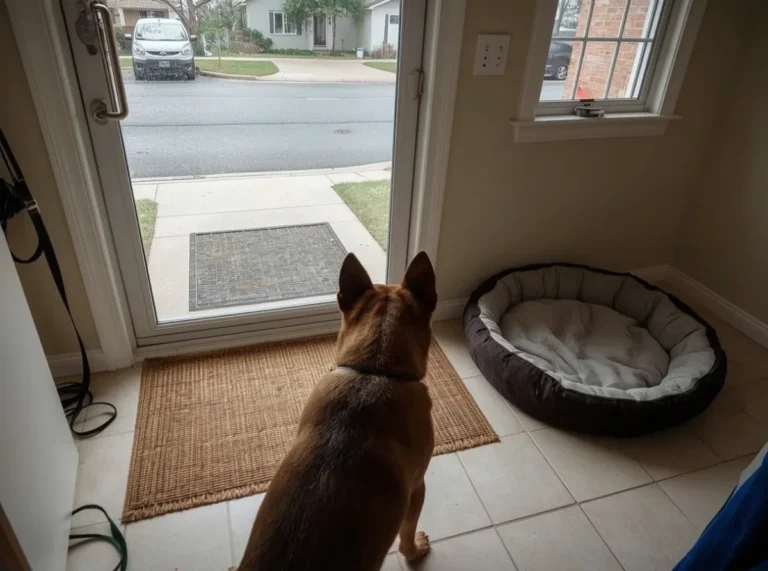
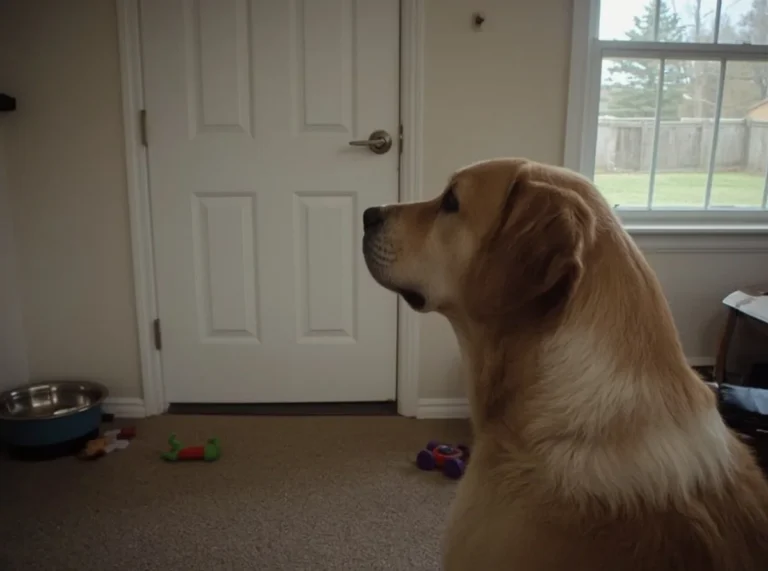
- Hard staring at doors, windows, or moving people
- Heavy panting after the activity has ended
- Difficulty lying down and staying down
- Overreacting to minor sounds or movement
- Ignoring food, toys, or familiar routines
- Clingy behavior after an exciting event
These signs do not always mean something is wrong. They often mean the dog’s system needs more time to return to normal. The body is ready to move, but the calm state has not fully taken hold yet.
Why some dogs take longer to come back down
One major reason is plain individual variation. Dogs, like people, differ in how strongly they react to stimulation and how long they carry that reaction. A naturally sensitive dog can respond more intensely to excitement and then require a longer quiet period afterward.
Breed tendencies may also play a role, but breed alone does not explain everything. Dogs bred for alertness, speed, or intense focus may stay activated longer after something stimulating happens. That does not make them difficult; it means their arousal system may run higher and take more time to settle.
Past experience matters as well. A dog that has learned to expect a lot of unpredictable stimulation may become quicker to ramp up and slower to recover. This is common in dogs from busy environments, shelters, crowded homes, or places where excitement and stress were often mixed together.
Recovery time is often less about the size of the reaction and more about how quickly the dog can return to a regulated state.
Emotional sensitivity and arousal control
Some dogs feel everything intensely. A friendly greeting, a favorite toy, a doorbell, or a short play session can all trigger a strong internal response. The dog may look happy, but underneath that happiness the body is working hard.
When a dog has trouble regulating arousal, excitement can tip into agitation very easily. That is why the dog may seem unable to “switch off” after something fun. The transition from engaged to calm is the hard part. The dog is not choosing to stay wound up. The body has not fully gotten the message yet.
Dogs with lower frustration tolerance can also have longer recovery periods. They may become fixated during exciting events, then struggle when the event ends. This is especially noticeable when the dog wants more play, more attention, or more access to the thing that got the reaction started.
Physical factors that slow the return to calm
Not every long recovery is emotional. Physical condition matters too. Dogs that are out of shape, elderly, recovering from illness, or carrying extra weight may pant longer and take more time to settle after excitement. Their bodies need more effort to manage the same stimulation.
Pain can also make recovery slower. A dog who is excited and then uncomfortable may appear restless or tense afterward. Joint pain, neck discomfort, digestive upset, or breathing difficulty can all make relaxation harder to reach once the body has been activated.
Hormones and developmental stage can influence this as well. Young dogs often have less control over their arousal. They may climb quickly into excitement and then stay there for a while, even when the activity has stopped.
Situations that tend to trigger longer recovery
Some settings naturally create stronger excitement and slower recovery. These are often the moments when owners first notice a pattern. The dog is not necessarily “bad” in those moments. The environment is simply pushing the dog closer to the edge of its comfort zone.
Visits from guests are a common example. A dog may adore people, but the sound of the door, the smell of new visitors, and the change in routine can create a long-lasting burst of arousal. Once the guests sit down and the house gets quiet, the dog may still be unable to fully relax.
Dog parks, group play, and highly stimulating walks can also lead to prolonged recovery. Even if the dog seems socially happy, the experience may be a lot to process. The dog may return home and continue panting, scanning, or following movement for much longer than expected.
Situations where recovery often takes longer
- Greeting people at the front door
- Meeting new dogs
- Car rides to exciting destinations
- Play that involves chasing or wrestling
- Noisy household activity
- Holiday gatherings or busy weekends
- Visits to unfamiliar places with many smells and sounds
Dogs can also have a harder time settling when excitement happens in clusters. A walk, then a play session, then visitors, then a quick errand in the car can create one long chain of stimulation. The dog never really gets a chance to reset between events.
What the behavior may signal about the dog’s emotional state
When recovery takes a long time, the dog may be carrying more than simple excitement. The reaction can point to a mix of anticipation, tension, stress, and relief. Not all “high energy” is positive energy. A dog can look thrilled and still be under strain.
Body language often gives useful clues. Loose, wiggly movement after an event suggests a dog is still engaged but may be headed toward calm. Tight muscles, stiff legs, a closed mouth, or a fixed gaze suggest the dog is still internally braced. That difference matters.
Some dogs struggle most after the exciting thing ends. They do not know how to handle the drop in stimulation. This can look like whining, following people closely, or repeatedly seeking the next thing to happen. In those cases, the dog may not be craving more fun so much as trying to manage an unsettled internal state.
When a dog cannot settle after excitement, the issue may be regulation, not stubbornness.
How owners often misread the signs
It is easy to assume a dog is being dramatic, stubborn, or simply overjoyed. Sometimes that is partly true. But a dog that takes a long time to recover may actually be overwhelmed by the level of arousal, even if the original trigger was pleasant. The reaction can look like enthusiasm from the outside and feel like stress from the inside.
Another common mistake is confusing exhaustion with calm. A dog may collapse after intense excitement, yet still be mentally activated. The body is tired, but the nervous system has not fully settled. That is why some dogs startle easily or rise again too quickly after a short rest.
Owners may also underestimate the role of stacking. A dog that only seems “too excited” after certain events may actually be reacting to a build-up of smaller triggers throughout the day. The long recovery period is the visible part of a larger pattern.
How environment and routine shape recovery time
Dogs that live with predictable routines often recover more smoothly. Regular meals, steady exercise, quiet rest periods, and familiar patterns can help the nervous system stay more even. When a dog knows what happens next, there is less reason to remain on alert.
By contrast, constant surprises can make recovery slower. A home with frequent noise, irregular schedules, visitors, and high activity may keep a dog in a near-constant state of readiness. In that setting, excitement does not stand alone. It becomes part of a bigger pattern of alertness.
Rest also matters. Some dogs need more deliberate downtime than owners expect. A dog that never gets true quiet time may have a harder and harder time returning to baseline after stimulation. The body can only tolerate so much revving before it starts to stay revved by default.
Patterns that make recovery harder
- Frequent interruptions during rest
- High household noise levels
- Unpredictable feeding or walk schedules
- Too many stimulating activities in one day
- Limited opportunities for undisturbed sleep
- Repeated greetings and farewells throughout the day
Even small changes in routine can matter for sensitive dogs. A visitor arriving at an unusual time or a late-night burst of activity may be enough to lengthen recovery. Some dogs need a quieter environment not because they are fragile, but because their baseline is easily shifted upward.
Why some dogs stay active after play but calm after other forms of excitement
Not all excitement is equal. A dog may recover quickly after a food puzzle but take much longer after chasing a ball. Another dog may settle after wrestling with a familiar dog but remain keyed up after seeing strangers. The type of stimulation matters as much as the amount.
Fast, repetitive, high-intensity play tends to produce more lingering arousal. Activities that involve pursuit, abrupt starts and stops, or competition over objects can keep the dog’s system engaged long after the game ends. That is why some dogs are almost unable to “come down” after fetch or rough play.
By contrast, slower forms of enrichment can sometimes leave the dog calmer afterward. Sniffing, slow exploration, and food-search activities often create satisfaction without the same level of peak arousal. The dog is engaged, but not pushed into such a high state.
Different kinds of excitement can leave different aftereffects
| Trigger | Typical recovery pattern | Why it may linger |
|---|---|---|
| Wrestling or chase play | Longer recovery | High speed and repeated arousal spikes |
| Guest arrival | Longer recovery | Noise, novelty, social anticipation |
| Sniff walk | Shorter recovery | Lower intensity, more self-paced |
| Meal excitement | Varies | Can be brief or intense depending on history |
| Car ride to a favorite place | Often longer recovery | Anticipation builds before and during the event |
The pattern can also shift by context. A dog that is calm on a quiet walk may become hard to settle after an event with social pressure. The emotional load is different, even if the dog looks equally excited in both settings.
How attachment and social behavior can extend recovery
Some dogs recover slowly because excitement is tied to connection. They care deeply about people, other dogs, or specific routines. That social intensity can make it harder to unwind when the interaction ends. The dog is not just aroused by activity; it is also emotionally invested.
This shows up clearly in dogs that shadow their owners after fun events. They may follow from room to room, wait by doors, or sit close without fully relaxing. The behavior can look affectionate, and often it is, but it can also reflect lingering expectation. The dog is waiting for the next social cue.
Dogs that are highly alert to human mood can also take longer to settle. They respond not only to direct interaction but to changes in tone, movement, and household energy. A lively family dinner, a tense conversation, or a sudden burst of noise can all keep the dog from dropping back into rest.
A dog that stays “switched on” after excitement may be asking for predictability, not more stimulation.
When a longer recovery is part of a broader pattern
Long recovery is most meaningful when it appears again and again in the same kinds of situations. If a dog only needs extra time after a rare, unusually busy day, that is not necessarily a concern. But if the dog routinely needs a long pause after every small burst of excitement, the pattern deserves attention.
Look at what comes before and after the event. Does the dog get enough rest beforehand? Is the trigger especially loud, crowded, or fast-moving? Does the dog settle eventually, or stay keyed up for hours? Those details help separate normal excitement from a more persistent difficulty with regulation.
It is also useful to notice what helps. Some dogs recover faster after a chew session, a quiet room, a walk with sniffing time, or a chance to lie down away from activity. Others do better when the day is simply less full. Small environmental changes can make a clear difference without needing to force a dramatic reset.
Why longer recovery is not always a problem to fix, but a pattern to respect
Not every dog that needs more time is struggling. Some dogs are simply more reactive to life’s highs and need a gentler pace afterward. The important part is understanding what kind of excitement pushes the dog out of balance and how long it takes to come back.
Once that pattern becomes familiar, the dog’s behavior makes more sense. The pacing after guests, the repeated sighing after a walk, the need to watch the room before lying down, or the clinginess after play all fit into the same story: the dog is still processing the event. The recovery is not a separate issue. It is part of the reaction itself.
Dogs that need longer recovery after excitement often give very clear information if the signals are read in context. Their bodies are speaking before their behavior becomes a problem. The more carefully those signals are noticed, the easier it becomes to understand which kinds of excitement build smoothly and which ones leave the dog carrying that energy for too long.