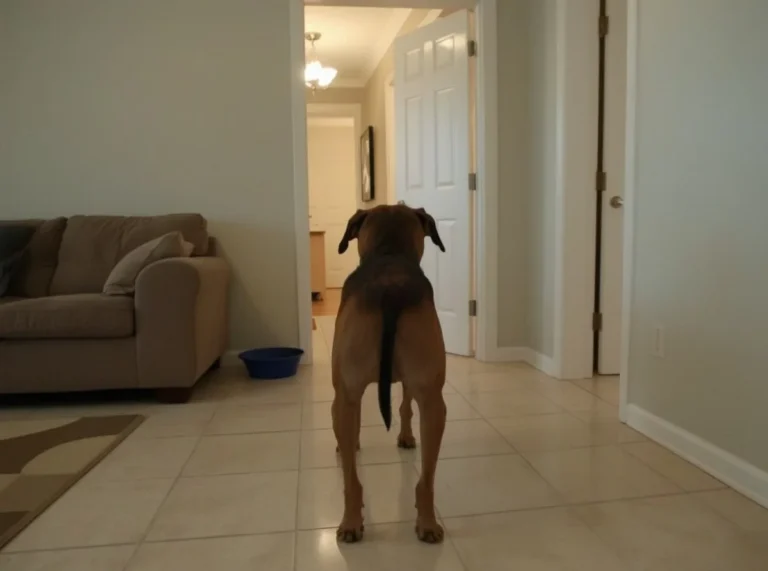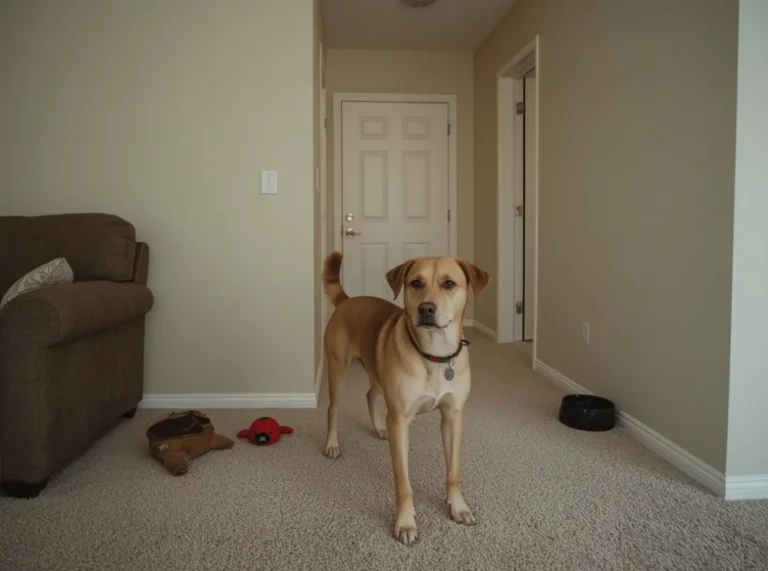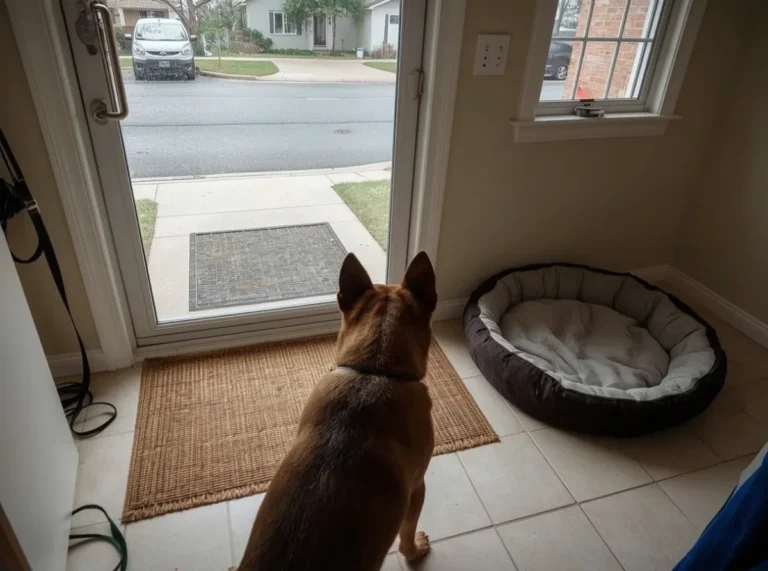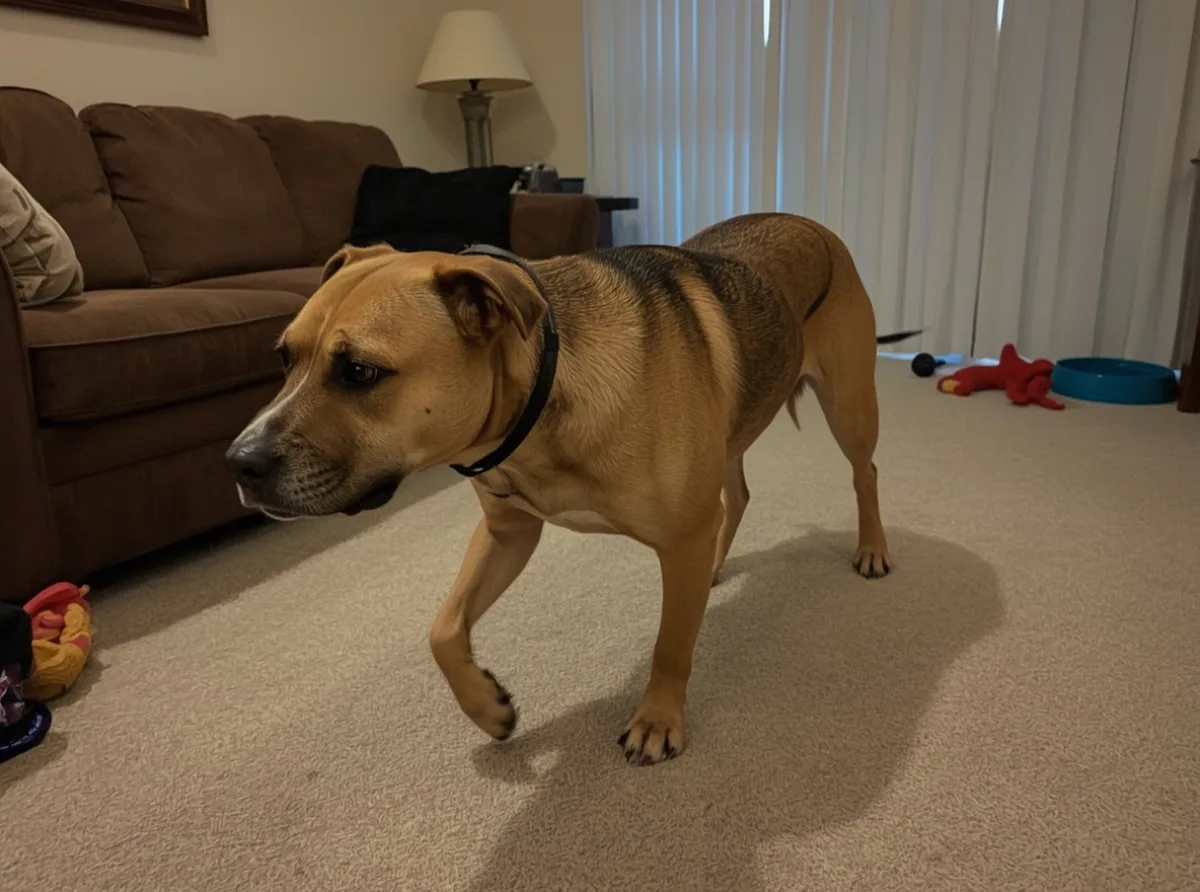
Stress in dogs rarely shows up as one dramatic moment. More often, it builds in layers. A dog may seem only slightly off at first, then gradually become more restless, more reactive, or harder to settle as the pressure keeps adding up.
What makes stress accumulation tricky is that many early signs look ordinary. A dog might pace after dinner, lick its lips in a quiet room, avoid eye contact, or suddenly act clingy. Each sign on its own can seem small. Together, they often tell a clearer story.
Dogs do not usually explain discomfort in neat, obvious steps. Their stress can move from subtle to noticeable before an owner realizes anything has changed. That is why looking at patterns matters more than noticing one behavior once.
What stress accumulation looks like in everyday life
When stress builds up in dogs, the changes often show up in daily routines. A dog that once settled easily on the couch may begin changing positions every few minutes. Another may start following people from room to room, unable to fully relax even when nothing exciting is happening.
Some dogs become more vocal. Others get quieter. A dog that usually greets the door calmly might start whining, barking, or running in circles when someone comes home. Another dog may simply stare, freeze, or hold its body stiffly and seem unwilling to move until the moment passes.
Stress accumulation can also affect normal habits. Appetite may shift. Sleep can become lighter or more fragmented. Potty behavior may change, especially if the dog feels unsettled by a new schedule, unfamiliar visitors, or louder activity in the house.
Stress in dogs often appears as a pattern of small changes, not one single behavior.
Common everyday signs
- Pacing or repeated walking from place to place
- Frequent yawning when the dog is not tired
- Lip licking or tongue flicking
- Shifting weight, crouching, or stiff posture
- Clinginess or following people constantly
- Sudden avoidance of touch, handling, or eye contact
- Interruptions in rest, sleep, or appetite
These signs do not always mean the same thing in every dog. A yawn may mean sleepiness in one moment and tension in another. The context matters. A dog that yawns after waking up is different from a dog that yawns repeatedly during a noisy gathering or vet visit.
Why stress tends to build gradually
Stress is often cumulative because dogs respond to repeated pressure. One busy day may not change much. Several busy days in a row can start to affect the dog’s ability to recover. The nervous system keeps working, and the dog has less room to fully reset.
This can happen in very ordinary settings. A household with irregular routines, frequent visitors, construction noise, or multiple pets may seem manageable from the outside. For a sensitive dog, though, the constant background activity can prevent true relaxation.
Even pleasant events can add stress when they pile up. Training classes, car rides, daycare, grooming, visits from friends, and long periods away from familiar people can all contribute. The dog may look fine during the event and then show the strain later at home.
A dog can handle a lot in the moment and still show stress afterward when the pressure finally catches up.
Internal pressure and emotional load
Not all stress comes from obvious triggers. Some dogs carry a lower tolerance for change, loud sounds, handling, or social contact. Their internal state can shift more quickly, even if the environment looks normal to the people around them.
An anxious dog may stay mentally “on” for long stretches. A vigilant dog may scan the environment constantly, even while lying down. A dog that dislikes uncertainty may seem fine until routines change, then gradually become irritable, withdrawn, or difficult to soothe.
Emotional strain can also build when a dog cannot avoid what is bothering it. If the dog feels trapped by noise, crowded spaces, repeated handling, or conflicting interactions, stress does not get a clean release. It tends to collect.
How stress accumulation appears in body language
Body language often tells the story before behavior becomes loud. Dogs commonly show early stress through posture. The body may look tight, the tail may stay lower than usual, and movement may become careful or hesitant.
Facial expression matters too. A dog may avoid direct eye contact, blink more often, or keep the mouth closed in a tense way. Some dogs pant lightly when they are not hot or active. Others hold their ears slightly back or shift them constantly as they monitor the environment.
These signs can be easy to miss because they are not dramatic. The dog is still “behaving,” but not necessarily feeling settled. That difference is important.
Subtle signs that often appear first
- Stiff pause before moving
- Repeated sniffing without much interest in the scent
- Small shake-offs that do not fully reset the body
- Turning the head away when approached
- Settling with the body half-curled or ready to rise
- Reduced interest in play, treats, or social contact
As stress accumulates, these signs may become easier to spot and more frequent. A dog that used to recover quickly after a startling moment may now remain tense for much longer. Recovery time is often one of the clearest clues that pressure is building.
Situations that often create ongoing stress
Some environments make stress accumulation more likely than others. A quiet, predictable home usually gives a dog more room to rest. A home with constant motion, interruptions, or uncertain routines can make relaxation harder to maintain.
Busy households are a common example. Doors open and close often. People move through the space. Children play loudly. Other animals may crowd personal space. Even if no one is doing anything “wrong,” the dog may never get a complete break.
Lack of stimulation can also create stress, though in a different way. Dogs need mental engagement, movement, and a sense of purpose. When days become too flat, frustration can grow. That frustration may later show up as restlessness, barking, chewing, or trouble settling.
| Situation | What stress may look like |
|---|---|
| Frequent visitors | Clinginess, pacing, barking, avoidance |
| Irregular schedule | Restlessness, uncertainty, trouble sleeping |
| Too much noise | Startling, hiding, trembling, tension |
| Too little activity | Reactivity, chewing, attention-seeking |
| Constant handling | Pulling away, freezing, lip licking, avoidance |
A dog can be affected by more than one of these at the same time. In fact, that is common. A new baby, a move, a schedule change, and more time alone can combine in ways that are not obvious until the dog starts showing changes in behavior.
What stress may signal about the dog’s emotional state
Stress accumulation often means the dog feels unable to fully relax. That may be due to worry, overstimulation, frustration, uncertainty, or a lack of control over the environment. The outward behavior can be the same, but the emotional reason behind it can differ.
A dog that paces around the house may be anxious. Another may be frustrated because it wants to move, sniff, or interact and cannot. A dog that becomes quiet and withdrawn may not be calm at all. It may be shutting down because the situation feels too much.
That is why labels can be misleading. “Naughty,” “dramatic,” or “stubborn” do not explain much. Stress usually points to a dog that is trying to cope, not misbehave.
When a dog’s behavior changes under stress, the first question is often not “What is the dog doing?” but “What is the dog having trouble handling?”
Different emotional patterns can look similar
- Anxious stress: the dog appears watchful, restless, or unsure
- Frustration stress: the dog may bark, paw, or push for attention
- Overstimulation: the dog becomes jumpy, reactive, or hard to settle
- Shutdown: the dog goes quiet, still, or avoids contact
These patterns can overlap. A dog may seem restless one hour and withdrawn the next. That shift does not necessarily mean the stress disappeared. It may mean the dog moved from active coping into exhaustion.
How routine and environment change the picture
Routine matters because it lowers uncertainty. Dogs notice when meals, walks, rest, and social interactions happen in a familiar rhythm. Predictability helps the body relax. When that rhythm breaks often, stress can rise even if the change seems small to people.
Environmental pressure also matters. Slick floors, loud appliances, constant traffic outside, strong smells, and visual clutter can create a low-level strain. Some dogs live with this background stress every day and never fully settle.
Routine changes are especially important during transitions. Moving homes, changing work schedules, adjusting to a new pet, or introducing a baby can all alter the dog’s sense of stability. Even positive changes can create stress when they arrive too fast.
Signs that routine is no longer working well
- The dog cannot relax after normal daily events
- Small disruptions trigger big reactions
- Rest time becomes shorter or more interrupted
- Mealtimes and potty habits change
- The dog begins to anticipate stress before it happens
That last sign is easy to miss. A dog that starts pacing before the vacuum is turned on, for example, may already be carrying stress from earlier in the day. The trigger is visible, but the buildup happened earlier.
How stress accumulation can look different from moment to moment
One reason owners miss stress is that dogs do not stay in a single mode all day. A dog may look calm during a walk, tense during dinner, needy at night, and irritated the next morning. These shifts can seem unrelated unless you look at the full pattern.
Some stress behaviors are active. The dog paces, vocalizes, scratches at doors, or keeps checking the windows. Other behaviors are quieter. The dog may nap poorly, stop offering normal greetings, or avoid its favorite resting place. Both can point to the same problem.
Mixed signals are common too. A dog may approach for affection, then turn away. It may want attention but also seem overwhelmed by it. That push-pull behavior often means the dog is unsure how to settle itself.
Stress can make a dog seem needy, distant, restless, or shut down within the same day.
What repeated stress may lead to over time
When stress keeps accumulating, the dog may become less flexible in daily life. Small changes that used to be manageable can start to matter more. A delivery person at the door, a delayed meal, or an extra car in the driveway may trigger a stronger reaction than before.
Recovery can also slow down. A dog that once bounced back after a surprise may now stay on edge for hours. It may take longer to eat, longer to rest, and longer to trust that the environment is safe again.
At that stage, behavior often becomes more predictable in a different way. The dog may not be “more difficult” all the time, but its threshold for stress becomes lower. That lower threshold is a sign that the buildup has been happening for a while.
Patterns worth noticing
- Stress appears at the same time each day
- Certain people, rooms, or sounds trigger a stronger reaction
- The dog needs more time to settle after excitement
- Normal activities now seem draining
- The dog has fewer calm moments between responses
These patterns are useful because they reveal consistency. Stress accumulation is rarely random for long. It usually connects to a routine, a setting, or a repeated type of interaction.
Why owners sometimes mistake stress for other things
Many stress behaviors resemble enthusiasm, boredom, or obedience problems. A dog that won’t sit still may look hyper. A dog that avoids people may seem unfriendly. A dog that suddenly barks more may be treated as pushy or disobedient. The outward action is visible, but the emotional pressure behind it may be missed.
This is especially true when the dog’s stress has become part of its normal pattern. People adapt to what they see every day. A dog that always follows the family from room to room can start to look “attached” rather than unsettled. A dog that frequently licks its lips in the kitchen may be seen as food-motivated, even if the real issue is tension.
Looking at timing helps. If the behavior appears after several days of activity, after a change in schedule, or in the same stressful settings, it is more likely to be part of accumulated pressure than a random habit.
What helps you read the bigger picture
Stress accumulation is easier to understand when you track patterns instead of isolated moments. A single yawn does not mean much. A yawn, pacing, clinginess, and poor sleep over three days tells a different story.
It also helps to notice recovery. Does the dog relax once the house gets quiet, or does it remain tense? Does a walk reset the mood, or does the dog come home still keyed up? The answer often shows whether stress is passing or stacking up.
Some dogs show their pressure through movement. Others show it through stillness. Both deserve attention. A dog that freezes, withdraws, or becomes unusually quiet may be carrying as much stress as one that is restless and vocal.
In everyday life, stress accumulation usually looks less like one big warning and more like a series of small changes that linger. The details matter. The pace of the dog, the way it settles, how it takes food, how it greets people, and how long it stays relaxed after a disruption all help reveal the full picture.