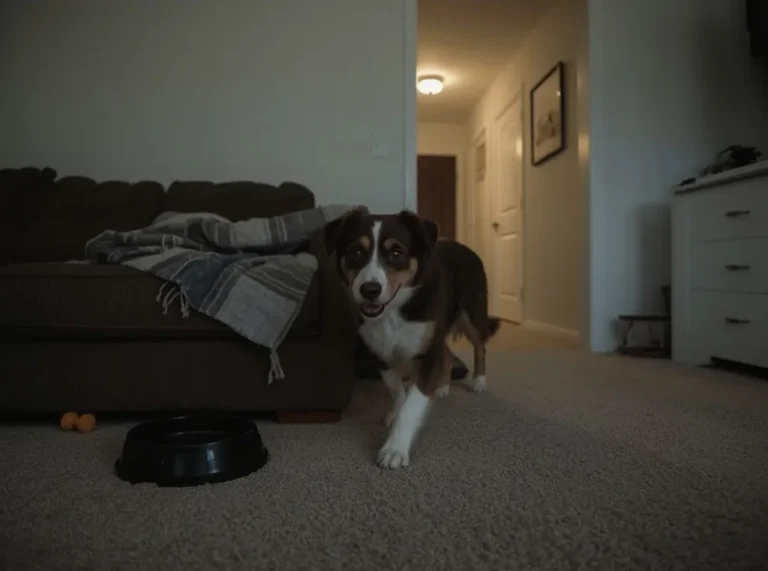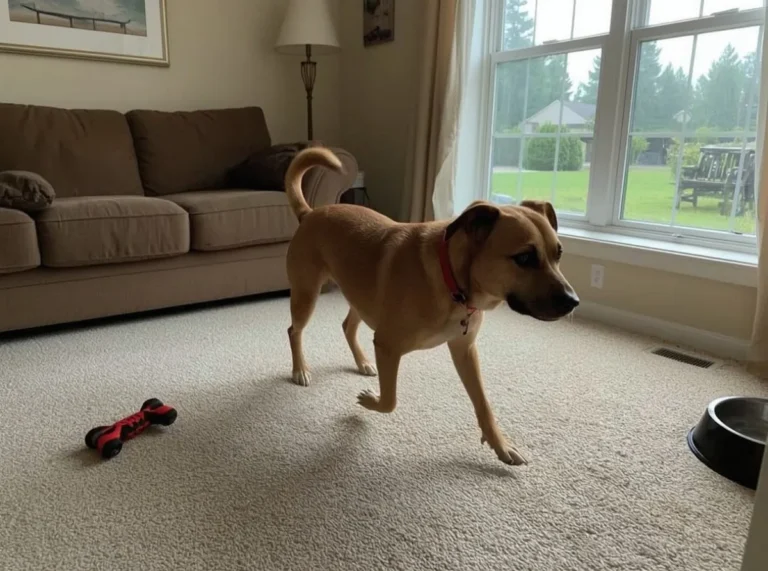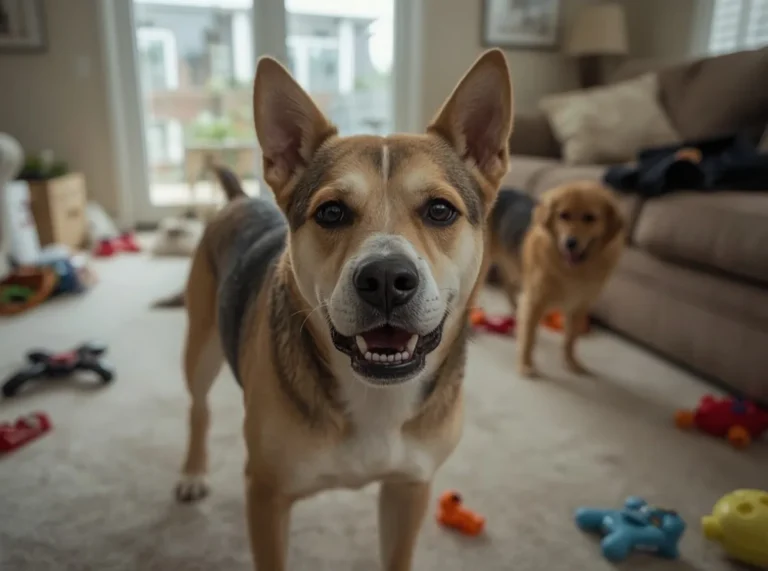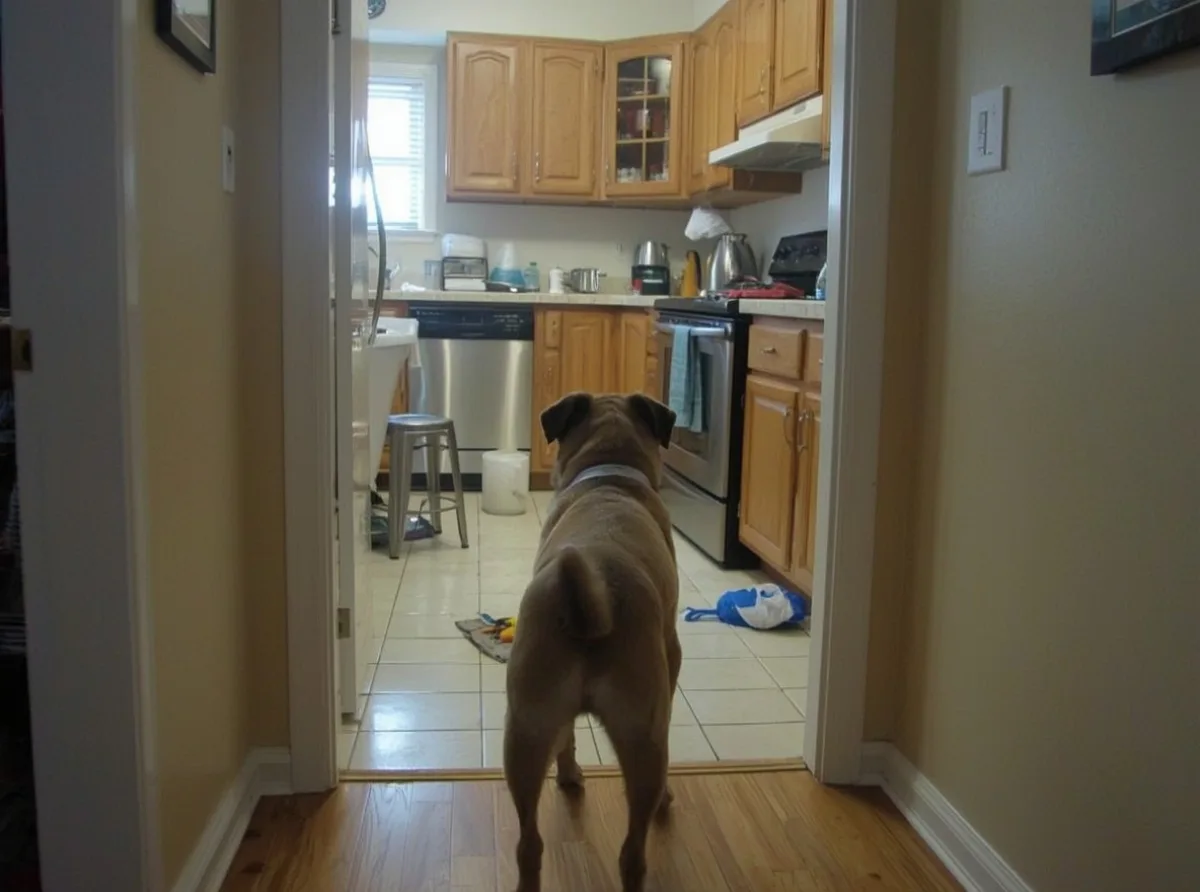
Some dogs move through a busy home as if they are part of the routine. They follow footsteps, settle near the kitchen, ignore a vacuum, and nap while people talk around them. Other dogs seem to struggle with even ordinary household activity. A dropped pan, a running dishwasher, children passing through a hallway, or a person changing rooms can be enough to make them stiffen, retreat, bark, or pace.
This reaction is often mistaken for stubbornness or poor manners, but the picture is usually more layered than that. Household activity can feel unpredictable to a dog that is sensitive, easily overstimulated, poorly rested, or unsure how to read the environment. In many cases, the dog is not resisting the home itself. It is reacting to the pace, noise, motion, and social pressure that come with daily life indoors.
Why one dog handles that easily while another struggles often comes down to a mix of temperament, early experience, emotional state, and the way the household is organized. A dog that seems fine in the yard may become unsettled the moment the kitchen gets busy. Another may be calm until evening traffic inside the home reaches its peak. Those differences are meaningful, and they usually point to more than simple obedience or disobedience.
What Struggling With Household Activity Looks Like in Daily Life
The signs are not always dramatic. Some dogs become visibly reactive, but many show much subtler changes first. They may hover at the edge of a room instead of entering, stand up whenever someone walks by, or follow people from space to space without settling. The dog may seem restless, over-watchful, or unable to fully relax when the house is in motion.
In busier homes, this can show up during ordinary tasks. Cooking, cleaning, laundry, remote work, school routines, or guests moving through the house may all create a level of activity the dog finds difficult to process. Some dogs bark at the sound of cabinets, others react to footsteps overhead, and some become uneasy when multiple people speak at once.
Common everyday signs
- Leaving the room when appliances turn on
- Startling at normal household sounds
- Pacing instead of resting
- Shadowing people closely from room to room
- Freezing, licking lips, or yawning during activity
- Barking when the routine becomes noisy or unpredictable
- Hiding under furniture or seeking very small spaces
These behaviors often appear in clusters. A dog that struggles with activity may not only react to one sound, but also to the pattern that follows it. For example, the vacuum starts, then a person changes direction quickly, then a child runs past, and then a door slams. What seems like a normal sequence to a human may feel layered and intense to a dog trying to keep track of everything at once.
When a dog appears unable to settle during household activity, the issue is often not one single trigger. It is frequently the combination of noise, movement, surprise, and the dog’s own level of arousal.
Why Some Dogs Are More Sensitive to Busy Homes
Dogs differ in how they process the world. Some are naturally more observant and alert. Others are easier to startle. Some recover quickly after a disturbance, while others stay activated for a long time. Those differences can make household activity feel manageable for one dog and overwhelming for another.
Breed tendencies can play a part, but they do not explain everything. A dog bred for close companionship may be especially attuned to human movement and emotional shifts. A dog with strong watchdog instincts may notice every sound and treat routine changes as important. A highly social dog may also struggle if activity means constant interruptions without enough predictability or rest.
Early life matters too. Puppies that were raised in quiet or limited environments may not have learned how to filter household noise. Dogs that did not experience many different sounds, surfaces, or routines during development may be more reactive later. Even a dog that was exposed to many things as a puppy can still become sensitive if later experiences were stressful or inconsistent.
Internal factors that influence the reaction
- Natural sensitivity to sound and movement
- Low tolerance for uncertainty
- Strong attachment to household members
- Past experiences with loud or chaotic settings
- Poor sleep or chronic overstimulation
- General anxiety or difficulty recovering from arousal
Some dogs are also more affected when they feel they have a job to do. A dog that spends the day monitoring the household may struggle to step out of that role when things become busier. Instead of settling, the dog keeps checking for updates, as if it needs to stay available. That kind of mental posture can make even small activity feel heavy.
How Routine and Environment Shape the Response
A dog’s reaction to household activity is often tied to how predictable the home feels. Predictability lowers tension. Unpredictability raises it. If meals, walks, visitors, cleaning, and quiet time happen in a loose but familiar rhythm, many dogs learn what to expect and can relax more easily. If those patterns shift often, the dog may stay on alert because the next thing is never obvious.
Environment matters in less visible ways too. Open floor plans, echoing rooms, hard surfaces, and constant movement can make noise travel farther and feel sharper. In a home with several people, the dog may experience a nearly continuous stream of sensory input. Even without one major event, the overall volume of daily life can remain too high.
Temperature, confinement, and lack of escape routes play a role as well. A dog that cannot move away from the action may become more stressed by it. A hallway that is always crowded, a crate placed in a noisy corner, or a resting spot beside the laundry area may leave the dog with very little true relief.
Household features that can raise stress
- Frequent slamming doors or heavy footsteps
- Constant television, music, or conversations
- People crossing the dog’s resting area often
- Small spaces with no quiet retreat
- Irregular schedules for meals and sleep
- Rapid changes in who is home and what is happening
One dog may struggle most in the morning when the household is rushing. Another may fall apart in the evening when everyone is active at once. These patterns matter because they show that the issue is not simply the dog’s personality. The dog may be responding to repeated overload at specific times of day.
What the Behavior May Signal Emotionally
When a dog cannot cope well with household activity, the outward behavior often reflects an internal state rather than a deliberate choice. Stress can appear as watchfulness, avoidance, clinginess, irritability, or shutdown. The dog may seem needy one moment and defensive the next. That shift is not unusual when a dog is trying to balance attachment with discomfort.
Some dogs become more attached when the home gets busy. They follow their person from room to room, lean into legs, or insist on physical contact. That does not always mean affection alone. Sometimes closeness is a way of seeking stability in a setting that feels hard to predict. Other dogs do the opposite and withdraw, choosing distance as a way to reduce stimulation.
Discomfort can also show up as resistance to handling or movement around the dog. A dog that is already tense may react more strongly if someone steps over it, picks up an object nearby, or reaches across its space. The issue may not be the person’s intention. It may be that the dog’s threshold has already been reached by the surrounding activity.
A dog that struggles with household activity is often communicating that the environment feels too active, too fast, or too hard to interpret in the moment.
Emotional states that may be involved
- Alertness that never fully settles
- Uncertainty about what will happen next
- Frustration from being unable to escape stimulation
- Need for reassurance or proximity
- Overarousal that turns into barking or movement
- Fatigue that makes the dog less tolerant than usual
It is easy to see barking, pacing, or clingy behavior and assume the dog is simply demanding attention. But household activity can be taxing in the same way that a crowded, noisy day is taxing for a person who values quiet. The dog may not know how to lower its own internal volume once it has been raised.
Situations Where the Struggle Shows Up Most Often
Some parts of the day expose the issue more clearly than others. Morning routines can be hard because they often involve movement, changes in pace, and people coming and going. Meal preparation can trigger reactions because of the sounds, smells, and repeated motion involved. Cleaning time can be difficult because tools appear suddenly and move in unfamiliar ways.
Guests change the energy of a house in a different way. New people often speak differently, walk differently, and occupy the dog’s familiar spaces. Even a polite guest can feel like a major disruption to a dog that values routine. For some dogs, the challenge is not the person but the chain of small changes that comes with a visitor.
Children can create a separate kind of difficulty. Their movement is less predictable, their voices are higher, and their timing is harder for many dogs to read. A dog that handles adult household activity fairly well may still struggle around children because the behavior is faster, noisier, and less consistent.
High-pressure household moments
- Vacuuming, sweeping, or mopping
- Doorbells and deliveries
- People cooking in a crowded kitchen
- Children running or playing indoors
- Busy evening transitions before bed
- Guests arriving or leaving
Some dogs also react more on days when their own needs are not fully met. A short walk, a missed nap, too much excitement earlier in the day, or a change in feeding time can lower tolerance. The household activity itself may be normal, but the dog’s ability to handle it is reduced because the baseline is already strained.
How Owners Often Read It vs. What It May Mean
People commonly interpret this behavior through a human lens. A dog that follows them everywhere may be seen as clingy. A dog that barks at the vacuum may be seen as difficult. A dog that hides during cleaning may be called shy or dramatic. Those labels are convenient, but they can miss the more useful question: what is the dog trying to manage?
In many homes, the same dog will seem fine in one context and overwhelmed in another. That inconsistency can be confusing. But it makes sense when the dog’s response is based on a threshold that changes with fatigue, noise, predictability, and emotional load. What looks like random behavior is often tied to an accumulation of small stressors.
Owners also sometimes assume a dog will “get used to it” simply by being around it more. Repetition can help in some situations, but only if the dog is not repeatedly pushed past its limit. If household activity keeps arriving in a way that feels intense or inescapable, the dog may not become calmer. It may become more vigilant instead.
Behavior that seems inconvenient is often a signal that the dog’s coping capacity is being stretched, not that the dog lacks manners or intelligence.
How Supportive Homes Reduce the Problem
A dog that struggles with household activity usually benefits from a home that feels organized and readable. That does not mean the house must be silent. It means the dog can better understand what is happening and has enough space to step away when needed. Simple adjustments often matter more than dramatic changes.
Consistent routines are a good starting point. Feeding, walks, and rest periods that happen at roughly the same times help the dog anticipate the day. Quiet resting zones also help, especially if they are placed away from high traffic areas. A dog that can choose a calmer corner is more likely to recover when the household gets busy.
It can also help to protect the dog from constant micro-interruptions. If every person in the house keeps reaching for the dog, talking to it, or moving it from place to place, the dog may never get a true break. Sometimes the most useful support is less interaction during already stressful periods.
Helpful environmental changes
- Create a quiet resting area away from main traffic
- Keep daily routines as consistent as possible
- Allow the dog to leave busy spaces without interruption
- Use gradual exposure to sounds and movement when appropriate
- Give the dog chances to rest before and after active household times
- Reduce crowding around the dog during cleaning, cooking, or guests
Some dogs also do better when the household activity has a clearer pattern. For example, if cleaning always happens after a walk and a rest period, the dog may tolerate it more easily. If the vacuum appears suddenly at random times, the same dog may stay on edge longer. That difference can seem small to people, but it often matters a great deal to the dog.
When the Response Becomes More Noticeable Over Time
Dogs do not always begin life struggling with household activity. Some grow into the problem. A puppy may seem curious and adaptable at first, then become more reactive as the home becomes busier or as the dog matures and becomes more aware of its surroundings. Adult dogs can also develop sensitivity after a move, a schedule change, a noisy renovation, or a period of stress.
Repeated overwhelm can make the reaction stronger over time. If the dog is regularly startled, crowded, or unable to relax, it may start to anticipate disturbance before it happens. Then the dog is not only responding to activity. It is responding to the memory of activity. That anticipation can be just as exhausting as the event itself.
On the other hand, some dogs show the problem less after life becomes more predictable. A move into a calmer household, more regular sleep, or a better resting setup can lower the intensity. The pattern often changes when the environment changes. That is one reason paying attention to context is so important.
What Ongoing Patterns Reveal
The most useful clues come from repetition. If the dog reacts to the same kinds of activity in the same parts of the day, the pattern can point toward a specific trigger or a specific type of strain. Some dogs are most affected by sound. Others are more bothered by movement or by the social pressure of people being active around them. Many are affected by all three.
Tracking the pattern often shows that the dog is not struggling with “household life” in general. The dog may be fine when the house is quiet, fine outdoors, and fine on a predictable day, but tense when activity stacks up. That distinction helps explain why the behavior can look inconsistent from one moment to the next.
There is also a difference between temporary overwhelm and a more stable sensitivity. A dog that has one rough day after a poor night of sleep may bounce back quickly. A dog that struggles every afternoon around the same routine may need more support because the issue has become part of the daily pattern.
Questions the pattern can answer
- Is the trigger noise, motion, or both?
- Does the dog react more when tired?
- Is the behavior tied to one room or one routine?
- Does the dog recover quickly or stay unsettled?
- Does the reaction worsen when several activities happen together?
Dogs that struggle with household activity are often telling a consistent story, even when the details vary. Once the pattern is visible, the reaction starts to make more sense. A dog who seems difficult may actually be doing the best it can in an environment that keeps asking for more than it can comfortably process.
Closing Thoughts on the Behavior
Some dogs are built to drift through a busy home without much concern. Others experience the same setting as a steady stream of interruptions, surprises, and pressure. When household activity becomes hard for a dog, the reasons usually sit in the overlap between temperament, history, and the design of everyday life indoors.
The behavior often makes the most sense when it is viewed in context. A dog that startles, shadows people, avoids the busiest rooms, or struggles to settle is not necessarily being difficult. It may be showing that the home’s pace, noise, or unpredictability is simply more than it can comfortably organize at that moment.