Some dogs walk in circles when the house is quiet. Others follow people from room to room, sigh dramatically, then stand up again before they ever fully lie down. A dog can have plenty of food, a soft bed, and a safe home, yet still seem unable to truly relax indoors.
That restlessness is not always about disobedience or stubbornness. In many cases, it is a clue. It can point to unmet physical needs, a nervous temperament, a home environment that feels too stimulating, or a routine that never gives the dog a clear signal to slow down.
Indoor restlessness often looks simple from the outside, but the reasons behind it are not. A dog may be physically tired and still mentally on edge. Another may be bored, underexercised, or waiting for something interesting to happen. And some dogs simply find it harder than others to switch from alert mode to rest mode once they are inside the house.
Understanding the pattern matters because not all fidgety behavior means the same thing. A dog that paces after visitors leave is different from one that cannot settle all evening. A dog that circles for two minutes before lying down is not the same as one that never stops scanning the room. The details help show whether the issue is mild, habitual, emotional, or something that deserves closer attention.
What Indoor Restlessness Often Looks Like
Dogs rarely say, “I cannot relax,” in one obvious way. They show it through small behaviors that repeat. The signs can be easy to dismiss at first because they resemble ordinary movement or brief bursts of energy.
Common examples include:
- pacing from room to room
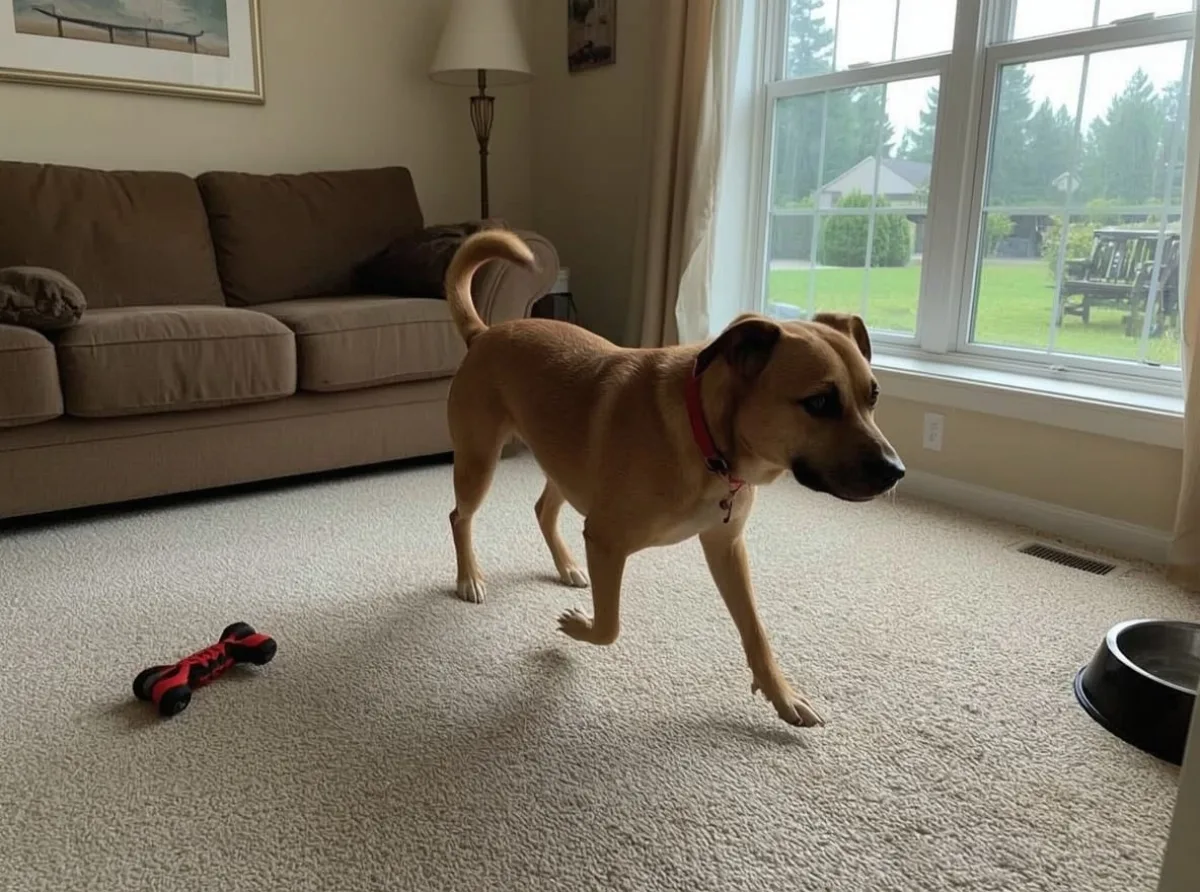
- changing resting spots repeatedly
- standing up every time someone moves
- following household members without settling
- lying down for a moment, then getting back up
- resting with tense muscles instead of soft, loose posture
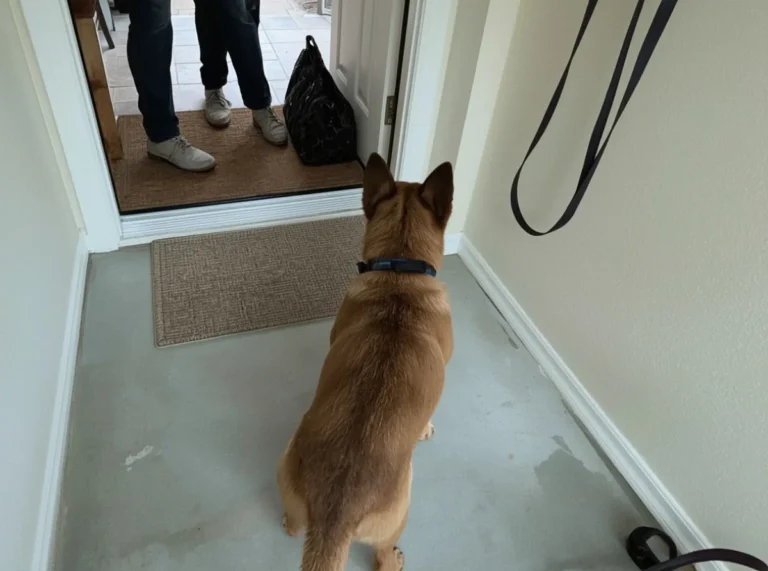
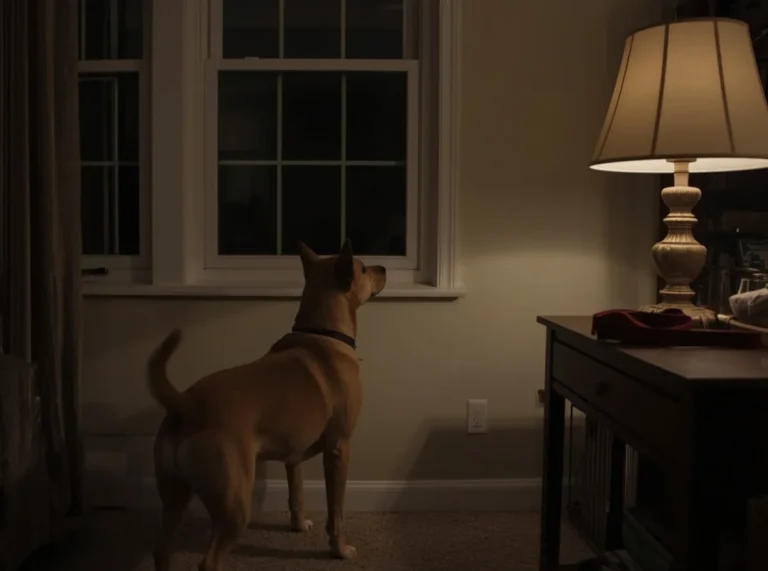
- watching doors, windows, or hallways for long periods
- picking up toys, dropping them, and moving on quickly
Some dogs are noisy about it. They whine, scratch at the floor, huff, or bring objects to people and then seem unable to decide what they want. Others are quiet but clearly not at ease. They may sit stiffly, keep their head lifted, or remain ready to spring up at the slightest sound.
Indoor relaxation is not only about lying down. A dog that truly settles tends to have softer body language. The breathing slows, the face loosens, and the body sinks into the floor or bed. When that never happens, or happens only for very short periods, the dog is probably not feeling fully comfortable.
A dog that cannot settle indoors is often trying to self-regulate. The movement itself may be the dog’s way of managing stress, excitement, uncertainty, or leftover energy.
Why Some Dogs Struggle to Switch Off Indoors
There is rarely just one reason. More often, several small factors stack up until resting indoors feels harder than it should. A dog may not be anxious in the dramatic sense, but still be too keyed up to let go of alertness.
1. They still have physical energy to burn
Some dogs need more than a quick walk around the block. Their bodies may be ready for rest, but their muscles and nervous systems are not. High-energy breeds, young dogs, and dogs that spend much of the day confined can carry a lot of stored-up motion into the house.
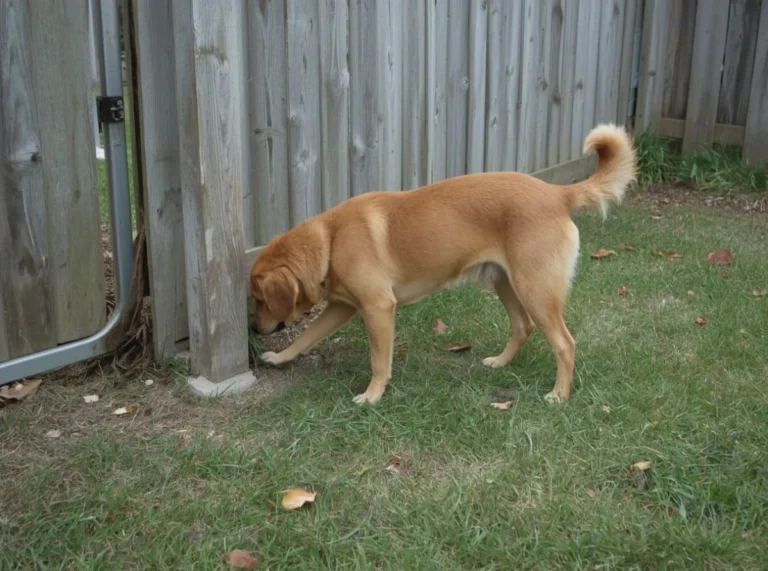
This does not always mean the dog needs endless exercise. It means the type of activity matters. A fast bathroom break or casual stroll may not satisfy a dog that needs a chance to sniff, explore, and process the world before coming back inside.
2. Their minds are underused
A dog can be physically tired and still mentally restless. Dogs are observant animals. They notice movement, scent, sounds, and routine changes. If the day offers little variety, some dogs create their own stimulation by pacing, watching, and searching for something to do.
This is especially common in dogs that are intelligent, highly social, or used to more interaction. If the home feels too predictable or too empty, rest may not come easily. The dog remains alert because nothing in the environment is helping it feel fully done for the day.
3. They are overstimulated instead of calm
Restlessness is not always a sign of too little activity. Sometimes the opposite is true. A busy day, too many visitors, constant play, repeated excitement, or nonstop noise can leave a dog wired. The body may be tired, but the nervous system is still buzzing.
That can happen after a chaotic afternoon, a loud household event, or even a series of small interruptions. Each little disturbance may not seem important on its own. Together, they can keep a dog from ever reaching a true resting state.
4. They do not feel fully secure
A dog needs to believe the indoor environment is predictable. If the home feels uncertain, the dog may remain on watch. This can happen in homes with frequent sudden movement, rough handling, tension between people, unpredictable routines, or lots of loud noises.
Dogs are sensitive to patterns. If they cannot anticipate what comes next, they may stay vigilant. That vigilance can look like anxiety, but it can also appear as simple inability to lie still.
5. They are waiting for something
Some dogs learn that being active indoors gets them access to attention, food, play, or outdoor time. Even if nobody intended to teach that pattern, it can develop quickly. A dog that gets rewarded whenever it paces, paws, nudges, or looks restless may repeat the behavior because it works.
This does not mean the dog is manipulative in a human sense. It means the dog has noticed a connection between movement and outcomes. If that pattern continues, settling quietly may become less natural than staying engaged.
How Environment Shapes a Dog’s Ability to Relax
The same dog may rest well in one house and struggle in another. Environment matters a great deal. A calm home with steady rhythms often helps dogs settle more easily, while a home full of interruptions can make relaxation feel like a difficult task.
Noise is one of the biggest influences. Hallway sounds, delivery trucks, television, children moving around, appliances, and nearby construction can all keep a dog alert. Some dogs adapt without much trouble. Others react to every small change in sound or movement, especially if they are naturally watchful.
Window access also changes behavior. Many dogs become more alert when they can see people, cars, other dogs, or wildlife passing outside. What seems like “looking out the window” may actually be constant monitoring. If the environment offers a steady stream of things to track, the dog may never fully come down from that state.
Layout matters too. Open floor plans, narrow hallways, busy entryways, and shared sleeping spaces can all affect a dog’s sense of rest. A dog may not know where to retreat if people keep moving through its usual resting zone. In homes where the dog has no clearly protected place, settling can be much harder.
Dogs relax more easily when the indoor environment is predictable, quiet enough, and structured in a way that does not keep asking them to stay alert.
Routine can either help or hinder calm
Dogs are deeply influenced by daily patterns. If meals, walks, play, and rest happen at roughly the same times, the dog’s body learns what to expect. That predictability often makes it easier to let go.
But routines can also keep a dog on edge if they are inconsistent. A dog that never knows when the next walk is coming may keep checking and following. A dog that receives bursts of excitement at random times may spend much of the day waiting for the next thing to happen. Even positive surprises can make relaxation harder if they interrupt the dog’s ability to predict the day.
Simple cues can help. A set evening pattern, a regular resting spot, and a quieter stretch after activity can create a familiar rhythm. Dogs usually do better when the household sends clear signals that the active part of the day is over.
What the Behavior May Reveal About the Dog’s Emotional State
Indoor restlessness can come from many emotional states, and they do not all look the same. A dog that paces from excitement is different from a dog that paces because it feels uneasy. The body language usually gives away the difference if you know what to look for.
Excitement
Some dogs cannot relax indoors because they are simply expecting something fun. They may perk up when someone moves toward the kitchen or grab a toy as if play might start at any moment. Their energy feels bright, not distressed.
These dogs often settle better after they have a clear outlet for their enthusiasm. Once the excitement passes, they may finally curl up and sleep. The challenge is not fear or deep tension, but an overactive state of anticipation.
Unease
Other dogs seem restless because something in the environment feels off. Their movement may be quieter and more cautious. They may keep checking the room, shifting position, or sitting near exits. Their ears, eyes, and body are often more alert than relaxed.
This kind of restlessness can show up when a dog is unsure about a person, a sound, a routine change, or a new object in the home. The dog is not necessarily panicked. It may just not feel safe enough to let the guard down.
Frustration
A dog that wants attention, access, or activity but cannot get it may become visibly unsettled. It might hover, whine, paw, or move from person to person. The dog may appear unable to decide whether to rest or keep trying to get something.
Frustration often looks like mixed behavior. The dog lies down, then gets up. It walks away, then comes back. It seems close to settling, but never quite arrives there. That in-between state can continue for a long time if the underlying need is not addressed.
Habitual alertness
Some dogs are simply used to staying ready. This is especially common in dogs that have spent time in busy, changing, or unpredictable environments. They may have learned that remaining watchful is safer than relaxing.
Over time, alertness can become the default. Even after the environment improves, the dog may still behave as though it needs to keep monitoring everything. That is why some dogs seem unable to relax indoors even when nothing obvious is wrong.
How Owners Often Misread the Signs
Indoor restlessness is easy to interpret incorrectly because it can resemble several other behaviors. Owners may assume the dog is being stubborn, bored beyond help, or trying to dominate the household. Those explanations usually miss the real issue.
A dog that paces after a walk may not need more miles. It may need a quieter decompression period. A dog that refuses to lie down could be overaroused rather than defiant. A dog that constantly asks for contact may not be needy in the simple sense; it may be searching for reassurance or clarity.
It is also common to mistake movement for comfort. Some dogs seem active and cheerful indoors, but the movement has a tense quality. They are busy, but not peaceful. The distinction matters. Cheerful movement usually looks loose and flexible. Restless movement tends to be repetitive, sharp, or difficult for the dog to stop.
Another misunderstanding is assuming that a dog should “just know” how to relax at home. Many dogs need help learning what rest feels like in a domestic setting. That help does not require rigid training language. It often starts with better timing, fewer interruptions, and a calmer routine.
Situations Where Indoor Restlessness Shows Up Most Often
The behavior is often more noticeable at certain times of day or in specific household situations. These patterns can be useful because they reveal what is triggering the dog’s inability to settle.
| Situation | Common pattern | Possible reason |
|---|---|---|
| Evening after work | Pacing, following, difficulty lying down | Accumulated energy, anticipation, household activity |
| After visitors leave | Scanning, whining, restless movement | Residual excitement or stress |
| During loud household activity | Standing, watching, changing spots | Noise sensitivity or vigilance |
| Before scheduled events | Persistent attention-seeking, inability to rest | Expectation of food, walks, or play |
| In new environments | Hovering, pacing, refusing to lie down | Unfamiliar smells, sounds, and layout |
Patterns like these can be revealing. A dog that only struggles after certain events may not have a general relaxation problem. Instead, the behavior may be tied to specific triggers. That difference changes how the issue should be understood.
When Restlessness Is Part of a Dog’s Personality
Some dogs are naturally more active in spirit. They watch, explore, and respond quickly. They may be sensitive, social, and intensely aware of what is happening around them. In those dogs, a certain amount of indoor restlessness may be part of their normal temperament.
That does not mean the behavior should be ignored, but it does mean expectations should be realistic. A dog with a lively, vigilant personality may never become the kind of pet that sleeps through every hour of the day. Still, there is a difference between an engaged dog and a dog that cannot ever appear comfortable.
Personality matters most when the restlessness is consistent across settings. If the dog acts this way indoors, in new homes, during quiet evenings, and after plenty of exercise, the trait may be more ingrained. If the dog relaxes well in some places but not others, the environment is likely playing a larger role.
What Helps Dogs Settle More Naturally
Helping a dog relax indoors usually starts with making the indoor experience less confusing. The goal is not to force stillness. It is to make rest feel like the next obvious choice.
- Use a predictable daily rhythm for meals, walks, and quiet time.
- Offer enough physical activity, but not so much excitement that the dog becomes overstimulated.
- Include mental work such as sniffing, problem-solving, or calm exploring.
- Reduce unnecessary household noise when possible.
- Give the dog a consistent resting place that feels undisturbed.
- Avoid rewarding every bout of pacing with immediate attention or play.
- Watch for patterns around visitors, windows, or certain times of day.
Small changes often work better than dramatic ones. A dog may improve when the house becomes more predictable, the day has more structure, and the dog is not constantly asked to respond to stimulation. Even one quieter period after activity can make a difference.
Sometimes the answer is not “more exercise” but better pacing. A dog that comes inside from a busy walk may need a decompression period before any expectations are placed on it. Sniffing, water, a low-key environment, and very little interruption can help the nervous system come down.
When Restlessness Becomes a Consistent Pattern
If a dog seems unable to relax indoors day after day, the pattern deserves attention. Repetition usually means the behavior is being reinforced by something in the environment, the routine, or the dog’s internal state. The issue is not likely to disappear on its own just because time passes.
Long-term restlessness can also wear a dog down. A dog that never fully settles may have trouble sleeping deeply, recovering from activity, or feeling secure in the home. Over time, that can affect appetite, responsiveness, and general comfort.
In some cases, persistent inability to relax may also overlap with medical discomfort. Pain, digestive upset, itchiness, breathing issues, or age-related restlessness can make lying still unpleasant. When a dog seems physically unable to settle, the possibility of discomfort should stay on the table.
When a dog’s restlessness is constant, repetitive, or tied to obvious discomfort, it is worth looking beyond behavior alone.
The Bigger Picture Behind Indoor Calm
A dog’s difficulty relaxing indoors is often a conversation between body, mind, and environment. Energy, habit, sensitivity, and routine all blend together. That is why the same behavior can come from very different causes in different dogs.
One dog paces because the home feels too busy. Another because the day never gave it a chance to use its brain. Another because something in the room keeps the dog on alert. And another because relaxation itself has not yet become a familiar part of daily life.
The behavior is often most understandable when viewed in context. A dog is not simply choosing restlessness for no reason. It is reacting to what the home feels like, what the day has offered, and how safe or predictable the environment seems. Once those pieces are clearer, the behavior usually makes more sense.
Indoor calm is rarely a single switch that turns on at the right moment. For many dogs, it is something that develops through repeated experiences of safety, predictability, and enough satisfaction to stop searching for the next thing. When those conditions are missing, the house can still feel like a place where the dog must stay ready, even if the door is closed and everyone else has already settled down.