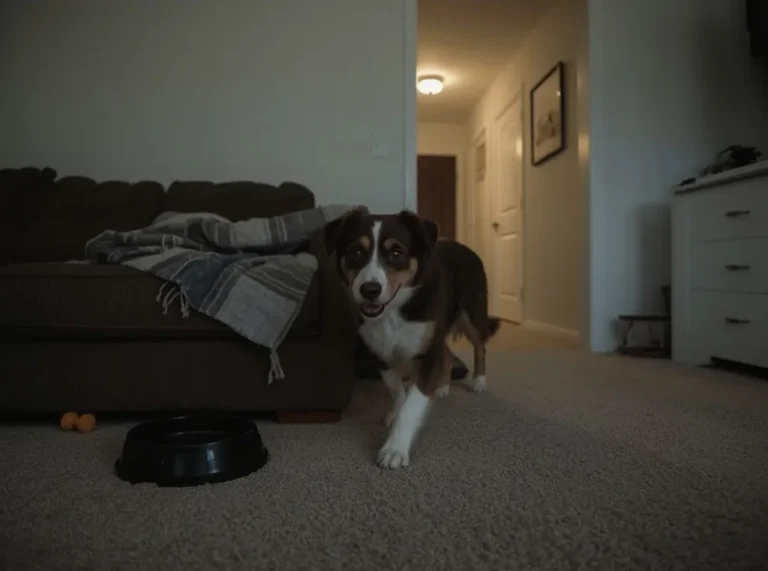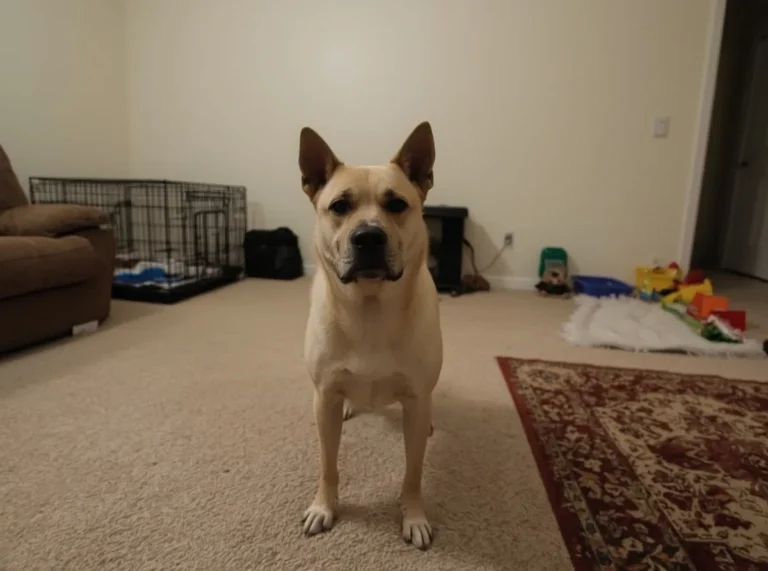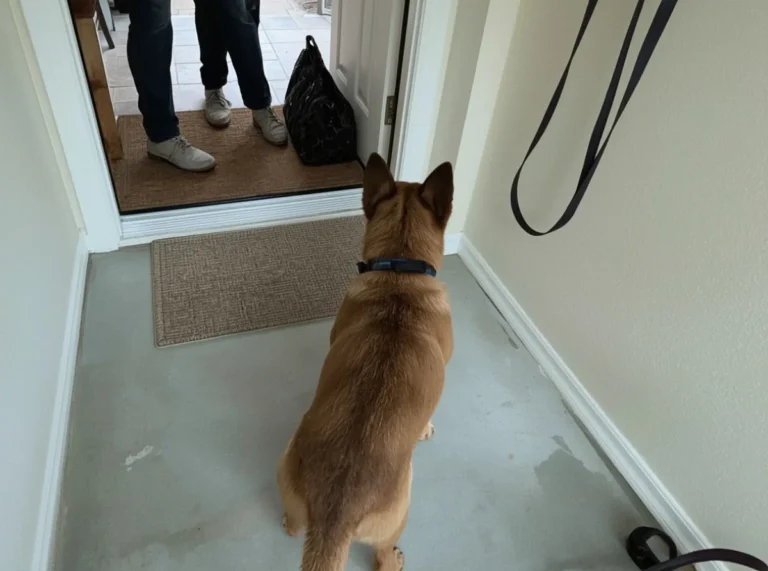
Some dogs seem calm all day and then suddenly become much more alert, vocal, or jumpy once evening arrives. A sound that would barely register in the afternoon can trigger barking, pacing, or a sharp stare into the dark after sunset. For many homes, this shift feels confusing because nothing obvious has changed.
Nighttime reactivity often has less to do with a dog becoming “bad” at night and more to do with the way dogs experience their surroundings when the day quiets down. Fewer distractions, lower visibility, and a different household rhythm can make small triggers feel bigger. A dog that was able to ignore the world at 3 p.m. may have a much harder time doing that at 9 p.m.
Sometimes the reaction is subtle. A dog may simply stay on edge, follow sounds from room to room, or refuse to settle near doors and windows. Other times it looks more dramatic, with barking, lunging, whining, or sudden bursts of energy that seem to appear from nowhere.
What nighttime reactivity can look like in everyday life
Nighttime reactivity does not always mean a dog is barking at every little thing. It can show up in a wide range of behaviors, some obvious and some easy to miss. The pattern matters more than any single event.
- Barking or growling at hallway noise, footsteps, or passing cars
- Pacing between rooms instead of resting
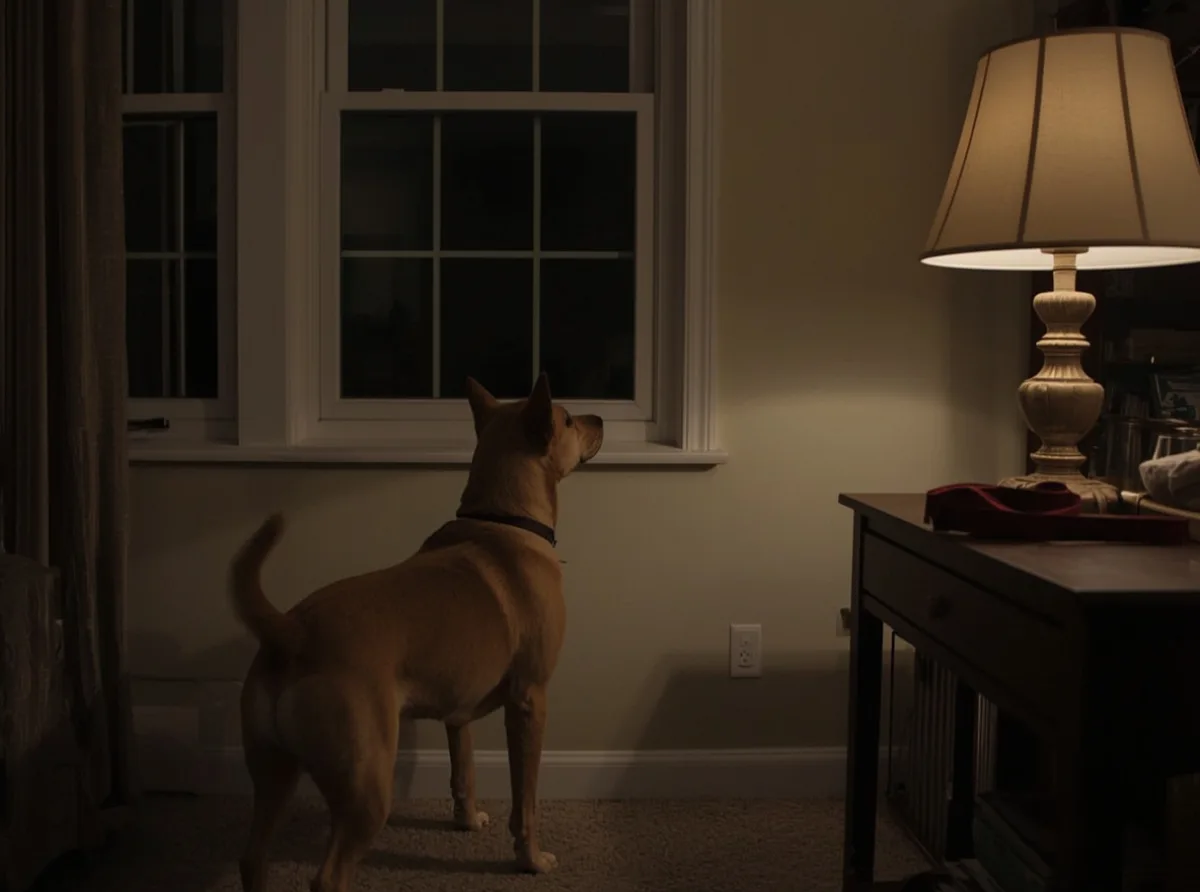
- Fixating on windows, doors, or dark corners
- Startling more easily when touched or spoken to
- Whining, restless circling, or repeated getting up and lying down
- Guarding a couch, bed, or person more intensely after dark
- Following family members closely and seeming unable to relax alone
In some homes, the behavior appears only after the lights go down. In others, it begins earlier in the evening when the routine starts to slow. The dog may seem fine during dinner, then become noticeably more reactive as the house gets quieter.
That shift is often a clue. It suggests the behavior is connected to context, not just personality. A dog may not be reacting to one single thing; it may be reacting to the whole nighttime environment.
Why dogs commonly react more at night
Dogs rely heavily on sound, smell, and movement. At night, those senses can become more important because visual information drops off. A creak in the wall, a neighbor moving outside, or an animal passing through the yard may stand out more strongly when the dog cannot see the full picture.
Households also change after dark. People settle in, conversations slow down, and movement becomes less predictable. If a dog is sensitive to routine changes, that transition alone can create tension. The evening may feel like a shift from active to uncertain.
Another common factor is accumulated arousal. A dog that spent the day waiting, holding in energy, or reacting to smaller stressors may become less able to regulate by night. The dog does not necessarily become more reactive because it is tired in a simple way. Often it is because the day has added up.
Nighttime reactivity often reflects a mix of reduced visibility, heightened sensory awareness, and leftover stress from the day.
How darkness changes the way dogs interpret their environment
Darkness does not scare every dog, but it does change how information comes in. A dog may hear a sound without being able to match it to a visible source. That uncertainty can raise suspicion. What seems harmless to a person may feel unresolved to the dog.
Many dogs also notice subtle changes that people miss. Reflections in windows, movement behind curtains, and unfamiliar shadows can all feel important. Some dogs bark not because they have identified a real threat, but because they cannot confidently rule one out.
Night can also amplify contrast. A quiet house makes tiny noises stand out. Floors settle, pipes click, distant dogs bark, and all of it carries farther than it does during the day. A reactive dog may respond to each new sound as if it deserves immediate attention.
Common nighttime triggers
- Outside noises that travel farther in still air
- Reflection or motion in windows
- Household sounds like appliances turning on
- Doors opening and closing unexpectedly
- People moving around after being still for a while
- Changes in the dog’s resting place or favorite sleeping area
These triggers do not affect every dog equally. A confident, relaxed dog may barely look up. A more vigilant dog may treat the same input as a warning sign. That difference often comes from temperament, history, and how secure the dog feels in the moment.
Emotional reasons behind the behavior
Reactivity is not always about fear, but fear is one possible ingredient. A dog that feels uncertain may become sharper, louder, or more protective after dark because it does not have enough information to feel settled. In the absence of clarity, some dogs choose defense.
Other dogs react from anticipation rather than fear alone. They may have learned that nighttime brings activity they dislike, such as late arrivals, street noise, or the family getting up and down unpredictably. After enough repetitions, the dog starts preparing for trouble before anything actually happens.
Attachment can matter too. Some dogs become more reactive at night because they are more watchful around the people they rely on. If the dog feels responsible for guarding the home or staying close to a person, nighttime can intensify that job. The quieter the house becomes, the more the dog may feel that it needs to stay on duty.
A reactive dog at night is often signaling uncertainty, vigilance, or a sense that it needs to stay alert.
Signs the reaction may be emotional rather than purely territorial
- The dog is reactive in multiple locations, not only near one door or window
- The dog settles only when someone sits nearby
- Barking is mixed with pacing, scanning, or lip licking
- The dog seems tense before the trigger even appears
- The dog calms down when the environment becomes more predictable
These details help show whether the dog is responding to a specific external target or to an internal state of tension. Often, both are involved. A single bark might start with a sound outside, but the intensity comes from the dog already being on edge.
How routine affects nighttime behavior
Routine gives dogs a sense of pattern, and pattern helps reduce uncertainty. When evening habits change often, some dogs become more reactive simply because they never know what to expect. A late walk, an irregular dinner time, or visitors arriving at different hours can all add mental noise.
Dogs also notice when people become less available. If the household is lively during the day and then suddenly still at night, a dog that depends on interaction may feel a kind of drop-off. For some dogs, that change is uncomfortable enough to trigger barking or restlessness.
Predictability can make a big difference. Not because a dog needs a perfectly rigid schedule, but because a familiar rhythm helps the dog know what comes next. When the evening unfolds in a similar way most days, many dogs relax more quickly.
Routine factors that can increase reactivity
- Inconsistent meal or walk times
- Late-night noise from TVs, phones, or household activity
- Unpredictable arrival and departure of family members
- Skipped exercise or mental activity earlier in the day
- Long stretches of boredom followed by excitement
These are not dramatic changes on their own, but dogs often respond to the accumulation of small shifts. A routine that feels normal to people can still feel unsettled to a dog, especially one with a sensitive temperament.
The role of stimulation, boredom, and leftover energy
Not every reactive evening is rooted in anxiety. Sometimes the dog simply has too much unused energy or too little to do. A dog that slept or rested most of the day may be mentally awake by night, exactly when the household wants quiet.
Boredom can look a lot like reactivity. A dog may bark at sounds because it has nothing better to do, or it may get stirred up by minor events because it is already seeking stimulation. The behavior can become a habit if the dog repeatedly finds that barking creates movement, attention, or a change in the room.
That does not mean the dog is being stubborn. It means the evening has become the most interesting part of the day. If nothing else has been engaging, even a small sound can feel like an event worth responding to.
Some dogs are more reactive at night because they are under-stimulated earlier and over-alert later.
When the behavior signals stress rather than simple alertness
A dog can be watchful without being distressed. But when reactivity turns into a pattern of tension, the body usually gives clues. The dog may hold its tail rigid, freeze before barking, or stare with an intense, fixed expression. These details matter.
Stress-related nighttime reactivity often appears with difficulty settling. The dog may lie down and get back up repeatedly. It may seek reassurance, then reject touch. It may look exhausted and restless at the same time.
The difference between alertness and stress is not always obvious in the moment. Still, stress usually comes with a broader inability to relax, not just a reaction to one sound or one person. The dog seems like it is waiting for the next thing.
| Behavior | Possible meaning |
|---|---|
| Quick bark at a noise, then settles | Brief alertness or momentary surprise |
| Repeated pacing and scanning | Ongoing tension or unresolved arousal |
| Fixation near doors or windows | Watchfulness, uncertainty, or guarding |
| Restlessness plus clinginess | Need for reassurance or low comfort level |
These patterns do not diagnose anything by themselves, but they help explain why the dog seems more reactive after dark. The evening may not be creating the problem from scratch. It may simply expose a state that was already building.
Household atmosphere and human behavior after dark
Dogs pay close attention to people, and the mood of the home can influence how they respond. If the family is tired, rushed, or on edge by evening, the dog may absorb that tension. A more restless human pace can create a more restless dog.
Nighttime also changes how people respond to barking. In the afternoon, a sound might be brushed off. At night, people often react faster because they are trying to sleep or keep the house quiet. That quick response can unintentionally reinforce the pattern, especially if the dog learns that barking brings immediate attention.
Some dogs react more because their people are moving less predictably. Turning on lights, getting up suddenly, or speaking sharply at a bark can all make the situation feel more charged. Even calm dogs can become more vigilant when they sense tension in the room.
Small household patterns that can matter
- Everyone settling in at different times
- Late-night noise near the dog’s resting spot
- Frequent trips outside or to the kitchen
- People reacting strongly to the first bark
- Closing off the dog from the family without a familiar routine
Sometimes the answer is not that the dog needs more correction. It is that the evening environment needs less unpredictability. The dog is reacting to a whole atmosphere, not just a single trigger.
Age, sensitivity, and past experiences
Age can influence how a dog reacts at night. Puppies may be more reactive because they are still learning what sounds and changes mean. Adult dogs may react because they have formed habits around certain evening cues. Older dogs may become more sensitive if hearing, vision, or comfort starts to change.
Past experience matters as well. A dog that has lived with noisy evenings, occasional conflict, or inconsistent handling may carry those associations into new homes or new routines. Even if the current environment is peaceful, the dog may still expect nighttime to be difficult.
Sensitivity is not a flaw. Some dogs are naturally more tuned in to small changes. They notice what others miss. At night, that sensitivity can become more visible because there is less distraction competing for their attention.
Nighttime reactivity often grows stronger when sensitivity, habit, and uncertainty overlap.
What owners often misread
It is easy to assume a barking dog is simply reacting to “nothing.” Usually, there is something there, even if it is not obvious to a human. The sound may be faint, the movement subtle, or the feeling simply too complex to see from across the room.
Another common misunderstanding is assuming the dog is trying to dominate the space. In many cases, the dog is not making a social statement. It is responding to pressure, uncertainty, or over-arousal. The behavior may look defiant, but the emotional driver is often less clear and more ordinary.
People also sometimes think a dog that is calm for most of the day cannot be stressed. In reality, some dogs are very good at coping until the environment shifts. Night can lower the margin for error. A dog that has held it together all afternoon may finally show the strain once the house gets quiet.
How to read the pattern over time
The most useful question is often not “Why did the dog bark tonight?” but “What tends to happen before the barking?” Timing, location, and repetition reveal a lot. A dog that reacts only when certain neighbors come home, or only when the family turns off lights, is giving useful information.
Patterns can also show whether the behavior is stable or changeable. If the dog is more reactive after a busy day, after less exercise, or when the weather keeps everyone indoors, the environment is playing a role. If the behavior fades on quieter nights, that matters too.
Watching for consistency helps separate a passing mood from a reliable trigger. Nighttime reactivity often becomes easier to understand when it is tracked against routine rather than treated as a random event.
Questions worth noticing
- Does the reaction happen at the same hour each night?
- Does it start before the trigger appears?
- Is the dog worse on busy days?
- Does the behavior change with more evening activity earlier in the day?
- Does the dog settle faster in some rooms than others?
These details can show whether the dog is reacting to the environment, the routine, or a combination of both. That distinction matters because the feeling behind the behavior shapes how it shows up.
Why some dogs are fine by day but reactive at night
Daytime often provides structure, movement, and information. There are people walking around, traffic sounds are more familiar, and the dog has more chances to understand what is happening outside. By night, the world becomes less readable. That alone can change behavior.
For some dogs, the evening also coincides with a drop in physical activity and mental engagement. The body may be ready to rest while the mind is still scanning. That mismatch can look like impatience, agitation, or sudden sensitivity.
In other cases, nighttime reactivity reflects a dog’s strongest habits. If the dog has spent weeks or months responding to evening sounds, the pattern may now appear automatically. Habit can be powerful, especially when the trigger is familiar and the outcome has repeated enough times to feel expected.
When a dog is consistently more reactive at night, the cause is often a combination of sensory changes, routine, and learned expectation.
How the behavior can appear different from one dog to another
Two dogs may react to the same night sound in very different ways. One might bark once and go back to sleep. Another may rush the window, vocalize for several minutes, and refuse to settle. The intensity does not always match the size of the trigger.
Breed tendencies, individual temperament, and life history can all shape the response. A herding dog may be more tuned in to movement. A guard-oriented dog may be quicker to notice sounds near the home. A shy dog may react more strongly when unsure what is happening.
But even within the same breed or household, dogs vary a lot. Some are naturally more resilient to evening stimulation. Others are more sensitive to the loss of daylight and the quiet that follows. The reaction is individual, even when the trigger is common.
What the nighttime reaction may be telling you
At a basic level, the behavior says the dog is not fully comfortable with something in that setting. It may be discomfort, vigilance, over-arousal, uncertainty, or a habit that has become too easy to repeat. The useful part is that the dog is communicating through pattern.
That communication can be loud or subtle. A dog that barks at the same sound every evening is often telling you that the sound, the timing, or the state of the house has become meaningful. A dog that paces before barking may be signaling that the build-up matters as much as the final reaction.
When the evening is calm and predictable, many dogs are able to settle better. When it is crowded, irregular, or filled with unresolved stimulation, reactivity tends to show up more readily. Night does not create a different dog. It often reveals the parts of the day that were already adding pressure.
The clearest clue is usually the rhythm. If the dog becomes more reactive once the household slows, dark arrives, and the usual signals disappear, the behavior is likely tied to that transition. Understanding that pattern makes the dog’s evening reactions feel less random and more readable.