A dog that keeps returning to the same spot again and again is often trying to tell you something, even if the message is not obvious at first. It may be a corner of the yard, the same patch of carpet, the base of the couch, a doorway, or a particular place on a walk. The habit can look mild and ordinary, but the reasons behind it are often specific.
Sometimes the behavior is simple curiosity. Other times it points to a routine, a memory, a strong smell, a lingering sound, or a feeling of uncertainty. A dog may revisit an area because something there feels important, familiar, or unresolved. The repeated checking is rarely random.
In everyday life, this can show up in small but noticeable ways. A dog pauses at the same fence line on every walk. Another keeps sniffing one section of the hallway. Some dogs circle back to the same window, the same door, or the same spot in the yard after every outdoor trip. The pattern can be harmless, but it can also reveal stress, vigilance, boredom, or anticipation.
What Repeated Checking Looks Like in Daily Life
Repeated checking does not always look intense. In many homes, it appears as a dog briefly returning to a place, sniffing it, then walking away, only to come back minutes later. The dog may seem calm, focused, or mildly distracted. In other cases, the behavior is more active, with pacing, circling, scratching, or standing and staring at the area.
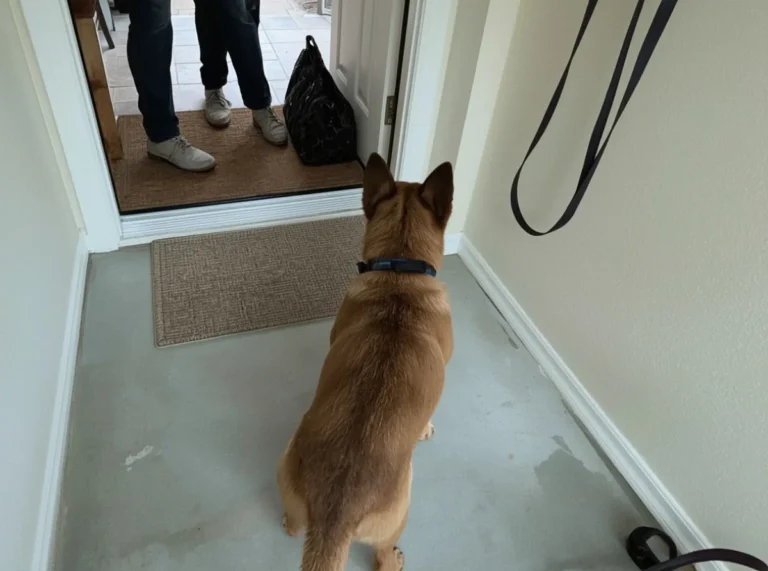
Some dogs return to spots that seem connected to food, rest, or routine. A dog may keep checking the kitchen because that is where meals happen. Another may revisit the front door because that is where family members come and go. A dog that repeatedly inspects a certain outdoor area may be following scent trails, trying to locate an animal, or paying attention to a place that has changed in some way.
The behavior can also be tied to body language. A dog that is relaxed may sniff slowly, move loosely, and leave the area without hesitation. A dog that is uneasy may have a stiff body, a fixed gaze, raised ears, or repeated stop-start movement. The difference matters because the same action can have very different meanings.
Why Dogs Keep Going Back to the Same Area
Dogs rely heavily on scent, routine, and observation. Their world is built around details people often miss. A place that seems empty to us may carry a strong odor, a memory of an event, or a clear signal that something changed there recently.
One of the most common reasons is scent investigation. Dogs can detect layers of odor that remain long after a person or animal has passed through. A single area might hold the scent of another dog, wildlife, food, cleaning products, moisture, or even a change in the household environment. If the smell is interesting, unusual, or emotionally meaningful, the dog may keep checking it.
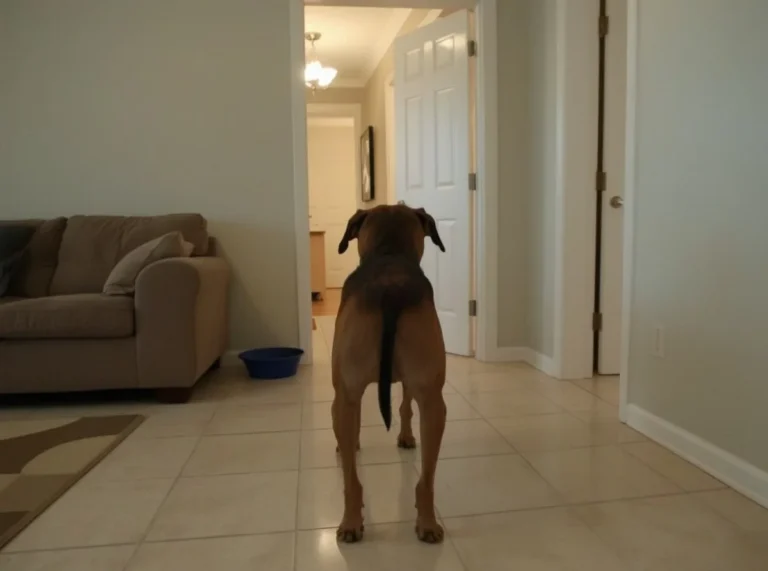
Routine also plays a role. Dogs learn patterns very quickly. If something usually happens in one location, they begin to check it habitually. A dog that waits near the back door because outdoor time often follows, or one that checks the hallway before walks, is showing expectation shaped by experience.
In some cases, repeated checking is about uncertainty. Dogs may revisit the same spot if they are trying to make sense of a sound, movement, or smell that seems incomplete. They are not always “worrying” in a human sense, but they are gathering information until the situation feels clearer.
A dog that keeps checking one area is often responding to information that is invisible to people: scent, routine, memory, or a feeling that something changed.
Emotional Reasons Behind the Behavior
Not every repeated check has the same emotional tone. Some dogs do it because they are curious and engaged. Others do it because the area matters to them emotionally. The difference can be subtle, but the dog’s posture and timing often give clues.
Attachment is one possible reason. Dogs that are closely bonded to their people may check areas associated with a family member’s presence, especially if that person has left the home, is expected to return, or has recently altered the routine. A dog may linger near a bedroom door, a chair, or a favorite resting place because the scent and memory of that person remain strong.
Another emotional factor is anticipation. Dogs often revisit spots where good things usually happen. If treats appear in the kitchen, if a leash is kept by the door, or if play starts in a certain room, the dog may keep checking there out of hopeful expectation. This can look like impatience, but it is usually just a learned pattern.
Stress and insecurity can create a different form of repeated checking. A dog that feels unsettled may patrol the same area because it offers reassurance. This is common during household changes, noisy events, new visitors, or disruptions in routine. The dog may not know what changed, only that the environment feels different enough to monitor carefully.
Signs the Behavior Is Emotional Rather Than Casual
- Stiff body posture while approaching the area
- Repeated glancing around the room or yard
- Slower movement than usual
- Excessive sniffing with little relaxation afterward
- Returning even after the area has already been checked many times
- Whining, pacing, or reluctance to settle nearby
When these signs appear together, the dog may be feeling more than simple interest. The behavior may reflect uncertainty, vigilance, or a need for reassurance.
How Environment and Routine Influence Repeated Checking
The home environment often shapes this habit more than people realize. A quiet household may make certain sounds and smells stand out more sharply, so the dog notices tiny changes and keeps investigating them. A busier home can create repeated activity in the same places, which naturally draws the dog back again and again.
Routine is equally important. Dogs are highly sensitive to patterns. If feeding, play, walks, visitors, or rest usually happen in certain areas, those spots become emotionally charged. The dog learns to expect something there, and the expectation itself can drive repeated checking.
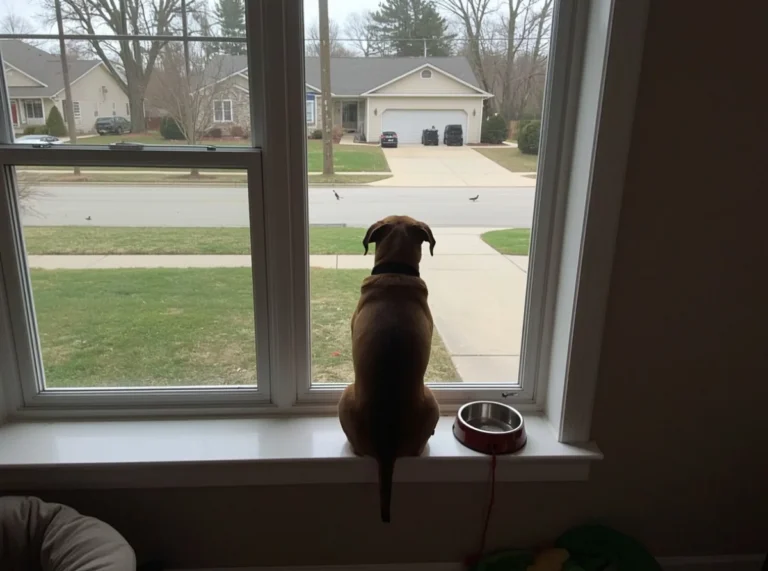
In a home with lots of movement, a dog may repeatedly inspect doorways, windows, hallways, or entry points because those are the places where change occurs most often. In a quieter home, the same dog might focus on a bed, couch corner, or window where outdoor activity can be observed. The location often reflects the dog’s role in the household rhythm.
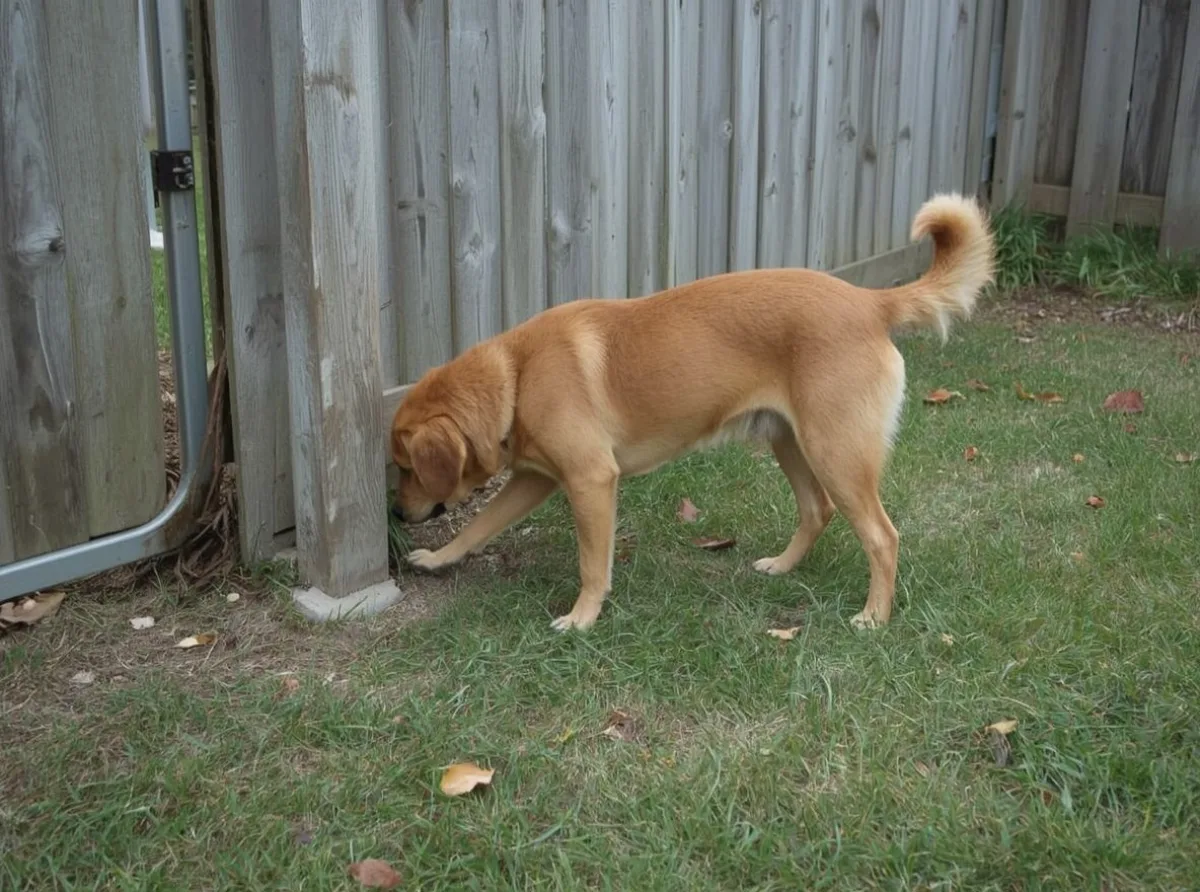
Outdoor space can influence the habit just as much. Yard boundaries, fence lines, gates, compost areas, bird feeders, and spots where other animals pass through can become regular inspection points. A dog does not need a dramatic reason to revisit them. A faint scent trail is often enough.
Common Household and Environmental Triggers
- New furniture or rearranged rooms
- Recent cleaning with strong-smelling products
- Animal scents left by neighborhood dogs, cats, or wildlife
- Food preparation areas and treat storage spots
- Doors, windows, and entryways with frequent activity
- Noise from appliances, plumbing, or nearby traffic
- Changes in lighting, airflow, or humidity that alter scent
These changes may seem minor to people, yet they can be significant to a dog. Repeated checking is often the visible part of a much larger sensory experience.
When Repeated Checking Becomes More Noticeable
The behavior often stands out during transitions. A dog may start checking the same area more often after a move, a schedule change, a new pet, a different work routine, or a period of reduced exercise. When the rest of life shifts, dogs commonly return to places that feel predictable.
It can also become more noticeable in moments of under-stimulation. A dog with too little mental or physical activity may create its own job by monitoring specific parts of the home or yard. The checking gives the dog something to do, even if the activity looks repetitive to human eyes.
Some dogs become more focused on one area after a single important event. A squirrel in the yard, a delivery at the door, a neighbor’s dog barking across the fence, or a dropped food item can leave a strong impression. After that, the dog may keep revisiting the spot long after the original event is gone.
Age can shape the pattern too. Puppies often check areas out of curiosity and learning. Adult dogs may do it for routine and awareness. Older dogs sometimes revisit places because their sense of confidence or sensory processing has changed, making familiar locations feel especially important.
If a dog starts checking the same area far more often than before, the timing matters. New patterns usually point to a change in routine, environment, comfort level, or sensory input.
Different Forms of the Behavior
Repeated checking does not always mean the same thing. A calm dog sniffing a doorway once every few minutes is different from a dog pacing around the same corner with tension in the body. The behavior can range from relaxed curiosity to defensive monitoring.
In its mildest form, the dog is simply observant. The dog checks a place, gathers information, and moves on. This version often appears loose, quiet, and easy to interrupt. It usually does not disrupt eating, resting, or normal household activity.
A more reactive version may appear when the dog is especially alert. The dog may freeze at the area, bark at it, or keep returning after every sound. This kind of checking often has a sharper edge. The dog is not just investigating; it is guarding, tracking, or reacting to a perceived change.
There is also a restless form that can look repetitive and hard to settle. The dog may keep revisiting the same area without satisfaction, almost as if the behavior itself has become a loop. That pattern can happen when the dog is anxious, overaroused, or unable to fully resolve what is drawing attention.
Subtle, Moderate, and Intense Versions
| Type of checking | What it may look like | Possible meaning |
|---|---|---|
| Subtle | Brief sniffing, relaxed movement, easy to redirect | Curiosity, habit, normal interest |
| Moderate | Repeated returns, focused attention, some alertness | Expectation, routine, scent tracking |
| Intense | Pacing, staring, vocalizing, stiffness | Stress, vigilance, uncertainty, frustration |
The same location can trigger any of these versions depending on what the dog is experiencing that day. Context changes everything.
What Owners Often Misread
People often assume that repeated checking means a dog is being stubborn, nervous, or trying to get attention. Sometimes that is partly true, but those labels are usually too simple. Most dogs are not choosing the behavior in a human-like way. They are reacting to what the area means to them.
A common misunderstanding is to interpret the behavior as a bad habit that should be ignored completely. In some cases, ignoring it is fine because the dog is just sniffing or revisiting a familiar place. In other cases, the habit is a sign that the dog is uneasy, and the underlying cause deserves attention.
Another mistake is assuming the dog is being dramatic. Dogs do not invent significance the way people do. They are responding to scent, learning, and emotional association. If a dog keeps checking the same place, something about that place still matters.
That does not always mean something is wrong. Sometimes the area simply holds a strong scent or a highly expected routine. The challenge is noticing whether the behavior looks relaxed, useful, or compulsive.
How to Read the Pattern More Clearly
Looking at timing often helps more than looking at the spot itself. Does the dog check the area before meals, after walks, when a certain person leaves, or when the house gets noisy? Repetition tied to a specific event usually points to expectation or routine.
Body language also matters. A dog that checks an area and then settles nearby is likely comfortable. A dog that checks repeatedly without relaxing may be telling a different story. Watch for tension in the face, ears, tail, and shoulders. Small details can reveal whether the behavior is casual or loaded with feeling.
Changes from the dog’s usual baseline are especially useful. If the behavior has been present for years, it may simply be part of the dog’s normal habits. If it started suddenly, intensified, or came with other changes such as barking, hiding, loss of appetite, or trouble resting, the pattern deserves closer attention.
Questions That Help Put the Behavior in Context
- Did the habit begin after a move, schedule change, or new household member?
- Does the dog check the area at a predictable time?
- Is the dog relaxed or tense while doing it?
- Does the checking happen in one location or many?
- Can the dog easily leave the area when called away?
- Does the behavior stop after exercise, play, or rest?
These details can make the difference between ordinary curiosity and a pattern shaped by stress or strong anticipation.
When the Same Area Keeps Drawing the Dog Back
Some places become magnets because they combine several powerful cues at once. A hallway may lead to the front door, carry family scents, and echo outside sounds. A yard corner may collect smells from animals, damp soil, and fence-line activity. A couch arm may hold the scent of a favorite person and serve as a lookout point at the same time.
The more meaning a place carries, the more often the dog may return to it. This is especially true in households where the dog has limited ways to control the environment. Rechecking becomes a form of staying informed.
In a practical sense, the behavior often reflects a dog doing its best to manage the world through information. Checking the same area again is a way to confirm that nothing changed, that a scent is still there, or that a familiar routine is still in place. The action can be reassuring in a very canine way.
When the behavior is calm, predictable, and brief, it may simply be part of how a dog experiences home. When it grows more frequent or tense, it often signals that the spot has become emotionally or sensory important. Either way, the repeated return is usually meaningful, not random.
A dog that keeps checking the same area is often saying, in its own way, “This place still matters to me, and I want to know what it means today.”