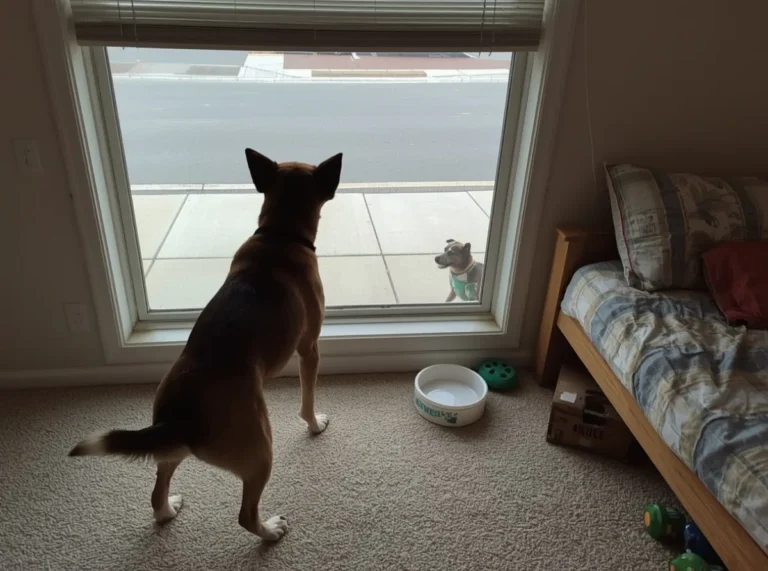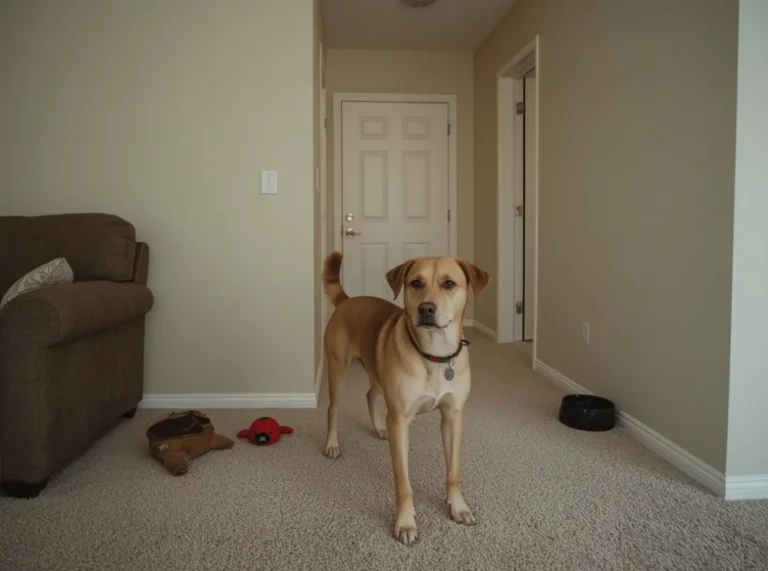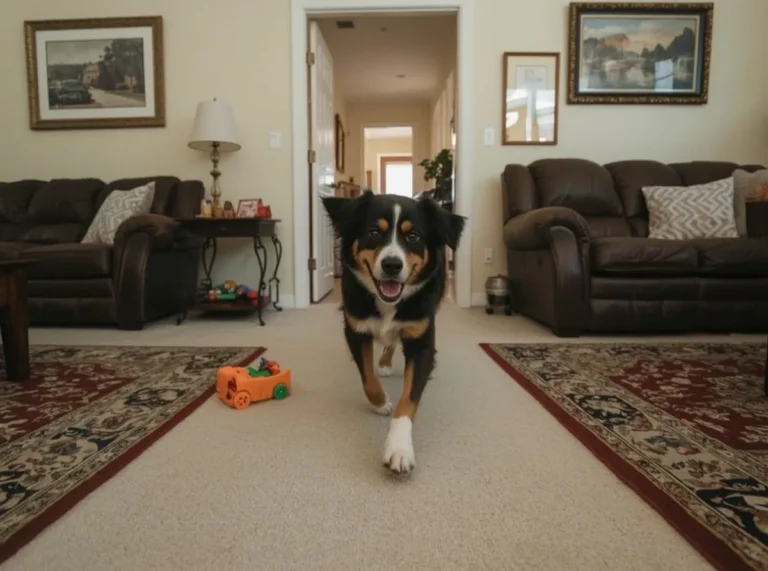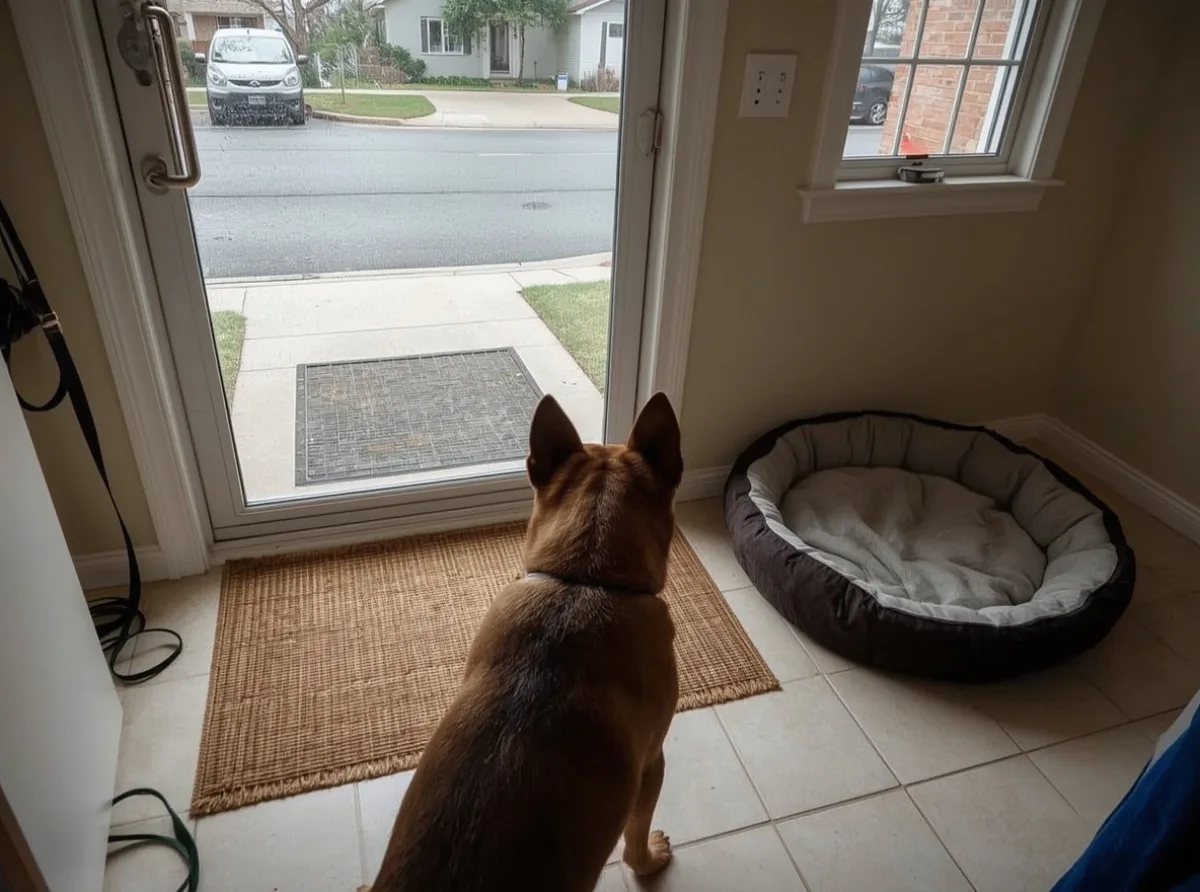
A dog that seems constantly alert can make even a quiet home feel busy. The head lifts at every sound, the eyes track movement across the room, and rest never seems fully settled. Sometimes this looks like sharp awareness. Other times it looks like tension that never quite turns off.
That alertness is not always a problem on its own. Many dogs are naturally observant, especially in new environments or around unfamiliar people and animals. Still, when a dog appears to stay on guard most of the day, the behavior usually has a reason worth noticing.
Constant alertness can come from instincts, habit, stress, boredom, or a mix of all four. The dog may be trying to gather information, stay close to the household’s activity, or prepare for something it expects to happen. What matters most is not just that the dog is watching, but how the rest of the body looks while it is doing it.
What Constant Alertness Usually Looks Like
A dog that is consistently alert is often easy to spot in everyday life. It may wake up the moment a sound changes outside the window. It may keep its head up during what should be rest time, even if the house is calm. Some dogs follow people from room to room and seem unable to settle until they know where everyone is.
This behavior can also show up as scanning. The dog looks at doorways, windows, hallways, or the edge of the yard again and again. Ears may stay forward, the tail may hold higher than usual, and movement may seem stiff rather than loose.
Not every alert dog is stressed. Some are simply interested in everything. But the line between healthy awareness and unease becomes clearer when the dog never fully relaxes, even in familiar places. A dog that sleeps lightly, startles often, or stays fixated on every small change may be telling you that vigilance has become a habit.
Natural Instincts Behind the Behavior
Dogs are built to notice movement, sound, and scent quickly. That sensitivity helped their ancestors survive, and it still shapes how modern dogs respond to their world. A dog that seems constantly alert may be showing a version of that old survival pattern.
Some breeds are especially responsive to environmental changes. Herding dogs, guarding breeds, and scent-driven dogs often keep a close watch on what is happening around them. That does not mean something is wrong. It does mean the dog may need help learning when it is safe to stand down.
Even dogs that are not from those backgrounds can become highly watchful if they have learned that being alert matters. If a dog has had chaotic routines, lots of interruptions, or frequent changes in the home, it may begin to expect the next event before it happens. Over time, that expectation can look like constant readiness.
Emotional Reasons a Dog Stays on Guard
A dog that never seems to relax may not be feeling confident. Alertness can be tied to uncertainty, especially if the dog does not know what will happen next. Some dogs become watchful because they want control over their surroundings. Others do it because they do not feel safe enough to ignore small changes.
Fear and anxiety are common behind-the-scenes reasons. A dog that is worried may try to monitor everything so nothing catches it off guard. This can happen after a move, a schedule change, a new pet in the home, loud construction nearby, or a frightening experience that left a strong impression.
Attachment can also play a role. Some dogs remain highly alert because they are focused on their people. They may listen closely for footsteps, keep tabs on where the family is, or react quickly whenever a person stands up. In those cases, the behavior may reflect strong social dependence rather than broad nervousness.
A dog that stays alert all the time is often trying to manage uncertainty, not just observe the room.
How the Body Language Helps Tell the Difference
The face and body often say more than the eyes alone. A dog can look alert in a relaxed, curious way, or in a tight, strained way. The difference matters. Calm alertness usually comes with flexible movement, normal breathing, and a body that can shift easily from watching to resting.
Stress-related alertness often looks different. The muscles may stay firm, the mouth may close tightly, and the body may lean forward as if bracing. The dog may struggle to lie down fully or keep getting back up. Some dogs also lick their lips, yawn repeatedly, or seem unable to find a comfortable spot.
Signs of relaxed alertness
- Loose body that can shift positions easily
- Curious head turns rather than sudden snaps of attention
- Normal breathing and soft facial muscles
- Ability to rest after checking the environment
Signs of uneasy alertness
- Stiff posture or a frozen body
- Persistent staring at doors, windows, or people
- Repeated startle reactions to ordinary sounds
- Tension in the face, shoulders, or tail
These patterns help show whether the dog is simply observant or whether the alertness is tied to discomfort. A dog that can check its surroundings and then settle is behaving very differently from one that seems stuck in a state of watchfulness.
Where the Behavior Shows Up Most Often
Constant alertness often becomes more obvious in specific places. Homes with frequent noise, neighbors passing close by, children running around, or many interruptions can keep a dog’s attention locked outward. Open windows and front-facing doors tend to make this even stronger.
New environments also bring it out. A dog in a rental home, hotel, friend’s house, or unfamiliar neighborhood may stay alert far longer than usual. The dog is collecting information, trying to understand the rules of the space, and deciding whether it can relax.
Some dogs become especially watchful when the household gets active. Feeding time, people getting ready to leave, children coming home, or evening routines can all make the dog feel that something is about to happen. In homes with irregular schedules, the dog may never know when to expect movement, which keeps attention high.
Routine, Stimulation, and Daily Life
Daily patterns can shape how alert a dog becomes. A dog with little mental stimulation may start watching everything simply because there is not much else to do. If the day is mostly waiting around, the dog may turn ordinary sounds and movements into major events.
On the other hand, a schedule that is too busy can keep a dog wound up all day. Constant activity, frequent visitors, repeated car trips, or ongoing training sessions without real rest can all make it harder for the dog to switch off. Alertness then becomes part of the dog’s default setting.
Enrichment helps, but only when it is balanced. Sniffing walks, chew time, food puzzles, and calm social interaction can reduce restless scanning. These activities give the dog a job that is satisfying without requiring it to monitor every detail of the home.
Dogs often settle better when their day includes both engagement and clear rest periods.
How Owners Often Misread the Behavior
It is easy to assume a constantly alert dog is being protective or “good at guarding.” Sometimes that is partly true. But the behavior can also come from worry, overarousal, or a habit of waiting for the next disruption. A dog that looks strong and watchful may actually feel unsettled underneath.
Another common mistake is assuming the dog is being stubborn when it cannot settle. In many cases, the dog is not refusing to relax. It may not know how. If its nervous system has learned to stay ready, simply telling it to calm down rarely changes much.
Owners may also overlook subtle signs that the alertness is getting worse. A dog that used to notice noises and move on may begin sleeping less deeply, pacing more, or reacting to smaller triggers. Those changes matter because they show that the behavior is becoming less flexible over time.
When Alertness Is Part of a Dog’s Personality
Some dogs are naturally keen observers. They notice the mail carrier before the doorbell rings, track the family’s movement through the house, and wake up quickly if the environment changes. In a stable dog, this kind of alertness is usually brief and easy to interrupt. The dog checks, then relaxes again.
Personality matters, but it is rarely the whole story. Even a naturally watchful dog should still be able to rest deeply. If the dog appears unable to disengage from the environment, personality alone is probably not explaining it.
The healthiest version of alertness has limits. The dog pays attention when needed and then returns to a settled state. When the watching never ends, something in the dog’s world may be asking too much of it.
Breed Tendencies and Individual Differences
Breed tendencies can influence how alert a dog seems, but they do not determine the entire picture. A terrier may be quicker to notice movement than a more laid-back breed. A shepherd-type dog may keep a close eye on people moving through the house. A hound may seem more absorbed in scent than in visual scanning, yet still appear highly tuned in to the environment.
Individual history still counts more than breed label alone. Two dogs of the same breed can behave very differently depending on their early experiences, social exposure, and daily routine. One may be calm and easygoing while the other seems keyed up from morning to night.
That is why the context matters so much. A highly alert dog in a quiet, predictable home may be doing fine. A similar-looking dog in a noisy, inconsistent environment may be struggling with constant uncertainty.
What Long-Term Alertness May Signal
When the behavior stays the same for weeks or months, it is often worth thinking in terms of patterns. A dog that is always awake to every small change may be stuck in a high state of arousal. That state can make rest shallow and make other behaviors harder to manage, including barking, pacing, and reactivity.
Long-term alertness can also affect how the dog handles everyday events. Visitors may feel like a bigger deal than they should. Normal household sounds may become triggers. The dog may spend so much time monitoring the environment that it has less mental room for rest, play, or relaxed companionship.
In some homes, the pattern is subtle at first. The dog just seems “very aware.” Later, the signs become harder to ignore. The dog starts waking at tiny noises, hovering near exits, or reacting to movement before it has even fully processed what it saw. That progression often points to a nervous system that has been running too hot for too long.
Practical Clues That Help Make Sense of It
Looking at the whole day usually tells a better story than watching one moment. A dog that stays alert during walks but relaxes at home may simply be tuned into outdoor stimulation. A dog that is alert from dawn to bedtime, indoors and outside, is showing a broader pattern.
It also helps to notice what interrupts the alertness. Some dogs soften after a meal, a sniffy walk, or a nap in a quiet room. Others stay in the same mode no matter what changes around them. The more stubborn the pattern, the more likely it is that the dog needs consistent help settling rather than more excitement.
Small changes in the environment can matter too. Closing blinds, reducing window access to busy sidewalks, keeping a steadier schedule, and giving the dog a predictable rest area can lower the number of things it feels it must monitor. For some dogs, that difference is noticeable within days.
When Alertness Starts Affecting Everyday Comfort
The key question is not simply whether the dog is observant. It is whether the dog can also switch off. A dog that watches and then rests is functioning in a balanced way. A dog that never lets go of the environment may be carrying tension that is harder to see at first glance.
That tension may show up in small choices. The dog may avoid lying in open spaces, choose spots with clear views of the door, or follow movement instead of relaxing after it has checked things out. It may seem interested in everything but satisfied by nothing.
Over time, this can become part of the dog’s daily rhythm. The household may start to notice that the dog is always the first to react and the last to settle. That pattern deserves attention because it reveals how the dog is experiencing its world, not just how it looks from the outside.
Noticing the difference between healthy awareness and persistent watchfulness helps make the behavior easier to interpret. A dog that seems constantly alert is often communicating something specific through its posture, movement, and habits. Once the pattern becomes clear, the next question is usually not whether the dog is paying attention. It is what the dog believes it needs to keep watching for.