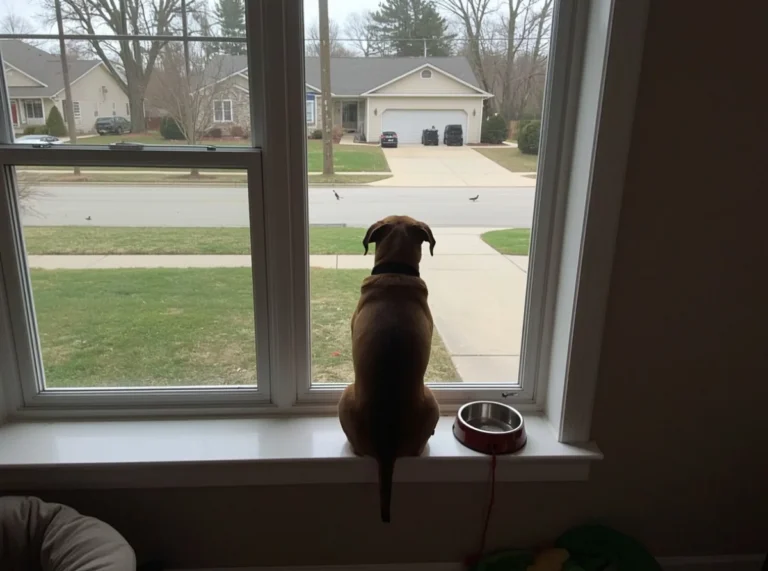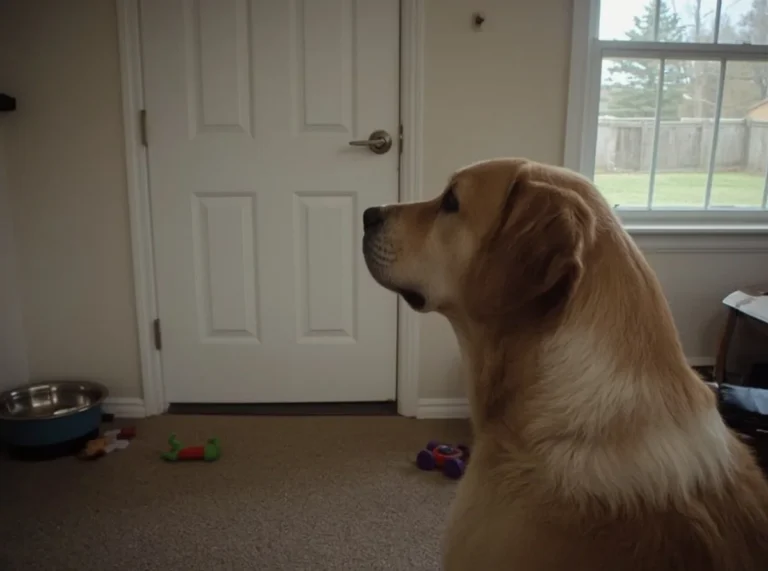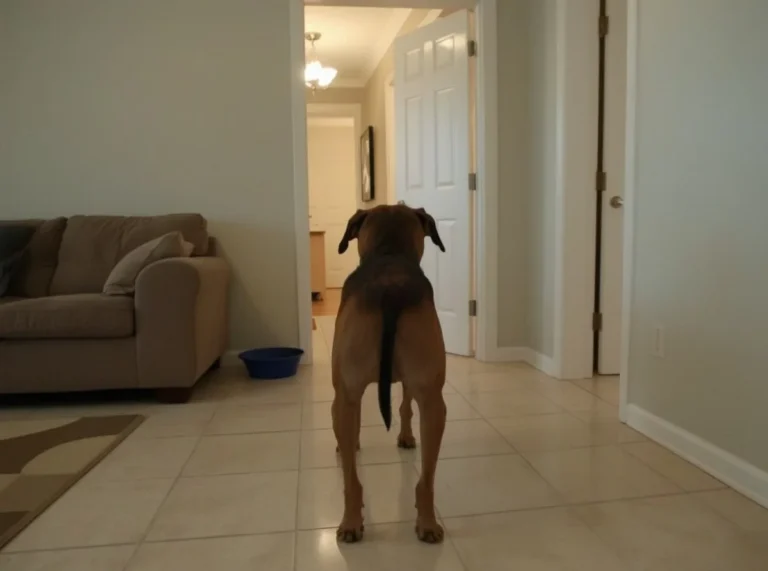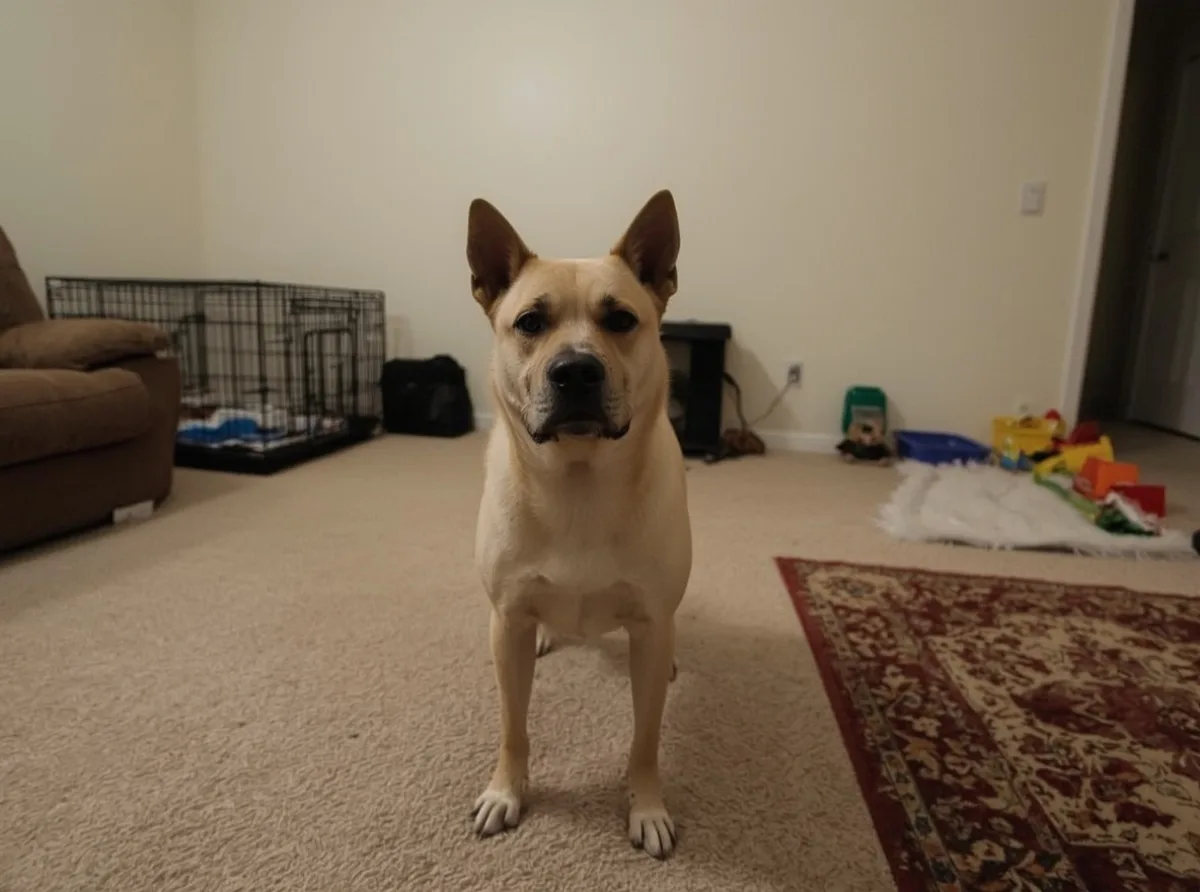
A dog that stays tense for a long time is not always reacting to one obvious event. Sometimes the body keeps holding stress after the moment has passed. Other times the tension builds slowly from a mix of small pressures that are easy to overlook in daily life.
That tension can show up as a stiff neck, a hard stare, a closed mouth, tight legs, or a body that seems ready for something before anything actually happens. Some dogs carry that state for minutes. Others seem to hold it for hours, especially in places that feel unfamiliar, busy, or hard to predict.
Long-lasting tension is worth paying attention to because it usually means the dog is still processing something. It may be fear, uncertainty, overarousal, frustration, or a habit of staying on alert. The same posture can look mild in one dog and meaningful in another, which is why context matters so much.
What Long-Lasting Tension Looks Like in Daily Life
In everyday settings, tension is often subtle at first. A dog may stand still instead of settling on the floor. The tail might stay low or rigid. Ears may tilt forward and then freeze. The dog watches more than it relaxes.
Some dogs pace without really choosing a spot. Others lie down but keep their muscles tight, as if they are resting only on the surface. They may respond quickly to small sounds, sudden movement, or shifts in the room. Even during quiet moments, the body does not fully soften.
It is easy to mistake this for simple alertness. And sometimes it is. But when the state lasts and does not ease, it usually tells you the dog has not moved out of stress mode yet.
Common signs that tension is lingering
- Stiff posture with little body sway
- Fixed or hard eye contact
- Closed mouth and tight lips
- Slow, careful movement or complete stillness
- Frequent scanning of the environment
- Difficulty settling even when nothing is happening
Why Dogs Stay Tense Instead of Letting Go
Dogs do not always reset quickly after a stressor. A barking dog outside, a crowded walk, a visit from strangers, or even a loud household routine can leave the nervous system activated for a long time. The event may be over, but the body has not received the message that it is safe to relax.
Some dogs are naturally more sensitive. They notice sound, motion, scent, and social pressure more strongly than others. That sensitivity can be helpful in some settings, but it also means they may carry tension longer after a disturbance.
Others develop a habit of staying braced because the environment feels unpredictable. If a dog never knows when the next noise, touch, or interruption will happen, staying ready can become the default. What looks like a personality trait is sometimes a response to repeated uncertainty.
Persistent tension usually means the dog is still trying to manage the situation, not that the dog is being difficult or stubborn.
Emotional Reasons Behind the Behavior
Fear is one of the most common reasons a dog stays tense. The dog may not be trying to escape, bark, or hide. Instead, it may hold still and wait, using tension as a protective strategy. This is common in dogs that are cautious by nature or have had experiences that made the world feel less predictable.
Uncertainty can create the same pattern. A dog that does not understand what is expected may remain tight and watchful. That uncertainty may appear during grooming, vet visits, car rides, or even changes in the home like new furniture or rearranged routines.
Frustration can also keep a dog tense. A dog that wants to move, greet, chase, or investigate but cannot reach the goal may stay locked in a strained state. The body is not calm because the mind is still focused on the blocked outcome.
Emotional states that can extend tension
- Fear or mild panic
- Uncertainty about what will happen next
- Frustration from being held back or delayed
- Overarousal after excitement
- General sensitivity to change or noise
How the Body Holds Stress
Once a dog’s nervous system is activated, muscles often stay ready for action. That is why tension can remain even after the visible trigger has gone. The dog may still be breathing a little faster than usual, standing on stiff legs, or keeping the neck and shoulders braced.
Some dogs also have a hard time switching from “notice everything” mode into resting mode. They may look calm because they are quiet, but the body tells a different story. Stillness is not always relaxation. In stressed dogs, stillness can mean restraint.
This is especially common in dogs that are trying not to make a situation worse. They hold themselves tight, avoid movement, and watch carefully. It is a way of coping, but it can last longer than owners expect.
How Environment Shapes Long Periods of Tension
Living environment matters a great deal. A quiet, predictable home often makes it easier for dogs to settle. A busy home with frequent movement, doorbells, children, visitors, or competing sounds can keep some dogs in a constant state of partial alertness.
Routine matters too. Dogs usually relax better when the day has a familiar rhythm. Meals, walks, quiet time, and predictable social contact all help the body know what comes next. When those patterns change often, some dogs spend more time trying to figure out the environment than actually resting in it.
Stimulation is another factor. Too little can create restlessness and frustration. Too much can create overload. In both cases, tension may linger because the dog never lands in a comfortable middle ground.
A dog can stay tense in both noisy and under-stimulated homes. The common thread is often not volume, but lack of balance and predictability.
Routine, Predictability, and the Ability to Settle
Dogs are routine-oriented in a practical sense. They learn patterns quickly, and they use those patterns to judge whether the day feels manageable. When a dog knows when food arrives, when the walk happens, and when the house becomes quiet, it is easier to relax between activities.
Without that structure, tension can become a background state. A dog may seem ready all the time because it never knows when the next event will happen. Even positive things can keep a dog tense if they arrive in a sudden, chaotic way. Excitement and stress often overlap more than people realize.
Consistency does not mean everything must be rigid. It means the dog can make sense of the day. That sense of order often reduces the amount of time the body spends braced.
When Tension Shows Up Most Often
Long periods of tension are especially noticeable in situations that ask a dog to wait, adapt, or ignore strong input. A dog might hold tension in the car, at the vet, during grooming, near other dogs, or while guests move through the home. Some dogs tense up during walks where they cannot control the pace or direction.
It may also appear after a startling moment. A dog hears a sudden bang, freezes, and then stays tight long after the sound is gone. Another dog gets anxious during a thunderstorm and keeps scanning the house well into the quiet afterward. The body remains stuck in the previous emotional state.
In a few dogs, tension appears most clearly when they are asked to be social. They may want to approach but remain stiff, or they may accept contact while clearly not easing into it. Social pressure can be as stressful as obvious threats.
Situations that commonly extend tension
- Vet clinics and grooming appointments
- Busy sidewalks and unfamiliar neighborhoods
- Households with frequent visitors
- Exposure to other dogs at close range
- Sudden household noises or construction sounds
- Long waits without a clear routine
What the Behavior May Signal About the Dog’s State
A dog that remains tense is often signaling that the situation still feels unresolved. The dog may not be ready to engage, relax, or explore. Instead, the body is saying that more time, distance, or predictability is needed.
Sometimes the tension points to a dog that has learned to suppress outward reactions. These dogs can look composed, but the internal pressure is still high. Their bodies may stay rigid because they are trying to keep control.
Other times, the state is less about control and more about confusion. The dog is not fully frightened, but not fully comfortable either. That in-between state can last surprisingly long, especially if the environment keeps offering mixed signals.
| Possible body pattern | What it may suggest |
|---|---|
| Rigid stance, wide eyes | Alertness, fear, or anticipation |
| Still body, tight mouth | Self-control or suppressed stress |
| Pacing with stop-and-go movement | Uncertainty or inability to settle |
| Stiffness after excitement | Overarousal that has not resolved |
How Owners Sometimes Misread the Behavior
Owners often assume a tense dog is being defiant, stubborn, or simply not listening. In reality, a stressed dog is usually less available for learning, not more. A body that is braced is not in a good position to absorb calm direction.
Another common mistake is reading quietness as comfort. A dog may stop moving and still be highly tense. That kind of pause can look peaceful from a distance, but the rest of the body may tell another story.
Some people also assume the dog needs more correction when the real need is less pressure. If the dog already feels cornered, added intensity tends to deepen the tension. The issue is often not obedience. It is emotional load.
Quiet does not always mean relaxed. Stiff quiet is often a sign that the dog is trying hard to cope.
Attachment and Social Sensitivity
Dogs are social animals, and many of them are highly attuned to human movement, tone, and routine. A dog may stay tense because it is tracking the people around it very closely. This is especially true in dogs that are deeply attached to their household and sensitive to changes in mood or activity.
If a person in the home is moving quickly, speaking loudly, or appearing stressed, the dog may absorb some of that tension. Not because it understands the details, but because it responds to the overall emotional climate. Dogs often read the room better than people expect.
That sensitivity can be useful, but it can also make relaxation harder. A dog that is constantly checking for cues from people may struggle to switch off. The attachment is real, and so is the strain that can come with it.
Long-Term Patterns to Notice
Short episodes of tension happen in most dogs. Long-term patterns are more meaningful. If a dog stays stiff in the same places, around the same people, or during the same activities, that repetition can reveal what the dog finds difficult.
Some dogs become more tense with age if their hearing, vision, or physical comfort changes. Others improve when the environment becomes simpler and more predictable. The pattern is not fixed forever, but it is often consistent enough to notice over time.
Tracking when the dog loosens and when it stays braced can help identify the real pressure points. A dog that relaxes on quiet walks but remains tense in the house may be responding to household chaos. Another dog may be the opposite. The pattern matters more than the label.
When Tension Becomes a Habit
Repeated stress can teach a dog to default to tension even in low-risk situations. The body begins to expect trouble. Over time, the dog may not need a clear trigger to look guarded because the state itself has become familiar.
This can happen after repeated exposure to overwhelming settings or after long periods where the dog had little control over what happened around it. When dogs cannot predict outcomes, they often learn to stay ready. That readiness can outlast the original stressors.
Breaking that habit usually takes more than one quiet day. It often takes a clearer routine, more space to decompress, and fewer situations that push the dog into constant bracing.
Reading Mixed Signals
Some dogs show a confusing blend of cues. They may wag their tail but keep their body stiff. They may approach, then stop. They may take food but keep their eyes fixed on the source of concern. Mixed signals do not mean the dog is fine. They often mean the dog is conflicted.
Conflict is a common reason tension lasts. The dog may want to investigate and also want distance. It may want attention and also feel wary. These opposing pulls can keep the body in a prolonged state of readiness.
That is why it helps to watch the whole dog rather than one behavior in isolation. Tail movement, posture, mouth shape, weight distribution, and willingness to shift position all add important context.
What Often Helps the Dog Ease Out of Tension
Dogs usually relax more easily when pressure drops in a simple, practical way. Less noise, fewer interruptions, more distance from the trigger, and a steadier routine can all help. Some dogs need time. Others need a change in environment before the body can fully unwind.
Comfort also improves when the dog is given choice. A dog that can move away, choose a resting place, or leave a stressful corner often regains calm more quickly than one that feels trapped. Choice is not a luxury. It is often part of how tension resolves.
Gentle repetition can help too. Familiar walks, predictable feeding, and calm daily rhythms give the dog a chance to see that nothing bad follows every moment. Over time, that steadiness may shorten the period of tension after stress.
The dog’s ability to settle is often shaped by what happens around the tense moment, not just by the tense moment itself.
Why Some Dogs Stay Tense Longer Than Others
Individual temperament plays a big role. A confident dog may shake off a scary moment fairly quickly. A cautious dog may hold onto it much longer. Neither response is unusual. They are different ways of handling uncertainty.
Past experience matters too. Dogs with a history of repeated stress often take longer to settle because they have more reasons to stay guarded. Even if the current situation is mild, the body may remember older patterns.
Physical comfort can also affect how long tension lasts. A dog with soreness, poor sleep, or general discomfort may be less able to relax. The body has fewer reserves, so it stays on guard more easily.
How to Tell Tension From Simple Alertness
Alertness is brief and flexible. The dog notices something, checks it out, and then moves on. Tension is heavier. The dog stays caught in the state, and the body does not fully shift out of it.
That difference often shows up in movement. An alert dog can change positions, investigate, or disengage. A tense dog may seem locked in place, overly controlled, or unable to settle even after the situation has changed.
The easiest question to ask is not whether the dog noticed something. Most dogs notice a lot. The better question is whether the dog is recovering from what it noticed. That recovery tells you far more than the first reaction.
Closing Observations From Everyday Life
Long-lasting tension usually comes from a dog trying to manage more than one thing at once. It may be the noise in the environment, the unpredictability of routine, the presence of other animals, or the dog’s own sensitivity to change. Often it is a blend, not a single cause.
When a dog stays tense for long periods, the body is giving useful information. It says the moment has not fully passed. The situation may still feel unresolved, or the dog may not have enough confidence to let go yet.
That is why the most revealing details are often the small ones: where the dog stands, how it breathes, whether it can move away, and whether the pattern repeats in the same places. Those everyday clues tell the story long before the tension becomes obvious.