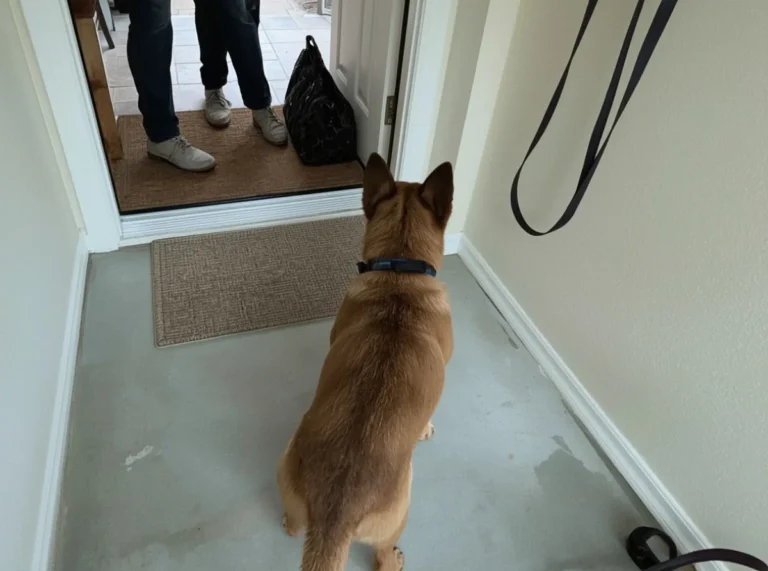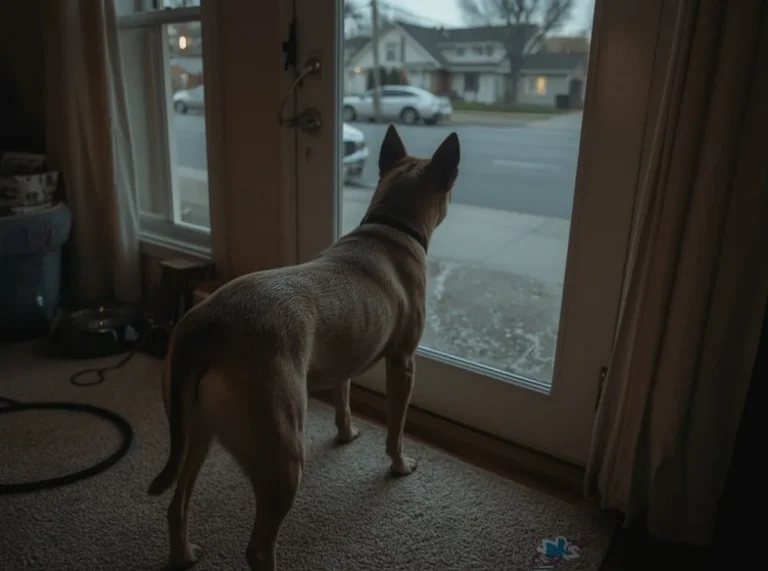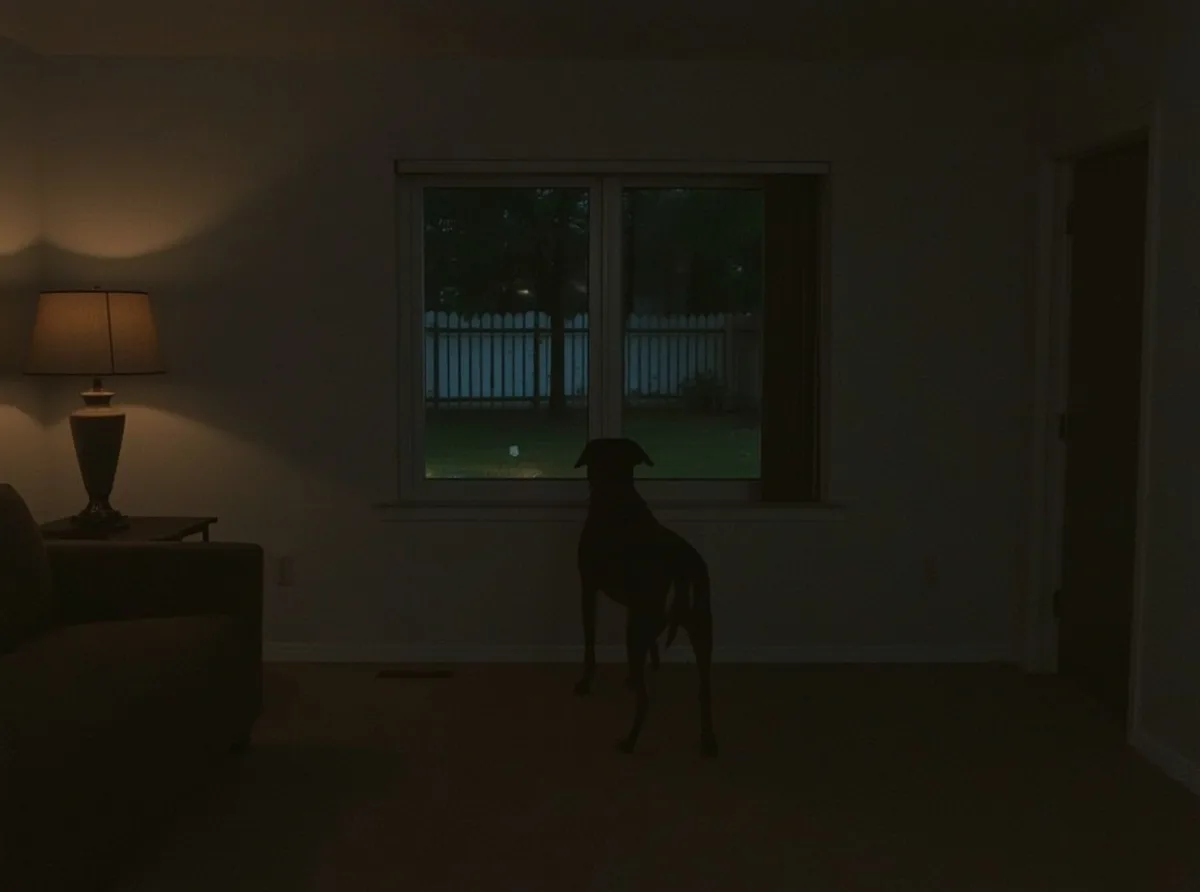
A dog that suddenly starts barking at night can turn a quiet house into a tense one very quickly. The sound feels sharper after dark, and because there is less activity around, even a short burst of barking can seem dramatic. In many homes, the first reaction is to assume the dog heard something alarming. Sometimes that is true. Other times the bark is a response to a feeling, a habit, or a change that is easy to miss while everyone else is asleep.
Night barking often looks different from daytime barking. A dog may go from resting peacefully to standing up, staring toward a window, and barking in a way that sounds more urgent than usual. The behavior can last just a few seconds, or it can continue in repeated rounds. What matters is not only the noise itself, but what seems to set it off and how the dog behaves before and after.
Some dogs bark at sounds that people never notice. Others react to movement outside, the smell of another animal, or a shift in the household routine. A dog may also bark because of boredom, separation stress, or a need to check the surroundings. When it happens suddenly, the reason is not always obvious at first, which is why it helps to look at the behavior in context instead of treating it as random.
What Night Barking Often Looks Like in Real Life
Night barking is not always the same from one dog to another. One dog may bark once or twice toward the front door and then settle. Another may pace from room to room, bark at the window, and stay alert for several minutes. A third may bark from a crate or a bed in another room, sounding more distressed than protective.
Owners often notice a pattern before they notice a reason. The dog may bark at the same hour each night, react only when the house is silent, or begin after the family has gone to bed. Those details matter because they can point to a trigger that is hidden during the day. A dog that seems calm in the afternoon may be much more sensitive when the environment is dark and quiet.
Not every bark means the same thing. The tone, timing, and body language around it tell a fuller story. A stiff body and fixed stare suggest something different from a dog that barks, glances around, and settles again. The way the dog stops barking can also be revealing. Some dogs calm down as soon as they know the “threat” is gone, while others stay keyed up and continue to watch.
Why Dogs Bark Suddenly at Night
Dogs are light sleepers compared with humans. Their hearing is sharper, their sense of smell is stronger, and they tend to notice changes in the environment earlier than we do. A faint sound outside, a car door closing several houses away, or a raccoon moving across a yard can be enough to wake a dog and trigger barking.
For many dogs, barking is a natural response to something unusual. Night can make ordinary things seem more suspicious because the usual daytime cues are missing. Fewer people are moving around, the neighborhood is quieter, and shadows or reflections in windows can stand out more. A dog may react to that change before it understands what it is seeing or hearing.
There is also an emotional side to it. Some dogs bark because they feel responsible for guarding the home. Others bark because they are uneasy when something changes unexpectedly. A dog with a strong attachment to its people may bark if it senses movement, isolation, or a shift in attention. The bark is less about “bad behavior” and more about a dog trying to make sense of its surroundings.
Sudden barking at night is often a response to alertness, discomfort, or stimulation, not just noise. The trigger may be external, but the reaction is shaped by the dog’s emotional state and habits.
Common Triggers That Show Up After Dark
Outside sounds and movement
Many dogs bark at sounds humans barely notice. This can include wildlife, distant footsteps, a gate closing, or another dog barking down the street. In quiet neighborhoods, those sounds travel farther at night. A dog may hear a pattern before the owner can identify it.
People or animals near the home
Someone walking by the house, a neighbor getting home late, or a cat crossing the yard can all set off barking. Dogs often react first to movement near windows, doors, or fences. If the bark is focused toward one part of the home, the trigger may be close to that area.
Reflections, shadows, and unfamiliar shapes
At night, a dog may react to a moving shadow, a light change outside, or a reflection on glass. These details seem small to people, but dogs can be cautious when they cannot clearly interpret what they are seeing. A dog may bark at the same corner of a room or the same window night after night if the visual cue repeats.
Household routines
Sometimes the trigger is not outside at all. A dog may bark when the house gets too quiet, when a family member goes to bed, or when a regular routine changes. If the dog expects certain sounds or activities and they do not happen, the silence itself can feel unusual.
Emotional Reasons Behind the Behavior
A sudden bark at night can reflect more than simple alertness. Some dogs are naturally more sensitive, and that sensitivity often shows up most when the house is still. A dog that is easily startled may react faster after dark because there are fewer distractions and less reassurance from daytime activity.
Attachment can also play a part. Dogs that stay closely tuned to their owners may bark when they feel unsure, separated, or left to monitor the home alone. That does not mean they are always anxious in an obvious way. Some dogs appear composed most of the day, then become vocal when the environment changes or everyone goes to sleep.
Frustration can be part of it too. A dog that wants to investigate a sound or reach a window may bark because it cannot resolve the situation on its own. The bark becomes a release. Once the dog has expressed that tension, it may settle briefly, only to react again when another sound occurs.
A dog that barks at night may be alert, uneasy, frustrated, or protective. The behavior can come from more than one feeling at once.
How the Home Environment Influences Night Barking
What happens during the day often affects what happens at night. A dog with little exercise, few mental challenges, or a long stretch of empty time may have more energy left over once the house gets quiet. That leftover energy does not always appear as obvious restlessness. It may come out as barking when the dog notices the first small disturbance.
Household noise matters too. In a busy home, dogs sometimes become used to constant background sound. When the house suddenly becomes silent, even small noises stand out. In a very quiet home, the opposite can happen: the dog may be more reactive because every new sound feels distinct.
Routine plays a major role. Dogs learn the rhythm of the home, and they notice when it changes. A later bedtime, a guest staying over, a window left open, or a recent move can all change how safe or predictable the environment feels. Some dogs bark because they are trying to reestablish the pattern they expect.
Even the location of the dog’s bed can affect night barking. A dog sleeping near a front window may react more often than one resting in a calm interior space. A crate placed in a high-traffic hallway might expose the dog to more motion and sound than a bed in a quieter room. Small layout choices can make a real difference.
When Night Barking Is Most Noticeable
There are certain moments when barking tends to appear more often. These moments usually involve change, uncertainty, or reduced stimulation. The dog may have been fine all evening, then suddenly bark when the house becomes still or when an outside sound breaks the silence.
Many owners notice barking around the same transition points each night. Bedtime is one. Another is the middle of the night, when a dog hears a sound after several hours of rest. Some dogs also bark during early morning hours, especially if they are already half awake and more responsive to movement outside.
Weather can influence the pattern too. Wind, rain, and storms create more background noise, and they can also bring unfamiliar smells into the yard. A dog that normally ignores the neighborhood may become more reactive on a windy night because the environment feels different in ways the owner cannot easily measure.
Subtle Signs That Often Come Before the Bark
Night barking rarely appears out of nowhere. There is usually a small shift before the vocalization starts. A dog may lift its head, freeze in place, scan the room, or move toward a window. Some dogs begin with soft whining, a low grumble, or a short exhale before the bark becomes clearer.
- Sudden head lift from rest
- Fixed staring at a door, window, or dark corner
- Pacing or moving from room to room
- Raised posture with a tense body
- Listening pauses between barks
- Returning to the same spot repeatedly
Those clues help separate an alert reaction from a more emotional one. A dog that is simply checking the environment may bark once and then relax. A dog that is uneasy may keep circling, licking its lips, or staying watchful even after the barking stops. The body often tells the story before the voice does.
Different Meanings in Different Dogs
Not every dog barks for the same reason, even when the sound is similar. Breed tendencies, past experiences, age, and personality all shape how a dog reacts at night. Some dogs are naturally observant and quick to respond to any change. Others are quieter but may still bark when something crosses a personal threshold.
A young dog may bark because the world still feels new and unpredictable. An older dog may bark because hearing or vision has changed and the environment is harder to interpret. A dog that recently moved homes may bark at unfamiliar sounds until the new space feels established. A dog with a history of guarding behavior may react quickly to anything near the home.
That is why the same bark can mean different things from one household to another. One dog may bark at a passing car because it is excited and overstimulated. Another may bark because it feels unsettled and wants reassurance. A third may bark from habit after learning that night noises are worth announcing.
| Possible Pattern | What It May Suggest |
|---|---|
| Barks once, then settles | Brief alert to a sound or movement |
| Repeated barking toward one spot | Specific trigger near a door, window, or yard |
| Pacing before barking | Unease, frustration, or rising tension |
| Barking after family goes to bed | Separation stress or sensitivity to quiet |
| Night barking after a routine change | Reaction to unfamiliar conditions or disrupted habits |
How Dogs Learn the Habit Over Time
Sometimes night barking starts with a real trigger, then becomes more predictable because the dog learns to expect a response. If barking leads to attention, outside access, or a lot of household movement, the dog may repeat it. Even negative attention can reinforce the pattern if it changes the environment in a noticeable way.
That does not mean the dog is being stubborn in a human sense. It means the behavior has become part of a learned sequence. The dog notices a sound, barks, and then sees something happen. Over time, the bark can become the default response even when the original trigger is weaker than before.
Consistency matters here. A dog that barks only during storms is different from one that barks most nights without a clear reason. A behavior that appears in one context and disappears in another may be tied to a specific cue. A behavior that grows broader over time may need closer attention to environment, routine, and the dog’s overall comfort.
When the Barking Seems Defensive
Some night barking has a more protective feel. The dog may stand tall, face the door or window, and bark with a deep, repetitive tone. The body is often stiff, and the dog may stay in one place rather than wandering. This can happen when the dog believes there is something outside that needs to be challenged or monitored.
Defensive barking is often more intense when the dog feels responsible for the home. It may happen near entry points, along fence lines, or where the dog has a clear view of the outside. Dogs that are already prone to territorial behavior may be more likely to show this at night because darkness increases uncertainty.
Still, defensive barking is not always about aggression. Often it is a mix of caution and duty. The dog is reacting to a perceived intrusion, not necessarily looking for conflict. That distinction matters because the goal is usually to understand what the dog is responding to, not just to stop the noise.
When the Barking Seems More Like Stress
Stress-related barking may look different. The dog might bark in short bursts, move restlessly, or seem unable to settle after the trigger is gone. The behavior may be paired with whining, panting, drooling, or repeated checking of doors and windows. Some dogs do not appear guarded in the usual sense. They simply seem unable to relax.
This kind of barking can show up when a dog is overtired, under-stimulated, or uneasy about being alone at night. It can also happen in dogs that are sensitive to changes in household rhythm. If the barking seems linked to nervous movement rather than a clear outside event, stress may be part of the picture.
Dogs sometimes give mixed signals. They may bark from the couch, then run to the hall, then return and lie down only to bark again a minute later. That pattern can make the behavior harder to interpret. Mixed signals often mean the dog is reacting to more than one thing at once: sound, memory, habit, and uncertainty.
What to Notice Before Assuming It Is One Thing
The trigger is not always obvious from the bark alone. It helps to notice what came just before it. Was there a noise outside? Did the dog wake from a deep sleep? Did someone move through the house? Did the barking happen after a long quiet stretch or after a busy evening?
Owners also benefit from looking at the dog’s overall state that day. A dog that had very little exercise, missed a familiar routine, or spent the evening alone may be more likely to react at night. A dog that had a full, calm day may still bark, but the reason may be different. Context changes the meaning.
One bark at 2 a.m. is a clue, not a full answer. The timing, posture, and recent routine often matter more than the sound itself.
What Usually Makes the Behavior More Noticeable
- Sudden changes in household routine
- Windows or curtains left open to outside movement
- Quiet houses with little background sound
- Sleepy dogs that wake from light sleep and react quickly
- Nearby wildlife, traffic, or late-night neighborhood activity
- Dogs left alone in a room where they can hear but not investigate
These factors do not always create barking on their own, but they can make a dog more likely to respond. Nighttime removes many distractions, so the dog’s attention becomes concentrated on a smaller set of sounds and sensations. That concentration can be useful, but it can also make the dog more reactive than usual.
A Calm Closing Thought
When a dog suddenly barks at night, there is usually a reason that makes sense from the dog’s point of view. The reason may be outside the house, inside the routine, or tied to how the dog feels in the quiet dark. Looking at the timing, body language, and environment gives a clearer picture than the bark alone ever can.
In many homes, the answer is a mix of alertness and habit. In others, it is sensitivity, unease, or a strong response to a small sound that people never hear. The behavior becomes easier to read when it is viewed as communication. The dog is reacting to something real to it, even if that something is hard to identify at first.