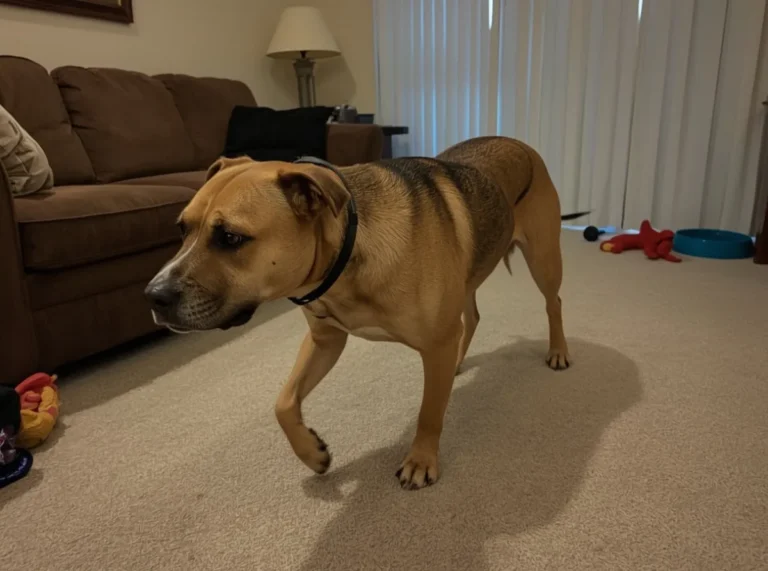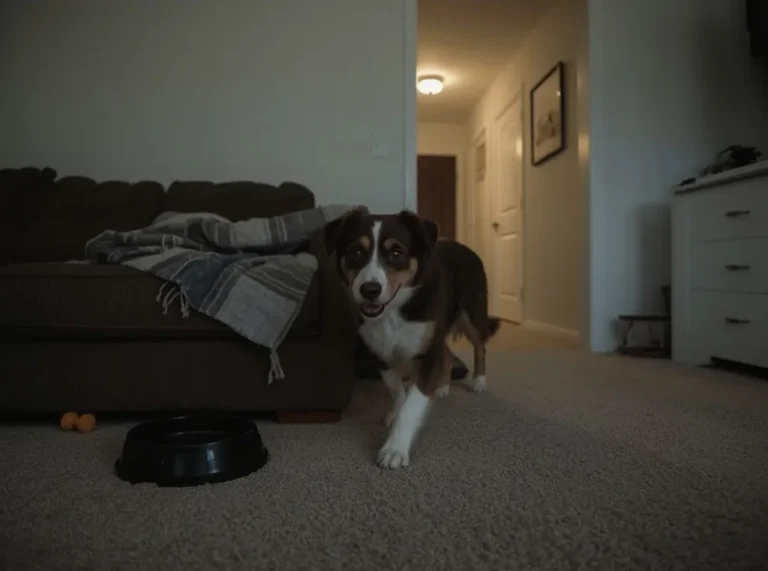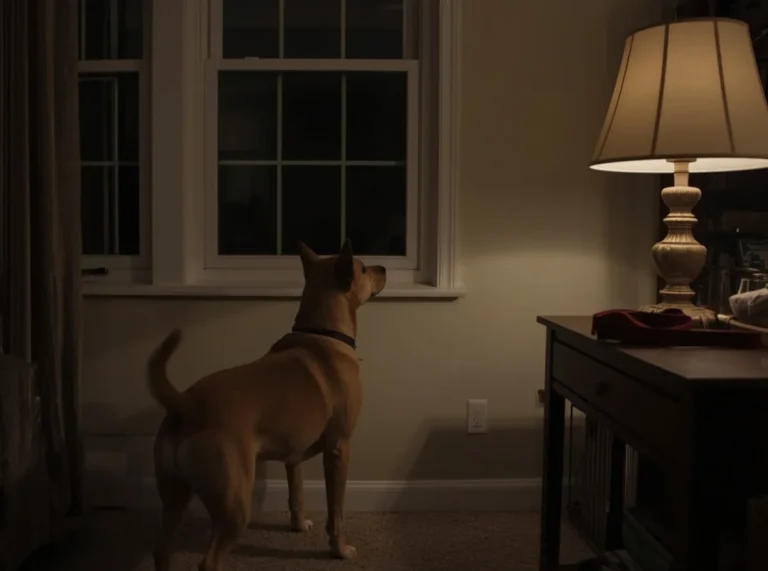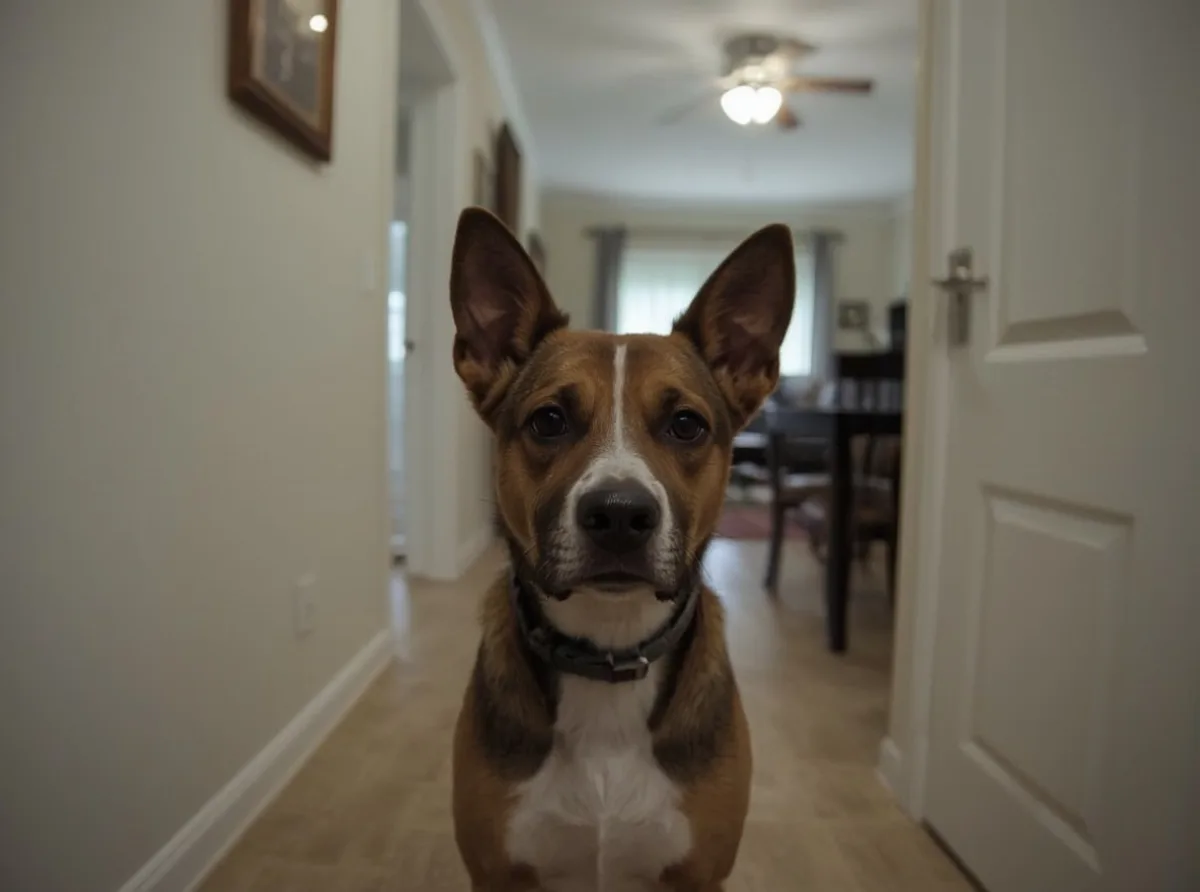
Some dogs seem unable to fully relax inside the house. They track every footstep, lift their head at the smallest sound, and keep checking doors, windows, and hallways as if something important might happen at any second. On the surface, that can look like simple alertness. In real life, it often reflects a mix of instinct, emotion, habit, and the dog’s understanding of the home environment.
A dog that stays hypervigilant indoors is not always being difficult or disobedient. Many are responding to a feeling of uncertainty. Others are reacting to noise, movement, tension in the household, or a lack of opportunities to settle. The behavior can appear mild and occasional, or constant and exhausting. The details matter.
Hypervigilance indoors is often easier to notice during ordinary moments. A dog may pace instead of lying down, watch the doorway during meals, or wake up instantly when a floorboard creaks. Some dogs seem to scan the room even when nothing is happening. That watchful state can become part of their daily routine if the conditions around them keep reinforcing it.
What hypervigilance looks like inside the home
Not every alert dog is hypervigilant. Some dogs are simply attentive, curious, or responsive to household activity. Hypervigilance goes further than casual awareness. The dog appears unable to let go of monitoring behavior and may stay mentally “on duty” for long stretches.
You may notice a few common patterns:
- frequent head turns toward sounds outside or inside the house
- difficulty lying fully down or staying asleep
- standing in doorways or near exits for long periods
- pacing from room to room without settling
- watching people instead of resting when the house is calm
- startling quickly at routine noises such as dishes, HVAC noise, or footsteps
- checking windows, blinds, or entry points repeatedly
Some dogs also show a body that looks ready to move at any moment. Their muscles stay tight, their mouth may remain closed, and their eyes seem fixed and searching. They may follow a person from room to room without appearing relaxed enough to choose a resting place.
In other dogs, the signs are quieter. They may stay in one spot but hold a tense posture, keep their ears constantly rotating, or fail to fully soften even during quiet moments. The difference between a dog that is simply interested and a dog that is chronically on alert often shows up in how hard it is for the dog to disengage.
Why some dogs stay on high alert indoors
One of the biggest reasons is instinct. Dogs are built to notice movement, sound, and change. In the wild, that sensitivity could help them avoid danger, protect resources, or stay connected to their group. In a house, those same instincts can become overactive when the dog has not learned that the environment is predictable and safe.
Breed tendencies may also play a part. Dogs developed for guarding, herding, or close human supervision often scan their surroundings more than average. That does not mean they are destined to be anxious. It does mean they may be more likely to notice and react to household details that other dogs ignore.
Past experience matters a great deal. A dog that lived in a noisy shelter, moved between homes, or experienced chaotic living conditions may remain ready for action indoors even after settling into a stable home. If a dog learned that sudden noises or human movement often led to stress, conflict, or change, the dog may continue to monitor the environment closely.
Hypervigilance is often less about “watching everything” and more about “not feeling sure it is safe to stop watching.”
Fear and uncertainty are common internal drivers. A dog that does not feel fully secure may keep scanning for cues, because staying alert feels more manageable than relaxing. That state can be subtle at first. Over time, it may become the dog’s default way of moving through the house.
Emotional reasons behind the behavior
Hypervigilance indoors often has an emotional component that is easy to miss. A dog may look busy, but the underlying state is usually tension. The dog is not just noticing the world. It is interpreting the world as something that requires constant monitoring.
One possible reason is anxiety. This does not always show up as trembling or hiding. Some anxious dogs become watchful instead. They keep checking their surroundings because attention feels safer than rest. For these dogs, alertness can be a coping strategy.
Another possibility is separation sensitivity. Dogs that struggle when alone may remain keyed up even when a person is home, especially if they are waiting for departures, arrivals, or changes in the household routine. The dog may hover near the owner, watch doors, or stay in a posture that suggests anticipation rather than ease.
Frustration can also play a role. A dog with a lot of unused energy, limited mental stimulation, or inconsistent daily activity may become restless and reactive to everything happening indoors. In that case, the dog is not always fearful. Sometimes the dog is under-fulfilled and unable to settle because the body and brain are both looking for a job.
Some dogs are sensitive to conflict or emotional tension in the home. Raised voices, unpredictable movement, or frequent interruptions can make a dog feel that the environment needs to be tracked carefully. Even when no one intends to create stress, the dog may absorb the atmosphere and remain watchful because the pattern in the house feels unstable.
How the home environment shapes vigilance
The same dog may appear calm in one home and hypervigilant in another. That difference is often environmental. The layout of the home, the amount of noise, the number of people coming and going, and the level of routine all influence how safe the dog feels.
Open-plan homes with lots of movement can be difficult for some dogs. So can apartments with thin walls, homes near busy streets, or households where doors, alarms, and appliances create constant small disturbances. A dog may never get the sense that the environment is quiet enough to stop monitoring.
Routine is another major factor. Dogs usually settle better when daily life feels predictable. Meals, walks, rest periods, and household rhythms all help the dog understand what comes next. When the schedule changes often, some dogs remain in a state of anticipation. They do not know when the next event will happen, so they keep watching for it.
Stimulation matters in both directions. A home that is too quiet can leave a dog under-engaged and mentally restless. A home that is too busy can keep a dog over-aroused and unable to switch off. Many hypervigilant dogs are stuck somewhere between those extremes. They are neither fully relaxed nor truly occupied.
When a dog cannot predict the pattern of the day, the brain often chooses vigilance over rest.
Furniture placement and access to vantage points can contribute too. Some dogs choose spots near doors, windows, staircases, or hallways because those locations offer the widest view. If a dog keeps selecting the same watch point, that choice may be telling. The dog is trying to gather information continuously rather than settle into a protected resting place.
Daily patterns that make the behavior stronger
Hypervigilance does not usually appear out of nowhere and stay the same every day. It is shaped by repetition. Small patterns can strengthen it without anyone noticing.
A dog that is repeatedly interrupted while resting may learn to stay half-awake. A dog that gets excited by every delivery person, neighbor sound, or family arrival may begin to expect stimulation all day long. Even well-intentioned attention can reinforce the pattern if the dog receives constant feedback for watching closely.
Common everyday triggers include:
- frequent doorbell or knocking sounds
- repeated pacing by people in the home
- unpredictable feeding, walking, or crating times
- too much window access to outside activity
- exciting greetings every time someone enters
- ongoing household noise without quiet downtime
Dogs are good at learning what matters in their environment. If every sound leads to a response, the dog may decide those sounds are important. If movement always signals change, the dog will keep tracking movement. The household can unintentionally teach the dog that relaxation is never the best option.
Sometimes the dog’s own routine strengthens the behavior. A dog that naps lightly during the day and sleeps poorly at night may seem edgy all the time. Another dog may become most alert after certain events, such as the owner preparing to leave, the children arriving home, or the vacuum coming out. The behavior becomes tied to expectation.
What the behavior may signal about the dog’s emotional state
Hypervigilance indoors often signals an emotional state that is narrower and more tense than it looks. The dog may not be able to fully take in the room because part of the brain is always scanning for change. That can leave very little room for rest, curiosity, or social ease.
A dog in this state may be overattached to its surroundings, highly sensitive to interruption, or uncertain about what is coming next. Some dogs look outward constantly. Others look toward their people for cues and seem unable to self-soothe. Both patterns can reflect a need for predictability and reassurance.
Subtle body language often gives the emotional picture away:
- tight or high tail carriage
- ears moving constantly or held forward
- stiff rather than loose movement
- brief, shallow naps instead of deep rest
- slow relaxation that never fully arrives
- frequent lip licking or yawning without obvious sleepiness
These signs do not always mean fear in a dramatic sense. Many hypervigilant dogs are not panicked. They are simply not comfortable enough to stop monitoring. That distinction matters, because a dog can look functional while still feeling chronically strained.
Some dogs also alternate between watchfulness and sudden overreaction. They may stay quiet for a while, then explode into barking or rushing toward a sound. That pattern suggests the dog has been holding tension in reserve. The behavior is not random. It is often a release after a long stretch of silent scanning.
How owners commonly misread the behavior
People often assume a dog that stays vigilant indoors is being protective, dominant, or “nosey.” Sometimes they see the behavior as intelligence or strong awareness. Those ideas can be partly true, but they do not tell the full story.
A dog that watches every corner of the home may not be guarding in a healthy way. The dog may feel responsible for noticing everything because relaxation does not feel safe enough. What looks like confidence can actually be persistent tension.
Another common misunderstanding is that more correction will fix the problem. If a dog is already struggling to settle, repeated scolding for barking, moving, or tracking sounds may add pressure. The dog may become even more alert, not less, because the home now contains both environmental triggers and social pressure.
People also miss the difference between enthusiasm and stress. A dog excited by guests may seem alert in the same way as a dog feeling unsafe, but the body language is usually different. Excitement is loose, bouncy, and recoverable. Stress tends to stay stiff and unresolved. The dog may not bounce back easily once the event is over.
If a dog cannot seem to stand down after the house becomes quiet, the issue is usually more than simple attention-seeking.
It helps to watch the whole pattern rather than one moment. What happens before the dog becomes alert? How long does the alertness last? Can the dog settle afterward, or does the vigilance return quickly? These details often reveal whether the behavior is a passing response or a stable emotional habit.
How different household situations bring it out
Some dogs are more hypervigilant in the evening, when the household becomes louder or more active. Others show it in the morning, when routines start and the day becomes less predictable. The pattern depends on what the dog has learned to expect.
New environments often amplify the behavior. A dog staying in a vacation rental, a new apartment, or a relative’s home may scan much more than usual. Unfamiliar smells, sounds, and floor plans all make it harder for the dog to relax.
Households with multiple pets can create a different kind of alertness. A dog may monitor other animals for access to food, resting places, toys, or human attention. In these cases, vigilance is not only about the environment. It is also about managing social resources.
Some dogs become especially watchful after major life changes. A move, a family schedule shift, the arrival of a baby, or the loss of another pet can all alter the dog’s sense of stability. Even when the change is positive, it can still produce uncertainty. The dog then stays on guard while figuring out the new pattern.
Noise sensitivity is another common piece. Fireworks, construction, delivery vehicles, and loud neighbors can train a dog to keep attention fixed on possible disturbance. Over time, the dog may begin scanning before the noise arrives, not just after it starts. Anticipation becomes part of the habit.
When vigilance becomes a long-term pattern
A dog that stays hypervigilant indoors for a few days is different from a dog that has done it for months. Duration changes the meaning. If the pattern is long-standing, the dog may have built a lifestyle around monitoring instead of resting.
Long-term vigilance can affect how a dog uses the home. The dog may avoid deep sleep, resist lying in open areas, or choose resting spots where exits remain visible. That is not always obvious at first, because the dog may still eat, walk, and interact normally. But the lack of true rest can slowly wear down resilience.
Age can influence how the pattern develops. Younger dogs may look restless because they are under-exercised or still learning home routines. Adult dogs may show more stable vigilance that reflects experience, sensitivity, or habit. Older dogs can also become more alert indoors if hearing or vision changes make the world feel less predictable.
Health should not be ignored. Pain, discomfort, cognitive changes, or sensory decline can all make a dog seem more watchful. A dog who cannot easily settle may be reacting to internal discomfort as much as to the outside environment. When the behavior changes suddenly or appears alongside other unusual signs, the emotional explanation may not be the whole picture.
Reading the difference between calm alertness and stress-related vigilance
Many dogs are naturally observant. That is not a problem by itself. The key difference is whether the dog can move in and out of alertness without strain. A calm, attentive dog notices a sound, checks it, and then returns to rest. A stressed, hypervigilant dog keeps the checking going.
The contrast often appears in recovery time. After a trigger, does the dog soften again? Can the body loosen, the mouth open, and the eyes drift away from the source of interest? Or does the dog remain braced, ready, and difficult to disengage? Recovery tells a lot.
Playful attention and defensive attention can also look similar for a moment. A dog may perk up at footsteps or a door opening because something good might happen. But when the same dog cannot relax even in the absence of stimulation, the pattern points away from simple excitement.
Sometimes the signals are mixed. A dog might wag, approach, and investigate while still holding tension in the body. That does not necessarily mean the dog is comfortable. Dogs can be curious and worried at the same time. The outward behavior alone does not settle the question.
How a dog’s relationship with people can affect indoor vigilance
Dogs are highly tuned to human behavior. If the people in the home move quickly, speak loudly, or change routines often, some dogs start to monitor them more closely. The dog may become especially aware of human cues because those cues often predict what will happen next.
This is one reason hypervigilance can seem linked to attachment. A dog may stay near one person, watch their movements, or follow them from room to room. That can look like loyalty, and it often is. But it can also reflect the dog’s need to track the person in order to feel secure.
In homes where people are emotionally inconsistent, the dog may stay more alert as a form of self-protection. The dog learns to read subtle changes in tone, posture, and activity. That sensitivity can be useful, but it can also prevent relaxation when the environment is always sending mixed signals.
Even simple household habits can matter. If people frequently jump up to answer every sound, the dog may learn that the sound is important. If family members constantly enter and leave rooms, the dog may never fully know when a moment is truly quiet. Over time, the dog remains mentally engaged because the household keeps asking for attention.
What to notice in everyday life
The clearest signs often show up in ordinary routines. A dog that stays hypervigilant indoors may struggle most during transitions: waking up, settling after meals, waiting for people to return, or trying to nap while the house is active. The pattern may not look dramatic. It may simply look like a dog who never quite lands.
Notice whether the dog has a preferred lookout spot. Notice whether the dog can sleep deeply or only lightly. Notice how quickly the dog responds to tiny sounds that others in the home barely hear. These observations matter more than a single event.
It can also help to pay attention to what relieves the behavior. Some dogs settle better in a smaller room, with fewer windows, or with a consistent daily schedule. Others calm down when household noise decreases or when they have something predictable to do. Relief offers clues about the cause.
Small changes in behavior often tell the story before the bigger signs do. A dog that used to sleep belly-up may start sleeping curled and ready. A dog that once ignored the hallway may begin checking it repeatedly. Those shifts are worth noticing because they show the dog’s internal state changing over time.
A steady pattern usually has a steady cause
Hypervigilance indoors rarely comes from just one thing. More often, it grows from a combination of sensitivity, experience, and daily reinforcement. A dog may be naturally alert, live in a busy home, and have learned that relaxing is not rewarded by the environment. Those layers stack together.
That is why the same behavior can mean different things in different dogs. One dog may be scanning because of guarded breed traits. Another may be anxious after repeated changes. A third may be restless because it never gets enough structure or quiet. The visible behavior can look similar while the underlying reason differs.
What stays consistent is the pattern itself. A dog that cannot leave watch mode is usually telling you the home does not yet feel fully predictable, fully restful, or fully manageable. Sometimes that reflects a temporary adjustment. Sometimes it reflects a deeper habit shaped over a long time. Either way, the dog’s body is showing that vigilance has become easier than letting go.
When the house is calm but the dog still remains on duty, the message is often plain: something about the environment, the routine, or the dog’s internal state is keeping the nervous system awake. That is where the real answer tends to be found, not in the barking, pacing, or staring itself, but in the reasons the dog keeps doing it long after the room has gone quiet.